digital-transformation
30 posts tagged with “digital-transformation”

AI Will Drive Freight Brokerage Consolidation: What C.H. Robinson's CEO Says About the Industry's Future
C.H. Robinson CEO Dave Bozeman says AI will drive freight brokerage consolidation, not disruption. Here's what the Feb 12 stock selloff and the race to agentic AI mean for brokers in 2026.
 CXTMS InsightsFebruary 24, 2026 · 5 min read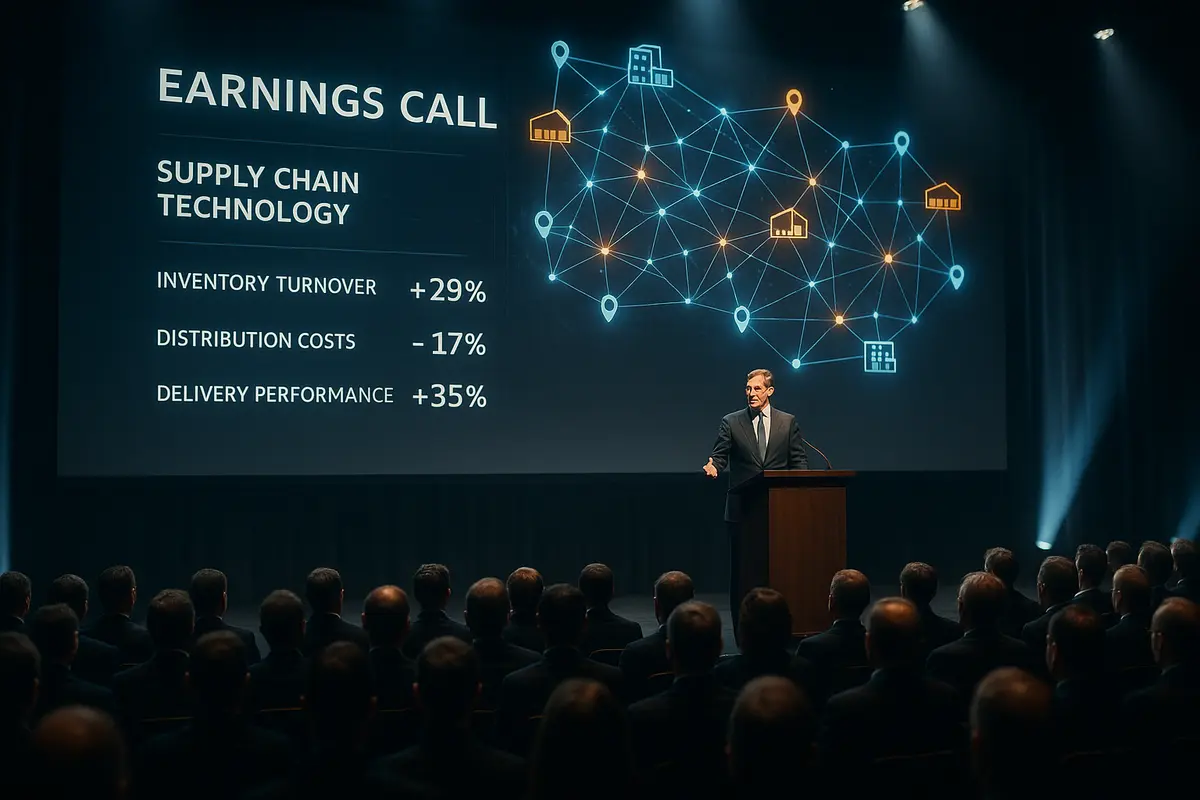
From Physical to Digital: How Earnings Season Proved Supply Chain Digitization Is Now a Boardroom Priority
Q4 2025 earnings calls reveal a decisive shift: CEOs and CFOs now frame supply chain technology as strategic capital investment, not discretionary IT. GXO, AIT Worldwide, and UPS show how digitization drives margin expansion and M&A strategy.
CXTMS InsightsFebruary 24, 2026 · 6 min read
Coordination Latency: The New KPI Reshaping Supply Chain Technology Investment in 2026
Coordination latency — the time between a supply chain disruption and a coordinated cross-functional response — is emerging as the defining KPI for logistics technology investment in 2026.
CXTMS InsightsFebruary 23, 2026 · 7 min read
Supply Chain Digitization Becomes Infrastructure: What Q4 2025 Earnings Reveal About 2026 Tech Spending
Q4 2025 earnings reveal supply chain technology is no longer a discretionary IT project — it's core infrastructure. Explore how the $72B-to-$147B market shift is reshaping logistics investment strategy.
CXTMS InsightsFebruary 23, 2026 · 6 min read
The AI Operating Layer Has Arrived: Why Supply Chain Copilots Are Replacing Standalone Analytics Tools
Supply chain AI has evolved from chatbots to embedded copilots that execute multi-step workflows autonomously. Here's how the AI operating layer is collapsing operational silos and replacing standalone analytics tools in 2026.
CXTMS InsightsFebruary 22, 2026 · 6 min read
The Digital Supply Chain Tech Market Hits $72 Billion: A Buyer's Guide to the Platforms That Actually Deliver ROI
The digital supply chain technology market has reached $72 billion and is racing toward $147 billion by 2031. Here's how to cut through the vendor hype and pick platforms that actually deliver ROI.
CXTMS InsightsFebruary 19, 2026 · 6 min read
The TMS Market Hits a Tipping Point: Why Transportation Management Systems Are No Longer Optional in 2026
The global TMS market is projected to reach $22.4 billion in 2026, growing at 17.8% CAGR. Here's why transportation management systems have become essential for every shipper.
CXTMS InsightsFebruary 15, 2026 · 6 min read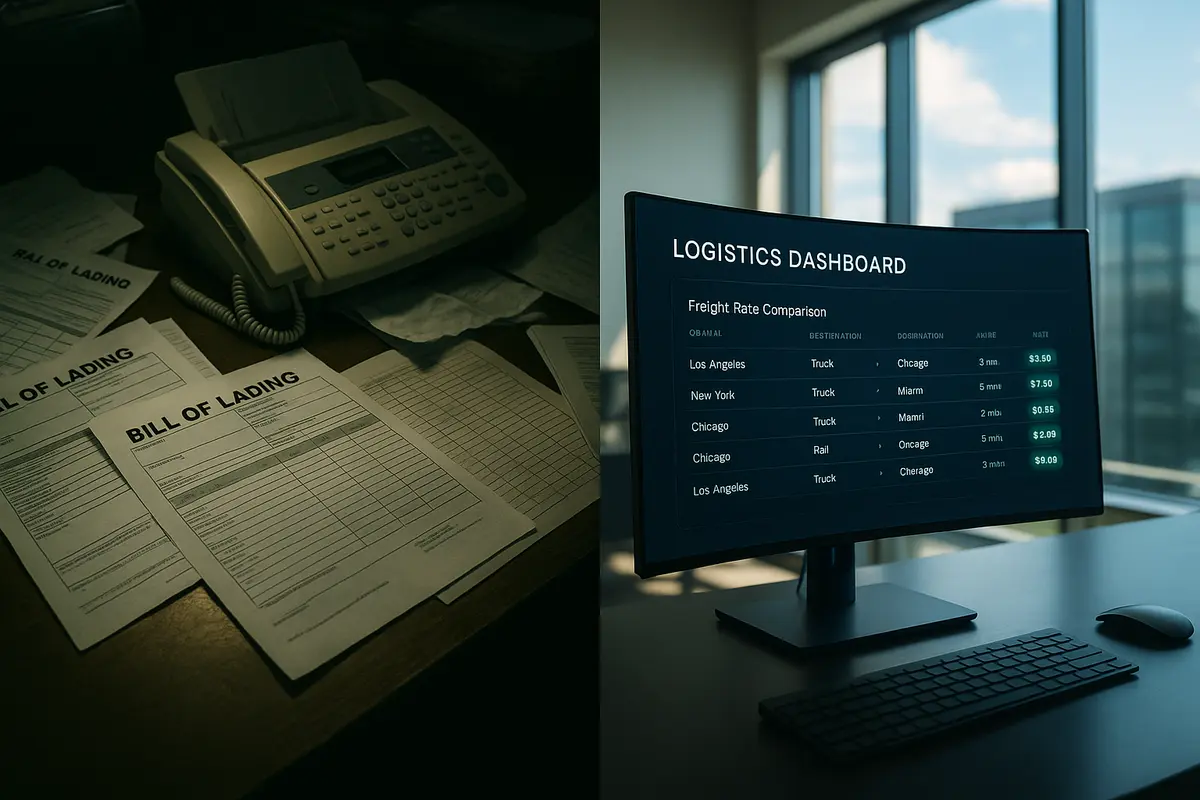
The Digital Freight Forwarding Market Will Hit $50 Billion by 2031: What This Means for Shippers Still Using Manual Processes
The digital freight forwarding market is projected to reach $50 billion by 2031. Shippers still relying on manual processes face growing competitive risk as EU CBAM compliance, automated booking, and AI-driven rate comparison reshape the industry.
CXTMS InsightsFebruary 14, 2026 · 5 min read
Electronic Bills of Lading: The Paperless Revolution Reshaping Freight Documentation
Electronic bills of lading (eBL) adoption has grown from 1% to 11% since 2021. Learn how digital freight documentation saves billions and how TMS platforms enable the paperless transition.
CXTMS InsightsFebruary 8, 2026 · 6 min read
How Agentic AI Is Transforming Freight Quote Generation in 2026
The freight forwarding industry has witnessed decades of incremental automation—from spreadsheets to TMS platforms, from manual rate lookups to digital rate management. But 2026 marks a fundamental shift: the emergence of agentic AI that doesn't just follow rules but makes autonomous decisions, learns from outcomes, and continuously optimizes freight quote generation without human intervention.
CXTMS InsightsFebruary 5, 2026 · 6 min read