From Physical to Digital: How Earnings Season Proved Supply Chain Digitization Is Now a Boardroom Priority

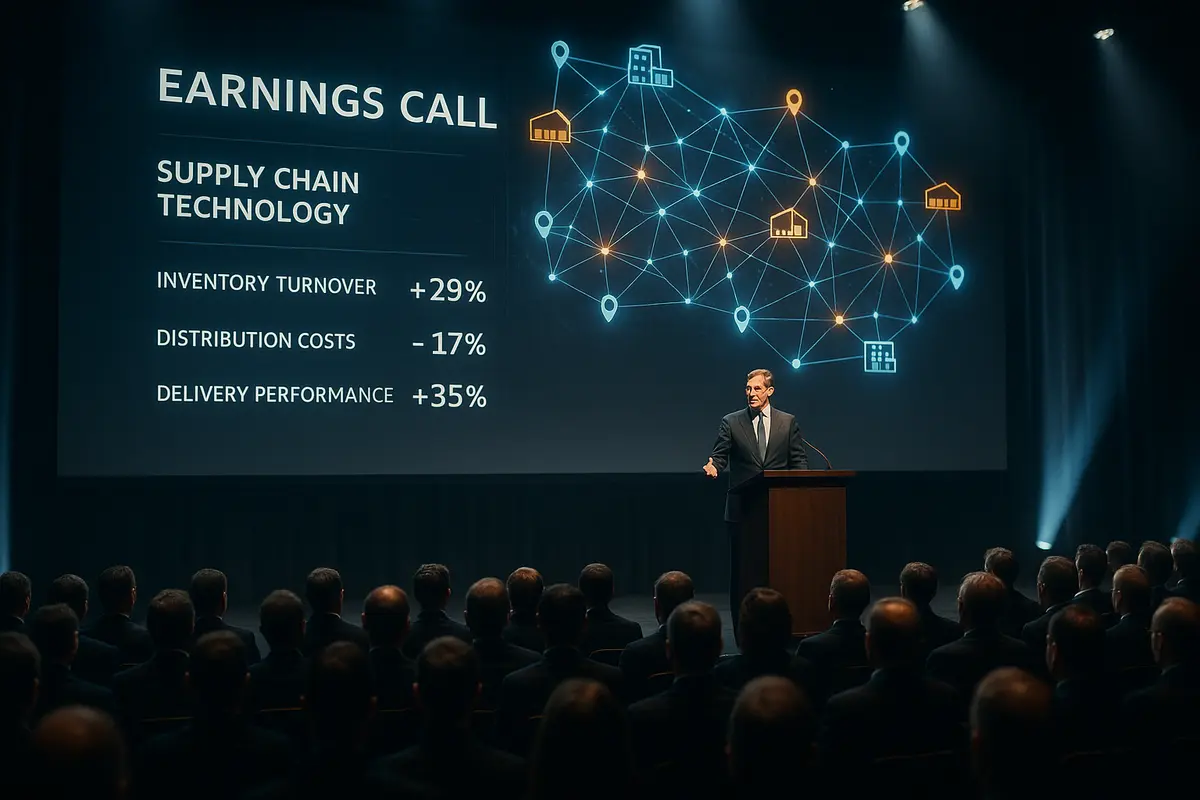
Something remarkable happened during Q4 2025 earnings season. When CEOs and CFOs addressed investors about their capital allocation plans for 2026, supply chain technology wasn't buried in the IT line item. It was front and center — presented as strategic infrastructure that determines whether companies grow or get left behind.
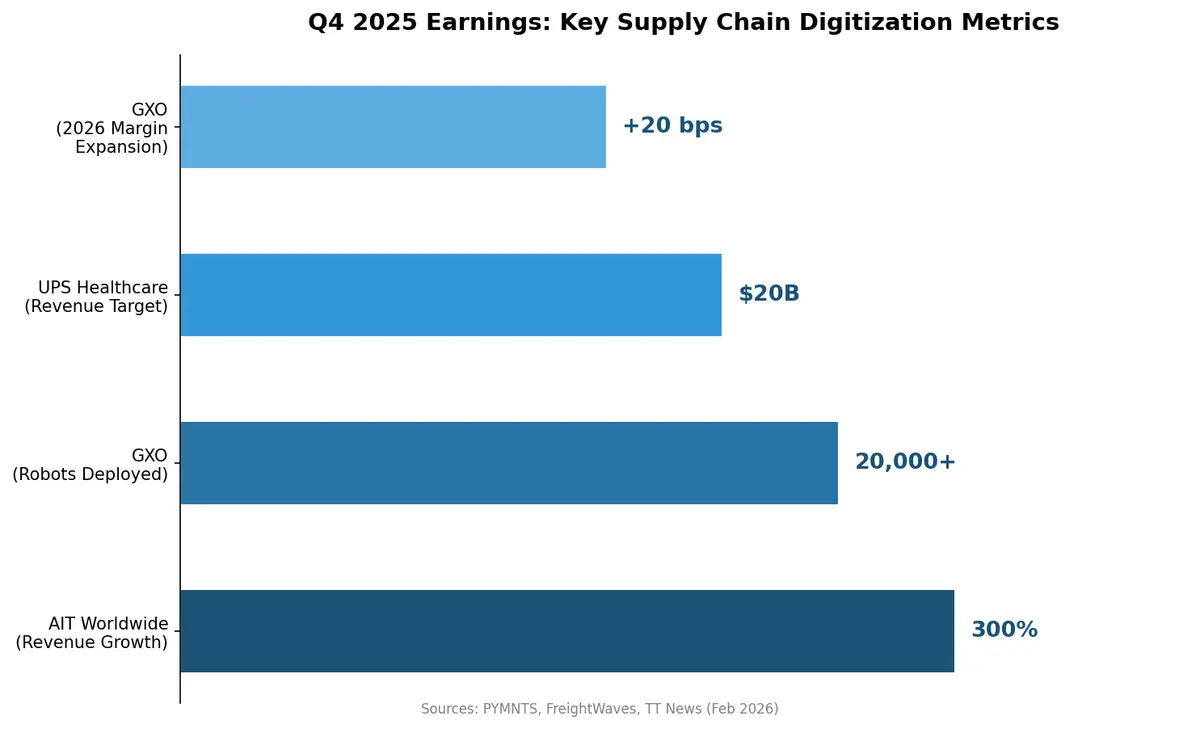
The message from boardrooms across logistics, retail, and manufacturing was unanimous: digitize your supply chain now, or watch competitors pull away. As PYMNTS reported from their analysis of Q4 investor calls, companies from FedEx to Caterpillar to Dollar General described supply chain investments not as efficiency plays but as core operating capacity — prerequisites for growth itself.
The Boardroom Narrative Has Shifted
For most of the past decade, supply chain technology lived in the cost-reduction bucket. Companies bought warehouse management systems and route optimization tools to trim expenses. The business case was always about savings.
That framing is dead.
Today's earnings narratives reveal three fundamental shifts in how C-suite executives talk about logistics technology:
Capital expenditure is moving upstream. Companies aren't just automating warehouse floors — they're investing in supplier integration platforms, real-time orchestration layers, and end-to-end data capture systems. The investment thesis has expanded from operational efficiency to strategic capability.
AI investment is inseparable from supply chain redesign. Every major earnings call this quarter connected AI strategy directly to logistics infrastructure. The physical backbone required for AI-driven commerce is being built now, and supply chain sits at its center.
Competitive advantage has migrated to execution certainty. In volatile markets, companies that can guarantee delivery timelines, inventory accuracy, and rapid responsiveness are winning contracts. That guarantee requires digital infrastructure.
GXO: 20 Basis Points of Margin From Automation Alone
GXO Logistics provided perhaps the clearest example of how digitization translates to boardroom metrics. The company reported Q4 2025 adjusted earnings of approximately $0.87 per share on $3.5 billion in revenue — beating Wall Street expectations.
But the real story was forward-looking. CEO Patrick Kelleher told FreightWaves that GXO expects roughly 20 basis points of margin expansion in 2026, driven primarily by automation and its centralized AI platform, GXO IQ.
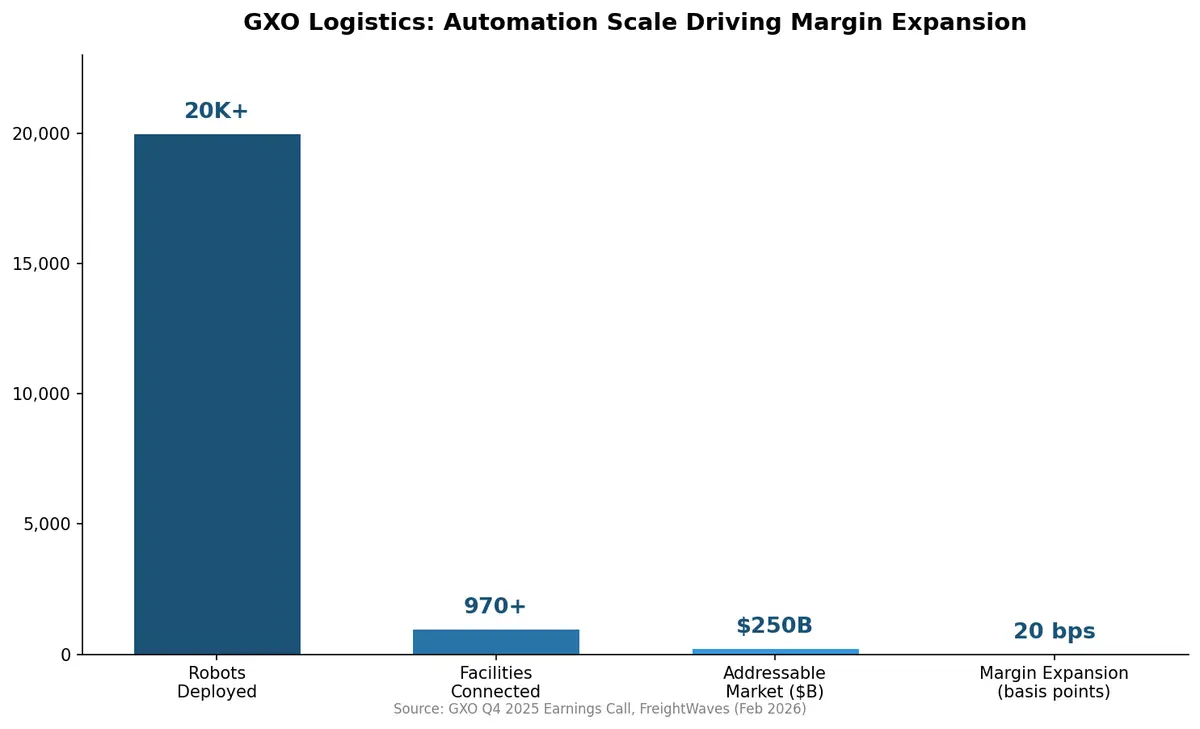
The numbers behind that projection are staggering:
- 20,000+ robots deployed globally across GXO's warehouse network
- 970+ facilities totaling 200 million square feet being connected through a unified digital platform
- Humanoid robot pilots running in live warehouse environments, with production-ready demos expected in California this year
- $250 billion addressable market in North American contract logistics alone
"Humanoids are going to be one of those technologies. I think it's game-changer technology for the supply chain industry," Kelleher said.
GXO's story illustrates a broader pattern: companies that invested early in supply chain digitization are now reaping measurable financial returns — and their boards are doubling down.
AIT Worldwide: 300% Revenue Growth Through Tech-Enabled Scale
While GXO demonstrates organic automation returns, AIT Worldwide Logistics shows how digitization enables transformative M&A. The Itasca, Illinois-based freight forwarder grew gross revenue by more than 300% during its partnership with The Jordan Company, completing 14 acquisitions that expanded its global footprint dramatically.
That growth trajectory attracted Greenbriar Equity Group, which announced a strategic partnership with AIT in February 2026. The deal signals that private equity investors view digitized logistics platforms as high-value acquisition targets — companies with integrated technology stacks command premium valuations.
The lesson for boardrooms is clear: supply chain digitization doesn't just improve operations. It creates enterprise value that shows up in valuation multiples and attracts strategic capital.
UPS: Automation as the Core Growth Thesis
UPS CEO Carol Tomé made the connection between digitization and financial performance explicit during the company's January investor call. The "Network of the Future" initiative puts automation at the center of UPS's growth strategy, with technology investment framed as the primary driver of productivity gains.
"How are we adding this productivity? Automation," Tomé told investors.
UPS Healthcare is simultaneously targeting $20 billion in revenue, building dedicated digital infrastructure for pharmaceutical and healthcare logistics — a bet that technology-enabled specialization commands higher margins than commodity freight.
What This Means for Mid-Market Enterprises
The boardroom prioritization of supply chain technology creates both opportunity and urgency for mid-market companies:
The investment bar is rising. When GXO deploys 20,000 robots and UPS restructures its entire network around automation, companies that rely on manual processes face a widening competitive gap. The cost of inaction compounds quarterly.
Technology-enabled M&A is accelerating. AIT Worldwide's 14 acquisitions weren't just about adding routes or customers — they were about building an integrated digital platform. Companies without modern TMS and supply chain technology become less attractive as acquisition targets and less capable as acquirers.
CFOs want measurable ROI. The shift from "efficiency project" to "strategic infrastructure" means supply chain technology must demonstrate returns in boardroom metrics: margin expansion, free cash flow conversion, and revenue enablement. Vague promises of "better visibility" no longer justify capital allocation.
Building the Business Case for Your Board
For logistics leaders preparing technology investment proposals, Q4 2025 earnings season provides a template:
- Frame technology as growth infrastructure, not cost reduction. GXO's 20 basis points of margin expansion speaks louder than percentage savings on shipping costs.
- Connect digitization to competitive positioning. Show how real-time visibility and automated workflows enable the execution certainty that wins contracts.
- Quantify the cost of inaction. When competitors deploy thousands of robots and AI platforms, standing still means falling behind at an accelerating rate.
- Demonstrate scalability. AIT's 300% revenue growth was possible because its technology platform could absorb 14 acquisitions. Manual processes can't scale at that velocity.
The Digitize-or-Fall-Behind Era Is Here
Q4 2025 earnings season marked an inflection point. Supply chain technology has permanently migrated from the IT department's wish list to the CFO's capital allocation strategy. Companies that recognized this shift early — GXO, UPS, AIT Worldwide — are showing measurable financial returns that justify continued investment.
For everyone else, the window is narrowing. As automation drives margin expansion for digitized competitors, the gap between leaders and laggards grows every quarter.
Ready to make supply chain digitization a boardroom priority at your organization? Contact CXTMS for a demo and see how our platform delivers the measurable ROI your board demands.