Robot Fleet Readiness Gap: Why 70% Expect Automation but Only 40% Have a Strategy

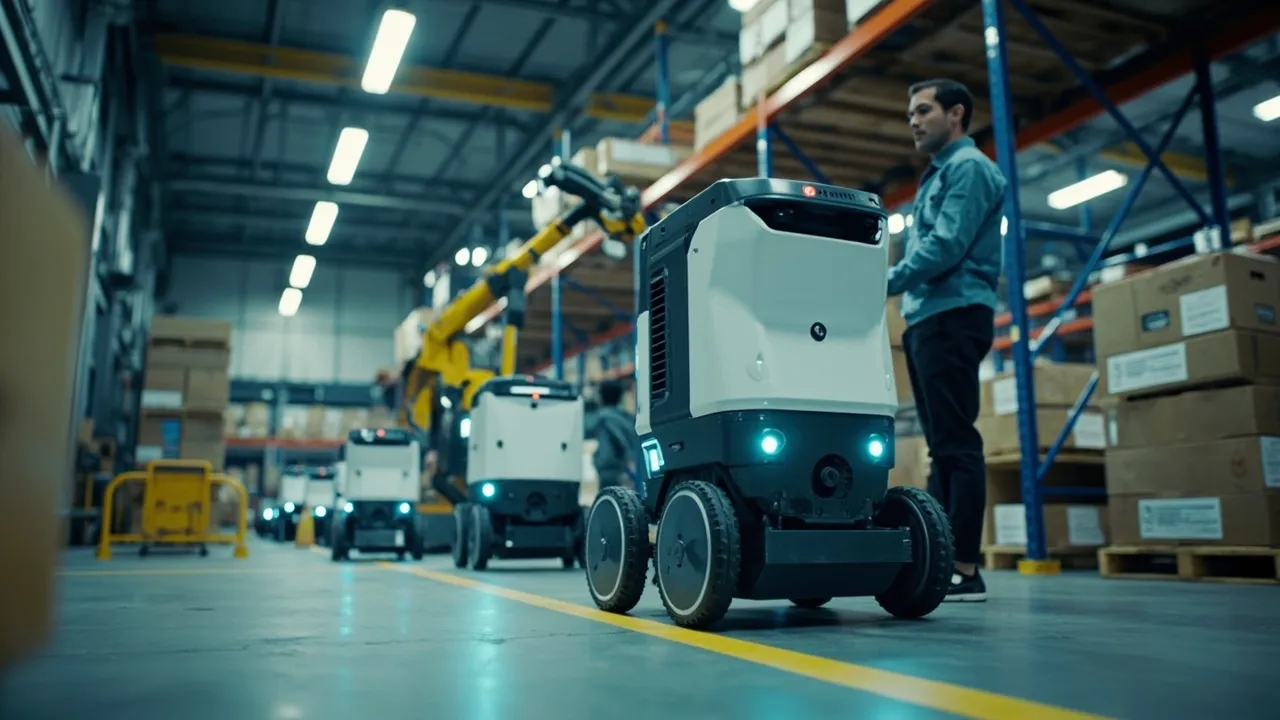
Robots are moving from isolated equipment purchases to a permanent operating layer in factories and distribution centers. Yet management systems are not keeping pace with the machines.
According to reporting from Supply Chain Dive, 70% of manufacturing leaders expect to manage a robot fleet within five years, while only about four in 10 have a formal strategy for a mixed human-robot workforce. That roughly 30-percentage-point readiness gap is more than a technology problem. It exposes weaknesses in process design, data, safety, maintenance, and logistics coordination.
Buying robots is not the same as building a robot-ready operation. Manufacturers and distribution operators need a staged plan that proves how automation will improve total flow—from material receipt through production and outbound transportation—before fleet size becomes the measure of progress.
Separate equipment readiness from operational readiness
A robot can perform its assigned movement perfectly while the overall operation becomes slower. An autonomous mobile robot may deliver components to a work cell, but production still stops if replenishment priorities are wrong. A robotic palletizer may increase line output, but finished goods accumulate if staging space and trailer appointments are not synchronized.
Operational readiness therefore has at least four layers:
- Process: Standard work, exception paths, handoff points, and service-level targets are documented.
- Data: Locations, inventory, tasks, orders, equipment states, and timestamps use consistent identifiers.
- People and safety: Employees understand robot behavior, escalation rules, restricted zones, and stop procedures.
- Lifecycle support: Maintenance coverage, spare parts, software ownership, cybersecurity, and vendor response times are defined.
The business case should test all four. Hardware utilization alone can hide congestion, extra handling, delayed orders, or a growing exception queue.
Start with a flow-based readiness assessment
Before selecting equipment, map one end-to-end material flow. Record where work enters, how it is prioritized, every physical and digital handoff, and the conditions that require human intervention. Then establish a baseline for travel time, touches, queue time, throughput, labor hours, safety incidents, and order-cycle performance.
This prevents teams from automating a visible task while ignoring its constraint. It also creates an honest denominator for return on investment. That matters because a separate Supply Chain Dive analysis noted that warehouse robotics investments may take two to three years on average to deliver a return.
Readiness scoring should be specific enough to stop a premature deployment. For example, a site should not advance if location master data is unreliable, wireless coverage fails in travel aisles, upstream task priorities change through informal messages, or no owner exists for robot-generated exceptions.
Deploy in stages with explicit exit criteria
A staged rollout makes operational learning part of the investment rather than an afterthought.
Stage one: instrument the current process. Capture reliable timestamps and exception reasons before automation. If managers cannot explain current queue time or missed service targets, they will struggle to prove what a robot changed.
Stage two: run a bounded pilot. Choose one repeatable flow with manageable variability. Define the operating window, volume, product types, staffing, safety boundary, and fallback process. Measure total flow, not simply robot missions completed.
Stage three: integrate adjacent systems. Connect the fleet manager to the WMS, manufacturing execution system, inventory records, and labor workflows. Validate failure behavior when a message is late, duplicated, incomplete, or rejected.
Stage four: scale only after stability. Expansion should require sustained throughput, controlled exceptions, trained coverage across shifts, acceptable downtime, and verified recovery procedures. Adding units before those conditions are met multiplies instability.
Each stage needs an accountable business owner as well as technical support. Automation affects production, warehousing, maintenance, safety, IT, and transportation; leaving ownership solely with engineering creates blind spots at the boundaries.
Connect robot events to WMS and TMS handoffs
Robot orchestration should begin with a business event, not an isolated movement request. A WMS may release a replenishment task because inventory at a pick face crossed a threshold. The fleet system accepts the mission, assigns a robot, and returns status events. Completion then updates inventory location and makes the next warehouse task eligible.
Outbound flow requires an additional connection. When a pallet reaches staging, the WMS should associate it with the correct order, load, dock door, and handling status. The TMS should use that information alongside carrier acceptance, appointment time, trailer availability, and shipment priority. If a pickup changes, the task queue must reflect the new loading sequence rather than continuing to feed the wrong door.
Useful events include task released, mission accepted, pickup complete, destination blocked, human assistance requested, task complete, and mission canceled. Every event should carry a timestamp, facility, asset, task, order or shipment reference, and reason code where applicable. This shared event record allows teams to distinguish a robot fault from missing inventory, a blocked destination, bad task priority, or a transportation schedule change.
Manage the mixed workforce deliberately
The formal-strategy gap is especially important because a robot fleet changes human work. Operators increasingly supervise flow, resolve exceptions, validate inventory, and recover equipment rather than only moving material. Training must reflect those responsibilities.
Sites should define who can pause a mission, clear an obstruction, release a quarantined load, change priority, or return equipment to service. Shift plans need coverage for those roles, including nights and weekends. Near misses and repeated interventions should enter the same continuous-improvement process as downtime and quality defects.
The MHI annual industry report program provides an additional benchmark for supply chain technology priorities and adoption. But external benchmarks should guide questions, not replace site-level evidence. The right automation sequence depends on each facility's demand variability, layout, product profile, labor model, and system maturity.
Build a fleet strategy around outcomes
A useful robot fleet scorecard combines equipment, flow, service, and financial measures. Track robot availability and mission success, but also monitor order-cycle time, queue age, touches per unit, on-time staging, dock dwell, expedited freight, safety events, exception resolution, and cost per completed order.
The 70% expectation signals where manufacturing is heading. The four-in-10 strategy figure shows how much governance still needs to catch up. Companies that close that gap will treat robots as participants in an integrated operating system—not as impressive machines working in isolation.
CXTMS connects transportation plans, warehouse handoffs, shipment priorities, and execution events so automation can improve the flow customers actually experience. Request a CXTMS demo to see how coordinated logistics data can support a scalable automation strategy.