ONE Raises Its Profit Outlook 200%: What Shippers Should Test Before Reopening Bids

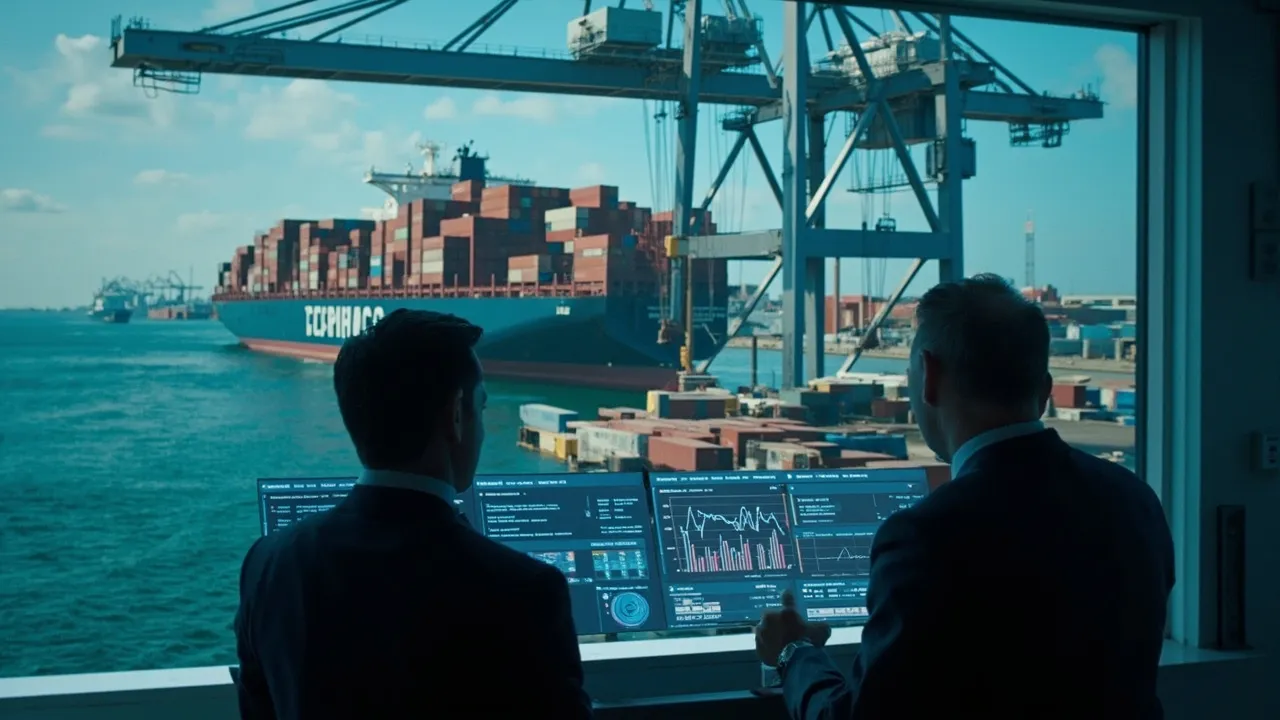
Ocean Network Express has given ocean freight buyers a striking headline: the carrier raised its full-year profit forecast from $300 million to $900 million. That is a 200% increase in the outlook, but it is not automatically a signal that every shipper should reopen bids or lock in more capacity.
The forecast says more about ONE's expectations for the remainder of its fiscal year than it does about the current strength of every trade lane. Procurement teams should treat it as a prompt to test market conditions—not as proof that contract rates are about to rise everywhere.
The quarter behind the revised outlook
According to FreightWaves' report on ONE's results, the carrier generated $4.539 billion in fiscal first-quarter revenue and $31 million in net profit. Revenue increased from $4.05 billion in the comparable quarter, while EBITDA rose from $616 million to $707 million. EBITDA margin edged up from 15.2% to 15.6%.
The operating picture improved, but it was not uniformly strong. Net profit fell from $86 million a year earlier as higher bunker costs weighed on results. ONE's average bunker price reached $666 per ton, versus $535 a year earlier and $440 in the preceding quarter. EBIT margin was only 1.7%, although that was better than 0.9% a year ago.
Volume and yield moved in the carrier's favor. ONE handled 3.257 million TEUs, up from 3.165 million TEUs, and its average freight rate increased to $1,300 per TEU from $1,199 a year earlier and $1,154 in the prior quarter. Those figures help explain management's confidence. They also show why buyers need to separate a broad carrier earnings recovery from lane-specific pricing power.
A profitable carrier does not mean every lane is tightening
Carrier earnings combine freight rates, utilization, fuel, network design, surcharges, and cost control across a global portfolio. A shipper buys a much narrower product: space on a specific origin-destination pair, during specific weeks, with defined equipment and service requirements.
That distinction matters when considering a mini-bid. ONE's forecast assumes that the coming quarters deliver much of the year's expected profit. It is therefore partly forward-looking and exposed to geopolitical disruption, fuel prices, and carrier capacity management. Meanwhile, the industry has a large pipeline of new vessels. FreightWaves reported that containership orders are approaching 40% of the existing global fleet, which could pressure rates when disruption normalizes. Carriers can counter excess capacity through slow steaming, redeployment, service withdrawals, and blank sailings, so nominal fleet growth does not translate neatly into available weekly slots.
The practical conclusion is simple: a carrier-level forecast should trigger lane analysis, not an automatic sourcing event.
Four tests before reopening ocean bids
1. Compare lane rates with actual service delivered
Measure the effective cost per delivered container, not merely the base ocean rate. Add origin and destination charges, premium fees, detention and demurrage exposure, transshipment costs, and the inventory cost of delay. A lower bid can become expensive when rollovers or missed connections force expedites.
Use at least eight to twelve weeks of shipment history. Compare booked departure, actual departure, promised arrival, actual arrival, and total landed transportation cost by carrier and service string.
2. Track reliability at the service-string level
Global schedule-reliability averages are useful context but too broad for a sourcing decision. Track on-time departure, on-time arrival, average days late, rollover frequency, and transshipment connection success for the exact services under consideration.
Also distinguish carrier-controlled failures from port congestion or weather. As FreightWaves noted in its reporting on East Coast blanking and congestion, late arrivals can result from port congestion and operational inefficiency rather than formal blank sailings. Buyers need both cancellation data and actual transit performance.
3. Quantify blank sailings and usable allocation
A weekly allocation has little value if the sailing is regularly blanked or bookings are rolled. For each lane, calculate the percentage of contracted allocation requested, confirmed, loaded, and delivered as planned. Record how early a carrier announces a blank sailing and whether replacement space is offered within an acceptable window.
Procurement should require carriers to explain capacity-protection rules during peak weeks. Operations should verify whether those commitments appeared in real booking outcomes.
4. Set objective bid triggers
Define thresholds before market noise creates pressure to act. A mini-bid may be justified when the all-in market rate moves materially beyond the contract rate for several consecutive weeks, incumbent acceptance falls below target, or reliability deteriorates past an agreed limit.
For example, a shipper might review a lane when its all-in rate gap exceeds 10% for four weeks, allocation fulfillment falls below 90%, or arrival reliability drops below its operational requirement. The precise thresholds should reflect margin, inventory sensitivity, and alternative routing options. If performance remains within tolerance, maintaining contracted allocations may be more valuable than pursuing a short-lived discount.
Turn the headline into a controlled decision
ONE's revised outlook is meaningful: revenue, EBITDA, volume, and average freight rate all improved. Yet falling net profit and sharply higher fuel costs show that the earnings story is more complicated than the 200% headline suggests.
Shippers should reopen bids only when lane evidence supports it. Combining rate history, schedule reliability, blank-sailing exposure, allocation fulfillment, and landed-cost outcomes creates a defensible sourcing decision—and reduces the chance of trading dependable capacity for a price that disappears before the cargo moves.
Ready to manage ocean procurement with lane-level rates, allocations, and shipment performance in one workflow? Request a CXTMS demo and see how stronger transportation data supports better bid decisions.