The Q2 2026 Multimodal Freight Market Divergence: Why Trucking, Maritime, and Air Cargo Are Moving in Opposite Directions


If you're making freight procurement decisions based on a single market narrative in Q2 2026, you're operating with an incomplete picture. For the first time in recent memory, the three major freight modes — trucking, ocean shipping, and air cargo — are moving in fundamentally different directions simultaneously. Trucking is tightening into a supply-driven squeeze. Ocean freight is softening under structural overcapacity. Air cargo is surging on demand growth that's outpacing capacity expansion.
This isn't a temporary anomaly. It's a structural divergence that creates both risk and opportunity for shippers who understand how to read cross-modal signals and act on them. Here's the full picture entering Q2 2026 — and what it means for your freight strategy.
Trucking: ACT Research Calls 2026 a "Structural Transition Year"
The trucking market has shifted decisively from the prolonged downcycle of 2024–2025 into what ACT Research characterizes as a "structural transition year" driven by capacity tightening, improving pricing dynamics, and gradual margin recovery. This isn't a demand-driven boom — it's a supply-side squeeze.
The numbers paint a clear picture. Tender rejection rates have climbed to approximately 14%, according to the FreightWaves April 2026 State of the Industry report, indicating that carriers are increasingly turning down contract freight in favor of higher-paying spot loads. Spot truckload rates remain materially higher year-over-year, and contract pricing is accelerating to catch up.
Several structural forces are driving the squeeze simultaneously:
- Driver supply constraints are tightening at the fastest pace in several years, with new policy changes affecting driver eligibility expected to further limit available capacity
- Diesel prices surged over $1 per gallon in early March due to geopolitical conflict, compressing carrier margins and reducing effective capacity
- Fleet contraction continues as sub-replacement Class 8 build rates and prolonged trade cycles shrink the active tractor population
- EPA 2027 regulations are shaping cautious fleet investment strategies, with carriers prioritizing replacement over expansion
The regional picture adds another layer of complexity. The Midwest remains significantly tighter than the West Coast, though West Coast capacity began tightening later in March. For shippers with multi-regional distribution networks, this means lane-level procurement strategies are no longer optional — they're essential.
Ocean Freight: Base Rates Soften While Hidden Costs Rise
While trucking tightens, the ocean freight market is telling the opposite story. Container shipping is experiencing what industry analysts describe as a gradual reset toward structural oversupply, with base freight rates under sustained downward pressure from expanding vessel capacity.
The headline numbers are dramatic. Spot rates have fallen roughly 70% from their pandemic-era peaks, and Asia-U.S. West Coast rates dropped 21% to approximately $1,916 per FEU in early 2026 as demand entered a post-Lunar New Year lull. Container demand remains soft with declining import volumes and excess vessel capacity flooding major trade lanes.
But here's where the ocean freight story gets complicated: base rate softening is being offset by regulatory cost escalation. As we covered in our analysis of the hidden regulatory cost layer in ocean freight, EU ETS compliance at 100% coverage, IMO decarbonization mandates, war risk premiums, and security surcharges are collectively adding 15-20% on top of base container rates. The all-in cost picture is far less favorable than headline rates suggest.
Geopolitical disruptions continue to distort supply signals. Red Sea rerouting has absorbed capacity and triggered tactical blank sailings by carriers, while U.S. tariff uncertainty has caused irregular front-loading of cargo at unpredictable intervals. The Beroeinc procurement outlook for 2026 notes that normalization is being repeatedly interrupted by these external forces, making it difficult for procurement teams to establish reliable baselines.
For shippers, the ocean freight takeaway is nuanced: negotiate aggressively on base rates where overcapacity gives you leverage, but budget separately for regulatory surcharges that will persist regardless of supply-demand dynamics.
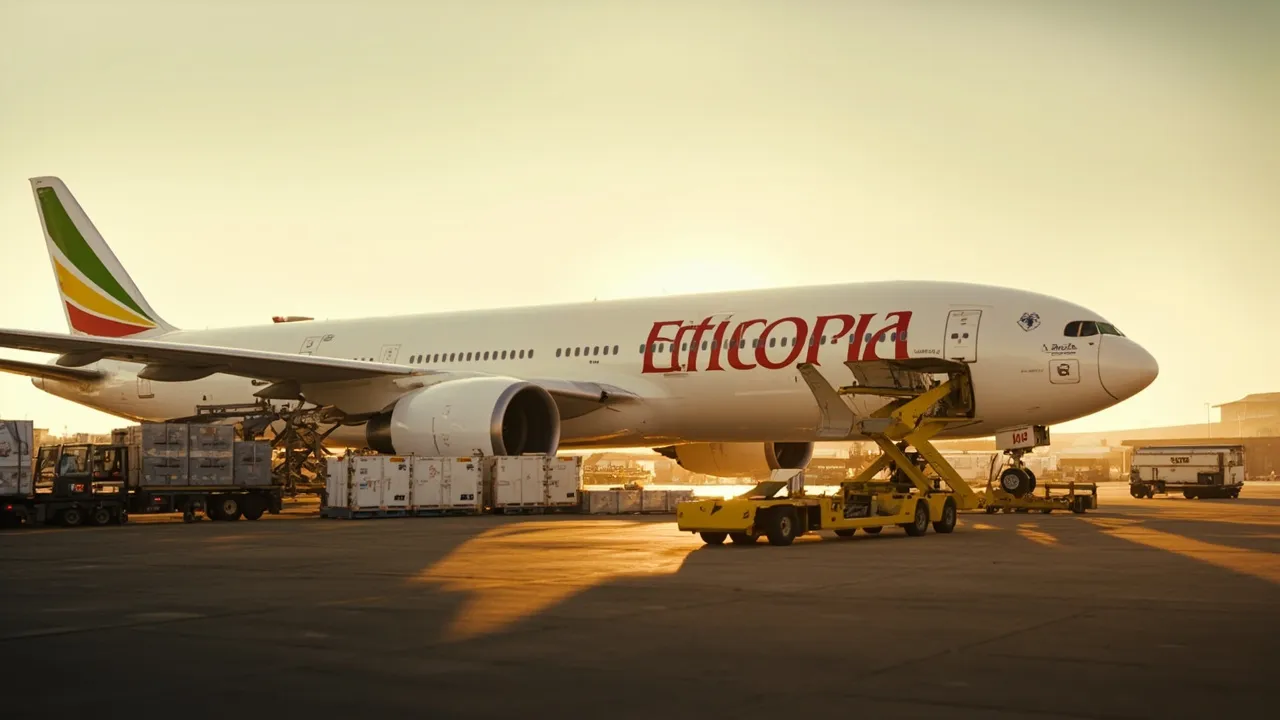
Air Cargo: Demand Growth Outpaces Capacity by a Wide Margin
The air cargo market is charting its own course entirely — and it's pointing sharply upward. IATA's February 2026 data shows global air cargo demand surged 11.2% year-over-year, with growth across all major trade corridors. This follows a 5.6% YoY increase in January, signaling accelerating momentum rather than a one-month anomaly.
The supply-demand imbalance is particularly striking. According to Supply Chain Dive's analysis of Xeneta data, demand growth continued to surpass available capacity growth by 4% YoY in February, pushing the global dynamic load factor up two percentage points to 62%. Average spot rates hit $2.58 per kilogram, up 5% year-over-year — the first recorded monthly rate increase since May 2025.
Lane-level dynamics reveal where the real pressure points are:
- Northeast Asia to North America: Semiconductor demand is driving rates up 10% YoY to $4.29 per kilogram
- Europe to North America: Rates jumped 21% YoY to $2.96 per kilogram, the largest year-over-year increase among major corridors
- Southeast Asia to North America: A rare exception, with rates down 6% YoY to $4.75 per kilogram
The Middle East conflict has introduced a significant wild card. The Strait of Hormuz closure disrupted major regional hubs in Doha, Dubai, and Abu Dhabi, forcing route reshuffling that creates capacity pockets on some corridors while squeezing others. Xeneta's chief airfreight officer warned that a protracted disruption could cause short-term rates to double or triple on directly impacted air corridors, particularly routes transiting through Middle Eastern hubs.
For pharmaceutical and retail shippers routing through India to the U.S. East Coast — a key lane that typically transits through Middle Eastern hubs — this creates an urgent need for alternative routing strategies.
The Divergence Opportunity: Where Modal Shift Makes Economic Sense
The simultaneous divergence across modes creates a rare strategic window. Rather than treating each mode in isolation, sophisticated shippers are exploiting the cross-modal arbitrage:
Shift eligible volume from trucking to intermodal. Domestic intermodal volumes are already up approximately 3% YoY, driven by strong service levels, lower costs versus truckload, and available capacity. With trucking tightening and intermodal offering competitive transit times on key corridors, this is the most actionable modal shift opportunity in Q2.
Lock in ocean freight contracts now. Overcapacity gives shippers rare negotiating leverage on base rates. The key is separating base rate negotiations from regulatory surcharge discussions and building surcharge escalation caps into contracts.
Diversify air cargo routing. The Middle East hub disruption is creating a two-tier air cargo market. Shippers who proactively identify alternative routing — European hubs for Asia-origin cargo, direct services bypassing Middle Eastern transit points — can avoid the worst of the rate spikes.
Build cross-modal flexibility into procurement. The days of locking into a single-mode procurement strategy for an entire quarter are over. The speed at which modal economics are shifting means procurement teams need real-time visibility into cross-modal rate differentials.
How CXTMS Helps Shippers Navigate Modal Divergence
CXTMS's multimodal rate management platform is built precisely for market environments like Q2 2026, where static, single-mode procurement strategies break down. Our platform provides real-time cross-modal rate comparison, automated modal shift recommendations based on live market conditions, and integrated procurement workflows that span trucking, ocean, air, and intermodal.
When trucking rates spike on a specific corridor, CXTMS automatically surfaces intermodal alternatives with comparable transit times. When ocean freight overcapacity creates negotiating windows, our contract management tools help you lock in favorable base rates while isolating regulatory surcharge exposure. And when air cargo route disruptions create capacity pockets, our carrier network visibility helps you find available capacity before competitors do.
The Q2 2026 freight market isn't rewarding shippers who pick the right mode. It's rewarding shippers who can move fluidly between modes as conditions change. Request a CXTMS demo to see how multimodal rate intelligence turns market divergence into procurement advantage.