The Hidden Regulatory Cost Layer in Ocean Freight: How ETS, IMO, and Security Surcharges Are Adding 15-20% to Base Container Rates in 2026

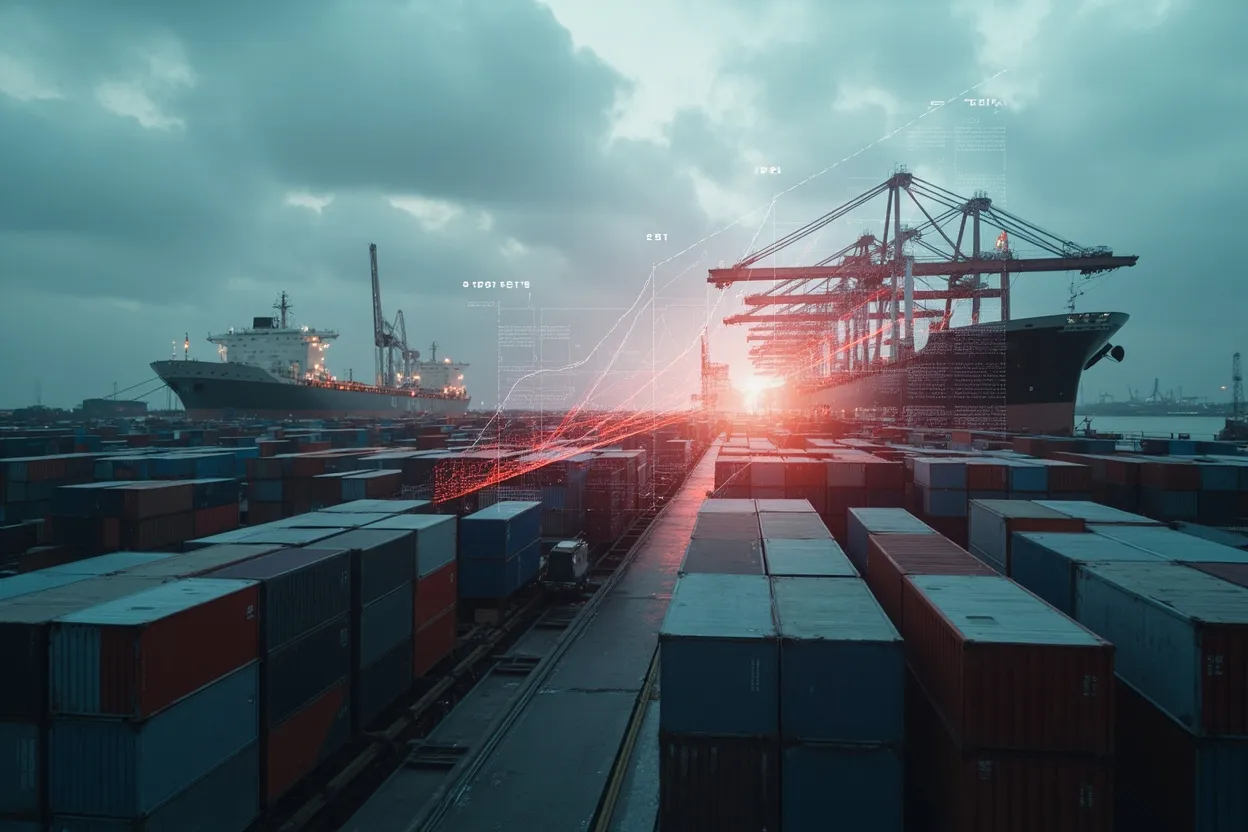
If you've reviewed an ocean freight invoice recently and felt like the surcharge section was longer than the base rate line, you're not imagining things. A structural shift is underway in container shipping economics, and it's one that most procurement teams are still underestimating: regulatory and compliance-driven surcharges are now collectively adding 15-20% on top of base container rates, creating a permanent cost layer that operates independently of supply and demand fundamentals.
This isn't about one regulation or one surcharge. It's the cumulative stacking effect of the EU Emissions Trading System, IMO decarbonization mandates, FuelEU Maritime requirements, war risk premiums, and security surcharges — all hitting invoices simultaneously. For shippers still negotiating ocean freight as a single line item, 2026 is delivering a costly education in cost layer decomposition.
The New Rate Reality: Base Freight Is No Longer the Whole Story
Asia-Europe container rates in early 2026 settled in the $2,500–$4,500 per FEU range depending on the trade lane and contract structure. Asia-U.S. West Coast rates dropped 21% to approximately $1,916 per FEU according to the Freightos Baltic Index as demand entered a post-Lunar New Year lull. On paper, it looks like a softening market.
But those headline rates tell only part of the story. Buried beneath the base freight charge sits a growing stack of regulatory surcharges that didn't exist — or were negligible — just three years ago. When you add EU ETS emission allowances, FuelEU Maritime compliance costs, environmental fuel surcharges, war risk premiums, and security-related levies, the all-in cost per container tells a very different story than the base rate suggests.
The Beroeinc procurement outlook for 2026 captures this dynamic precisely: the container market is experiencing a gradual reset toward structural oversupply, but normalization is repeatedly interrupted by regulatory cost escalation, geopolitical risk premiums, and carrier surcharge strategies that decouple total landed cost from headline freight rates.
EU ETS at 100%: The Biggest Single Regulatory Cost Driver
The EU Emissions Trading System moved to 100% compliance coverage for maritime shipping in January 2026, up from 70% in 2025. This is the single largest regulatory cost escalation hitting ocean freight this year, and its impact is both direct and structural.
Under full EU ETS coverage, shipping lines must now surrender European Union Allowances (EUAs) for every ton of CO₂ emitted on voyages to, from, and within EU ports. Maersk confirmed this expanded obligation in a December 2025 advisory, announcing significant increases to its Emissions Surcharge (EMS/ESS) effective January 2026.
EU ETS surcharges now represent up to 12% of total shipping costs on Europe-connected trade lanes, according to industry analysis. Ocean Network Express (ONE) implemented its updated Europe Environmental Surcharge (EES) on January 1, 2026, while CMA CGM, Hapag-Lloyd, and MSC have all rolled out comparable levies with carrier-specific naming conventions that make cross-comparison deliberately challenging.
The critical detail most shippers miss: EU ETS costs apply to any vessel calling at even one EU port, including intra-voyage emissions. A vessel sailing from Shanghai to Rotterdam surrenders allowances for the entire voyage, not just the European leg. This makes route selection and transshipment strategy a direct lever for ETS cost management — and it means carriers are quietly restructuring service networks with carbon cost optimization in mind.
War Risk and Security Surcharges: Geopolitics as a Permanent Cost Line
The Iran-U.S. conflict that escalated in late February 2026 sent war risk premiums surging across Middle East-connected trade lanes. But the surcharge impact extends far beyond the Gulf.
Hapag-Lloyd implemented a War Risk Surcharge (WRS) of $1,500 per TEU for standard containers and $3,500 for reefers and special equipment on Gulf-connected cargo. CMA CGM followed with an emergency conflict surcharge of $2,000/$3,000 per TEU/FEU for dry containers and $4,000 for reefers. These charges took effect in early March 2026 and show no sign of being rolled back.
Vespucci Maritime CEO Lars Jensen stated bluntly at TPM26 that carriers are set to implement "as many and as high surcharges as humanly possible" as the industry faces compounding disruptions. More than 700 vessels were backed up during the first week of March alone as the Strait of Hormuz closure impacted approximately 10% of the world's container fleet.
Even for shippers whose cargo doesn't transit the Gulf, the ripple effects are real. Red Sea service resumptions that were cautiously underway have been abandoned entirely. Jensen estimates the situation has set Red Sea normalization back by more than a year, meaning the capacity absorption from Africa-rerouted services continues to support carrier pricing power globally.
The security surcharge landscape now includes war risk premiums, piracy surcharges, conflict zone diversions, and insurance cost pass-throughs — each with different triggers, durations, and revision mechanisms. For a single container moving from Asia to Northern Europe via the Cape of Good Hope, the combined security-related surcharges can add $400–$800 per FEU on top of base rates.
The Stacking Effect: Why Individual Surcharges Compound Into Systemic Cost Inflation
Here's what makes 2026 different from previous surcharge cycles: these costs are additive, not substitutive. In prior years, a war risk surcharge might offset lower fuel costs, or environmental levies might coincide with softer base rates. The net impact was manageable.
In 2026, every major surcharge category is elevated simultaneously:
- EU ETS / FuelEU Maritime: 100% compliance, up from 70% — estimated $150–$350 per FEU on EU-connected lanes
- Environmental fuel surcharges: Low-sulfur fuel mandates and CII rating compliance driving bunker adjustment factors higher
- War risk / security premiums: $400–$800 per FEU for Middle East-impacted and Africa-rerouted services
- Congestion and equipment surcharges: Port delays from rerouted capacity creating equipment imbalances
- Carrier service recovery charges: Catch-all surcharges covering longer transit times and schedule reliability costs
When stacked, these surcharges add $600–$1,200 per FEU to a typical Asia-Europe shipment — representing that 15-20% premium on top of base rates. And unlike spot market volatility, these charges are sticky. Regulatory costs don't reverse with demand softening. War risk premiums persist as long as geopolitical tensions remain elevated. Environmental compliance costs only increase as IMO regulations tighten toward 2030 targets.
Why Regulatory Costs Deserve a Separate Budget Line
The procurement implication is clear: shippers who negotiate ocean freight as a single all-in rate are systematically disadvantaged in 2026. When regulatory surcharges represent 15-20% of total cost and operate on different drivers than base rates, bundling them into one number obscures risk, prevents hedging, and eliminates leverage.
Progressive procurement teams are restructuring ocean contracts with explicit surcharge decomposition — separating base freight, fuel adjustments, emission compliance, and security premiums into distinct line items with different index mechanisms and revision triggers. This approach accomplishes three things:
- Transparency: Understanding exactly which cost drivers are increasing and by how much
- Hedging capability: Regulatory costs can be modeled and partially hedged against carbon credit markets and fuel forward curves
- Negotiation leverage: Base rates are where carrier competition applies; surcharges should reflect actual cost pass-through, not margin padding
Procurement Strategies for the Regulatory Cost Era
The most effective shippers in 2026 are treating regulatory cost management as a distinct discipline, separate from freight rate negotiations:
Decompose every invoice. Require carriers to break out EU ETS, FuelEU, war risk, and security surcharges individually. Compare surcharge levels across carriers on the same lane — discrepancies reveal margin-building, not cost differences.
Model route-level carbon cost exposure. EU ETS costs vary dramatically by route. A transshipment via Tanger-Med versus a direct call at Rotterdam carries different emission profiles. Use route modeling to identify carbon-efficient alternatives that reduce ETS exposure.
Build surcharge escalation into forecasts. EU ETS coverage goes to 100% this year. IMO's mid-term measures targeting 2030 will add further compliance costs. War risk premiums show no sign of abating. These aren't temporary disruptions — they're structural cost layers that compound year over year.
Index where possible. Tie emission surcharges to published EUA prices on the ICE exchange rather than accepting carrier-set flat rates that may not reflect actual market costs.
How CXTMS Helps Shippers Navigate the Regulatory Cost Maze
CXTMS gives logistics teams the visibility to dissect ocean freight costs beyond headline rates. Our rate management platform captures surcharge-level detail across carriers and trade lanes, enabling side-by-side comparison of regulatory cost components. When EU ETS surcharges from Carrier A are 40% higher than Carrier B on the same lane, CXTMS flags the discrepancy — turning opaque surcharge structures into actionable procurement intelligence.
Ready to take control of your ocean freight cost exposure? Request a CXTMS demo and see how regulatory cost decomposition can save your team 8-12% on total landed ocean freight costs.