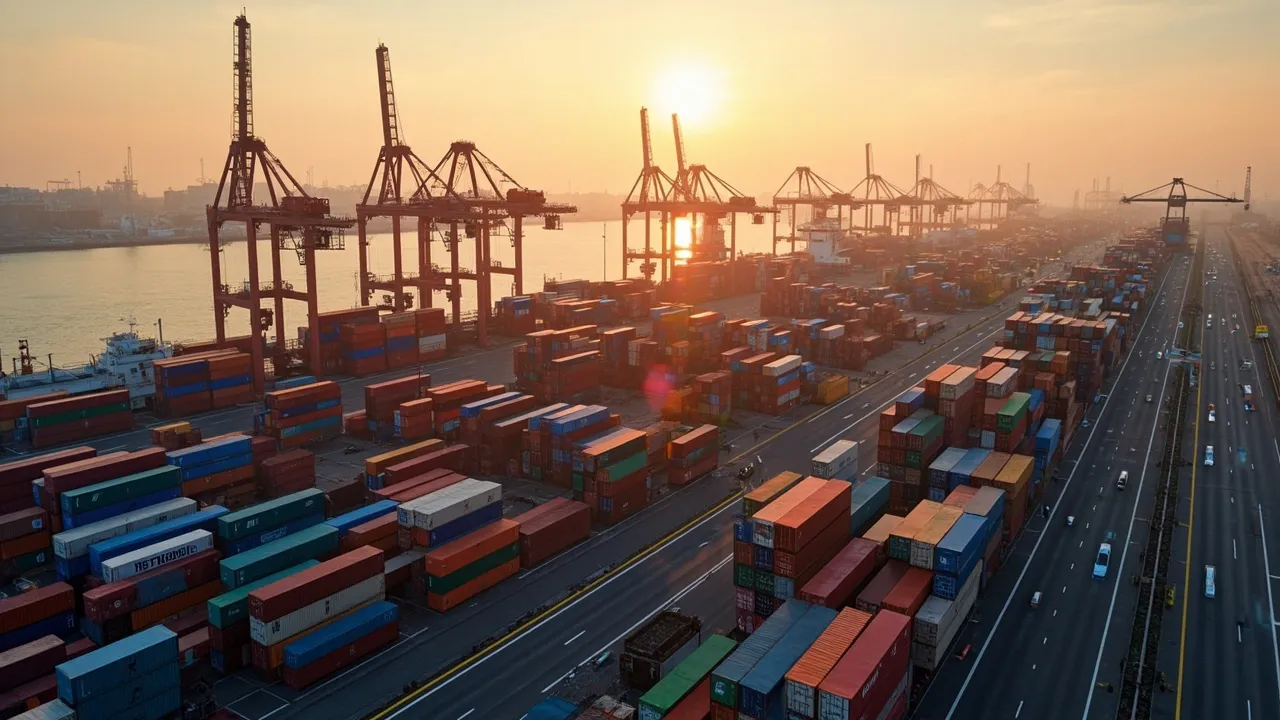
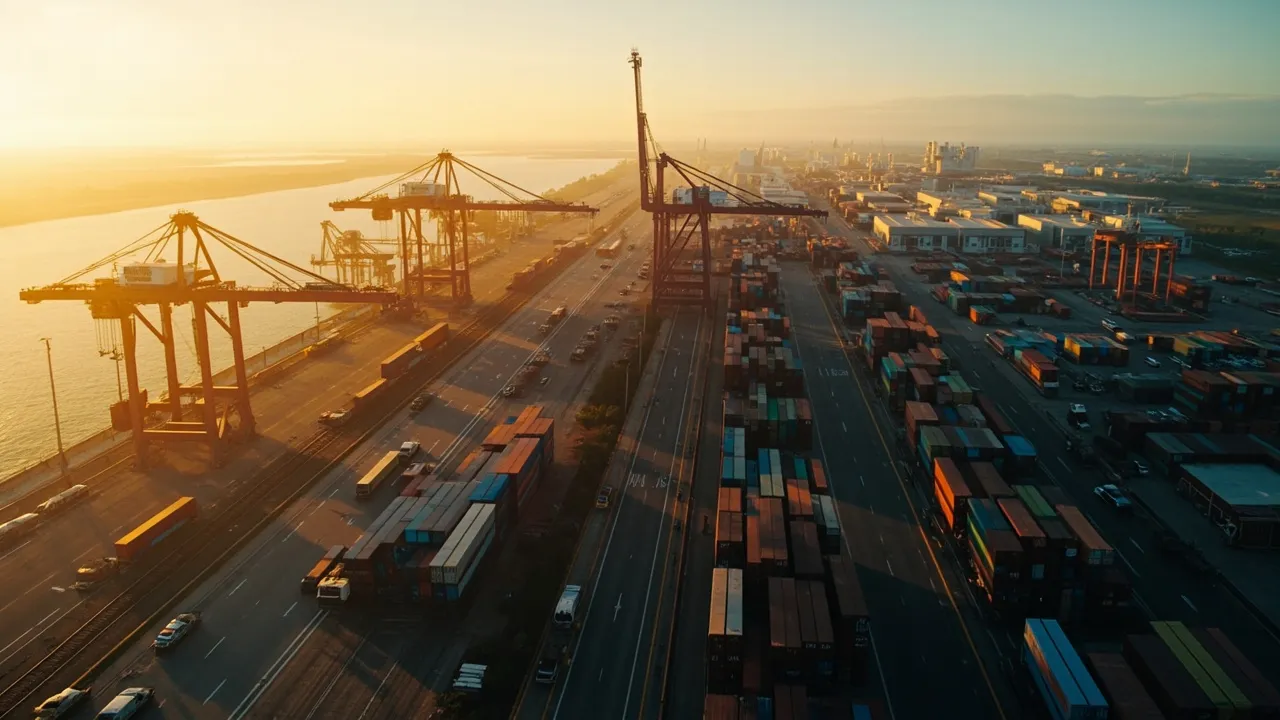
Record LA and Long Beach Volumes Make Drayage Appointments the Control Point

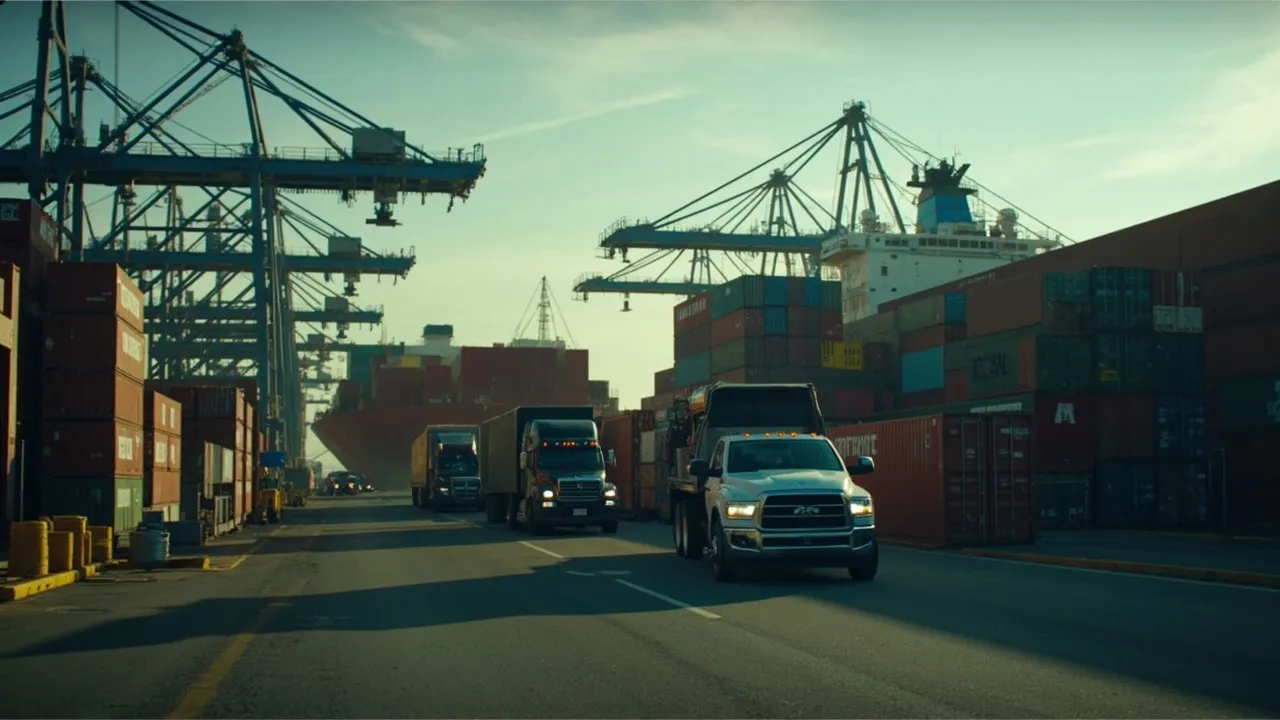
The San Pedro Bay port complex just sent shippers a clear signal: ocean freight can surge before inland logistics is ready for it.
Logistics Management reported that the Port of Los Angeles handled 1,002,734 TEUs in June, up 12% year over year, making it the busiest June in the port's history. The Port of Long Beach handled 779,331 TEUs, up 10.6%, for its third-highest June reading.
Those are healthy gateway numbers. They are also a warning. Strong port throughput does not automatically turn into clean inland flow. The control point is what happens after the box is discharged: terminal status, appointment availability, chassis access, free-time deadlines, dray carrier confirmation, warehouse receiving capacity, and the ability to change plans before demurrage starts.
When a million-TEU month lands in Southern California, the shipper with the best ocean booking is not necessarily the shipper with the best outcome. The winner is the one with a port-flow record current enough to turn arrivals into executable inland moves.
Record Volume Is Not The Same As Fluidity
The June data is impressive because both ports grew while importers were navigating trade policy uncertainty, fuel costs, and frontloaded inventory decisions. Logistics Management noted that Los Angeles imports reached 530,538 TEUs, up 13% annually, while empty containers rose 17% to 345,811 TEUs. Long Beach imports reached 387,025 TEUs, up 11%, while empties climbed 14.1% to 305,860 TEUs.
Year to date, Los Angeles moved 5,122,603 TEUs, up 3% annually, while Long Beach moved 4,829,578 TEUs, up 1.7% and ahead of its record 2025 pace.
That velocity pressures every downstream handoff. A vessel arrival spike can look positive in executive reporting and still create daily execution problems if importers do not have appointment slots, chassis, receiving docks, and carrier capacity locked together.
The port can move the container off the ship. The logistics team still has to move it off the terminal.
Pull-Forward Shipping Breaks Old Calendars
The June surge was not only seasonal. Supply Chain Dive reported that retailers and manufacturers are stepping away from traditional ocean shipping patterns and moving cargo when windows open. Port of Los Angeles Executive Director Gene Seroka described companies balancing back-to-school and holiday demand against tariffs, fuel costs, and global uncertainty.
That changes the planning problem. If cargo no longer follows a familiar peak-season curve, drayage teams need a live view of which containers are early, which are tied to urgent retail programs, which can sit, and which will trigger cost or service failure if pulled late.
Supply Chain Dive also noted that July cargo at Los Angeles was forecast to remain above 900,000 container units, while the outlook beyond July was harder to read because companies were adapting in real time. The inland network is not infinitely elastic. Truckers, chassis pools, transload operators, and distribution centers all make commitments before the container becomes available.
When demand is pulled forward, every weak handoff becomes more expensive. A missed appointment can roll into another day of terminal dwell. A late chassis decision or unconfirmed receiving window can strand a container even after a trucker has capacity.
The Appointment Slot Is The Operating Truth
Drayage appointments are often treated as administrative details. In a high-volume gateway, they are the operating truth.
A container that is "available" but has no appointment is not truly executable. A confirmed appointment without a chassis is fragile. A trucker confirmation without a warehouse receiving window moves the problem from the terminal to the dock. A pickup plan without the free-time deadline visible can quietly turn into demurrage exposure.
SupplyChainBrain wrote that the San Pedro Bay complex accounts for roughly 31% of containerized shipments entering the U.S. and that port-to-door execution requires tight coordination across vessel discharge, terminal handling, customs clearance, drayage, and inland rail or truck transportation. It also called out congestion, customs delays, detention and demurrage, and capacity constraints as persistent challenges.
That is why the drayage appointment has become the hinge point. It translates a broad port-volume statistic into a specific operating commitment: this container, at this terminal, in this time slot, with this trucker, this chassis plan, this receiving dock, and this cost deadline.
Without that record, teams manage by fragments: ETA changes, terminal portals, ASN assumptions, and detention charges that finance sees after the fact.
Build The Port-Flow Record
The first field in the port-flow record is vessel ETA, but ETA alone is not enough. Teams need the vessel, voyage, terminal, discharge status, customs state, hold status, and last-free-day calculation in one place.
Terminal matters because appointment rules and availability differ by facility. Treating Los Angeles and Long Beach as one generic gateway hides the constraint.
Container status should show more than "arrived." It should distinguish discharged, available, customs-held, exam-held, line-released, freight-released, appointment-ready, picked up, returned, and closed.
The appointment slot is the next anchor. It should include date, time, terminal, cutoff, reservation owner, confirmation source, and backup slot if one exists.
Chassis pool status belongs beside the appointment. For merchant haulage, chassis access can decide whether an available container can actually leave.
Receiving dock details complete the inland leg. A warehouse needs dock hours, appointment rules, unload capacity, labor plan, yard space, transload need, and exception contact.
Free-time deadline and demurrage exposure should be visible to operations, not buried in finance review.
Dray carrier confirmation closes the record. The plan should show carrier, dispatch contact, equipment requirement, appointment acceptance, backup carrier, and escalation owner.
Turn Gateway Surges Into Executable Moves
The June numbers at Los Angeles and Long Beach show that volume can arrive in concentrated waves even when the broader market feels uncertain. Importers are pulling freight forward to reduce tariff and supply risk, but the inland network still has to execute one container at a time.
For logistics teams, the practical answer is not more status meetings. It is a shared port-flow record that ties vessel ETA, terminal, container status, appointment slot, chassis pool, receiving dock, free-time deadline, and dray carrier confirmation to the same shipment.
CXTMS helps freight forwarders and logistics teams manage ocean arrivals, inland moves, carrier handoffs, customer commitments, documents, and exceptions in one workflow. When ports hit record volume, that connected record helps teams turn arrival spikes into dispatched moves instead of unmanaged terminal queues.
If your import operation still depends on terminal screenshots, drayage emails, and warehouse spreadsheets, request a CXTMS demo. CXTMS helps teams make drayage appointments the control point for port flow, not the afterthought that decides cost after the container is already stuck.