Warehouse Modernization Fails When Process Debt Survives the Automation Budget

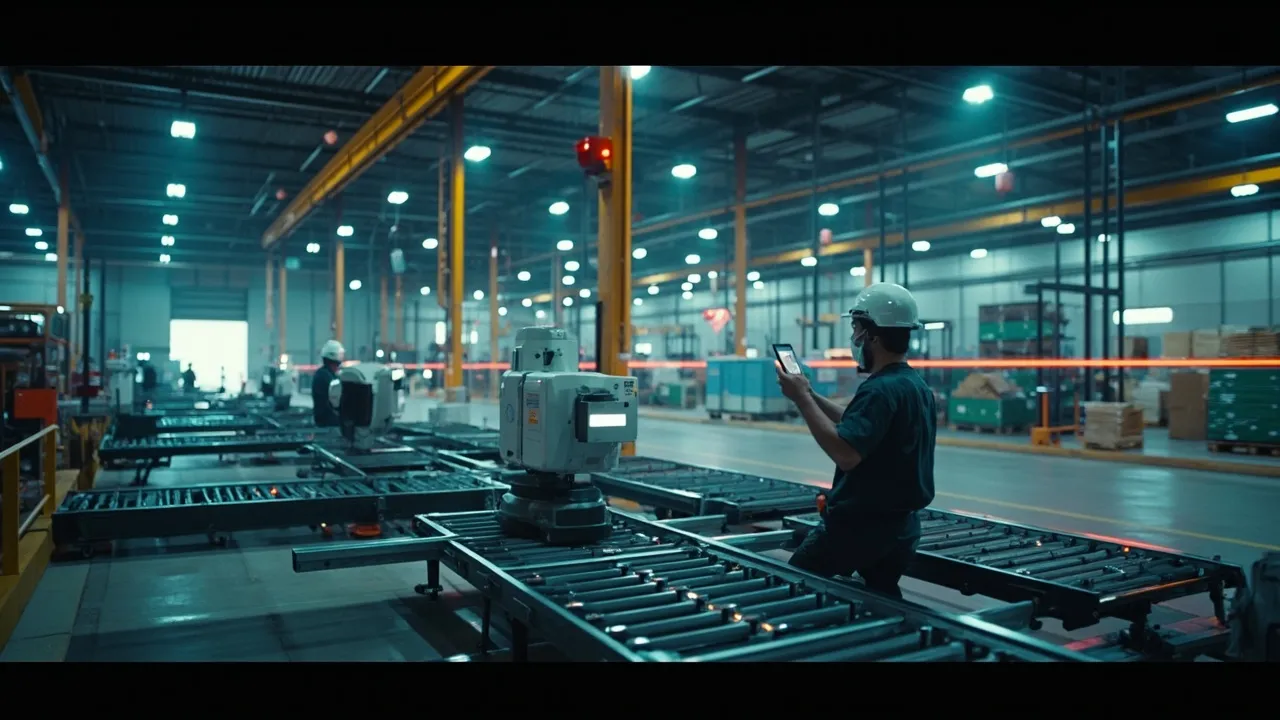
Warehouse modernization usually looks impressive from the outside: robots moving through aisles, conveyors feeding pack stations, tablets replacing clipboards, and AI assistants answering operational questions. The hard part is less cinematic. Most modernization programs fail quietly because the old process debt survives underneath the new equipment.
Process debt is the accumulation of manual workarounds, undocumented rules, inconsistent priorities, and tribal knowledge that let a facility function yesterday but make it harder to scale tomorrow. It lives in the picker who knows which aisle is always wrong, the supervisor who manually reorders dock appointments every afternoon, the customer order that must be packed “the special way,” and the carrier cutoff that only one planner remembers.
Automation does not erase that debt. It exposes it.
That is the useful warning inside Inbound Logistics’ recent look at the next-generation warehouse. The article describes warehouse operators dealing with volatility, tight labor, turnover, tariff uncertainty, and faster ecommerce expectations. It also shows the upside of modernization when process and technology move together: Dermalogica’s autonomous inventory drones increased warehouse imaging frequency by 600% and saved roughly 120 labor hours per month, while West Liberty Foods and Lineage spent two months training, testing, and debugging an automated production-to-cold-storage flow before making a sandwich.
The lesson is blunt: the automation budget buys capability. Process cleanup determines whether that capability becomes operational performance.
Robotics adoption is no longer experimental
Warehouse leaders are not waiting on the sidelines. Modern Materials Handling’s 2026 Intralogistics Robotics Survey found that 52% of respondents currently use one or more types of robots, up from 48% the prior year. Another 32% plan to deploy robotics within three years, while the share with no robotics plans dropped to just 3%.
The same survey shows why modernization pressure is rising. Respondents named limited physical space as their top supply chain challenge, followed by high and rising labor costs. Beyond robotics, 58% said they use or are considering other intralogistics automation such as conveyors, sortation, AS/RS, or shuttle systems, up from 46% last year.
Those numbers move the warehouse conversation from “Should we automate?” to “Can we automate without preserving bad operating logic?”
The answer is often no. If a facility has unclear slotting rules, inconsistent replenishment triggers, chaotic dock priorities, or undocumented exception handling, robotics will execute those flaws faster. A goods-to-person system can improve picking speed, but it cannot decide which customer promises deserve priority if the order rules are inconsistent. A drone can improve cycle counting, but it cannot fix receiving discipline if pallets arrive without clean location, lot, or status data. A warehouse execution system can sequence work, but it cannot optimize around carrier appointments nobody keeps current.
Process debt becomes freight failure
Warehouse process debt rarely stays inside the four walls. It leaks into transportation.
A late replenishment task becomes a missed parcel pickup. A packing exception becomes an LTL reclassification dispute. A dock door conflict becomes detention. A bad inventory location becomes an expedited truckload. A will-call rush order steals labor from outbound staging and causes a missed cutoff for higher-margin freight.
This is why warehouse modernization should not be managed as a warehouse-only project. Transportation feels the failure when automation exposes process gaps. Customer service feels it when ETAs become unreliable. Finance feels it when premium freight, detention, accessorials, and chargebacks turn a theoretically efficient facility into a margin drain.
The survey offers another clue. Companies are targeting robots for order or case picking at 57%, heavy payload forked or tugger transport at 32%, sortation at 31%, and collaborative in-aisle picking at 30%. These are not isolated tasks. Each one touches shipment readiness, load building, dock timing, and carrier performance.
That means the process questions should come before the purchase order. Which orders can never miss cutoff? Which customers require special labeling or appointment coordination? Which SKUs are most likely to create split shipments? Which inbound loads require immediate cross-dock decisions? Which exception codes trigger transportation recovery, not just warehouse cleanup?
If those rules are not explicit, automation inherits ambiguity.
The hidden test: can the system explain the exception?
A modern warehouse does not need zero exceptions. That is fantasy. It needs explainable exceptions.
When a robotic picking flow stalls, operators should know whether the problem is inventory accuracy, replenishment, labor availability, cartonization, customer priority, equipment availability, or transportation timing. When outbound staging fills up, the system should identify whether the constraint is dock scheduling, carrier late arrival, incomplete loads, labeling problems, or appointment recovery.
This is where AI can help, but only if the underlying process data is clean. Gartner’s 2026 Supply Chain Symposium/Xpo Barcelona highlights emphasized AI in supply chain, autonomous supply chain architecture, and emerging logistics and warehousing technologies. Those capabilities sound powerful, but they depend on the same boring foundation: standard events, accurate statuses, governed workflows, and clear owners.
An AI assistant trained on messy process debt will produce confident noise. A warehouse execution system fed by inconsistent priorities will optimize locally and disappoint globally. A robot fleet deployed into unclear exception logic will improve individual task speed without improving customer delivery performance.
Clean the process before scaling the tech
The practical move is not to slow modernization. Warehouses are under too much pressure for that. The move is to pair every automation initiative with a process-debt cleanup plan.
Start with the workarounds. Interview supervisors, planners, receiving leads, dock coordinators, and customer service teams. Ask which tasks require human memory to execute correctly. Ask which orders get manually rescued. Ask which carrier, customer, SKU, or shift creates the most avoidable exceptions.
Then standardize the rules that connect warehouse work to freight execution. Slotting decisions should account for outbound velocity and carrier cutoff risk. Replenishment priorities should reflect customer promise dates, not just bin availability. Dock scheduling should connect to load readiness, detention exposure, and appointment recovery. Exception codes should distinguish between warehouse-only fixes and transportation-impacting failures.
Finally, measure modernization by flow outcomes, not equipment utilization alone. Robot uptime matters. So do missed cutoffs, dwell time, detention, short shipments, load plan changes, expedite spend, appointment reschedules, and customer ETA accuracy.
Where CXTMS fits
CXTMS sits at the point where warehouse exceptions become freight consequences. A transportation management system should not wait until a load misses pickup to discover that the warehouse was behind. It should surface shipment readiness, appointment risk, carrier cutoff pressure, and exception patterns early enough for teams to recover.
That matters because the next-generation warehouse is not just a more automated building. It is a tighter promise engine. Orders, inventory, labor, docks, carriers, and customers all have to move in sequence. When process debt breaks that sequence, the transportation layer needs to expose the failure and coordinate the response.
For shippers, 3PLs, and freight forwarders, the best modernization strategy is not “buy robots and hope.” It is: clean the process, connect warehouse events to transportation decisions, and scale automation only where the operating rules are clear.
CXTMS helps logistics teams make that connection. If your warehouse modernization plan needs better visibility into shipment readiness, carrier execution, exception recovery, and customer delivery promises, schedule a CXTMS demo and see how transportation workflows can turn process cleanup into measurable service gains.