Blockchain Logistics Only Works When It Proves Exceptions, Not Just Documents

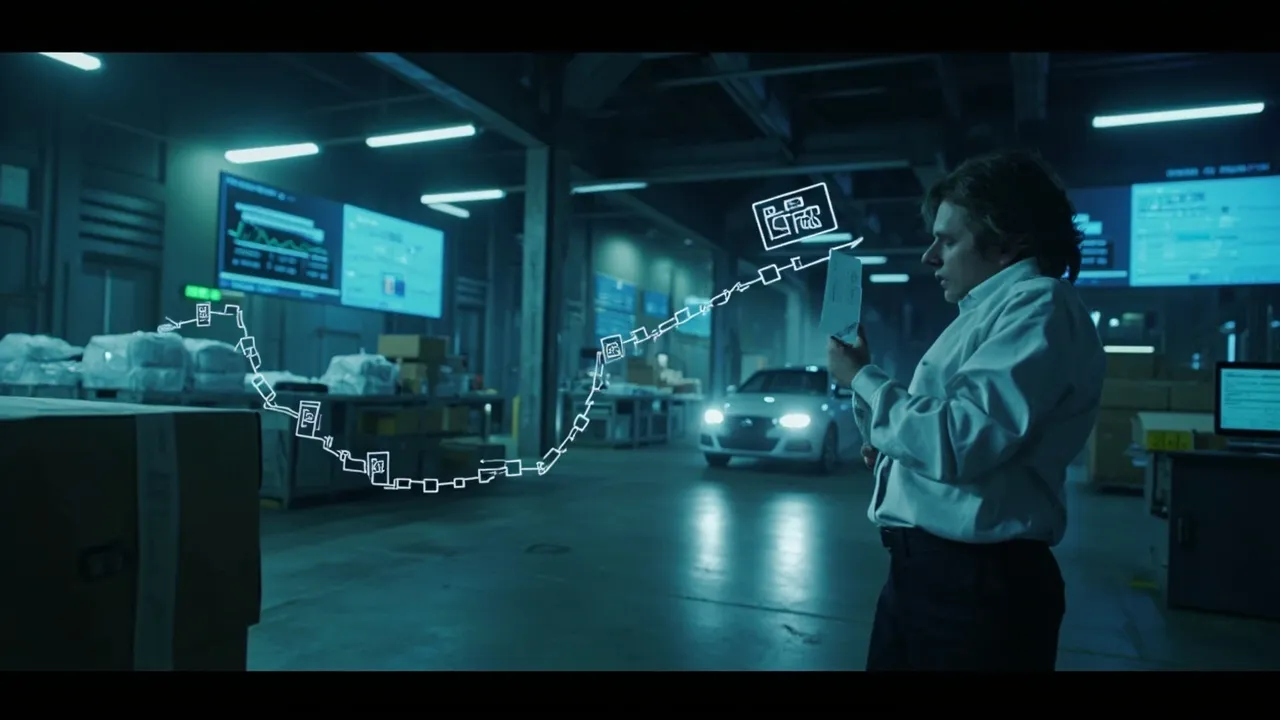
Blockchain logistics has spent years trapped between two bad sales pitches. One says distributed ledgers will magically solve supply chain trust. The other reduces blockchain to a tamper-resistant filing cabinet for bills of lading, certificates, invoices, and customs paperwork.
Neither helps freight operators.
The better question is narrower: can a shared, verifiable record prove what happened when freight did not move according to plan? That is where blockchain has practical potential: not as a replacement for transportation management systems, warehouse systems, carrier portals, or visibility platforms, but as an evidence layer for expensive exceptions.
A clean delivery rarely needs a blockchain story. A temperature breach, disputed handoff, suspicious pickup, customs-document conflict, route deviation, or rejected claim might.
The market is interested, but the use case has to get sharper
Inbound Logistics has reported that the blockchain technology market in transportation and logistics was estimated to increase by $2.23 billion from 2022 to 2027, growing at a 39.78% compound annual growth rate. That growth expectation explains why the topic keeps returning to logistics strategy meetings.
But growth estimates do not make a system operationally useful. Freight teams do not need another abstract trust layer. They need proof that survives the messy reality of handoffs, revised appointments, substitute drivers, customs amendments, sensor gaps, claims reviews, and customer escalation.
That distinction matters because most logistics disputes are not about whether a document exists. They are about whether the document matches the physical event. Was the correct carrier at the dock? Was the seal intact when custody changed? Which invoice version was active at clearance? Did the reefer breach happen before pickup, during linehaul, or after delivery refusal?
A repository can store files. Exception proof must connect documents to operational events.
Where distributed records can actually help
The strongest blockchain use cases are the ones where multiple parties need confidence in a shared event sequence and none fully controls the others' systems.
Handoff confirmation. Freight changes custody across shippers, warehouses, carriers, drayage providers, terminals, brokers, customs brokers, and receivers. A verifiable handoff record can preserve who released the load, who accepted it, when the transfer occurred, what equipment was present, and whether seals, photos, signatures, or geofence checks supported the event.
Temperature breach history. Cold chain disputes often become arguments over timing. A blockchain-backed exception record is not valuable because it says "temperature data exists." It is valuable if it anchors sensor readings, device identity, location, custody status, and acknowledgment history to a shipment timeline that cannot be quietly rewritten after a claim appears.
Identity validation. Fraud has made identity a freight execution problem. Inbound Logistics reported that U.S. cargo theft incidents fell 25% from Q4 2025 to Q1 2026, but deceptive pickup schemes involving forged credentials and fake identities jumped 31% year over year. The same article noted an average of 6.4 reported theft incidents per day in Q1 2026, with electronics representing 17% of thefts and auto parts rising 142% from the previous quarter.
Those numbers are exactly why blockchain logistics should focus less on generic paperwork and more on verified release events. A dock record that connects carrier authority, driver validation, appointment data, equipment ID, license plate, photo confirmation, and release approval beats a static PDF uploaded after the fact.
Customs document versioning. International freight depends on commercial invoices, packing lists, certificates of origin, dangerous goods documents, entry filings, and broker instructions staying aligned. When versions change, the audit trail matters. A distributed record can help prove which document was current at each decision point, who changed it, and whether downstream parties acknowledged the update.
Dispute evidence. Claims and accessorial disputes are expensive because evidence is scattered. The proof may live in emails, dock photos, carrier portals, temperature platforms, ELD records, customer notes, and invoice attachments. A verifiable exception record can reduce the scavenger hunt by pointing everyone to the same event history.
Blockchain fails when the operational data is dirty
The hard truth: blockchain cannot rescue bad freight execution data. If the shipment record has the wrong carrier, the wrong appointment, missing milestone timestamps, vague exception codes, or documents detached from events, an immutable ledger only preserves confusion more permanently.
Logistics Management recently framed the broader risk-management shift well: supply chain teams are moving from alerts to action because disruptions are constant and companies must respond before they fully understand the impact. The same report cited Marsh research estimating that global supply chain disruptions cost businesses $184 billion annually, while 65% of companies face at least one supply chain bottleneck at any given time.
That environment punishes weak data discipline. Exception records have to be created as work happens—not reconstructed days later for a claim packet.
Inbound Logistics' 2026 supply chain technology coverage made a similar point from the execution side: visibility is evolving into actionable intelligence, and AI is becoming a system of action rather than a standalone feature. The article cited examples such as logistics cost reductions of up to 15% from orchestration and automation of up to 80% of freight decisions in advanced freight systems.
Those gains depend on clean operational inputs. The ledger is downstream of the workflow.
The TMS should remain the source of truth
For most shippers, brokers, and forwarders, the transportation management system should remain the operational source of truth. It is where loads are planned, tenders are issued, appointments are managed, carriers are assigned, milestones are captured, documents are attached, exceptions are routed, and invoices are reconciled.
Blockchain can support that environment, but it should not pretend to be the system of record for everything. The practical architecture is simpler: the TMS captures shipment reality; a verifiable record preserves selected high-value events when trust, compliance, or dispute resolution requires extra evidence.
That means teams should be selective. Not every status update belongs on a distributed ledger. The best candidates are events with high dispute value: shipment release, custody transfer, temperature breach, customs-document revision, seal exception, identity validation, delivery refusal, and claims-critical photo evidence.
The operating rule is blunt: if the event would matter in court, customs, insurance, or customer escalation, it may deserve stronger proof.
How CXTMS fits
CXTMS gives logistics teams the execution discipline blockchain projects need before they can be useful. Shipment references, carrier records, appointment history, documents, milestones, exceptions, customer updates, and audit trails belong in one operational layer. Without that foundation, a blockchain initiative becomes another disconnected technology experiment.
With CXTMS, teams can structure the events that matter: who touched the shipment, what changed, when the exception occurred, which documents were active, and how the resolution was handled. That clean operational history can feed verifiable exception records when customers, insurers, regulators, or trading partners need proof.
Blockchain logistics should not be about hype. It should be about evidence.
Ready to make freight exceptions easier to prove and resolve? Request a CXTMS demo and see how shipment execution, documentation, and audit history can work from the same trusted record.