Schnucks Is Exiting Its Only Company-Owned Warehouse—How to Govern the 3PL Handoff

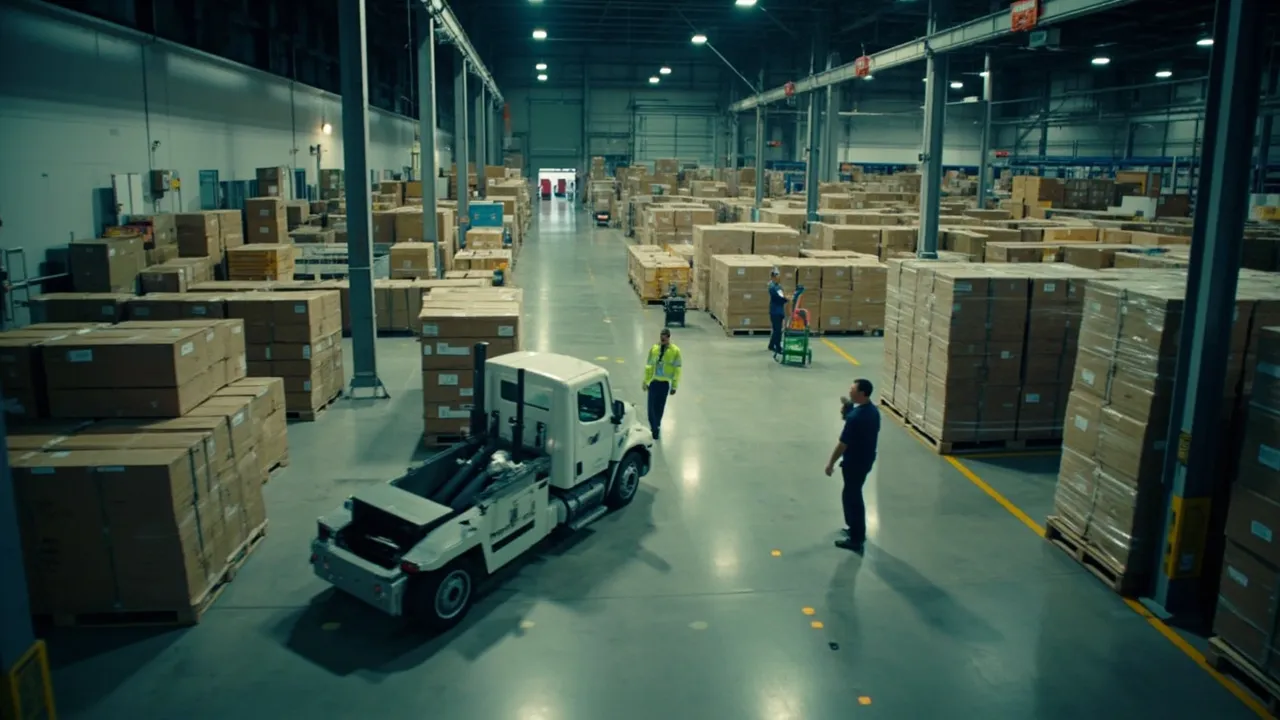
Schnuck Markets plans to close its only company-operated warehouse in 2027. The physical move may involve only a small share of the grocer’s assortment, but its operational significance is larger: the company is transferring routines, exceptions, and store-service knowledge that have developed inside its own four walls.
That makes this more than a warehouse closure. It is a controlled handoff of operating responsibility. The transition succeeds only if the receiving logistics network can reproduce the service outcomes—not merely absorb the pallets.
Treat eight months as a sequence of control gates
Supply Chain Dive reports that the Bridgeton, Missouri, distribution center will close on March 28, 2027. The phased wind-down will continue over eight months, and 64 union and non-union warehouse roles will be eliminated. Schnucks says the site handles general storage and only a small portion of its product assortment, and that the closure will not affect product availability or store operations.
Those commitments establish the transition’s acceptance criteria. Inventory must remain available, stores must receive the service they expect, and the operation must be stable before the old facility disappears as a fallback.
The eight-month runway should therefore be divided into gates:
- Discovery: document the current flow, decision rules, data, and exceptions.
- Design: map every process and control to an owner in the future network.
- Pilot: move a limited set of stable SKUs and stores under close observation.
- Parallel run: operate old and new flows together long enough to expose failures.
- Cutover: transfer remaining inventory only after service and accuracy thresholds hold.
- Stabilization: maintain heightened staffing, reporting, and escalation after closure.
A date alone cannot authorize progress. Each gate needs evidence that the next increase in scope is safe.
Transfer the logic, not just the inventory
The most valuable warehouse knowledge often is not in a standard operating procedure. It lives in slotting choices, labor plans, store priorities, substitution habits, and the judgment experienced employees use when the plan breaks.
Before people leave, the transition team should capture at least four knowledge sets:
- Slotting and handling logic: velocity, case dimensions, temperature requirements, damage risks, lot controls, and items that should not share a location.
- Labor standards: expected rates by activity, realistic travel time, peak staffing requirements, and tasks that require specialized training.
- Exception playbooks: responses to shorts, damages, late inbound loads, inventory discrepancies, system outages, and urgent store requests.
- Store-service rules: delivery windows, promotional priorities, new-store needs, critical items, and who may override normal allocation.
Shadowing is more reliable than document collection alone. The future operator’s supervisors should observe complete operating cycles, then perform the work while current employees validate it. Every undocumented workaround should become either an approved process or a defect to remove before cutover.
Reconcile inventory at three levels
Inventory errors are especially dangerous during a transfer because both operators can appear correct inside their own systems while the combined network is wrong. Reconciliation must cover physical quantity, inventory status, and financial ownership.
At the item-location level, teams should compare warehouse management system balances with physical counts. At the status level, they must distinguish available, allocated, held, damaged, expired, and in-transit stock. At the transaction level, they should match every shipment from the legacy site to a receipt at the receiving site, with a defined time limit for resolving unmatched records.
Cycle counts should intensify before each SKU wave moves. During parallel operations, a daily control-tower report should show opening balance, receipts, shipments, adjustments, transfers, and closing balance across both facilities. High-value, high-velocity, regulated, and promotion-sensitive products deserve tighter tolerances than slow-moving general storage.
The final transfer should not become a single large inventory event. Smaller waves create time to diagnose mapping errors, labeling problems, unit-of-measure mismatches, and damaged stock without jeopardizing the whole assortment.
Make the parallel run prove store service
The pilot should begin with products that have predictable demand and uncomplicated handling, but it should not remain artificially easy. Later waves must test weekend volume, promotions, inbound delays, short-dated inventory, and urgent replenishment.
Orders routed through the future network should be measured against comparable orders from the current site. Required controls include:
- Order fill rate and lines shipped complete
- On-time dispatch and store delivery
- Inventory and picking accuracy
- Damage, spoilage, and claims
- Inbound receiving cycle time
- Exception age and repeat incidents
- Cost per case and premium freight
The old warehouse should remain able to recover service until the future operator demonstrates stable performance across several complete replenishment cycles. A rollback plan must name the decision-maker, inventory routing method, carrier capacity, and system steps required to return volume safely.
Use a service-led 3PL scorecard
Outsourcing can widen access to capabilities, but availability does not guarantee execution. The 2026 Inbound Logistics 3PL survey found that 67% of responding providers offer distribution center management, 72% offer WMS or warehouse execution capabilities, and 83% offer visibility technology. Yet shippers still place service above price: 78% said service is more important when evaluating 3PL performance. Poor customer service was the leading reason for failed partnerships at 33%, followed by failed expectations at 29%.
That evidence argues against governing the handoff through cost per case alone. A balanced scorecard should weight:
- Store service, 35%: fill rate, on-time delivery, complete promotional orders
- Inventory control, 25%: accuracy, shrink, aging, lot and status integrity
- Execution quality, 20%: pick accuracy, damage, dock cycle time, exception closure
- Resilience, 10%: recovery tests, backup labor, carrier and system contingencies
- Cost, 10%: handling cost, storage cost, accessorials, and premium freight
Targets should include escalation thresholds and remedies, not just monthly averages. A strong average can hide repeated failures at a small group of stores or on critical SKUs. CXTMS can support the transition by connecting inventory movements, transportation milestones, exceptions, and store commitments in one operational view.
The Bridgeton closure is scheduled, but the real finish line is stable service after the building is gone. Request a CXTMS demo to see how coordinated transportation data, exception workflows, and performance reporting can help govern a warehouse-network transition.