USMCA 2026 Review: How Trade Renegotiations Will Reshape North American Logistics Networks

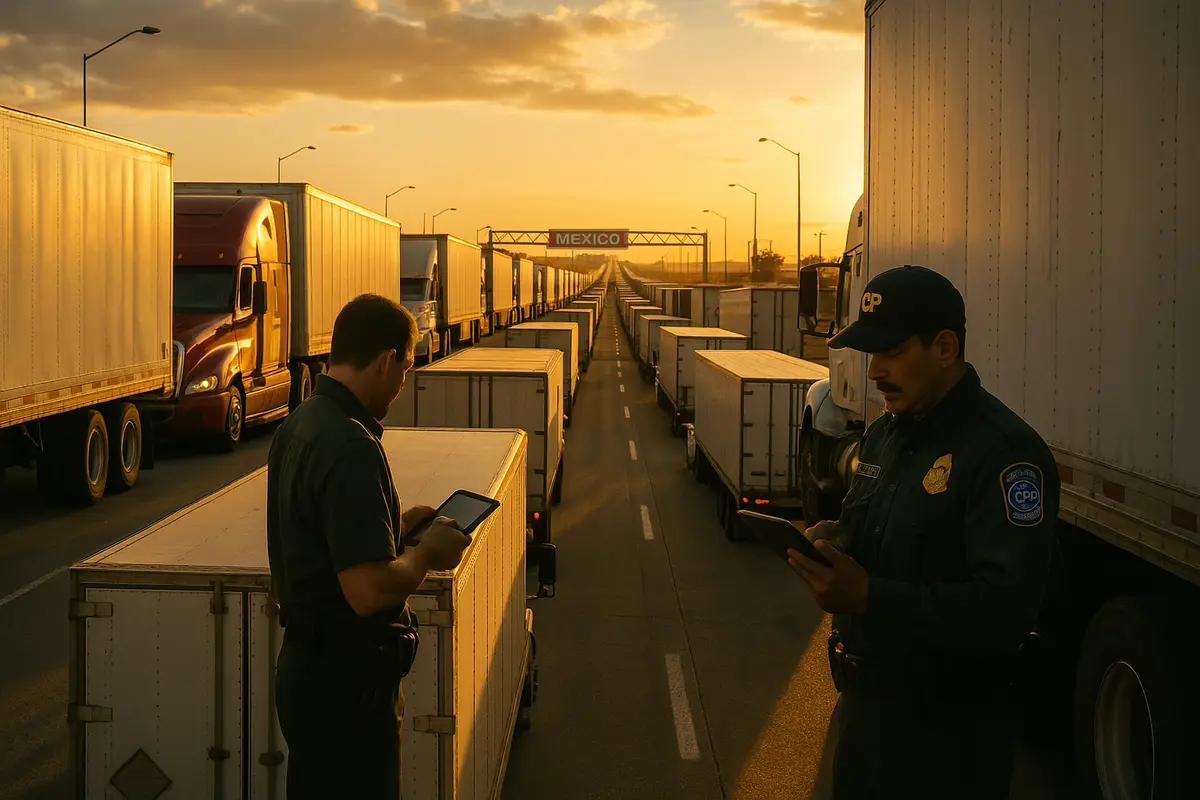
The United States–Mexico–Canada Agreement enters its first mandatory six-year review in July 2026, and what was expected to be a routine assessment has become a high-stakes renegotiation that will define North American logistics for the next decade. With Mexico attracting $40.9 billion in foreign direct investment in the first three quarters of 2025 alone—a 14.5% year-over-year increase—the stakes for supply chain leaders have never been higher.
Three Paths Forward: Extension, Annual Reviews, or Termination
The USMCA's built-in review mechanism presents three formal routes that will directly shape logistics planning across the continent.
Automatic extension is the best-case scenario for supply chain stability. If all three parties reach consensus, the agreement extends until 2042, providing 16 years of regulatory predictability. For logistics operators, this means continued preferential tariff access, stable rules of origin, and the confidence to invest in long-term cross-border infrastructure.
Annual reviews represent the middle ground—and the most likely outcome according to trade analysts. The agreement would remain in force but enter a cycle of yearly assessments. While preferential access continues, the regulatory volatility introduces planning challenges for companies making multi-year investments in warehouse capacity, fleet expansion, and technology platforms. Without subsequent agreement, the USMCA would expire in 2036.
Termination, though least likely, would return regional trade to World Trade Organization tariff schedules. The impact on logistics would be immediate and severe: higher transportation costs, loss of preferential treatment, and a fundamental restructuring of supply chain networks that have been optimized for NAFTA and USMCA frameworks over three decades.
Mexico's Industrial Transformation Is Already Underway
The numbers tell a compelling story. Mexican exports reached $664 billion in 2025, growing 7.6% year-over-year—outpacing the 6% global trade expansion estimated by UNCTAD. New investments surged by 218.6%, signaling that companies aren't waiting for the review to make strategic moves.
The transportation equipment sector has been the primary beneficiary, accounting for roughly 41% of total manufacturing FDI—a substantial increase from 2022 levels. This concentration reflects the automotive industry's aggressive nearshoring strategy, with manufacturers repositioning production closer to North American end markets to mitigate geopolitical risks and tariff exposure from China.
The semiconductor industry adds another dimension. With Intel and TSMC building major fabrication facilities in Phoenix, Arizona—just 225 miles from the Mexican border—the potential for integrated semiconductor supply chains spanning the U.S.-Mexico corridor is creating entirely new logistics requirements for high-value, time-sensitive freight.
What the Review Means for Cross-Border Logistics Operations
For logistics operators and shippers, the USMCA review creates both immediate planning challenges and long-term strategic opportunities.
Rules of origin adjustments are almost certain, particularly for automotive and manufacturing sectors. Current USMCA requirements mandate that 75% of an automobile's components must be manufactured in North America for duty-free treatment. Any changes to these thresholds will ripple through supplier networks and force rerouting of component logistics flows.
Customs technology requirements will likely increase regardless of the review outcome. All three countries are pushing toward greater digitization of cross-border processes. Companies that have invested in automated customs documentation, real-time shipment tracking, and electronic certificates of origin will be better positioned to handle whatever regulatory changes emerge.
Cross-border capacity planning becomes critical. The Laredo, Texas corridor alone handles over $300 billion in annual bilateral trade. As nearshoring accelerates, border crossing infrastructure is already strained. Logistics operators need visibility into alternative crossing points, intermodal options, and capacity allocation strategies that can flex with regulatory changes.
The Nearshoring Acceleration Creates New Logistics Demands
Mexico's emergence as a nearshoring powerhouse is generating demand for logistics capabilities that didn't exist five years ago. Companies relocating manufacturing from Asia need sophisticated inbound logistics for raw materials and components, outbound networks optimized for North American distribution, and reverse logistics capabilities for returns and warranty management.
The industrial real estate market reflects this shift. Vacancy rates in key manufacturing corridors like Monterrey, Guadalajara, and Querétaro have dropped to historic lows, driving demand for new warehouse and distribution center construction—along with the transportation networks to serve them.
For shippers managing cross-border operations, the complexity multiplies. They need to track compliance across three regulatory regimes, manage currency fluctuations, coordinate with customs brokers in multiple countries, and maintain visibility across supply chains that may span all three USMCA nations.
Preparing Your Logistics Network for Any Outcome
Smart supply chain leaders aren't betting on a single review outcome. They're building flexibility into their networks now:
Diversify border crossing strategies. Don't concentrate all cross-border volume through a single port of entry. Map alternative routes and build relationships with customs brokers at multiple crossings.
Invest in trade compliance technology. Automated origin determination, duty calculation, and documentation generation will be essential regardless of how the review plays out. Manual processes won't scale with the complexity ahead.
Build scenario-based capacity plans. Model your logistics network under each of the three USMCA outcomes. Identify which routes, carriers, and warehouse locations are resilient across all scenarios versus those that only work under extension.
Strengthen visibility across borders. Real-time tracking, predictive ETA management, and automated exception handling become critical when regulatory uncertainty increases transit time variability.
The Technology Foundation for Trade Resilience
The USMCA review underscores a fundamental truth: trade policy is inherently unpredictable, but logistics execution doesn't have to be. Organizations that invest in flexible, technology-driven supply chain management can adapt to regulatory changes faster than competitors still relying on spreadsheets and manual processes.
Modern TMS platforms provide the cross-border visibility, compliance automation, and scenario planning capabilities that turn trade uncertainty into competitive advantage. When regulations change, the companies that can reconfigure their logistics networks in days rather than months will capture market share.
Navigating USMCA uncertainty? Contact CXTMS for a demo of our cross-border logistics management capabilities.