UPS’s Cargo Jet Warning Shows Air Freight Risk Management Starts Before the Flight

Air freight risk does not begin when a shipment misses a flight. It begins much earlier, in the quiet operational signals that determine whether capacity is safe, available, documented, and replaceable.
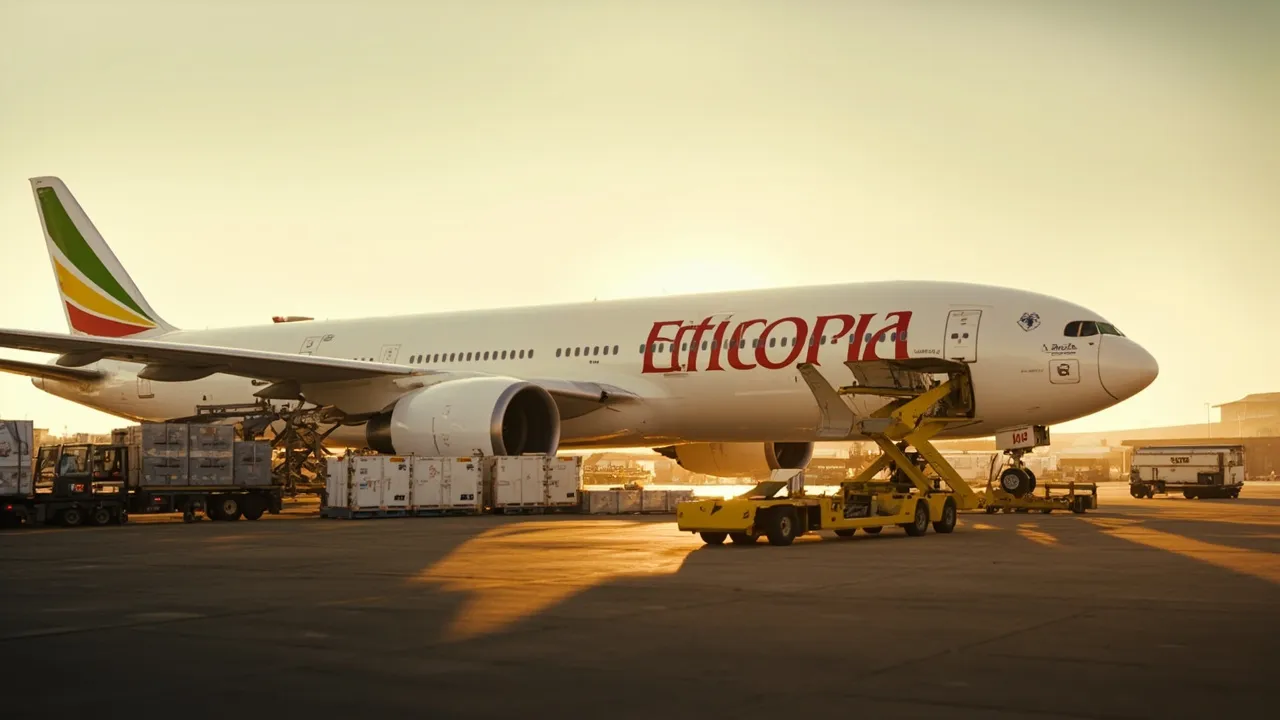
That is the hard lesson from the latest National Transportation Safety Board hearing on the UPS MD-11F crash in Louisville. According to SupplyChainBrain, a U.S. safety investigator said UPS reviewed Boeing service letters from 2008 and 2011 about cracking in a spherical bearing tied to the MD-11F engine mount and determined no further action was required. Mechanics interviewed by investigators said they were not aware of the 2011 Boeing service letter.
The aircraft involved in the November 2025 crash lost its left engine during takeoff from Louisville Muhammad Ali International Airport. The accident killed 15 people on the aircraft and on the ground. Investigators later found fatigue cracks in a structural component that helped secure the turbine to the aircraft. After the crash, the FAA grounded all MD-11 and MD-11F cargo aircraft until inspections and repairs were completed under Boeing-approved safety protocols. UPS has since retired its MD-11 fleet, while FedEx began flying the aircraft again after receiving FAA clearance.
For shippers and forwarders, the point is not to become aircraft maintenance engineers. The point is to understand that air cargo continuity depends on a larger risk system than booking confirmation, transit time, and price.
Air freight risk hides upstream
Air cargo is often treated as the premium escape valve of logistics. When ocean service is too slow, inventory is late, production is at risk, or a customer escalation gets loud enough, freight moves by air.
That instinct makes sense. Air freight is fast, global, and essential for high-value goods, medical products, electronics, automotive parts, and urgent replenishment. Mordor Intelligence estimates the air freight market at $169.53 billion in 2026, growing to $225.26 billion by 2031 at a 5.85% CAGR. The same forecast says international service controlled 83.50% of 2025 volume, while Asia-Pacific held 40.70% of the market.
But premium mode does not mean low risk. It means different risk. A single aircraft grounding, maintenance issue, runway disruption, security event, labor constraint, or capacity withdrawal can hit a shipment with very little time to recover.
That is why the UPS case matters beyond aviation safety. It shows how a technical advisory, a maintenance communication gap, and a fleet-level operating decision can become a logistics continuity problem.
Capacity risk is also pricing risk
The market is already reminding shippers how quickly air cargo conditions can move.
Supply Chain Dive reported that global air cargo spot rates rose 30% year over year in April to $3.34 per kilogram, the highest level since October 2022. Southeast Asia-to-North America spot rates increased 33% year over year to $6.46 per kilogram, while Northeast Asia-to-North America reached $5.54 per kilogram for the week ending April 26. Global air cargo volumes were up only 2% year over year, but the dynamic load factor reached 62%, up three percentage points.
That combination matters. If rates can spike when volume growth is modest, capacity availability and supply-side constraints deserve much more attention than many procurement models give them.
A grounding or fleet restriction does not have to remove a large share of global capacity to create pain. It only has to remove the wrong capacity from the wrong lane at the wrong time. For a shipper moving aerospace parts, temperature-sensitive pharmaceuticals, launch inventory, or production-critical components, the relevant question is not, "Is there air cargo capacity somewhere?" It is, "Is there qualified, reliable, recoverable capacity for this shipment, this week, on this lane?"
Forwarders need aircraft and carrier context
Most shipper dashboards do not show aircraft type. Many do not show whether the forwarder is relying on scheduled belly capacity, freighter capacity, charter options, block-space agreements, or spot-market uplift. That is a blind spot.
The Supply Chain Dive report quoted advice that shippers should understand how forwarders are moving their freight, including whether capacity is secured through longer-term arrangements or purchased on the short-term market. That advice becomes even more important when aircraft availability or carrier operating risk enters the picture.
Forwarders should not need to disclose every commercial detail of their capacity strategy. But shippers have a reasonable need to understand resilience. Are there alternate routings if a freighter is pulled from service? Is the shipment dependent on one carrier, one hub, one aircraft type, or one departure? For high-value or time-critical freight, those answers should be captured before tendering.
Build a continuity checklist before the booking
Air cargo continuity starts with a practical checklist.
First, classify the shipment by consequence, not just value. A low-weight component can carry enormous operational risk if it stops production or misses a customer launch window.
Second, require alternate lane options for critical freight. That may include different airports, different carriers, deferred versus express air products, or a hybrid air-truck recovery plan.
Third, ask how capacity is secured. Long-term capacity, scheduled lift, charter access, and spot-market buying all behave differently when the market tightens.
Fourth, document service-level clauses and exception responsibilities. If a shipment is delayed by aircraft availability, customs documentation, carrier disruption, or force majeure, the escalation path should already be clear.
Fifth, review insurance and liability coverage before the emergency. Air cargo often carries high-value inventory, and claims language is miserable to discover after a loss.
Finally, monitor exceptions in real time. Tender acceptance, flight status, cargo handoff, customs milestones, temperature records, and recovery actions should live in one operating view, not scattered across emails and portals.
TMS visibility should include risk, not just movement
A transportation management system should not reduce air freight to mode, carrier, cost, and ETA. That is table-stakes visibility. The more valuable layer is risk-aware execution.
For CXTMS users, that means building workflows that connect shipment priority, carrier options, lane history, exception monitoring, document packets, approval trails, and contingency plans. When an air shipment is expensive because it is urgent, the system should preserve the logic behind the decision: why air was selected, what alternatives were considered, what service level was promised, and what recovery options exist.
The UPS hearing is a grim reminder that logistics risk often starts as an operational signal someone thinks is outside their lane. Shippers cannot manage aircraft maintenance, but they can manage carrier selection, contingency routing, documentation, insurance, and escalation discipline.
Air freight will remain the premium tool for speed. It should also become a premium discipline for risk management.
Ready to make high-value freight planning more resilient? Schedule a CXTMS demo and see how connected shipment visibility, exception workflows, and audit-ready documentation help logistics teams act before disruptions become expensive surprises.