Baltimore’s $2.25B Bridge Settlement Turns Maritime Liability Into a Supply Chain Planning Problem

The Baltimore bridge settlement is not just a legal headline. It is a supply chain planning warning with a dollar sign attached.
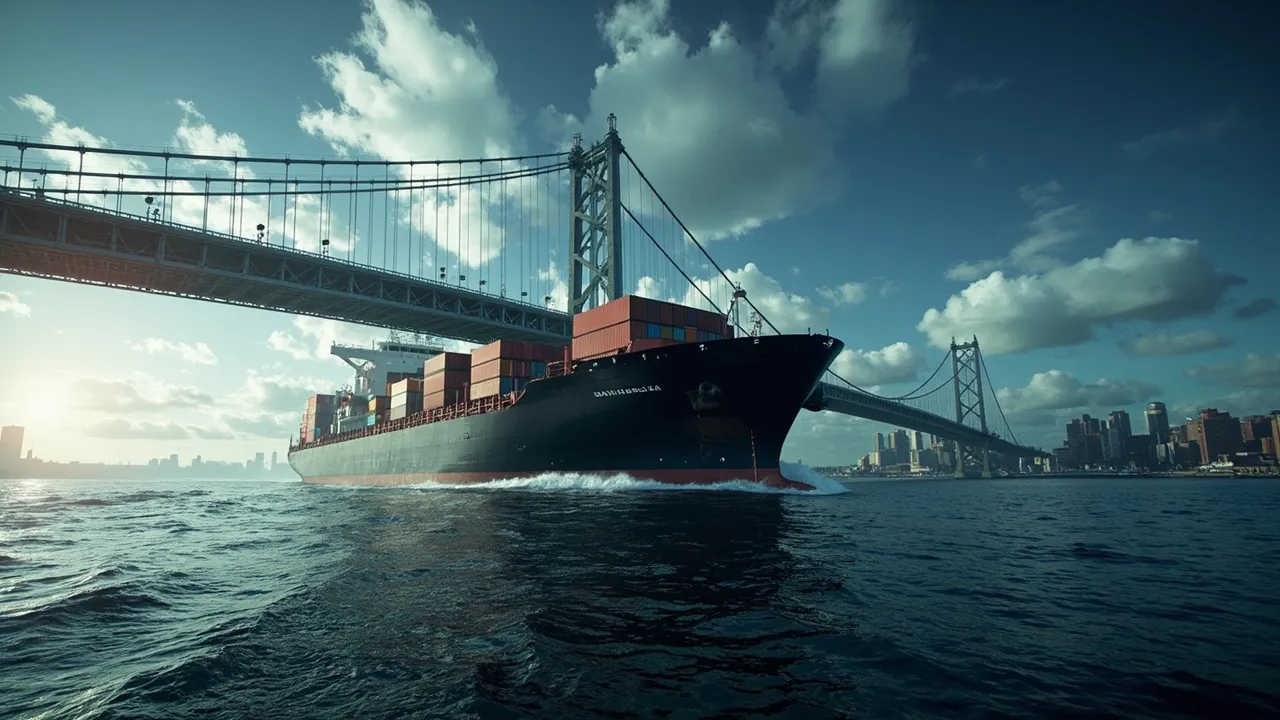
Maryland has reached a $2.25 billion settlement with the owner and operators of the Dali, the container ship that struck the Francis Scott Key Bridge in 2024 and collapsed a critical Baltimore transportation artery. SupplyChainBrain reported that the state sued Grace Ocean Private Limited and Synergy Marine for the destruction of the bridge, environmental harm, lost toll revenues, and wider economic losses tied to the crash.
The number matters because it reframes infrastructure disruption as a balance-sheet event, not a temporary routing inconvenience. A bridge collapse, channel closure, port shutdown, or vessel casualty can trigger claims, contract disputes, demurrage exposure, inland rerouting, customer penalties, insurance questions, and months of documentation requests. Shippers that treat maritime risk as someone else’s legal problem are missing the operational point.
When infrastructure fails, the companies with clean shipment records, alternate routing evidence, exception logs, and customer communication trails are in a much stronger position than teams searching inboxes after the fact.
Liability limits are not planning limits
The Dali interests initially sought to cap liability at $43.7 million, based on the vessel’s post-incident value. Maryland argued that figure covered only a fraction of the damage from losing the bridge. The final $2.25 billion settlement shows how wide the gap can be between a maritime liability formula and the real-world economic impact of a disruption.
That gap matters to shippers even when they are not parties to the headline lawsuit. Transportation contracts, bills of lading, cargo insurance, carrier terms, force majeure clauses, service commitments, and customer agreements all decide who absorbs delay, damage, extra freight, and lost sales when a route suddenly breaks.
The mistake is assuming that ocean freight risk ends at the waterline. The Key Bridge collapse affected vessel traffic, port access, truck routing, commuter movement, recovery activity, public infrastructure, and regional business continuity. A shipper using a single gateway, one drayage provider, one inland rail plan, or one customer promise structure can feel the impact long before any legal claim is settled.
Criminal charges raise the documentation bar
The settlement also sits beside a separate accountability track. SupplyChainBrain reported that the U.S. Department of Justice filed criminal charges against Synergy Marine, including conspiracy, obstruction, and misconduct resulting in death. Prosecutors accused the company of misleading investigators about the ship’s condition and failing to disclose safety concerns to the U.S. Coast Guard.
Synergy denied the allegations, but for logistics teams the operational lesson is clear: after a major maritime incident, documentation gets scrutinized hard. Investigators, insurers, ports, carriers, customers, and attorneys all want timelines. What happened? Who knew? When was the shipment delayed? Which alternatives were available? Why was a route chosen? Which exception was communicated, and to whom?
The National Transportation Safety Board found that a loose wire caused the Dali to lose power twice before the bridge strike, according to SupplyChainBrain’s summary. That detail is technical, but the supply chain implication is practical. Failure chains are rarely single-point stories. They are sequences: equipment condition, vessel operation, infrastructure design, emergency response, channel closure, port recovery, inland congestion, customer delay, and financial exposure.
Shippers cannot control every upstream failure. They can control whether their own decision trail is defensible.
Single-gateway networks need disruption math
The Baltimore case should push importers, exporters, forwarders, and 3PLs to recheck how dependent their freight is on individual bridges, tunnels, channels, terminals, and drayage corridors.
A single-gateway network can look efficient until the gateway is unavailable. Then the hidden dependencies surface: container availability, appointment systems, chassis supply, rail cutoffs, truck mileage, warehouse receiving windows, labor scheduling, customs handoffs, and customer delivery promises. The alternate port may be open, but that does not mean the alternate network is ready.
The right planning question is not, “Could we technically use another port?” It is, “How fast can we switch, what does it cost, and what evidence do we need to justify the decision?”
That requires disruption math before the incident:
- alternate ocean gateways by lane and commodity;
- drayage coverage and appointment rules at each backup port;
- inland mileage, rail availability, and transit-time variance;
- inventory buffers for customer-critical SKUs;
- demurrage, detention, toll, storage, and premium freight exposure;
- customer notification thresholds and service-credit rules;
- documentation needed for claims, insurance, and contract exceptions.
If that information lives in spreadsheets, carrier portals, and tribal memory, the team will move too slowly when the port call changes.
Contract language should match physical risk
Bridge, channel, and port disruption clauses are no longer edge-case paperwork. They belong in carrier, forwarder, and customer agreements.
Shippers should review whether contracts clearly address infrastructure closures, vessel casualties, port shutdowns, alternate port discharge, inland rerouting, storage responsibility, accessorial approval, customs delay, and documentation duties. The clause should also define who can authorize emergency routing changes and what evidence is required afterward.
This is where operations and legal need to stop working in separate rooms. Legal teams understand liability. Transportation teams understand where the freight can actually move. Procurement understands the commercial leverage. Finance understands exposure. Customer service understands the promise that will be broken if nobody acts.
The Baltimore settlement connects all four.
The CXTMS angle: make disruption evidence usable
CXTMS-style transportation execution gives logistics teams a better foundation when infrastructure risk becomes a claims event. Shipment records, carrier milestones, documents, exception notes, alternate routing decisions, cost approvals, and customer communications should sit in one operating trail.
That matters before, during, and after disruption. Before an incident, teams can map vulnerable gateways and define contingency rules. During disruption, they can compare alternatives, assign owners, and log decisions. After disruption, they can support claims, explain cost changes, and prove that customer-impact decisions were made with the best available information.
The lesson from Baltimore is blunt: maritime liability may be settled in court, but supply chain exposure is created in everyday routing decisions.
Want to make port disruption planning less reactive? Schedule a CXTMS demo and see how shipment visibility, exception workflows, documentation, and alternate routing records help teams move faster when infrastructure risk becomes real.