SMB Logistics Goes AI-First: Why Small and Mid-Size Shippers Can No Longer Afford to Wait on Automation

Eight in ten small business owners now credit AI and technology with helping them navigate inflation, supply chain disruptions, and access to capital. That statistic, from FedEx's B2B Business Trends 2026 report, signals a fundamental shift: AI in logistics is no longer a competitive advantage reserved for enterprise shippers. It's table stakes.
The Widening Technology Gap
For years, small and mid-size shippers could compete on relationships, flexibility, and local market knowledge. Those advantages haven't disappeared, but they're no longer enough. Enterprise shippers have spent the past three years deploying AI-powered route optimization, automated freight auditing, and predictive demand planning. The result is a widening gap between digitally mature operations and those still running on spreadsheets and phone calls.
The logistics automation market tells the story in dollars. According to GlobeNewsWire research, the logistics automation market is projected to reach $144.78 billion by 2031, growing at a 9.78% CAGR — driven by e-commerce parcel volumes, labor shortages, and corporate sustainability commitments. That growth isn't just enterprise spending. Increasingly, it includes SMBs recognizing that manual processes carry real costs.
The Innovation Paradox Hits SMBs Hardest
Kenco's 2026 Innovation Report, surveying more than 150 North American supply chain executives, uncovered what they call the "innovation paradox": organizations increasingly depend on innovation to mitigate inflation, yet inflation itself makes those projects harder to fund. Nearly 45% of respondents cited inflation as their primary innovation driver, while 51% named cost constraints as the biggest barrier to progress.
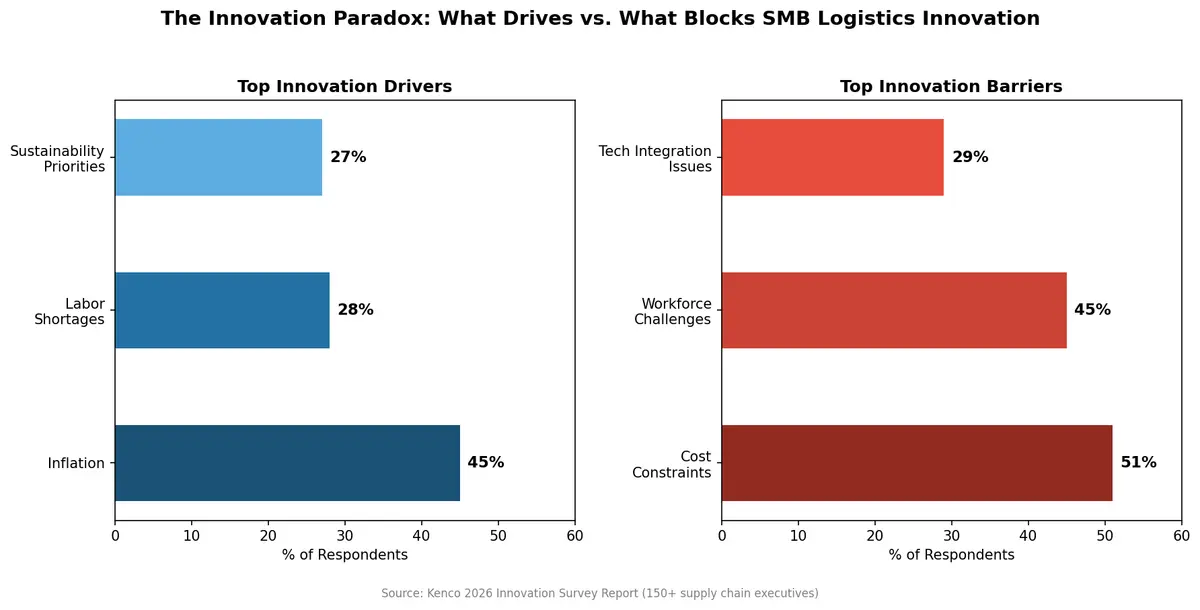
For enterprise shippers with dedicated innovation budgets — 83% of Kenco's respondents reported having one, with 49% allocating at least $500,000 — this paradox is manageable. For SMBs operating on thinner margins, it can feel paralyzing. But the cost of inaction is rising faster than the cost of adoption.
What "AI-First" Actually Means for Small Shippers
AI-first doesn't mean replacing your team with robots. For most SMBs, it means three practical shifts:
1. Automated freight auditing and invoice reconciliation. Manual invoice review is one of the biggest hidden costs in small shipping operations. AI-powered audit tools catch billing errors, duplicate charges, and rate discrepancies that human reviewers miss — typically recovering 2-5% of total freight spend.
2. Predictive demand and inventory planning. Instead of ordering based on gut feel or last year's numbers, AI models analyze seasonal patterns, market signals, and historical data to recommend optimal inventory levels. For mid-size shippers managing hundreds of SKUs, this alone can reduce carrying costs by 15-25%.
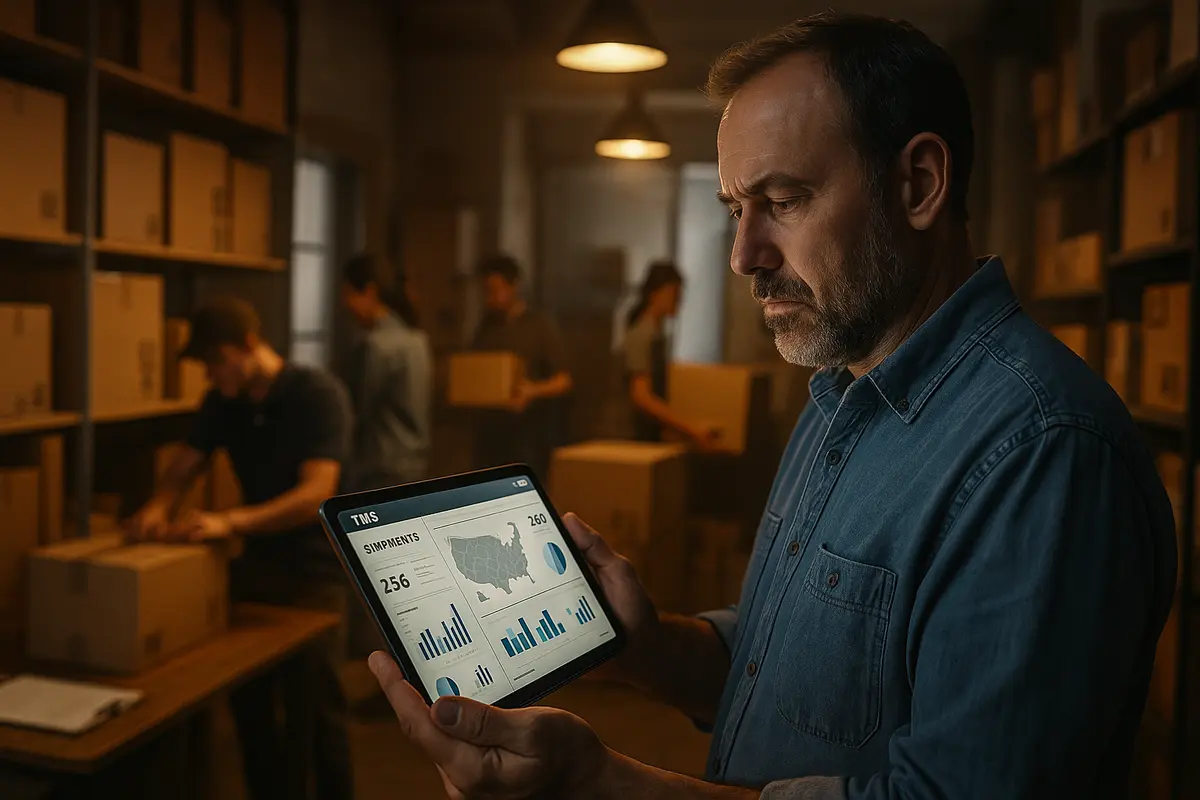
3. Intelligent carrier selection and rate optimization. Rather than manually comparing quotes from three or four carriers, AI-driven TMS platforms evaluate dozens of options across service level, cost, transit time, and reliability — in seconds. The result is consistently better rates without the hours of comparison shopping.
The B2B Experience Bar Has Risen
FedEx's 2026 trends report highlights another pressure point for SMBs: B2B buying behavior now mirrors consumer expectations. Research cited in the report shows 75% of B2B buyers would switch suppliers for a better experience. That means real-time tracking, transparent delivery timelines, and digital self-service aren't nice-to-haves — they're retention requirements.
For small shippers still sending tracking updates via email or fielding "where's my order" phone calls, this shift is existential. Your customers are comparing your shipping experience not to other small businesses, but to Amazon.
Overcoming the Barriers
The Kenco survey identified the real blockers to innovation adoption, and they're not primarily technological. Organizational misalignment across operations, IT, and leadership causes the most delays. Among respondents, 42% favor established technologies over cutting-edge solutions, and 43% prefer blending existing and emerging tools — showing that reliability matters more than novelty.
This is actually good news for SMBs. You don't need to deploy experimental AI. The proven, established tools — TMS platforms, automated auditing, carrier integration APIs — have matured to the point where implementation is measured in weeks, not years. And pricing models have shifted from six-figure enterprise licenses to scalable, per-shipment or subscription tiers accessible to shippers moving 500 or 5,000 loads per month.
The ROI Case Is Clear
For a mid-size shipper processing 1,000 shipments per month, the math on automation typically looks like this:
- Freight audit savings: 2-5% of total spend recovered from billing errors
- Labor efficiency: 15-20 hours per week redirected from manual data entry to strategic work
- Carrier optimization: 5-10% reduction in average per-shipment cost through intelligent rate shopping
- Customer retention: Measurable reduction in "where's my shipment" inquiries through automated tracking
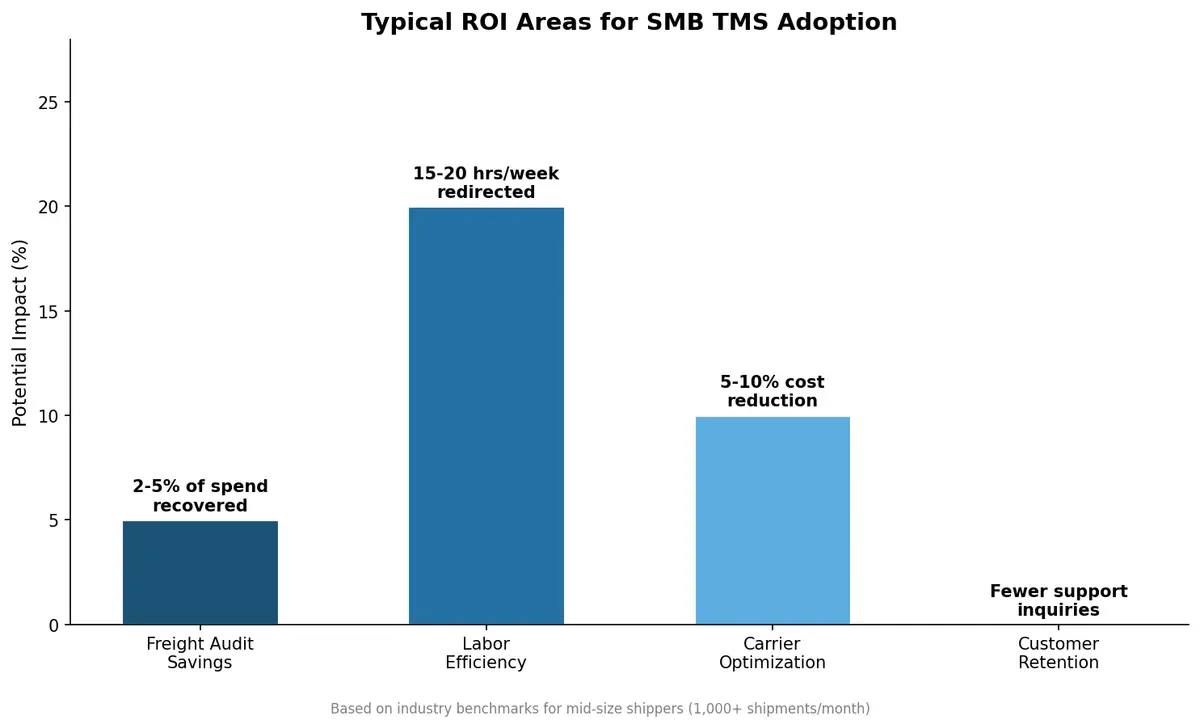
Most SMBs see full ROI within 3-6 months of TMS implementation — faster than almost any other technology investment in the operation.
Start Where It Hurts Most
The best approach for SMBs isn't a wholesale digital transformation. It's identifying the single process that consumes the most time or loses the most money, and automating that first. For most small shippers, that's either freight auditing or carrier selection. Both deliver immediate, measurable returns and build organizational confidence for the next step.
The 2026 logistics landscape has made one thing clear: the question for SMBs is no longer whether to adopt AI and automation, but how quickly they can get started. The shippers who move now will compound their advantages over the next two to three years. Those who wait will find the gap increasingly difficult to close.
Ready to bring enterprise-grade logistics intelligence to your mid-size operation? Contact CXTMS for a demo and see how our scalable TMS platform delivers ROI from day one.