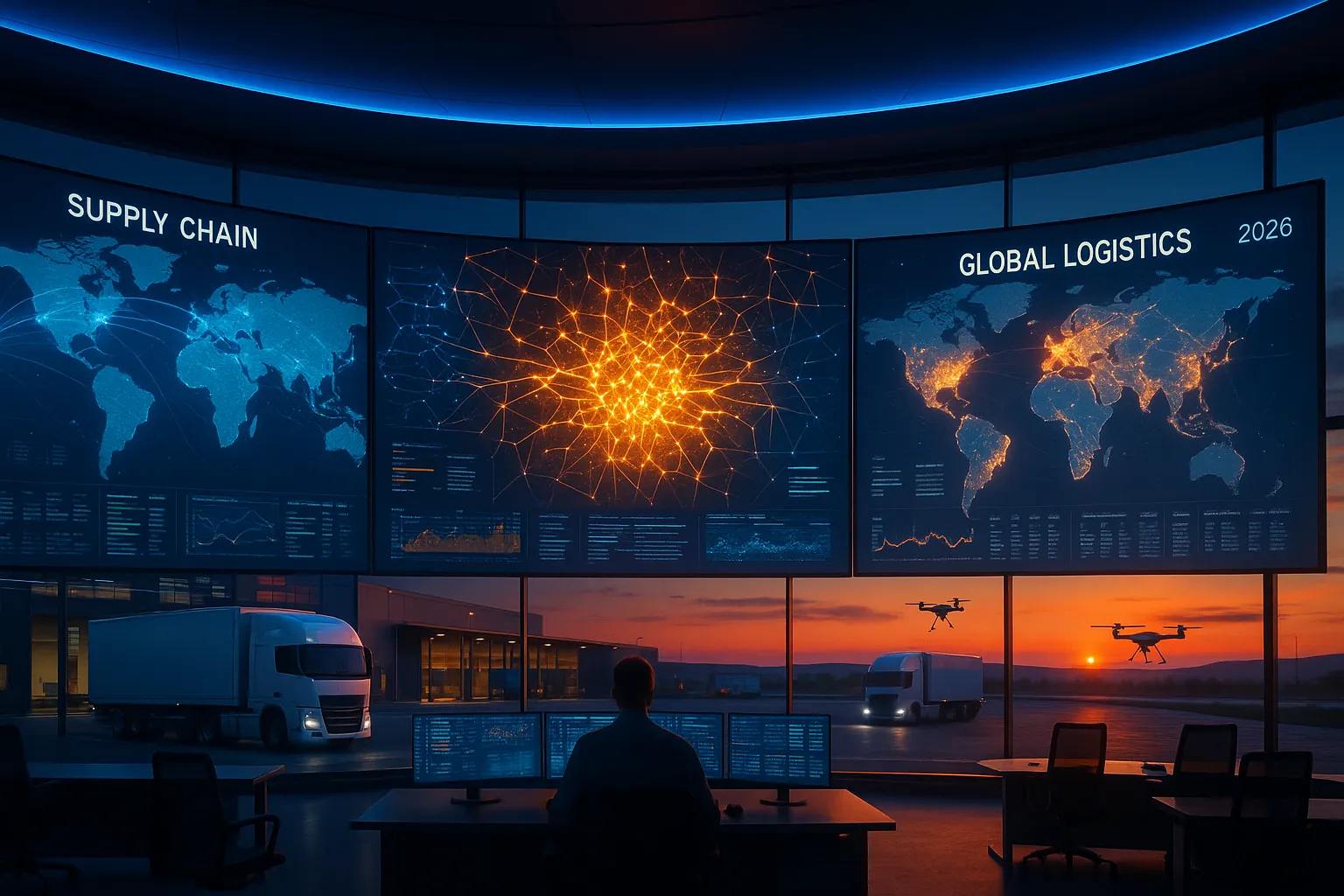
Manifest 2026 Takeaways: How Major Retailers Are Using Layered AI to Transform Supply Chain Operations

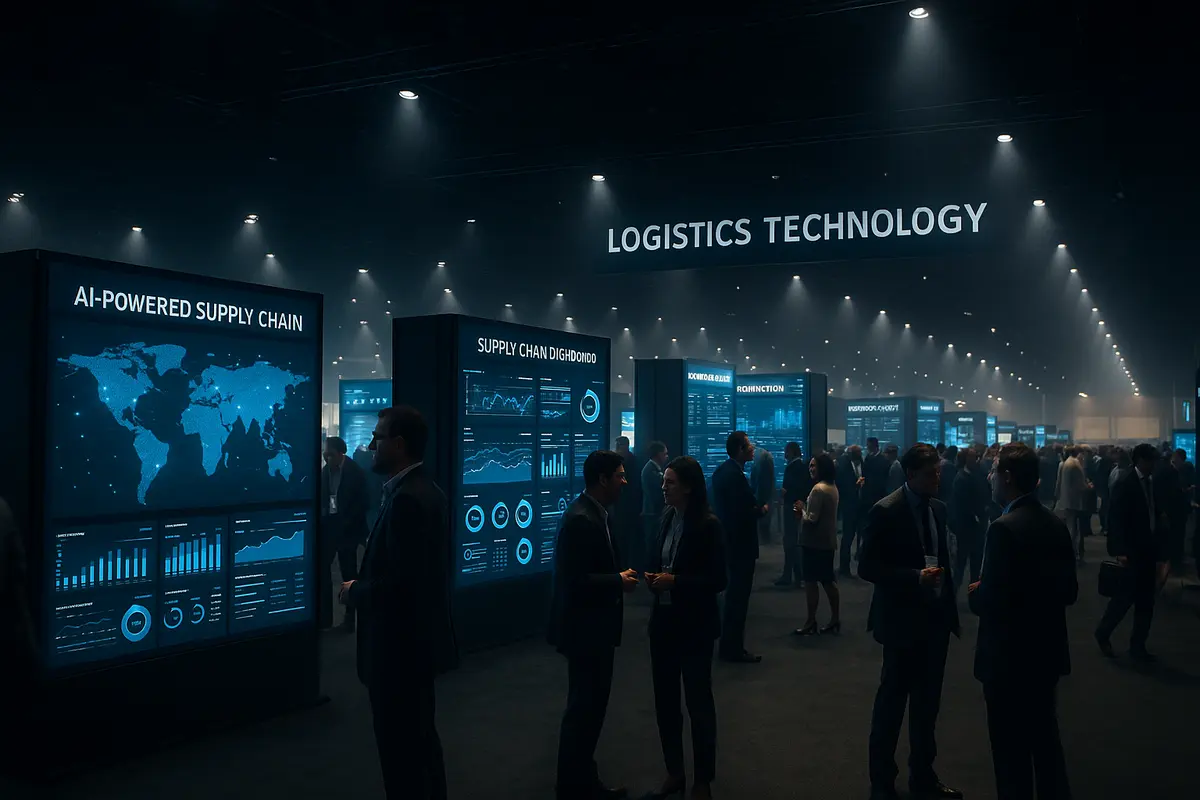
The Manifest 2026 conference in Las Vegas delivered a clear message: major retailers have moved past AI experimentation and into full-scale deployment across their supply chains. From American Eagle Outfitters' four-layer intelligence architecture to Dollar General's automated distribution systems and Nordstrom's AI-powered procurement, the conference showcased how retail supply chains are being fundamentally rewired by artificial intelligence.
The Shift from AI Experimentation to Deployment
Manifest 2026 marked a turning point in how the industry talks about AI. According to Accenture data cited at the conference, 85% of supply chain executives are increasing AI spending, with one in five planning up to a 20% budget increase to build more flexible, agile, and resilient operations.
The conversation has shifted from "should we adopt AI?" to "how many layers of AI do we need?" Retailers presenting at Manifest weren't pitching future visions—they were reporting measurable results from systems already in production.
American Eagle's Four-Layer Intelligence Architecture
The most detailed AI deployment framework came from Brandon Friez, SVP of Global Logistics and Supply Chain Intelligence at American Eagle Outfitters. Friez outlined a layered intelligence approach that structures AI across four distinct operational layers:
Layer 1 — Demand Forecasting: Machine learning models evaluate consumer demand at the ZIP code level, predicting where sales will occur by channel. This granularity allows American Eagle to position inventory closer to actual demand before products even arrive in the country.
Layer 2 — Inventory Repositioning: As products flow into the supply chain, the company can dynamically shift a purchase order's destination to any distribution center "up to a few moments before it hits the port," according to Friez.
Layer 3 — Logistics Optimization: AI optimizes carrier selection based on real-time capacity and cost data, enabling mode and carrier changes "at a moment's notice."
Layer 4 — Orchestration: The top layer ensures all three operational layers work in unison, driving enterprise-level value rather than isolated department wins.
Tariff Simulation: AI Under Pressure
The real test of American Eagle's system came during the U.S. tariff announcements in April 2025. The company ran network simulations evaluating mitigation strategies—including increased air freight usage and adjusted sourcing country mixes. By September 2025, executives reported they expected to reduce the tariff impact by more than 60% by early 2026, driven by more cost-effective transportation and sourcing shifts.
"It allowed us to make decisions that were millions of dollars in impact," Friez said. "Do we get every one perfect? Never. But it allowed us to stop, think, simulate and then execute."
Dollar General: Automation at Distribution Scale
Rod West, EVP of Global Supply Chain at Dollar General, presented a different but equally compelling technology story focused on distribution efficiency across the company's 38 distribution centers nationwide.
Dollar General's technology investments target three key areas:
- Segmented storebound orders — AI creates a more efficient product mix tailored to each individual store location, reducing overstock and stockouts simultaneously.
- Inbound appointment scheduling — Intelligent prioritization determines which products should enter the distribution network and when, optimizing flow through facilities.
- Automated storage and retrieval systems (AS/RS) — Deployed in two distribution centers, these systems increase storage density, improve picking labor efficiency, and reduce outbound transportation needs through better cube utilization.
The overarching goal, West emphasized, is driving improved performance at the store level—where every supply chain decision ultimately creates or destroys value.
Nordstrom: AI-Powered Procurement Intelligence
Nordstrom's Chief Procurement Officer Karoline Dygas brought a procurement-focused perspective to the AI conversation. The retailer has started using AI "quite heavily" within its procurement spend analytics, building sourcing category strategies and gaining deeper visibility into spending patterns.
Dygas highlighted the time-saving value: AI compiles supplier intelligence that "would really take me hours" to assemble manually. But she also pushed for more ambitious applications, expressing interest in prescriptive AI that proactively surfaces insights rather than waiting for human queries.
"I want AI to tell me what I need to know," Dygas said. "Right now, we're telling it what we need to know. That defeats the purpose."
Her candor about AI's current limitations—particularly around data governance and hallucination risks—resonated with attendees navigating their own adoption challenges.
Common Patterns Across Retailers
Despite different scale and focus areas, three patterns emerged consistently across Manifest 2026 presentations:
1. Layered, Not Monolithic
No retailer deployed a single AI system. Every successful implementation involved multiple specialized AI layers working together—forecasting feeding inventory decisions, feeding logistics optimization, feeding orchestration. The lesson: point AI solutions deliver point value. Layered AI delivers compound value.
2. Simulation Before Execution
American Eagle's tariff response demonstrated a critical capability: the ability to simulate supply chain scenarios before committing capital. As disruptions become more frequent—from tariffs to port congestion to carrier capacity swings—simulation capability becomes as essential as the execution systems themselves.
3. Data Quality as Foundation
Nordstrom's Dygas put it bluntly: if your data isn't accurate and governed, AI will amplify your problems rather than solve them. Every retailer emphasized clean, timely, and actionable data as the non-negotiable foundation for AI deployment.
What Mid-Market Shippers Can Learn
The retailers presenting at Manifest 2026 operate at massive scale, but the principles apply universally. Mid-market shippers can adopt the same layered approach:
- Start with forecasting — Even basic demand prediction reduces inventory carrying costs and improves service levels.
- Add dynamic routing — Real-time carrier and mode optimization often delivers the fastest ROI.
- Build toward orchestration — Connect individual optimizations so they reinforce each other rather than creating conflicting signals.
- Invest in data infrastructure first — No AI layer can compensate for poor data inputs.
The gap between technology leaders and laggards is widening. As the Kenco 2026 Innovation Report found, companies actively deploying AI are seeing measurable improvements in efficiency and cost reduction, while those still in pilot mode are falling further behind.
The Orchestration Imperative
Manifest 2026 made one thing clear: the future of retail supply chain management isn't about any single AI application. It's about orchestrating multiple intelligence layers into a unified system that can sense, simulate, decide, and execute faster than the disruptions it faces.
The retailers who presented in Las Vegas aren't just using AI—they're building AI-native supply chains where every decision, from ZIP code-level demand forecasting to carrier selection to procurement strategy, is informed by machine intelligence working in concert.
Ready to build a layered AI approach for your supply chain? Contact CXTMS to see how our platform orchestrates forecasting, routing, and execution in a single system.