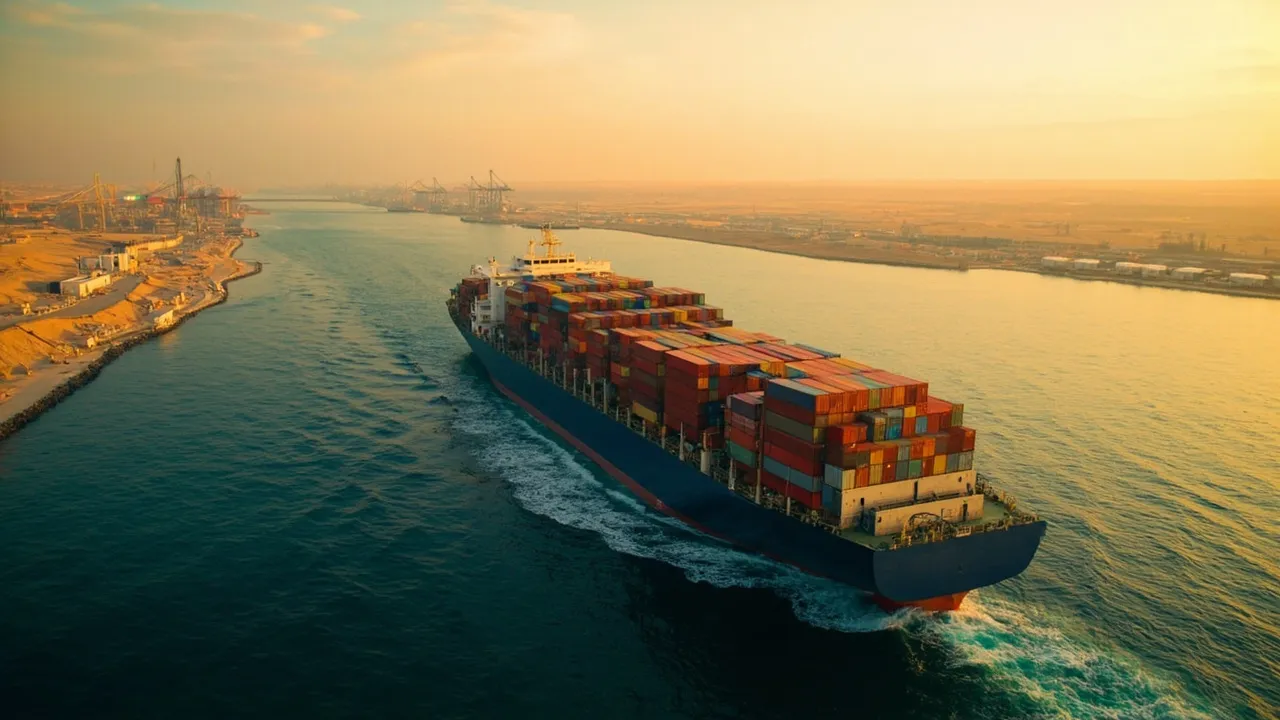
Port of Long Beach Posts Surprise February Export Surge: Why 8.2% Growth Defies the Tariff Uncertainty Narrative

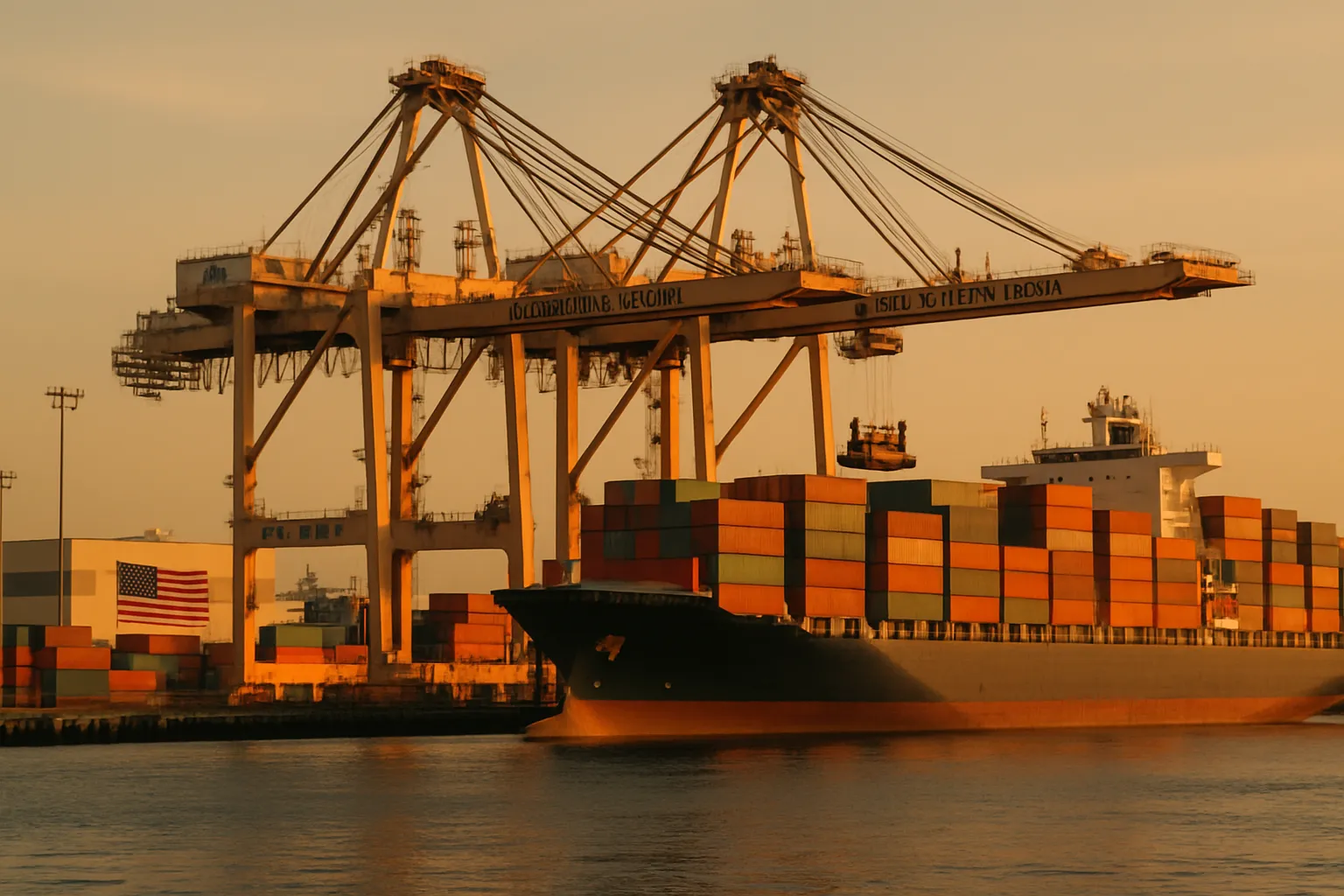
Everyone's watching imports. The tariff headlines dominate. Frontloading strategies consume shipper planning cycles. But buried inside the Port of Long Beach's February 2026 data is a number that tells a fundamentally different story: U.S. exports through the nation's busiest container gateway surged 8.2% year-over-year, even as imports barely moved. For shippers fixated on inbound freight risks, this export signal is the one worth paying attention to.
The port processed 767,525 TEUs in February 2026, a modest 0.3% increase from the same month last year, according to FreightWaves. On the surface, that looks like stability — unremarkable, even. But crack open the directional data and the picture shifts dramatically. Imports dipped 0.2% to 368,060 TEUs. Exports climbed 8.2% to 97,422 TEUs. Empty containers declined 0.15% to 302,044 TEUs.
That export number isn't just a statistical blip. It's a signal that American goods — agricultural commodities, recycled materials, manufactured components — are finding buyers overseas at an accelerating pace, even as geopolitical uncertainty and tariff volatility dominate the trade narrative.
The Narrative Reversal: Exports as the Overlooked Signal
For the past 18 months, the logistics industry has operated under a simple framework: tariff uncertainty suppresses trade, importers frontload to beat deadlines, and ports experience boom-bust cycles driven by inbound cargo surges. The Port of Long Beach's record-setting 9.9 million TEUs in 2025 was largely attributed to exactly this dynamic — importers pulling forward inventory ahead of anticipated tariff escalations.
But 2026 is writing a different script. Year-to-date through February, the port has processed 1.6 million TEUs, down 6% from the record pace of 2025. The import frontloading wave has subsided. What's left underneath, once you strip away the panic buying, is a surprisingly resilient export trade that's actually growing.
Port CEO Dr. Noel Hacegaba put it plainly during his February media briefing: "Cargo volumes at the Port of Long Beach remained positive in February." He noted that while the Strait of Hormuz disruption and Middle East conflict have "added more uncertainty to global trade," operations at the port remain fluid. The port projects handling more than 9 million TEUs in 2026, which would rank among its top five busiest years ever, according to SupplyChainBrain.
What's Driving U.S. Export Growth
The 8.2% export surge didn't materialize out of thin air. Several converging forces are pushing American goods outbound through West Coast gateways at rates that defy the prevailing pessimism.
Agricultural commodities remain a powerhouse. U.S. agricultural exports continue to hover near historic highs through the 2025–2026 cycle, driven by robust demand from Asia, Latin America, and the European Union. Soybeans, tree nuts, animal feeds, and specialty grains move in massive containerized volumes through Long Beach, and global food security concerns are keeping demand elevated regardless of tariff posturing.
Recycled materials and scrap commodities. The U.S. remains one of the world's largest exporters of recyclable materials — paper, plastics, metals, and textiles — and Asian markets continue to absorb significant volumes despite tightening import quality standards. These containerized exports are less sensitive to tariff policy and more responsive to raw material pricing cycles.
Manufactured goods and chemicals. Industrial chemicals, plastics, and manufactured components bound for Asian and Latin American markets are contributing to the export growth story. As nearshoring and friendshoring reshape global production networks, U.S. manufacturers are increasingly positioned as suppliers to emerging manufacturing hubs in Southeast Asia and Mexico.
Tariff Uncertainty Hasn't Killed Trade — It's Redirecting It
The most important takeaway from the February data isn't that trade is resilient. It's that the composition of trade is shifting in ways that standard import-focused analysis completely misses.
When imports flatline and exports surge, it signals a rebalancing of trade flows. American exporters are capturing market share in categories where the U.S. has structural advantages — agriculture, energy products, recycled materials, and specialized manufacturing. Meanwhile, the import slowdown reflects not a collapse in demand but a normalization after the unprecedented frontloading surge of 2024–2025.
Hacegaba warned that the Middle East conflict poses real risks to this trajectory. The Strait of Hormuz disruption, which affects roughly 20% of global oil flows, has already pushed oil prices higher. If sustained, higher fuel costs will increase vessel operating expenses and could force carriers to seek alternative routing — adding transit time and cost to both import and export lanes.
But even with these headwinds, the export resilience data suggests that American shippers have more leverage than they might think in the current market environment.
YTD Context: Down from Record Highs but Structurally Sound
The year-to-date decline of 6% from 2025's record pace requires context. Last year's volumes were inflated by extraordinary frontloading behavior — importers pulling months of inventory forward to beat anticipated tariff deadlines. That artificial demand spike was never sustainable, and the current "decline" is better understood as a reversion to a still-historically-elevated baseline.
The port's 2025 total of 9,881,595 TEUs set an all-time record, surpassing the previous high of 9.6 million TEUs in 2024 by 2.4%. Even if 2026 lands at the projected 9 million TEU mark, it would still rank among the five busiest years in the port's 115-year history.
For shippers, the strategic implication is clear: the busiest container gateway in America is not slowing down. It's normalizing after an anomalous peak, and the export growth embedded in that normalization represents an underexploited opportunity.
Shipper Strategy: Leveraging Export Strength in Carrier Negotiations
For shippers managing outbound freight through West Coast ports, the February data creates a tangible negotiating advantage. Here's how to use it:
Push for export-favorable contract terms. When exports are growing while imports moderate, carriers face an imbalance problem. They need export cargo to fill containers that would otherwise reposition empty back to Asia. Shippers with consistent export volumes are solving a carrier problem — and should price their contracts accordingly.
Lock in capacity on export lanes early. An 8.2% export growth rate means competition for outbound container slots will intensify through 2026. Shippers who secure capacity commitments now — especially for agricultural and commodity exports with seasonal peaks — will avoid the spot market premiums that hit when space tightens.
Monitor Strait of Hormuz developments for fuel surcharge exposure. Hacegaba's warning about rising oil prices and potential route diversions is directly relevant to export shippers. Build fuel surcharge escalation scenarios into your transportation budgets and identify alternative routing options through Gulf Coast or East Coast ports as contingencies.
Use directional trade data to inform mode selection. With empty container availability declining (down 0.15% in February), exporters should work with their TMS platforms to optimize container procurement and avoid the repositioning charges that eat into export margins.
How CXTMS Helps Shippers Capitalize on Export Momentum
CXTMS gives logistics teams the visibility and analytical tools to act on trade flow shifts like the Long Beach export surge — before competitors do. Our platform enables real-time rate benchmarking across export lanes, carrier performance scoring for outbound reliability, and automated procurement workflows that lock in capacity at optimal pricing.
Whether you're moving agricultural commodities to Asia, recycled materials to Southeast Asian markets, or manufactured components to Latin American buyers, CXTMS transforms port throughput data into actionable freight strategy.
Ready to turn export momentum into a competitive advantage? Request a CXTMS demo today and see how real-time trade flow intelligence can reshape your ocean freight procurement.