Red Sea and Bab el-Mandeb: The Hidden Financial Toll on Global Supply Chains Eighteen Months Later

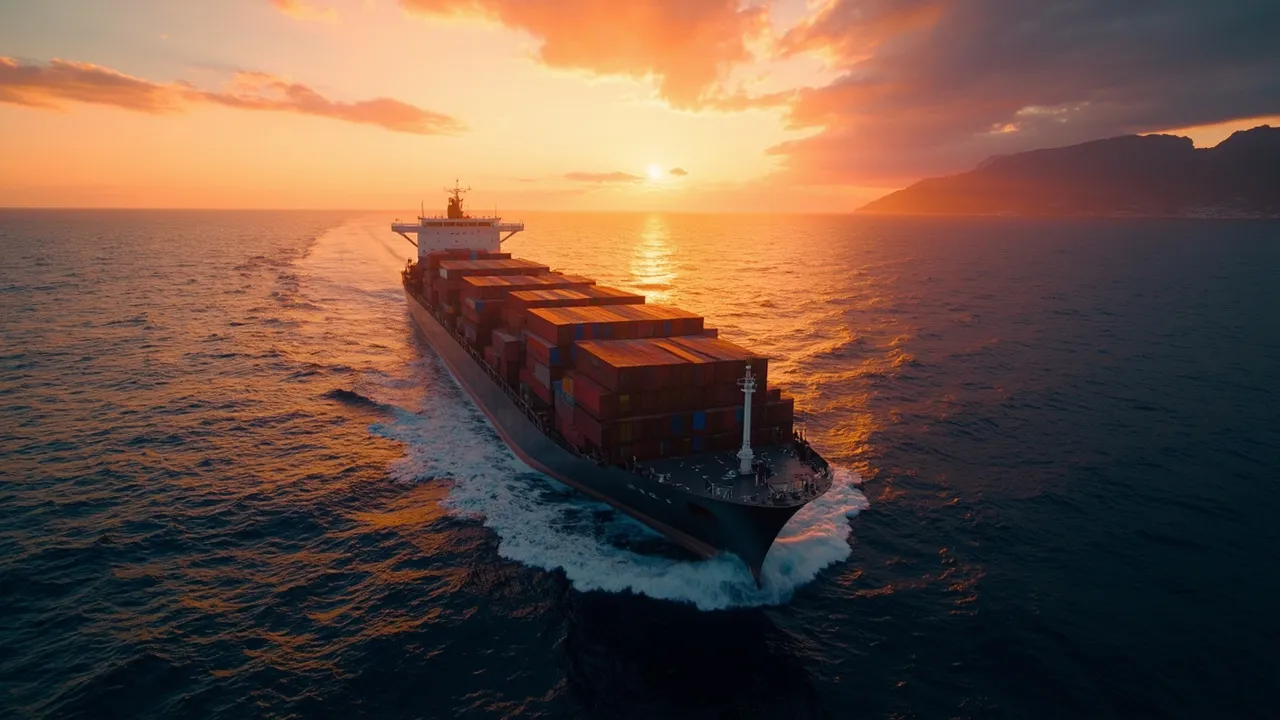
Eighteen months ago, major ocean carriers made a collective call: route everything around Africa or risk crew lives. In the time since, the Red Sea and Bab el-Mandeb crisis has become the defining cost driver for global shippers — and the bills are still arriving.
The detour around the Cape of Good Hope isn't a temporary inconvenience anymore. It's the new operating baseline for Asia-Europe and Asia-Mediterranean trade lanes. And as the data piles up, the financial toll is proving far more complex than a simple fuel surcharge.
What the Detour Is Actually Costing Shippers Per TEU
Routing around the Cape of Good Hope adds roughly 10–14 days to transit times and approximately 30% more fuel consumption per voyage, according to industry analyses of the diversion pattern established since late 2023. That's the visible cost. The hidden costs are where it gets expensive.
JPMorgan's supply chain research puts the per-TEU incremental cost of the Cape routing at $200–400, factoring in additional fuel, extended crew wages, and vessel positioning. That's before you layer in the war risk surcharges that carriers began assessing the moment Houthi attacks escalated.
During peak disruption in early 2025, Maersk added $400 per TEU specifically for Red Sea transits — a surcharge that forced European retailers to choose between absorbing costs or passing them downstream. One major European retailer reportedly cut total ocean freight expenses by 15% simply by committing fully to Cape routing rather than maintaining split routing strategies.
For US East Coast importers shipping from Asia via Suez, the math is similar but framed differently: transit times have stretched 8–12 additional days, with freight rates running 15–25% higher than comparable pre-crisis periods, per industry reporting on routing dynamics through early 2026.
Bab el-Mandeb: Which Carriers Returned and Which Haven't
Bab el-Mandeb transit data tells the story of a slow, partial recovery. By November 2025, Lloyd's List Intelligence recorded 1,128 transits — the highest monthly figure since January 2024, before the Houthi campaign accelerated. But that still represents roughly a 60% suppression of pre-crisis traffic volumes.
The carriers who have dipped back into Red Sea routing tell you something: Maersk completed its first Red Sea voyage in nearly two years in December 2025, and CMA CGM and MSC have both signaled cautious resumption of Suez transits. These aren't full network migrations — they're test runs and opportunistic slot allocations. The industry consensus, as of mid-2026, is that Cape routing remains the default, with Houthi threats ongoing and most carriers unwilling to stake crew safety on a fragile ceasefire.
BIMCO's chief shipping analyst put a number on what a full Red Sea return would mean: a 10% drop in vessel demand as shorter Suez voyages free up capacity currently tied up in the Cape detour. That's the leverage sitting dormant in shipper contracts right now.
War Risk Surcharges: Carrier Absorb vs. Pass-Through
Here's where the sustainability question gets real. War risk surcharges were designed as temporary premium adjustments — a market mechanism to price in geopolitical uncertainty. But eighteen months in, they're starting to look like permanent line items.
Surcharge transparency has become a leading demand in 2026 freight contracts. Shippers are pushing back on carriers that bundle war risk premiums into base rates without clear mechanism for reduction when conditions improve. The risk: carriers using the surcharge structure to protect margins even after the geopolitical premium has vanished.
Marine insurance rates have already begun adjusting downward for Red Sea transits following the October 2025 ceasefire signals — a positive indicator. But carriers face a structural problem: the Cape routing is slower, burns more fuel, and ties up vessel capacity that could otherwise generate returns on shorter Suez voyages. Absorbing surcharges works when demand is high and rates are elevated. When spot rates normalize — as long-term Far East-Mediterranean rates have already dropped 25% from late 2025 levels — the pressure to push costs back to shippers intensifies.
Who Paid the Steepest Price
The financial exposure map isn't uniform. Product categories with high time-sensitivity and low margin tolerance — electronics components, perishable goods, fashion and seasonal retail — felt the sting most acutely. The 10–14 day lead time extension effectively forced many importers to pre-position inventory earlier, tying up working capital and increasing storage costs across the supply chain.
Trade lanes connecting Asia to the Mediterranean and Northern Europe bore the heaviest burden, given their direct dependence on Suez Canal routing. Trans-Pacific shippers had more routing optionality, though US East Coast volumes via Suez still felt the detour impact on rates and schedules.
Industries already operating on thin margins — automotive suppliers, consumer goods manufacturers — reported the crisis as a significant contributor to 2025 margin compression. The data from McKinsey's 2024 Risk Pulse Survey resonates here: organizations knew the exposure existed, but pre-positioning mitigation was inconsistent at best.
What Shippers Should Be Doing Right Now
The forward picture isn't all headwinds. A managed Red Sea return — if it happens — could release meaningful capacity back into the market, potentially easing rate pressure through the second half of 2026. But that's a conditional forecast, not a certainty.
The practical moves for logistics teams in 2026:
- Audit your surcharge structure. Go line-by-line through your carrier contracts and identify what's a genuine risk premium versus what's become a margin pad.
- Lock in backup carrier capacity now. If a Red Sea return triggers service network restructuring, the transition windows will create capacity gaps. Have alternatives qualified.
- Revisit inventory positioning. If your network is still holding 10–14 days of safety stock to compensate for Cape routing, recalculate whether that's still necessary given the partial Bab el-Mandeb recovery.
- Negotiate with transparency clauses. Contracts that allow war risk surcharges to sunset when conditions improve protect you from these costs calcifying into base rates.
The Cape of Good Hope detour isn't going away in 2026. But the shippers who treat it as a fixed, manageable cost — rather than a temporary disruption — will be the ones who stop over-paying for it.
📦 See how CXTMS helps logistics teams track, manage, and optimize freight costs across ocean, air, and multimodal lanes. Request a demo →