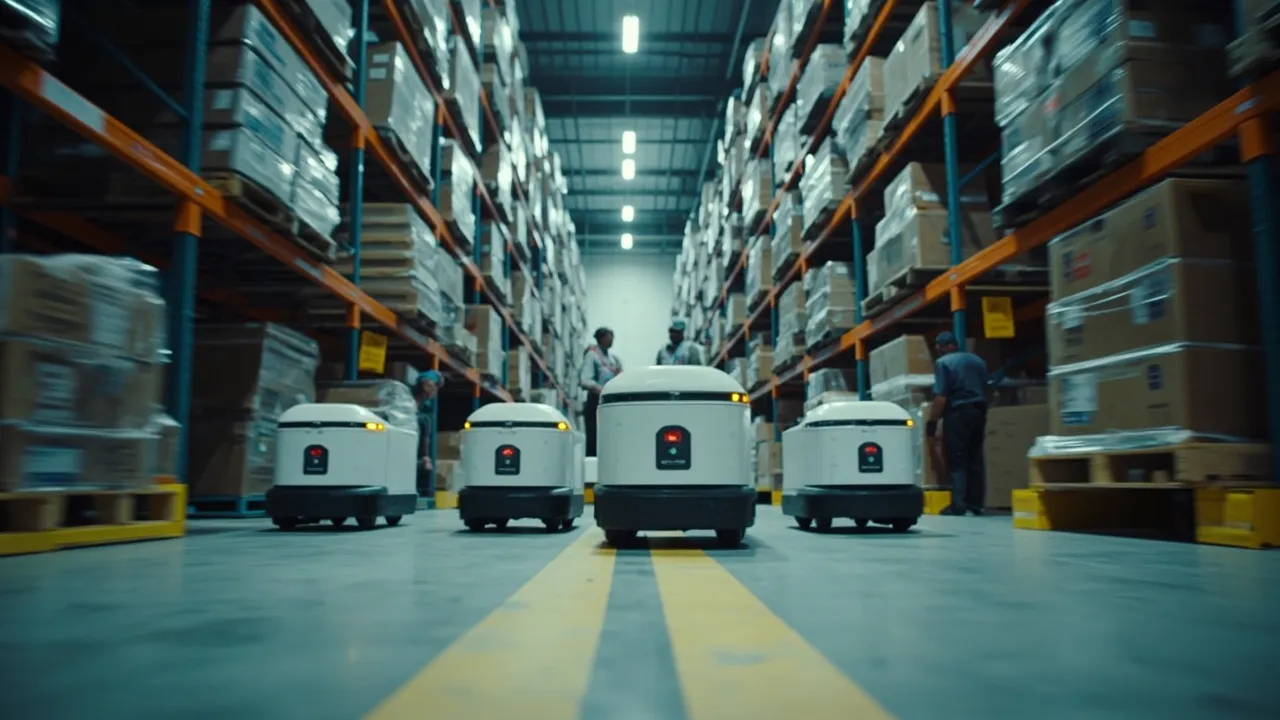
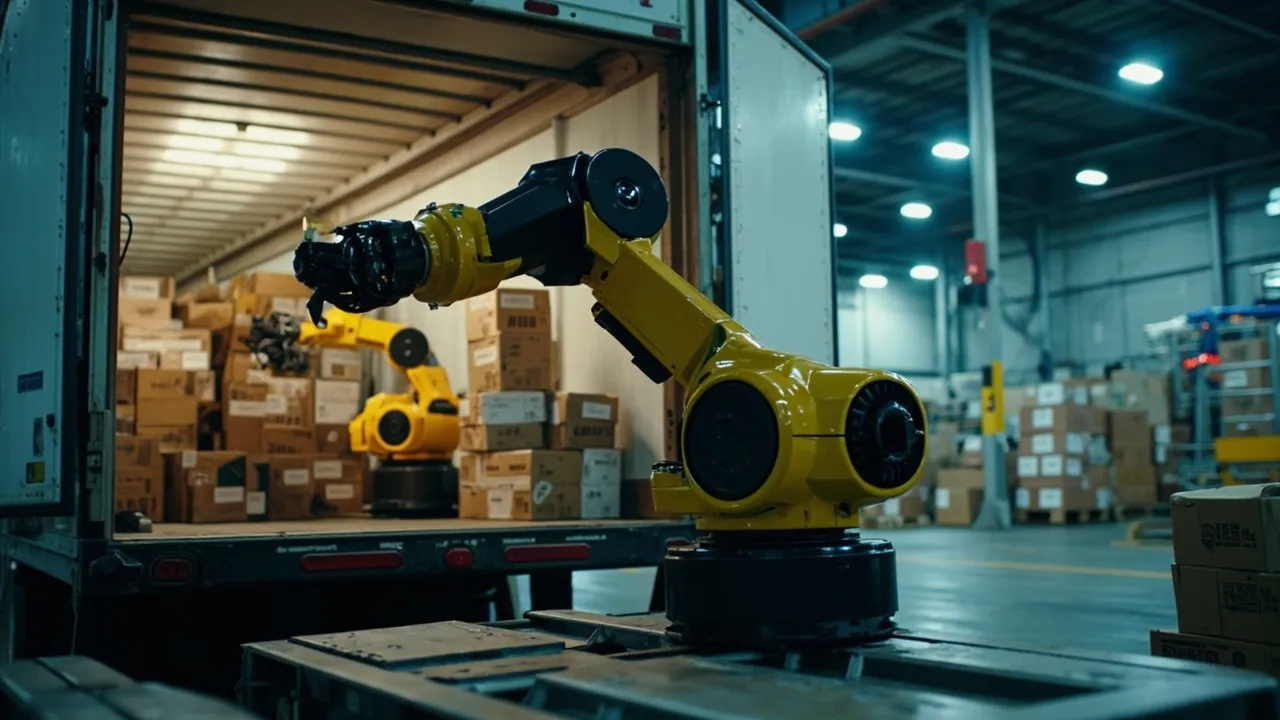
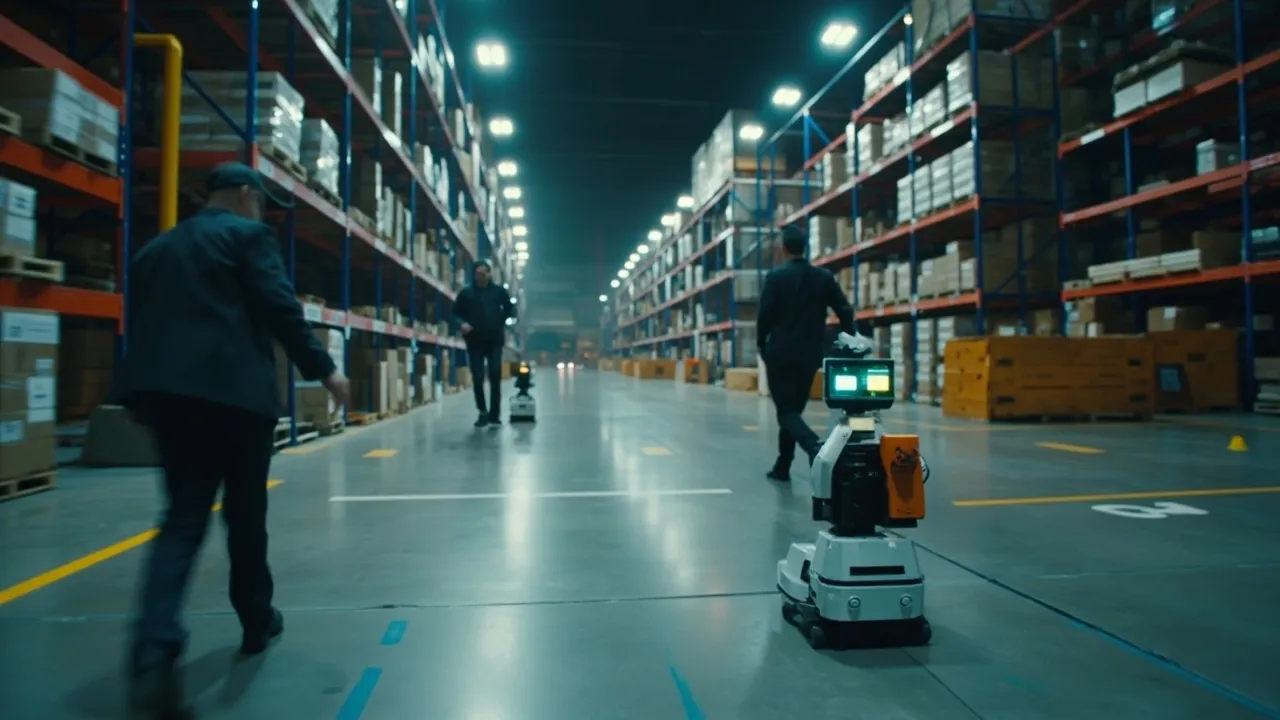
Industrial 3D Depth Sensing Enters the Warehouse: How the Orbbec-Basler Partnership Is Giving AMRs Human-Like Spatial Awareness

Autonomous mobile robots have been rolling through warehouse aisles for years — but most of them have been navigating with the equivalent of a blindfold and a cane. Standard 2D cameras and basic LiDAR sensors give AMRs a flat, limited view of their environment, forcing them to rely on pre-mapped routes and struggle with unexpected obstacles, mixed-SKU pallets, and dynamic human traffic.
That's about to change. At LogiMAT 2026 in Stuttgart, Orbbec and Basler AG announced a technology partnership that brings industrial-grade 3D stereoscopic depth sensing to warehouse robotics — and the implications for logistics operations are significant.
The Partnership: Chip-Level Depth Meets Industrial Vision Expertise
The Orbbec-Basler collaboration isn't a simple distribution deal. It combines two distinct competencies: Orbbec's proprietary chip-level depth sensing technology and vertically integrated manufacturing with Basler's 35-year track record in industrial machine vision, system integration, and global go-to-market infrastructure.
The first product born from this partnership is the Basler Stereo Mini — a compact stereo-based 3D vision system delivered as a complete, single-source solution. It ships with camera hardware, tested configurations, accessories, documentation, and full integration into the Basler pylon SDK.
"With Orbbec as our technology partner, we are specifically strengthening our 3D portfolio," explained René von Fintel, Executive Director of Business Management at Basler AG. "With the Basler Stereo Mini camera, we are expanding our range of solutions in the field of navigation, obstacle detection, and environment mapping for autonomous mobile robots."
Mike McSweeney, VP of Sales at Orbbec, added that Basler's industrial expertise enables them to "deliver industrial-grade stereo solutions with the price-performance and long-term availability" that demanding automation markets require.
Why 3D Depth Sensing Is the Missing Link for Warehouse AMRs
Traditional 2D machine vision systems excel at tasks like barcode scanning, label verification, and quality inspection at fixed stations. But when it comes to autonomous navigation through dynamic warehouse environments, 2D vision hits a wall — literally.
Here's the fundamental problem: a 2D camera sees a flat image. It can identify what an object is, but it struggles to determine how far away that object is or how it's oriented in space. That's a critical gap when an AMR needs to:
- Navigate around irregular obstacles like partially loaded pallets, fallen boxes, or parked forklifts
- Detect floor-level hazards such as spills, low-profile objects, or uneven surfaces
- Estimate bin fullness for automated picking and put-away operations
- Interact safely with human workers moving unpredictably through shared aisles
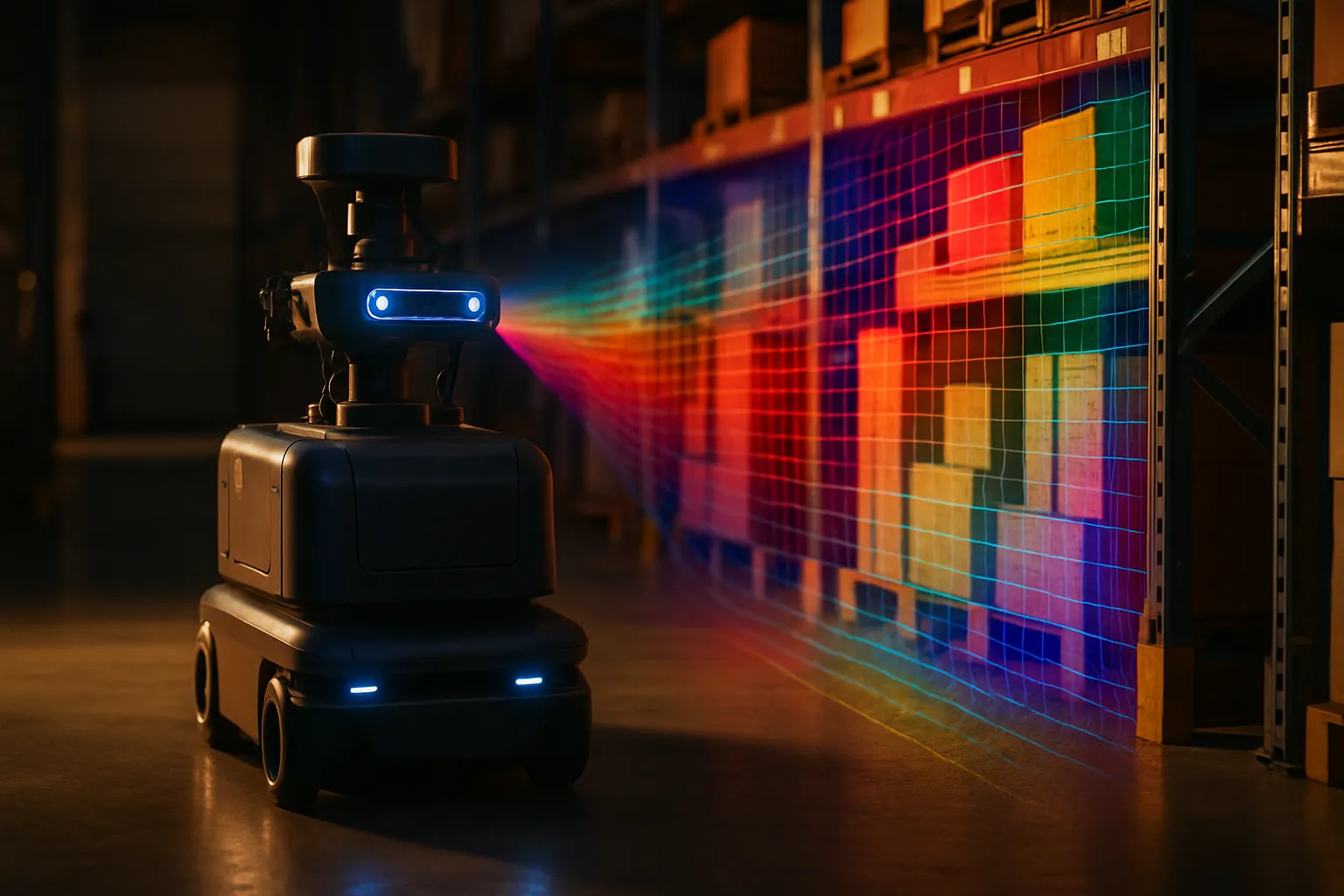
Stereoscopic 3D depth sensing solves this by providing real-time spatial awareness — essentially giving the robot a sense of depth perception similar to human binocular vision. The Stereo Mini creates dense 3D point clouds that map the robot's surroundings in three dimensions, enabling precise distance measurement and spatial reasoning.
The Market Context: 4.7 Million Warehouse Robots and Counting
The timing of this partnership reflects the explosive growth trajectory of warehouse robotics. According to Mordor Intelligence, the global autonomous mobile robot market is estimated at $5.18 billion in 2026, growing at a 15.31% CAGR toward $10.56 billion by 2031.
The scale is staggering: approximately 4.7 million warehouse robots are now installed across more than 50,000 warehouses globally. Yet most of these systems still rely on basic sensor suites that limit their operational flexibility.
Meanwhile, Gartner predicts that by 2030, 80% of warehouse workers will interact with smart robots daily, and one in 20 supply chain managers will manage robots rather than humans. As Modern Materials Handling reports, this rapid transformation demands not just better hardware, but more capable perception systems that allow robots to operate safely alongside human teams.
The MHI Annual Industry Report found that 55% of supply chain leaders are increasing investments in technology and innovation — and perception quality is increasingly the bottleneck that determines whether an AMR deployment delivers its promised ROI.
Use Cases: Beyond Simple Navigation
While navigation and obstacle avoidance are the headline applications, industrial 3D depth sensing opens up a broader range of warehouse automation use cases:
Pallet Detection and Dimensioning. 3D vision enables AMRs to measure pallet dimensions in real time, verify load integrity, and detect stacking irregularities before they become safety hazards.
Bin Picking and Sortation. Depth data allows robotic arms to locate and grasp individual items in cluttered bins — a task that's nearly impossible with 2D vision alone. Vision-guided robotic systems can process more than 10,000 parcels per hour when equipped with proper 3D sensing.
Dynamic Path Planning. Rather than following rigid pre-programmed routes, depth-aware AMRs can calculate optimal paths on the fly, adjusting for real-time changes in warehouse layout and traffic patterns.
Safety Zone Monitoring. 3D sensing creates precise safety envelopes around robots, enabling more responsive speed adjustments and stop triggers when humans enter proximity zones — critical for collaborative warehouse environments.
What This Means for Logistics Operations
For warehouse operators and logistics managers, the Orbbec-Basler partnership signals a shift in what's commercially available for AMR perception. The Stereo Mini's positioning as an integrated, SDK-ready solution — rather than a research-grade component — lowers the integration barrier for fleet operators looking to upgrade their robots' spatial awareness.
Orbbec's scale adds credibility here: the company generated RMB 941 million ($136 million) in revenue in 2025, a 66.66% year-over-year surge that reflects surging demand for robotic vision across industrial applications. Combined with Basler's 850-employee global operation and established distribution channels, this partnership has the infrastructure to deliver at scale.
The key question for logistics operators isn't whether 3D depth sensing will become standard in warehouse AMRs — it's how quickly they can integrate it into existing fleets to capture the productivity and safety gains before competitors do.
How CXTMS Supports Smarter Warehouse Operations
As warehouse robotics grow more sophisticated, the logistics platforms that connect to them need to keep pace. CXTMS is built with an API-first architecture that integrates with warehouse management systems and robotics platforms, giving logistics teams unified visibility across automated and manual operations.
Whether you're managing a fleet of depth-sensing AMRs or coordinating shipments across facilities with varying levels of automation, CXTMS provides the real-time data layer that ties it all together.
Ready to see how CXTMS connects your warehouse automation investments to your broader logistics strategy? Request a demo today and discover how unified visibility drives better decisions across your entire supply chain.