Cainiao Deploys Global AI Robotic Warehouse Network: What Alibaba's 2026 Logistics Expansion Means for Cross-Border Fulfillment

Alibaba's logistics arm just made its boldest infrastructure play yet. Cainiao announced plans to deploy a large-scale global network of AI-powered robotic warehouses in 2026 across Hong Kong, China, the Netherlands, Spain, France, Germany, and the United States. The move signals a fundamental shift in how Chinese logistics platforms are building physical fulfillment infrastructure inside Western markets — and every shipper involved in cross-border ecommerce should pay attention.
The Scale of the Buildout
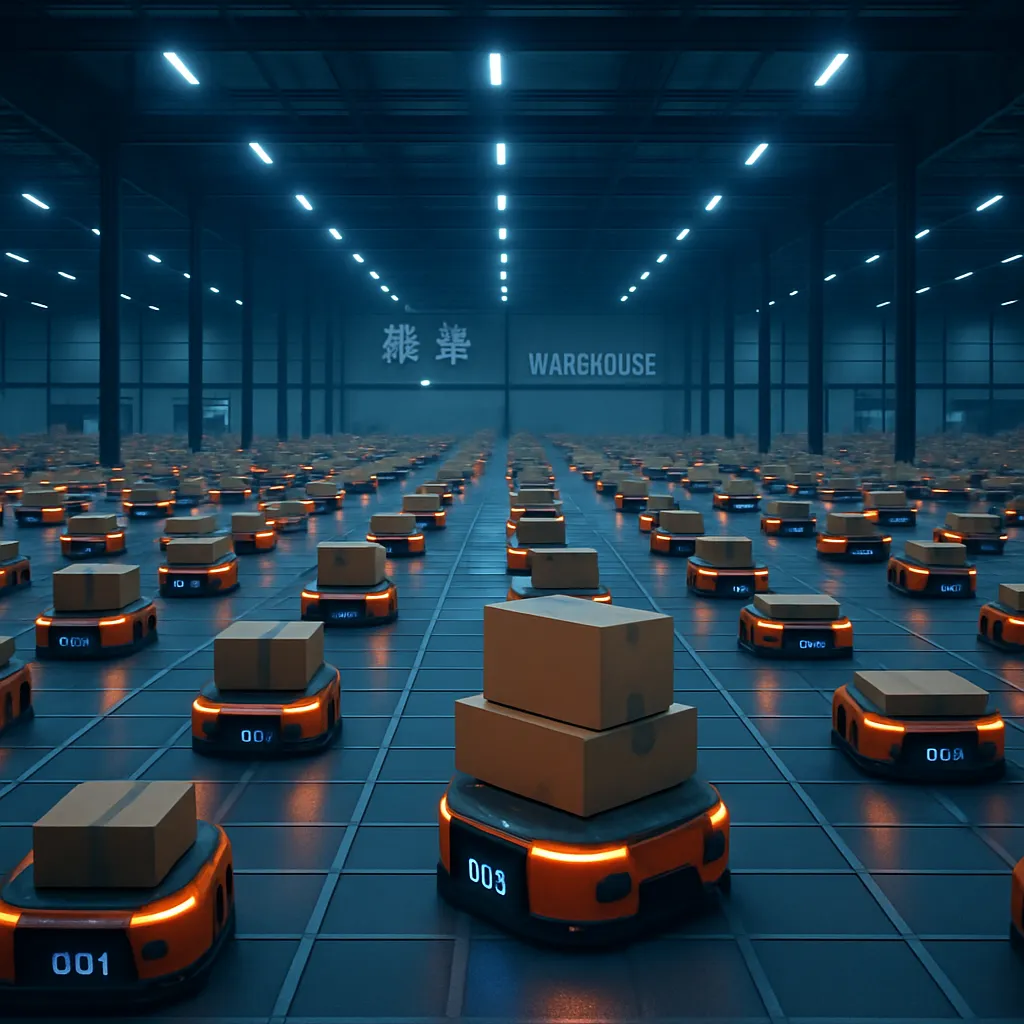
Cainiao currently operates more than 40 overseas warehouses across 18 countries. The 2026 expansion isn't incremental — it's a generational leap. The new facilities will feature next-generation warehouse robots and an AI-powered scheduling system designed to dramatically increase storage density and operational efficiency compared with traditional automated warehouses.
Shuai Yong, Vice President of Cainiao and General Manager of the Global Supply Chain Division, framed the initiative as an AI transformation: "As the AI era arrives, we are accelerating the application of AI and robotics across our global supply chain network to enhance the consumer experience."
The target is ambitious: significantly expanded next-day and two-day delivery coverage from robotic warehouses across every market where new facilities are deployed.
What Makes These Warehouses Different
This isn't a simple conveyor-belt upgrade. Cainiao described its approach as a ground-up redesign of logistics operations with AI and automation embedded across storage, movement, and delivery.
On the warehouse floor, the company is developing next-generation logistics robots for three critical functions: high-density storage, automated picking, and goods movement. These are the operations that determine how quickly items can be retrieved and orders consolidated for dispatch — the bottleneck in most fulfillment centers.
The AI scheduling system sits at the center. In robotic warehouse environments, scheduling software assigns tasks across robot fleets and equipment to maintain throughput while avoiding congestion and downtime. Cainiao's system uses real-time task allocation, collision avoidance, and routing algorithms that coordinate hundreds of autonomous mobile robots simultaneously.
Beyond the warehouse walls, the AI layer extends to demand forecasting models that predict sales patterns to reduce overstock and stockouts, and to automated customs clearance through compliance documentation.
A Market Primed for Disruption
The timing isn't accidental. The global warehouse robotics market is projected to grow from approximately $7.35 billion in 2026 to more than $25.41 billion by 2034, expanding at a CAGR of 16.8%, according to Fortune Business Insights. Separately, Mordor Intelligence estimates the market at $10.96 billion in 2026, growing at 17.5% CAGR to reach $24.55 billion by 2031.
Meanwhile, the cross-border ecommerce market that feeds these warehouses is on its own exponential trajectory. Precedence Research projects the global cross-border ecommerce market will grow from $636.34 billion in 2026 to approximately $2 trillion by 2034 at a 15.44% CAGR. The volume of packages flowing through cross-border fulfillment networks is scaling faster than existing infrastructure can handle — and Cainiao is racing to fill that gap.
The Competitive Threat to Incumbent 3PLs
Here's where it gets uncomfortable for established fulfillment providers. Cainiao isn't just building warehouses — it's building a vertically integrated, AI-native logistics network that can offer merchants on Alibaba, AliExpress, and Temu a fully managed fulfillment experience from factory door to consumer doorstep.
The expanded services include:
- Large-item warehouses for overseas shipment of bulky goods requiring specialized storage and handling
- Factory container loading globally, capturing goods at the earliest point in the supply chain
- Bundled shipments that consolidate multiple orders from the same buyer into single parcels
- Direct inbounding of unpackaged goods into warehouses without individual packaging
- Secondary assembly within facilities for kitting and customization
For incumbent Western 3PLs, this represents a new class of competitor: one backed by the transaction data of the world's largest ecommerce ecosystem, with AI capabilities trained on billions of package movements, and a willingness to invest heavily in physical infrastructure.
Geopolitical Considerations Shippers Can't Ignore
Cainiao building robotic warehouses in the Netherlands, France, Germany, and the United States is not just a logistics story — it's a geopolitical one. As U.S.-China trade tensions continue to reshape supply chains and IEEPA tariff consequences ripple through 2026, Chinese logistics infrastructure inside Western markets raises questions that shippers need to evaluate:
Data sovereignty: Warehouses generate enormous amounts of inventory, order, and shipment data. Where that data flows and who controls it matters for compliance-sensitive industries.
Regulatory scrutiny: The same political dynamics that produced TikTok divestiture battles could extend to logistics infrastructure. Shippers should assess whether relying on Chinese-owned fulfillment networks creates concentration risk.
Service advantage: On the flip side, Cainiao's AI-native approach and massive scale could deliver genuinely superior service levels. For sellers on Alibaba platforms, the integrated fulfillment experience may be hard to replicate through traditional 3PL relationships.
What Shippers Selling Cross-Border Should Know
If you're a shipper moving goods through cross-border ecommerce channels, Cainiao's expansion creates both opportunities and strategic decisions:
-
Evaluate Cainiao fulfillment for Alibaba/AliExpress channels: The integrated warehouse-to-doorstep experience will likely offer the fastest delivery times for these platforms.
-
Diversify your fulfillment network: Don't concentrate all cross-border volume with any single provider — regardless of how advanced their robotics are. Resilience requires optionality.
-
Benchmark your current 3PL against AI-native standards: Cainiao's AI scheduling, demand forecasting, and automated customs clearance are setting a new performance bar. If your current provider can't match those capabilities, you're leaving margin on the table.
-
Monitor regulatory developments: Keep tracking policy signals around Chinese logistics investment in Western markets. Build contingency plans that allow you to shift volume if the regulatory landscape changes.
Managing Multi-Provider Cross-Border Fulfillment
The reality for most shippers in 2026 is a multi-provider, multi-channel fulfillment strategy. You may use Cainiao for AliExpress volume, a regional 3PL for domestic ecommerce, and a different provider for B2B distribution — all while managing customs compliance across multiple jurisdictions.
This is where platform-level visibility becomes essential. CXTMS helps shippers orchestrate cross-border fulfillment across multiple providers, giving you a single view of inventory positions, shipment status, and compliance documentation regardless of which warehouse or logistics partner is handling the goods.
The warehouse robotics revolution isn't coming — it's here. Cainiao's 2026 buildout is a signal that the infrastructure layer of global ecommerce is being fundamentally rewired. The shippers who thrive will be those who understand the new competitive dynamics, diversify intelligently, and use technology to maintain control across an increasingly complex fulfillment landscape.
Ready to manage cross-border fulfillment across multiple providers and markets? Request a CXTMS demo and see how unified logistics visibility keeps you ahead of the robotics revolution.