Microsoft's Supply Chain 2.0 Vision: How Simulations, Agentic AI, and Physical AI Are Creating the Three-Layer Autonomous Logistics Stack

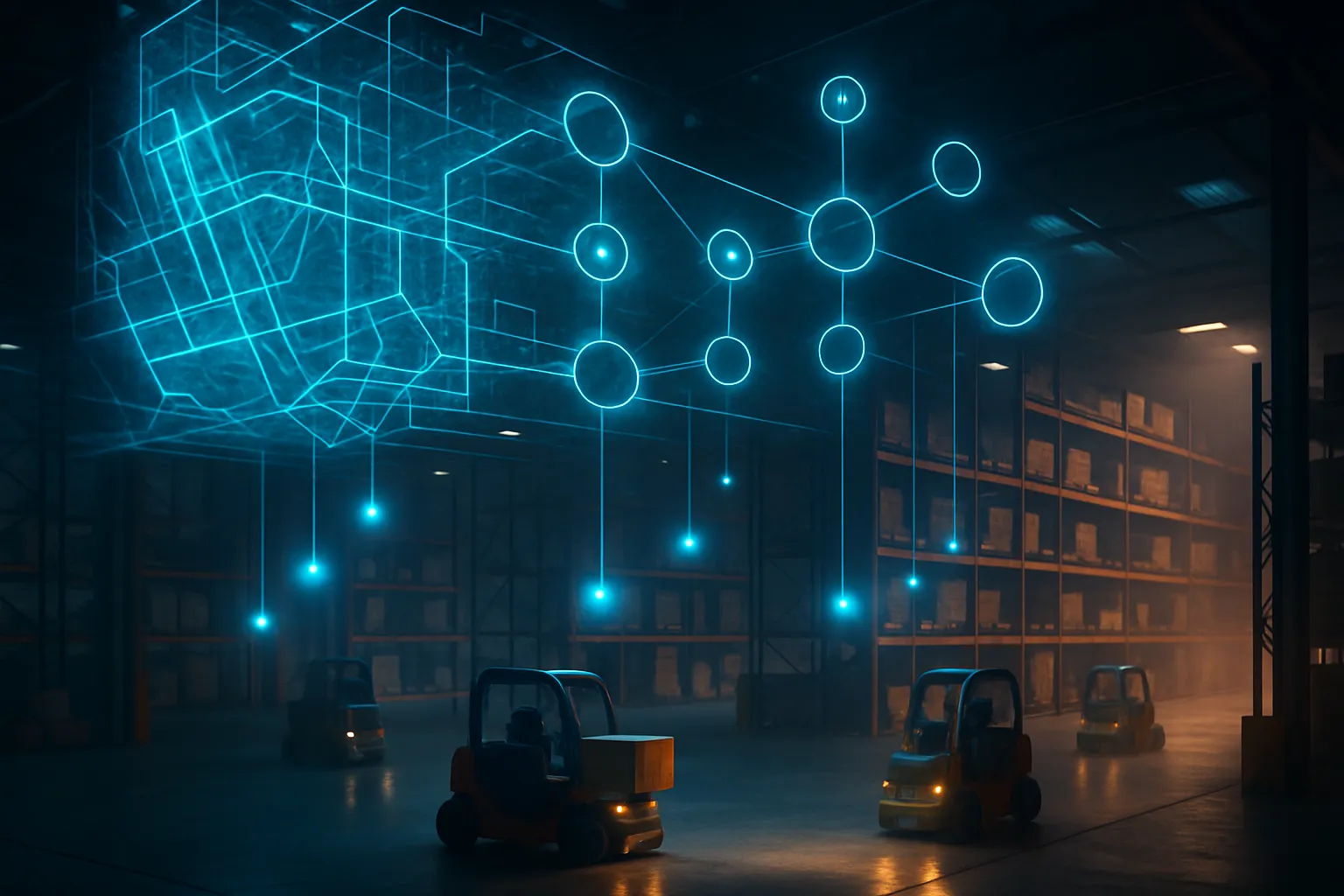
On March 24, 2026, Microsoft published its Supply Chain 2.0 framework — a strategic blueprint that redefines how enterprises should think about logistics technology. Rather than treating AI as a single tool bolted onto existing systems, Microsoft is framing the autonomous supply chain as a three-layer stack: simulations and digital twins at the foundation, agentic AI in the middle for autonomous decision-making, and physical AI at the top where robots and machines operate in the real world.
The timing matters. According to a Gartner survey released in February 2026, 55% of supply chain leaders already expect agentic AI to reduce the need for entry-level hiring. Gartner separately predicts that by 2031, 60% of supply chain disruptions will be resolved without human intervention. Microsoft's three-layer framework is the most concrete architecture yet for how that autonomous future actually gets built.
Layer 1: Simulations and Digital Twins — The Risk-Free Testing Ground
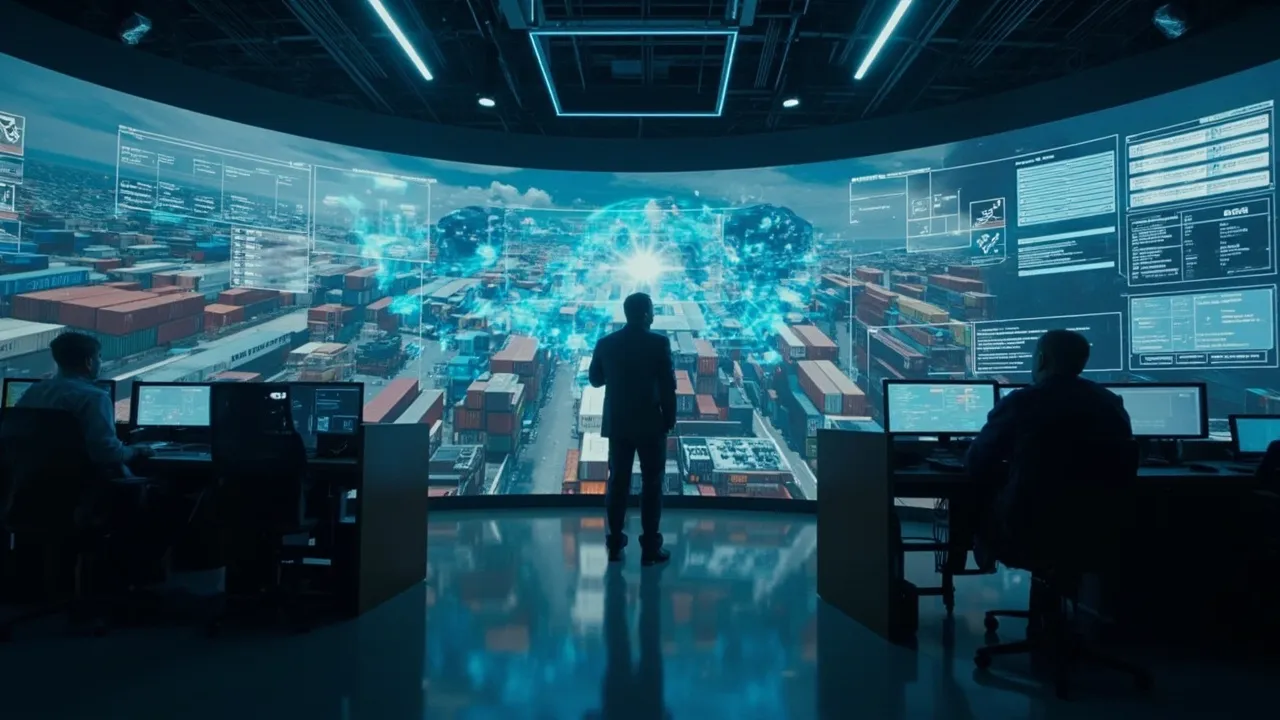
The foundation of Supply Chain 2.0 is discrete event simulation (DES) — the ability to create virtual replicas of physical supply chain networks and stress-test them before making real-world changes.
Microsoft is leveraging Azure Digital Twins, Azure Machine Learning, and the new machine learning models in Microsoft Fabric to let organizations simulate demand patterns, shortages, route disruptions, and capacity constraints. The idea is straightforward: before you restructure a distribution network or switch carriers, you run the scenario in simulation first.
This isn't theoretical. Microsoft operates one of the world's most complex cloud supply chains, spanning more than 70 Azure regions, over 400 datacenters, and a fiber network exceeding 600,000 kilometers. The company has used its own logistics operations as "customer zero" for these simulation capabilities, consolidating more than 30 legacy systems into a single Azure-based supply chain data lake starting in 2018.
Key partners are extending these simulation capabilities to the broader market. Cosmo Tech offers an AI simulation platform for supply chain risk management on Azure, enabling dynamic digital twins that model how disruptions cascade through interconnected systems. Paiqo's prognotix platform, available on the Microsoft Marketplace, uses more than 70 algorithms to generate optimized demand forecasts directly within Azure environments.
For shippers, the practical takeaway is clear: simulation is shifting from a nice-to-have planning exercise to a core operational capability that reduces the cost of bad decisions before they're made.
Layer 2: Agentic AI — When Software Makes Its Own Decisions
The middle layer is where Supply Chain 2.0 makes its most significant departure from traditional logistics technology. Agentic AI refers to AI systems that don't just analyze data and present dashboards — they reason, plan, and take autonomous action across complex supply chain workflows.
Microsoft's own supply chain already runs more than 25 AI agents and applications, with a target of scaling to 100+ agents by the end of 2026 and equipping every employee with agentic support. Three examples from Microsoft's internal operations illustrate the scope:
- Demand Planning Agent: Drives AI-based demand simulations for non-IT rack components, improving forecast accuracy and reducing manual reconciliation across Microsoft's datacenter supply chain.
- Multi-Agent DC Spare-Part Space Solver: Combines computer-vision-driven monitoring with multi-agent reasoning to forecast spare-part storage needs and proactively mitigate space or stockout risks.
- CargoPilot Agent: Continuously analyzes transport modes, routes, cost structures, carbon impact, and cycle times — providing optimized shipment recommendations that balance speed, sustainability, and efficiency.
The results are already measurable. Microsoft reports that AI in logistics is saving their teams hundreds of hours each month, translating directly into operational efficiency and business value.
What makes this wave different from previous AI hype is the infrastructure beneath it. Microsoft Foundry provides end-to-end agent hosting, while open protocols like the Model Context Protocol (MCP) standardize how AI agents connect with each other and with enterprise systems. This means agents aren't isolated bots — they're interconnected participants in a unified decision-making mesh.
As Supply Chain Dive reported in their 2026 trends analysis, agentic AI is "poised to be a particularly alluring technology in the supply chain space, given its applications in demand planning, forecasting, and decision-making." Gartner backs this up with a prediction that by 2030, 50% of cross-functional supply chain management solutions will use intelligent agents to autonomously execute decisions.
Layer 3: Physical AI — Robots That Understand the Real World
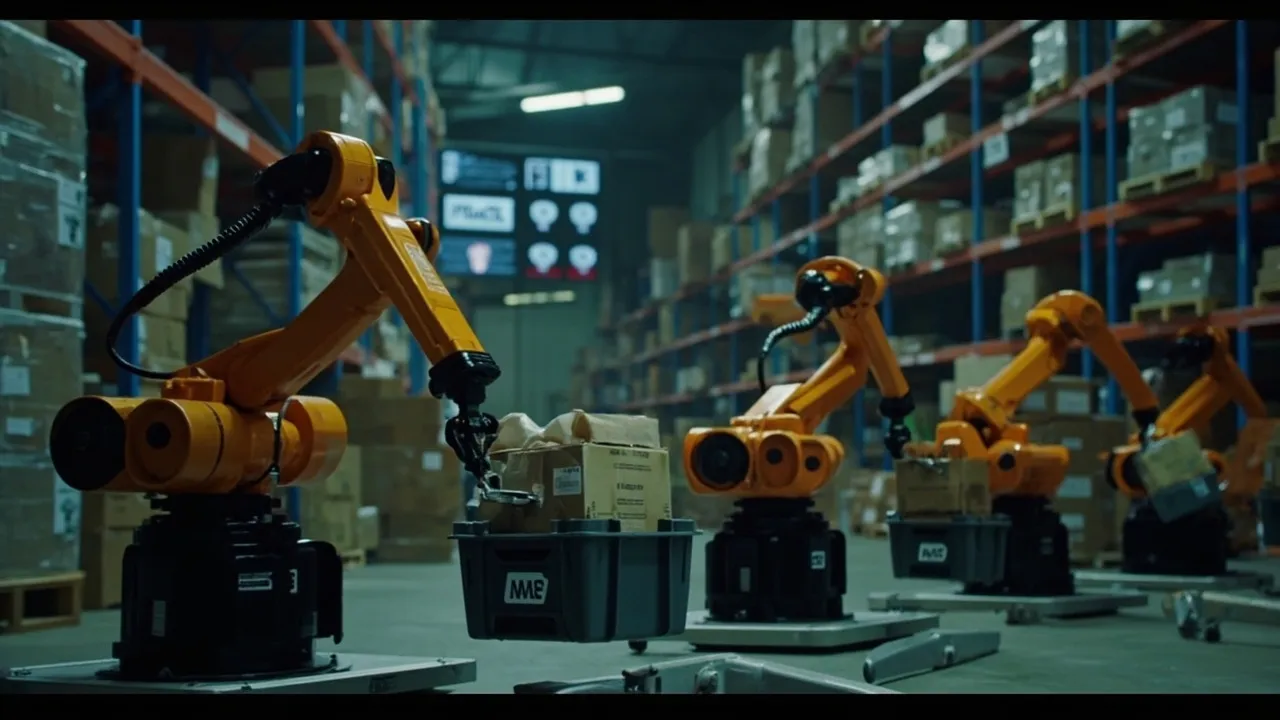
The top layer of the stack bridges the digital-physical divide. Physical AI refers to embodied intelligence — robots and autonomous systems that can perceive, navigate, and manipulate objects in real-world logistics environments like warehouses, distribution centers, and loading docks.
Microsoft highlights several enabling technologies:
- NVIDIA Cosmos: World foundation models that help robots understand and predict physical interactions.
- OSMO: Microsoft's edge-to-cloud compute framework on Azure that enables physical AI workloads to run across warehouse edge devices and cloud infrastructure.
- Wandelbots NOVA: A robot-agnostic operating system that democratizes industrial robot programming. NOVA's Sim-to-Real technology accelerates robot deployment by 50% while eliminating costly programming errors, making it practical for logistics operators without deep robotics expertise to deploy automated sorting, picking, and fulfillment processes.
The physical AI layer is where the three-layer stack comes full circle. Simulations create the virtual environment where robot behaviors are trained and validated. Agentic AI provides the decision logic for what robots should do and when. Physical AI executes those decisions in the warehouse or on the dock.
The Partner Ecosystem: NTT DATA, PwC, and Capgemini
Microsoft isn't building Supply Chain 2.0 alone. The framework is backed by a growing partner ecosystem:
- NTT DATA is working on network rebalancing solutions that leverage Microsoft's AI infrastructure to help enterprises optimize logistics network design.
- PwC is delivering end-to-end agentic AI consulting services, helping enterprises navigate the organizational and process changes required to operationalize autonomous supply chains.
- Capgemini is building an agentic end-to-end offering using Microsoft's latest AI technology, with a planned launch at Hannover Messe in April 2026 — one of the world's largest industrial technology exhibitions.
This partner strategy signals that Microsoft sees Supply Chain 2.0 not as a product but as a platform play, similar to how Azure became the default cloud infrastructure for enterprise IT.
What This Means for Shippers and Logistics Operators
Microsoft's three-layer framework provides a useful mental model for logistics leaders evaluating their own AI roadmaps:
- Start with data unification. Microsoft's own transformation began by consolidating 30+ siloed systems into a single data lake. Without clean, unified data, neither simulations nor agents can function effectively.
- Invest in simulation before automation. Testing scenarios digitally before implementing them physically reduces risk and accelerates ROI on logistics network changes.
- Plan for agents, not just dashboards. The shift from analytics to autonomous action requires rethinking workflows, approval processes, and human oversight models.
- Watch the physical AI timeline. Warehouse robotics is moving from custom-coded to platform-based. When robot programming becomes as accessible as deploying a software application, adoption curves will accelerate dramatically.
The transition from manual supply chains to autonomous logistics stacks won't happen overnight. But Microsoft's framework — and its willingness to test it on its own $70 billion supply chain operation first — provides the clearest roadmap yet for how the industry gets there.
How CXTMS Fits Into the Autonomous Logistics Stack
CXTMS is built with an API-first architecture designed to integrate seamlessly with cloud-native platforms like Microsoft Azure, simulation engines, and emerging agentic AI frameworks. Whether you're connecting digital twin outputs to real-time freight execution or feeding agent-driven recommendations into carrier selection workflows, CXTMS provides the transportation management layer that bridges autonomous planning with physical logistics execution.
Ready to future-proof your logistics technology stack? Request a CXTMS demo today and see how our platform connects with the simulation, AI, and automation tools shaping Supply Chain 2.0.