The Heavy-Duty Truck Repair Technician Crisis: Why 54% of Shops Are Understaffed Despite 68% Revenue Growth

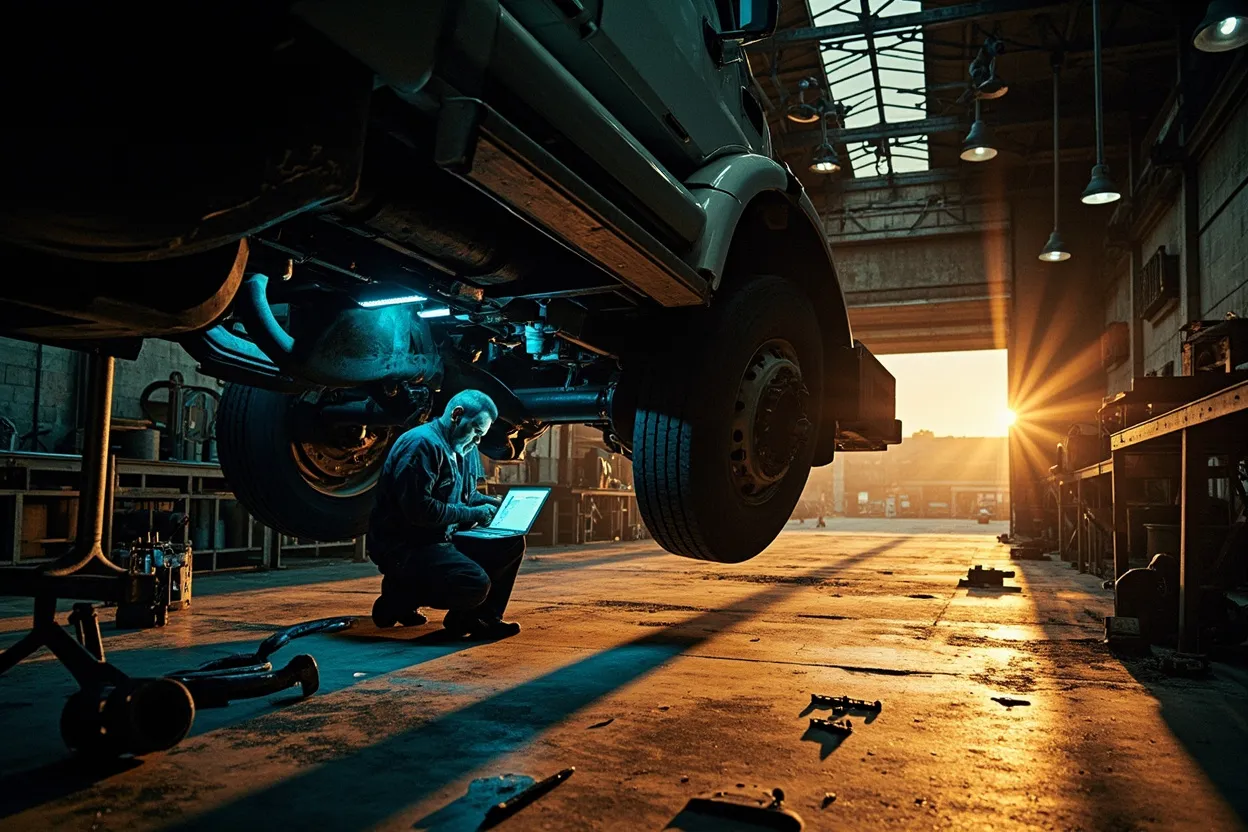
The freight industry talks endlessly about the driver shortage — the well-documented 174,000-driver gap that dominates headlines and conference panels. But there's a second workforce crisis quietly throttling freight capacity from a completely different angle: the heavy-duty truck repair technician shortage.
Fullbay's sixth annual State of Heavy-Duty Repair report, drawn from nearly 900 professionals across the commercial vehicle repair sector, exposes a paradox that should alarm every shipper and fleet operator. The industry is delivering record revenue — and simultaneously running out of the people who keep trucks on the road.
Record Revenue Meets a Workforce Wall
The numbers tell a story of booming demand crashing into structural labor constraints. Fullbay shops processed $5.04 billion in service order commerce in 2025, with an additional $1.5 billion in parts revenue flowing through the system. Net new revenue from 2023 to 2025 reached $2.05 billion — a 68% increase that outpaced broader freight market softness.
Sixty-one percent of shops reported business was better in 2025 than the prior year. And yet, 54% of those same shops reported being understaffed, with 40% of owners saying hiring technicians was harder than ever.
Why the disconnect? Aging trucks are driving demand through the roof. The average fleet truck age continues to climb as purchase prices push operators to keep equipment running longer. Emissions complexity on newer models means many fleets actively prefer older, simpler trucks — which need more frequent repair. And as freight rates improve, operators are pulling parked trucks and trailers with "lot rot" back into service, flooding shops with deferred maintenance work.
The demand side is accelerating. The supply side is shrinking.
Labor Rates Are Surging — And It's Not Enough
Median shop labor rates jumped 10% year over year, climbing from $135 per hour in 2024 to $149 per hour by the end of 2025. Mobile repair operations command roughly $160 per hour — a premium reflecting the even tighter supply of road-capable technicians.
Technician wages surged 14.1% to a median $36.50 per hour — nearly three times the pace of inflation. Yet shops still can't fill positions.
"It's basically like an auction block at this point," said Peter Cooper, CEO of Ascend Consulting, during the TMC 2026 Annual Meeting panel. "Guys are leaving for a dollar an hour raise. They'll leave a shop and go across town."
The Bureau of Labor Statistics projects roughly 26,500 openings for diesel service technicians and mechanics each year over the current decade, driven primarily by replacement needs as experienced workers exit the trade. Industry research indicates that 177,000 new entrants were needed between 2022 and 2026 to meet both new demand and replace departures — a target the pipeline has consistently missed.
The Demographics Are Alarming
This isn't a cyclical staffing dip. The Fullbay data reveals a structural demographic crisis:
- Median respondent age: 41 years old
- Only 17% of respondents are age 30 or under
- 42% of technicians have more than 20 years of experience
That last statistic should stop fleet managers in their tracks. Nearly half the current heavy-duty technician workforce is approaching retirement eligibility, and the pipeline of younger replacements is a trickle, not a flood.
For smaller operations — the median Fullbay shop runs eight employees and five technicians — losing even a single experienced tech is devastating. As Jack Poster, VMRS services manager at the American Trucking Associations, noted: when you have five or six technicians and lose one, that's an immediate 17-20% capacity hit. Large shops can absorb attrition. Small shops get crushed.
Culture Beats Compensation in Retention
One of the report's most actionable findings challenges conventional thinking about workforce retention. When technicians were asked what matters most, culture ranked first at 49%, with pay second at 36%.
Even more telling: 75% of technicians said they would recommend their current shop to others — significantly higher than automotive repair industry benchmarks.
This creates an opportunity. Cooper pointed out that most automotive technicians are dissatisfied with their work environments, making cross-industry recruitment a viable strategy for heavy-duty shops that invest in workplace culture, respect, and recognition.
The shops winning the talent war aren't just offering higher wages — they're building environments where technicians feel valued, investing in modern diagnostic equipment, and creating career progression paths that didn't exist a decade ago.
AI as a Force Multiplier: Fullbay's Pitstop Acquisition
Fullbay isn't just documenting the problem — it's building technology to mitigate it. On March 25, 2026, the company announced its acquisition of Pitstop, an AI-powered predictive maintenance platform that shifts the repair model from reactive to proactive.
The integration brings several capabilities into Fullbay's ecosystem:
- Real-time vehicle monitoring that flags issues before breakdowns occur
- Automated service request generation from fault codes and predictive alerts
- Parts demand prediction ensuring inventory availability before jobs start
- Greater than 94% accuracy in identifying potential failures weeks in advance
By analyzing billions of data points across Fullbay's network of over 5,000 shop locations, the Pitstop system transforms how limited technician capacity gets allocated. Instead of spending hours diagnosing unexpected failures, technicians can focus on planned, efficient repairs with parts already staged.
"This acquisition enables us to change that model by delivering predictive maintenance, real-time diagnostics, fault-code management and automated fleet communication directly into Fullbay," said Trent Broberg, Fullbay's CEO.
What This Means for Shippers
The technician shortage isn't just a shop-level problem — it's a freight capacity constraint with direct cost implications:
Rising maintenance costs flow through to rates. With labor rates up 10% and technician wages up 14.1%, carrier operating costs are climbing. Shops pass parts markup increases (21-30% depending on scale) to fleet customers, who pass them to shippers.
Longer repair cycles reduce available capacity. Understaffed shops mean longer dwell times for trucks awaiting repair. Every truck sitting in a bay or queue is a truck not hauling freight.
Deferred maintenance increases breakdown risk. When shops can't schedule preventive maintenance due to staffing constraints, unexpected breakdowns increase — creating the exact service failures that cause tender rejections and missed deliveries.
Tariffs add another layer. While 47% of shops reported no significant tariff impact yet, 46% noted increased replacement part prices. As inventory buffers deplete through 2026, parts cost escalation will compound the labor cost squeeze.
Building Resilience Into Your Fleet Maintenance Strategy
Smart shippers and fleet operators should treat the technician shortage as a planning variable, not just a news story:
- Audit carrier maintenance practices during procurement — shops investing in predictive maintenance and technician retention will deliver better uptime
- Factor rising repair costs into rate negotiations rather than absorbing them as surprises
- Prioritize carriers with technology-enabled maintenance programs that maximize the productivity of their existing technician workforce
- Build maintenance-related KPIs into carrier scorecards — breakdown frequency, preventive maintenance compliance, and average repair turnaround times
CXTMS gives shippers the visibility to track carrier performance across every dimension that impacts service reliability — including the maintenance-driven capacity constraints reshaping fleet economics in 2026. Request a demo to see how our platform helps you build freight strategies that account for the full picture of carrier capability.