Red Sea Routing Costs in 2026: The $1 Million Cape Detour

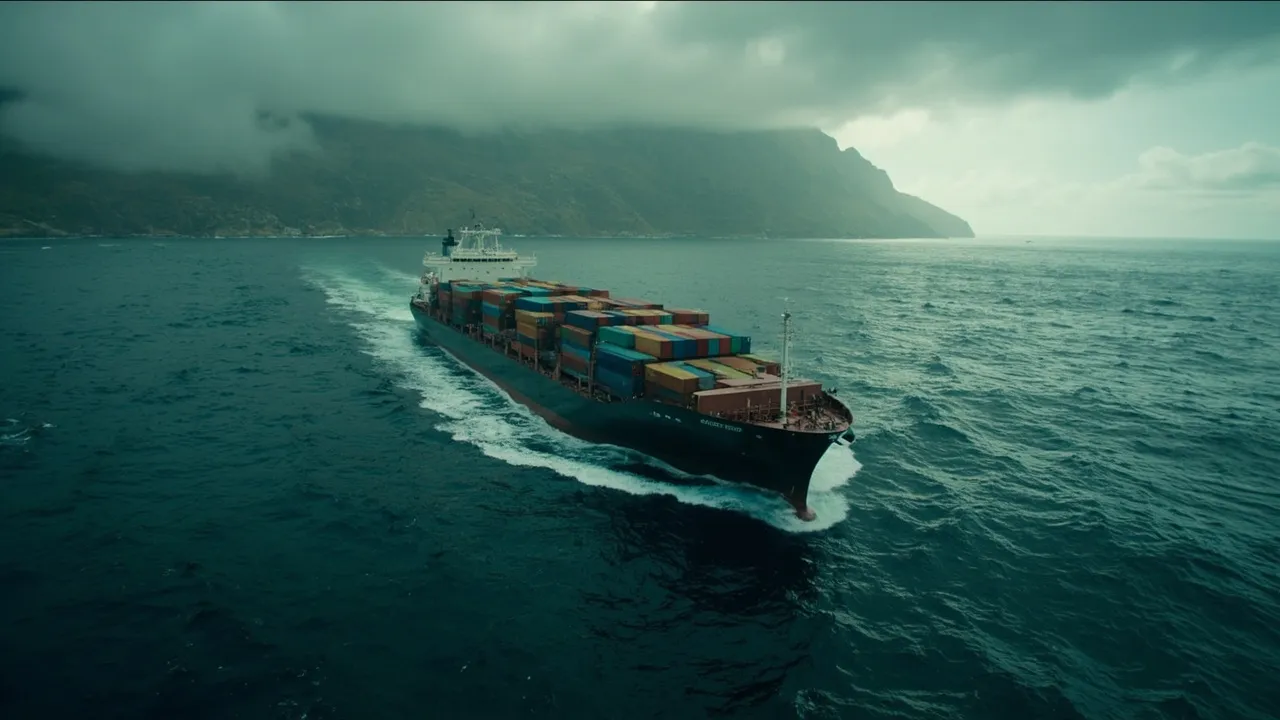
The detour around the Cape of Good Hope stopped being a temporary fix months ago. In 2026, it's the default routing assumption for Asia-Europe trade, and the financial consequences are compounding.
The Numbers Don't Lie
The Cape routing adds 10 to 14 days to a typical Asia–Europe transit compared to Suez Canal passage, according to industry analyses tracking global diversions through late March 2026. FreightWaves provides ongoing coverage of Asia-Europe lane disruptions and Cape routing cost impacts for shippers tracking current market rate data. That's not a minor schedule adjustment — it's a fundamental shift in how long capital sits in transit, how much buffer inventory you need, and how much extra fuel you burn.
On fuel alone, a large container vessel burning 150 to 200 metric tonnes of bunker fuel per day consumes an additional $200,000 to $350,000 in incremental fuel costs per round trip when routing via the Cape instead of Suez. For the largest megamax vessels, that number stretches toward $1 million per voyage once you factor in the full operational cost delta — longer crew time, additional port fees at waypoints, and the cumulative wear on a vessel making a significantly longer round trip.
Annualized across the global container fleet, analysts estimate the Cape diversion represents $7–9 billion in excess shipping costs in 2025–2026, absorbed partly by carriers and passed on to shippers through higher rates and surcharges.
A Fragile Return That Didn't Stick
There was a moment in early 2026 when it looked like things might normalize. By January, more than 70% of container traffic that had been diverted around the Cape had returned to Suez routes as Houthi attack frequency appeared to moderate. Then the political situation shifted again.
The repercussions of renewed military operations in the region, according to Xeneta chief analyst Peter Sand, "will see the further weaponization of trade and shatter hopes of a large-scale return of container shipping to the Red Sea in 2026." The Gemini Cooperation reversed a recent decision to reroute its ME11 service back through the Red Sea. Ocean Network Express CEO Jeremy Nixon was blunt: "There seems to be no political breakthrough. We can't put the vessels, the cargo, the crew at risk."
That is the posture of an industry that has reclassified the Red Sea as an unacceptable routing option for the foreseeable future.
What Shippers Are Actually Paying
Beyond the direct fuel and transit time costs, several additional charges are layering onto shipper invoices:
- War risk premiums: Marine insurance costs have tightened considerably for Cape routing, with additional charges reaching 0.5% to 1% of a vessel's value during elevated threat periods. Some carriers, including Maersk, have reduced or withdrawn insurance cover for certain shipments into affected areas altogether.
- Operational surcharges: Carriers have implemented sustained congestion and Cape routing surcharges that are now embedded in Asia-Europe rate structures rather than treated as temporary add-ons.
- Inventory carrying costs: Longer transit times mean more capital tied up in floating inventory. For a mid-sized importer moving 500 TEUs per week, the incremental inventory carrying cost of a 12-day routing extension is measurable in hundreds of thousands of dollars annually at typical working capital costs.
- Schedule reliability penalties: Cape routing disrupts vessel scheduling reliability, which cascades into port congestion at both ends of the trade lane. That congestion has a real cost in dwell time and demurrage.
Building Contracts That Survive the Detour
The days of treating Cape routing as an exceptional circumstance are over. Freight procurement teams that haven't updated their contract frameworks are leaving money on the table — or worse, signing agreements that don't account for what is now the baseline routing scenario.
Routing clause renegotiation should be explicit. Contracts should specify how Cape routing costs are allocated between carrier and shipper, and under what conditions a routing change triggers a rate adjustment. Many 2024-era contracts assumed routing flexibility was a carrier prerogative; that assumption doesn't hold when the alternative is $1 million per voyage.
Fuel adjustment mechanisms need to be recalibrated. BAF formulas that were calibrated for Suez routing need to be revisited for Cape operations, which have meaningfully different fuel consumption profiles. A 10-14 day extension on a 21-day base transit changes the effective fuel cost per TEU in ways that flat BAF structures don't capture.
Lead time buffer planning must now assume Cape routing as the default scenario, not the exception. Procurement calendars, safety stock calculations, and supplier delivery windows need to be adjusted to reflect 10-14 additional transit days. Shippers who built their 2024 lean inventory models on Suez transit times are operating with systematically underestimated safety stock requirements.
The Bottom Line
Bab el-Mandeb isn't a crisis that's going to resolve itself cleanly in 2026. The structural drivers — regional instability, the weaponization of trade chokepoints, and the absence of a political breakthrough — show no signs of reversal. Ocean Network Express's CEO called Cape routing "the new normal," and the industry's behavior confirms that assessment.
Shippers who treat the Cape detour as a temporary surcharge are misreading the situation. The costs are structural now, embedded in fuel burn rates, inventory carrying costs, and contract rate structures. The question isn't whether to adapt — it's how fast you can update your procurement frameworks before the next rate cycle locks in assumptions that don't reflect reality.
The detour costs a million dollars per voyage. Your contract framework should be built accordingly.
Ready to bring visibility to your ocean freight operations? Request a CXTMS demo and see how CXTMS helps freight forwarders manage multimodal routing complexity, track shipments across all trade lanes, and maintain real-time cost visibility — even when the fastest route around is the longest one.