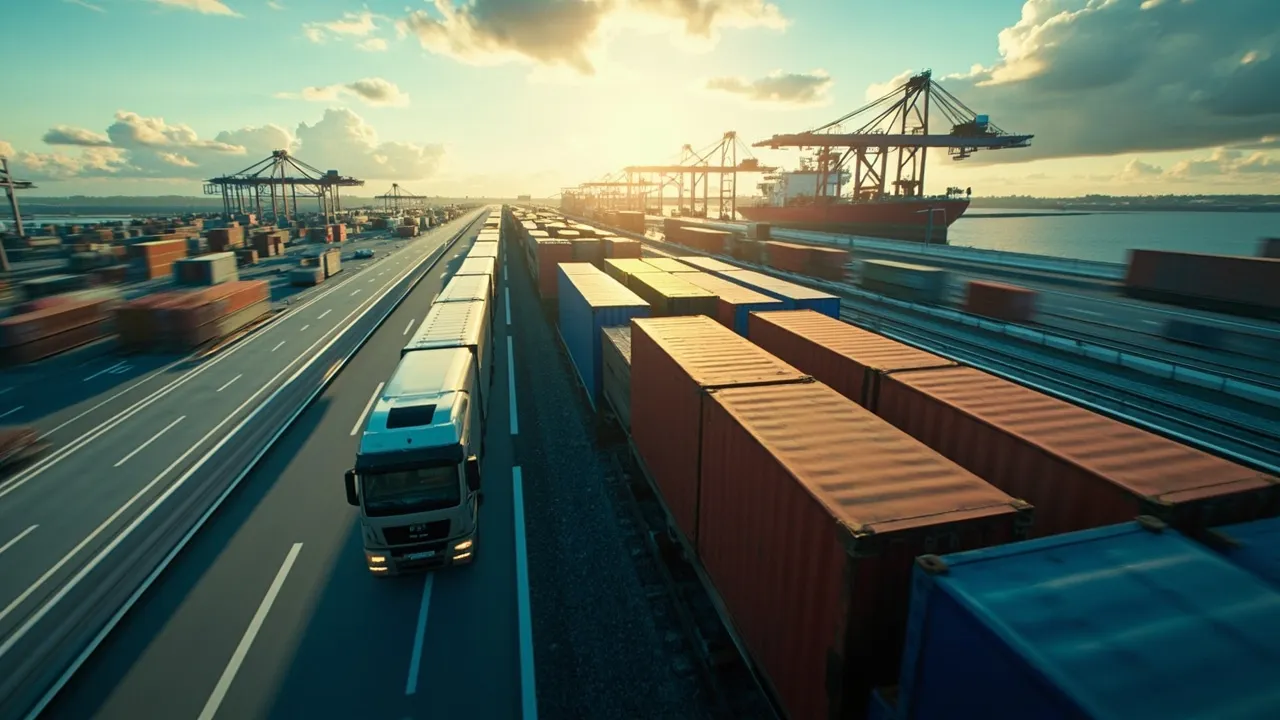
Georgia Ports Opens Gainesville Inland Terminal in May 2026: How the Inland Port Model Is Reshaping Southeast Freight Networks

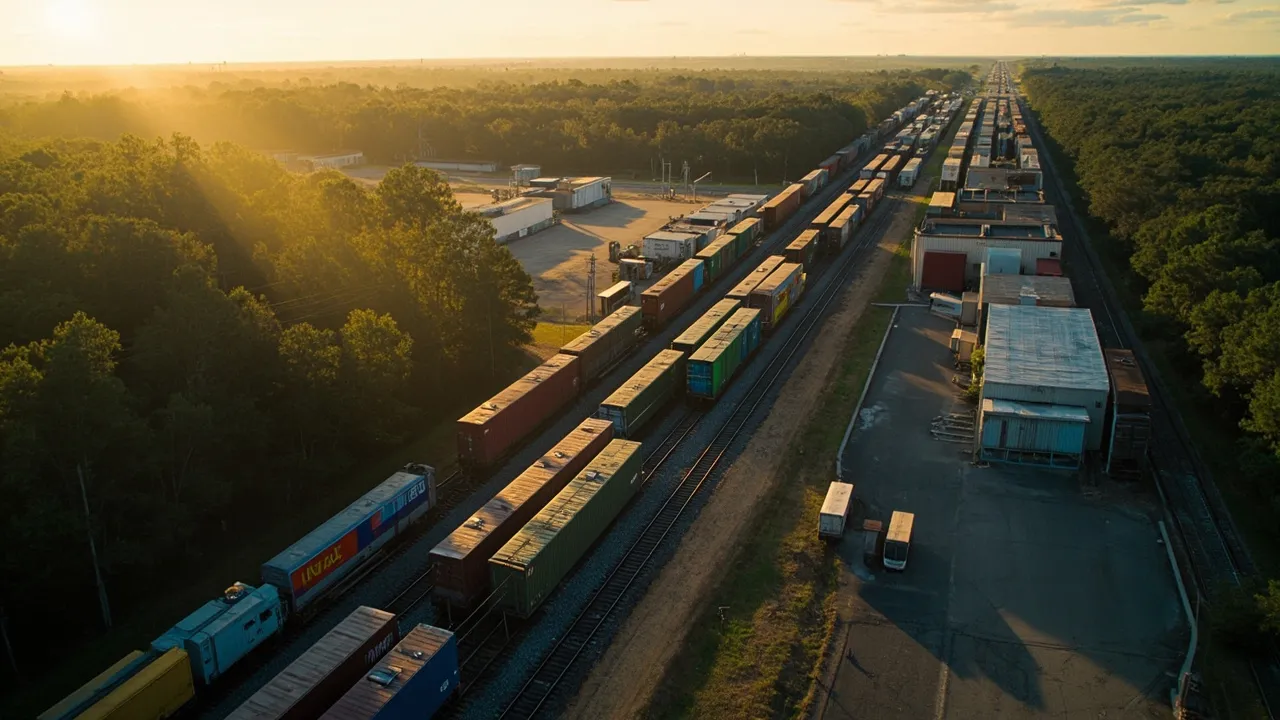
On May 4, 2026, the Georgia Ports Authority (GPA) will open the doors to its newest logistics asset: a $134 million inland port in Gainesville, Georgia, roughly 60 miles north of Atlanta. With six rail tracks spanning 18,000 feet of capacity and an annual throughput target of 200,000 containers at full build-out, this isn't just another railyard — it's a strategic node in a freight network model that more shippers should be paying attention to.
The Gainesville Inland Port will replace an estimated 26,000 truck roundtrips in its first year alone, eliminating 600 highway miles per container that would otherwise clog I-85 and metro Atlanta corridors. For shippers in Northeast Georgia's manufacturing belt — home to 330 manufacturers spanning poultry, heavy equipment, and forest products — this opens a direct rail pipeline to Savannah's 40-ship-per-week global carrier network.
What Makes Inland Ports Different from Port-Centric Logistics
The logistics industry tends to use "inland port" loosely, but the model GPA is executing is architecturally distinct from port-centric logistics strategies where distribution centers relocate to coastal ports.
An inland port does the opposite: it extends the coastal port's reach inland via rail, creating a satellite facility where containers are loaded and unloaded far from the congested port zone. Containers move by rail — not truck — between the inland terminal and the seaport. The shipper interacts with the inland facility as if it were the port itself, handling customs clearance, container staging, and drayage locally.
The key advantage is drayage compression. Instead of a 300-mile one-way truck haul from Gainesville to Savannah, shippers do a short local dray to the inland port and let Norfolk Southern's five-day-a-week rail service handle the long-haul segment. According to FreightWaves' coverage of the project, the 104-acre site was specifically designed to shift containers from highway to rail at scale, directly addressing the Southeast's growing highway congestion problem.
Gainesville Terminal Specs: What Shippers Need to Know
The numbers behind the Gainesville Inland Port tell the story of a facility built for serious intermodal volume:
- Opening date: May 4, 2026
- Investment: $134 million (up from the initial $127 million budget, reflecting expanded scope)
- Site: 104 acres with six rail tracks totaling 18,000 feet
- Rail operator: Norfolk Southern, five-day-a-week service to Savannah
- Annual capacity: 200,000 containers at full build-out
- Highway miles eliminated: 600 roundtrip miles per container
- First-year truck trip reduction: 26,000 roundtrips removed from Georgia highways
GPA also invested $4.8 million in local infrastructure improvements in Hall County to minimize community impact — eliminating an at-grade rail crossing, rerouting White Sulphur Road south of the terminal for uninterrupted emergency vehicle access, and resurfacing Cagle Road as an alternative residential route. Both projects were completed in summer 2025, well ahead of the port's opening.
"Our new inland rail facility in Gainesville will significantly offset truck traffic congestion in Atlanta and improve air quality," said Griff Lynch, GPA President and CEO, at the March 24 board meeting.
GPA's Broader Inland Network: Three Ports, One Strategy
Gainesville doesn't exist in isolation. It's the third node in GPA's expanding inland port network, joining two existing facilities that collectively demonstrate how a coordinated inland strategy multiplies the reach of a single coastal port:
Appalachian Regional Port (Crandall, Georgia): Located in Northwest Georgia, this CSX-served terminal opened in 2018 and connects the carpet manufacturing and flooring industry corridor to Savannah. It serves a region that previously relied entirely on long-haul trucking for international shipments.
Cordele Inland Port (Cordele, Georgia): Situated in South-Central Georgia, Cordele is served by two short-line railroads (Heart of Georgia and Georgia Central) with connections to both CSX and Norfolk Southern. It provides overnight rail access to Savannah three times weekly, serving agricultural and timber producers in the state's southern half.
Gainesville Inland Port (Gainesville, Georgia): The newest addition targets Northeast Georgia's manufacturing sector via Norfolk Southern, completing a geographic triangle that gives GPA inland coverage across the state's northern, northwestern, and southern corridors.
Together, these three facilities are part of GPA's nearly $5 billion infrastructure investment plan over the next decade — a program that also includes the $1.6 billion Ocean Terminal renovation in Savannah (Phase 1 opening July 2027), a new $29 million I-16 overpass already operational, and a 12-inbound-lane gate complex at Ocean Terminal opening November 2026.
The Economic Case for Rail-Based Inland Distribution
The financial argument for inland ports goes beyond fuel savings. For shippers evaluating the Gainesville terminal — or inland port strategies generally — there are several cost layers to consider:
Direct drayage savings: Eliminating a 600-mile roundtrip truck movement at current Southeast linehaul rates translates to roughly $500–$800 per container in direct transportation cost savings, depending on fuel surcharges and carrier pricing. Multiply that across even modest volumes, and the math shifts quickly.
Congestion avoidance: Atlanta's I-285/I-85 interchange corridor consistently ranks among the worst freight bottlenecks in the country. Every container that bypasses metro Atlanta via rail avoids detention risk, unpredictable transit times, and driver hour-of-service complications.
Carbon reduction: Rail produces approximately 75% fewer greenhouse gas emissions per ton-mile compared to trucking. For shippers facing Scope 3 reporting requirements or customer sustainability mandates, inland port utilization provides a measurable, auditable emissions reduction without operational disruption.
Capacity insurance: As the trucking market enters what ACT Research calls a "structural transition year" in 2026, with capacity tightening and driver availability fluctuating, rail-connected inland ports provide a parallel freight channel that isn't subject to the same labor and equipment constraints.
How Shippers Can Leverage Inland Ports to Reduce Truck Dependency
The inland port model works best when shippers design their supply chains around it rather than treating rail as an afterthought. Here's what that looks like in practice:
1. Map your origin-destination pairs against inland port locations. If your manufacturing or distribution footprint overlaps with an inland port's service area, the container-on-rail economics almost certainly beat door-to-door trucking for international shipments.
2. Negotiate inland port rates with your ocean carrier. Many carriers offer through-rates that include the inland rail segment as part of the ocean contract, simplifying billing and potentially lowering total landed cost compared to separately procured drayage.
3. Build inland port transit times into your planning horizon. Rail adds a day or two versus direct trucking, but the cost savings and reliability improvements often more than compensate — especially when you factor in Atlanta congestion variability.
4. Use inland ports as buffer inventory nodes. The Gainesville terminal's container staging capability means shippers can position inventory closer to their Northeast Georgia operations without leasing dedicated warehouse space.
What This Means for Your Freight Strategy
Georgia's inland port expansion reflects a broader national trend. Port authorities in South Carolina (Inland Port Greer and Dillon), Virginia (Front Royal), and California (various inland empire proposals) are all investing in rail-connected satellite terminals to decompress coastal port congestion and extend their market reach.
For shippers managing Southeast freight networks, the Gainesville opening creates an immediate opportunity to restructure international supply chains around rail — reducing cost, cutting emissions, and building resilience against the truck capacity swings that define 2026's freight market.
CXTMS helps shippers optimize multimodal freight strategies, including inland port routing and intermodal rate management. Request a demo to see how our platform integrates rail and drayage planning into a single transportation management workflow.