Geopolitical Supply Chain Risk Scoring: How Real-Time Intelligence Platforms Are Replacing Reactive Crisis Management

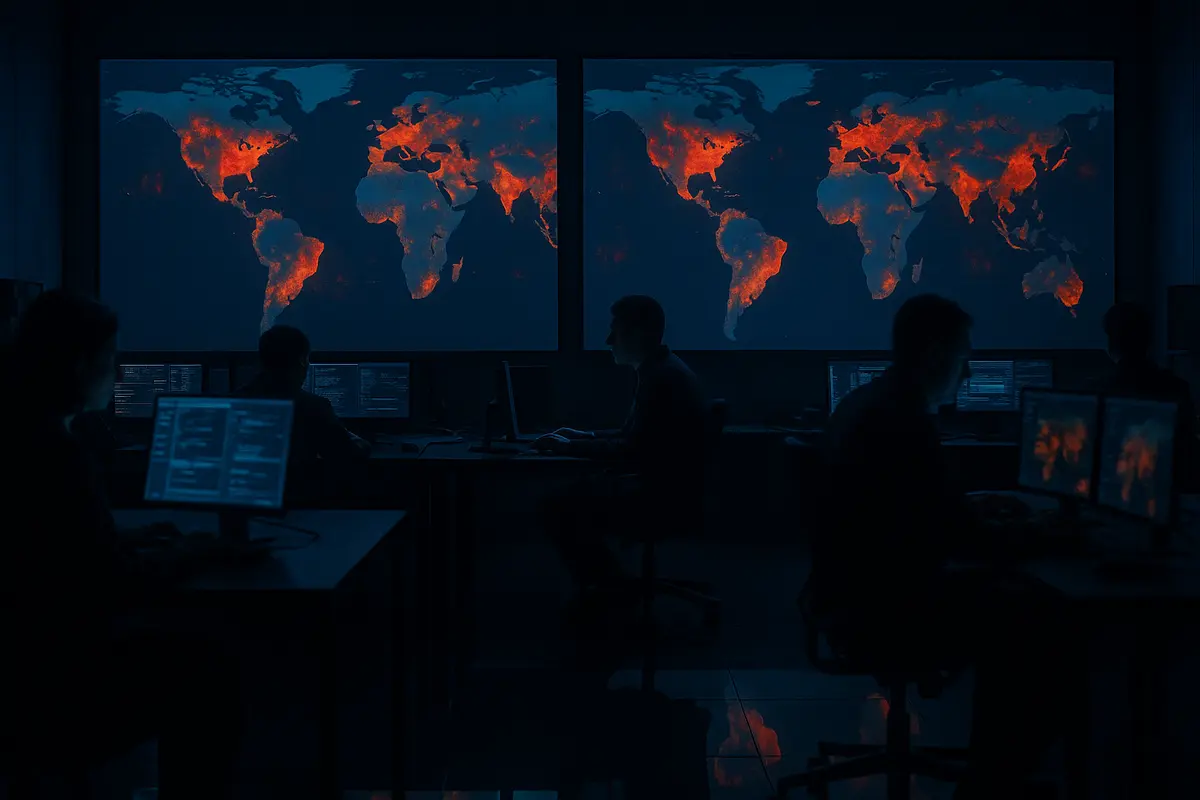
Global supply chain disruptions now cost businesses an estimated $184 billion annually, according to Marsh's Sentrisk data—and geopolitical volatility is the fastest-growing driver. From tariff whiplash to armed conflicts disrupting critical trade lanes, the question is no longer whether your supply chain will face a geopolitical shock, but when. In 2026, leading organizations are abandoning reactive crisis management in favor of continuous, AI-powered risk scoring platforms that quantify threats before they hit the bottom line.
The Geopolitical Risk Landscape in 2026
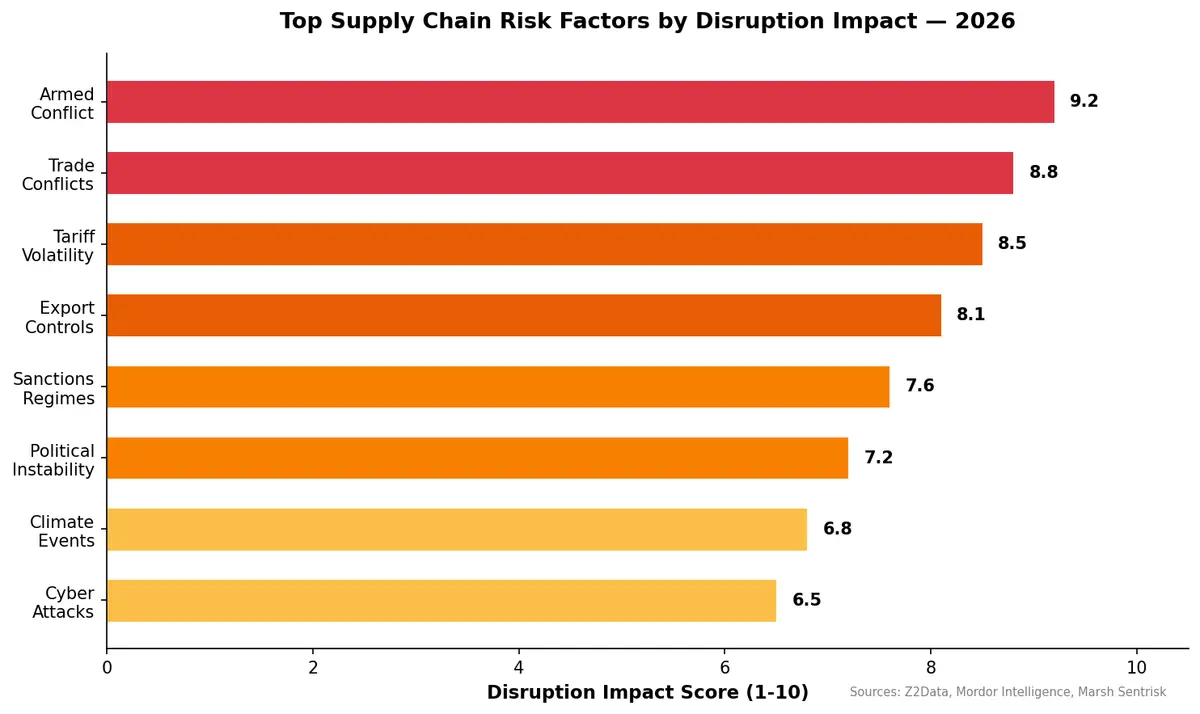
The scope of supply chain risk has expanded dramatically. Z2Data's 2026 risk assessment identifies 22 critical supply chain risks facing global manufacturers—with geopolitical and trade disruptions dominating the list. Armed conflicts between nations, retaliatory export controls on critical minerals, and rapidly shifting tariff structures are creating an environment where traditional annual risk assessments are obsolete before the ink dries.
Consider the cascading impact: when China announced new export controls on key critical minerals in April 2025, Ford confirmed it shut down plants for weeks due to shortages. A single geopolitical decision in Beijing rippled through tier-two and tier-three suppliers to halt production lines in Michigan. Meanwhile, natural disasters, labor stoppages, and geopolitical events collectively erased $4.6 trillion in global economic value in recent years, according to Mordor Intelligence's SCRM market analysis.
The message is clear: supply chains that rely on spreadsheets and quarterly reviews to manage geopolitical risk are flying blind.
From Reactive to Proactive: The Rise of Continuous Risk Monitoring
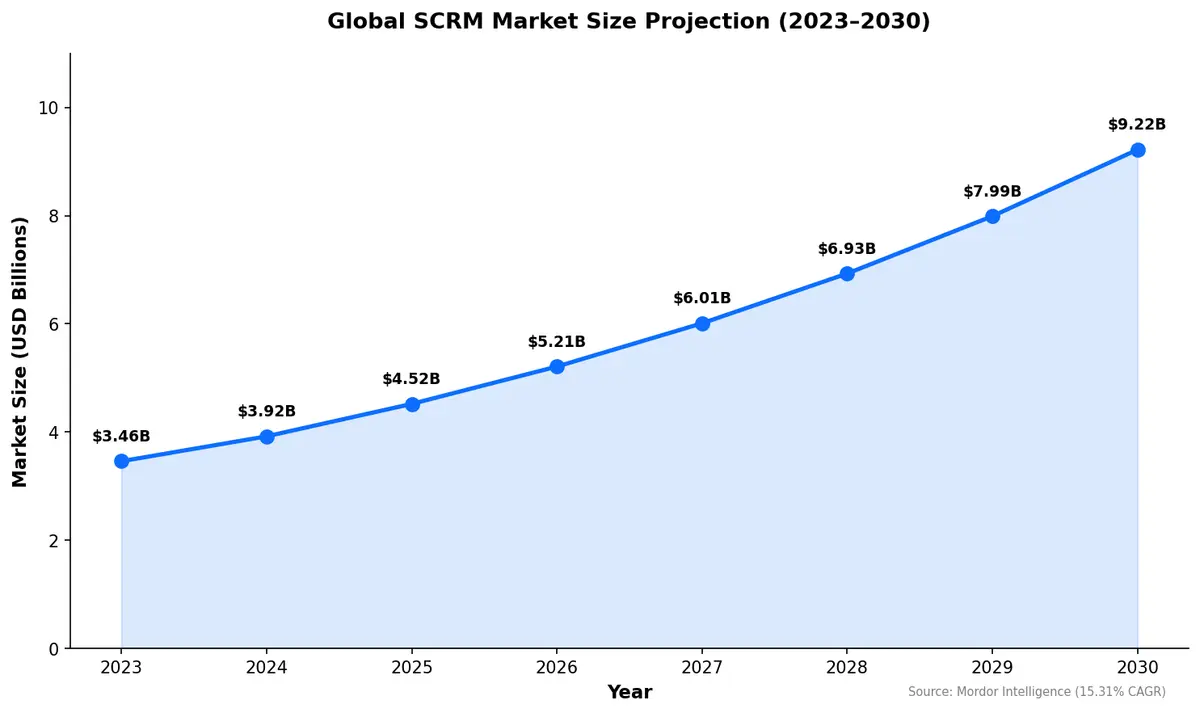
The supply chain risk management (SCRM) software market reflects the urgency. Valued at $4.52 billion in 2025, the market is projected to reach $9.22 billion by 2030—a 15.31% CAGR driven by organizations racing to build resilience before the next disruption strikes.
What's driving this explosive growth? A fundamental shift in methodology. Traditional risk management operated on a detect-respond-recover cycle: a crisis hits, teams scramble to assess impact, and recovery takes weeks or months. Modern SCRM platforms flip this model entirely, providing:
- Continuous monitoring across geopolitical, financial, regulatory, and environmental risk vectors
- Supplier-level risk scores updated in real time as conditions change
- Multi-tier visibility that maps dependencies beyond direct suppliers—critical when automotive manufacturers manage 250+ tier-one suppliers with roughly 37,500 hidden tier-two links
- Scenario simulation that models the impact of potential disruptions before they occur
Organizations with Composite Risk Scores (CRS) of 3.5 or above are now treating these as high/critical alerts requiring immediate playbook activation—not quarterly review items.
SCRM Platform Capabilities: What Modern Risk Intelligence Looks Like
Today's leading SCRM platforms—including Everstream, Resilinc, Interos, and Moody's supply chain solutions—go far beyond simple news monitoring. They combine multiple intelligence layers into unified risk scores:
Geopolitical intelligence tracks armed conflicts, sanctions regimes, trade policy shifts, and political instability across every country where your suppliers operate. When tariff structures change—such as the recent shift to taxing semiconductors based on Country of Design rather than Country of Origin—platforms flag affected components and suppliers instantly.
Financial health monitoring identifies suppliers showing early signs of distress. A supplier's credit downgrade or unusual payment pattern becomes a risk signal months before a potential bankruptcy disrupts your production.
Environmental and climate risk layers weather patterns, natural disaster probability, and climate projections over supplier facility locations. Graph databases reveal single-point-of-failure components before a typhoon season or earthquake event.
Regulatory compliance tracking monitors ESG mandates like Europe's Corporate Sustainability Due Diligence Directive (CSDDD) and the U.S. Uyghur Forced Labor Prevention Act, ensuring supplier networks meet evolving legal requirements.
The result: instead of learning about a disruption from a panicked supplier phone call, logistics teams receive scored alerts with impact assessments and recommended actions—often days or weeks before the disruption materializes.
Integrating Risk Signals Into Logistics Execution
The real power of geopolitical risk scoring emerges when intelligence platforms connect to execution systems. A risk score is only as valuable as the action it triggers. This is where TMS integration transforms risk data into operational resilience.
When a SCRM platform detects elevated risk on a trade lane—say, escalating tensions in the Red Sea corridor—an integrated TMS can automatically:
- Re-route shipments through alternative lanes with lower risk scores
- Trigger carrier diversification by activating pre-qualified backup carriers in unaffected regions
- Adjust inventory buffers for components sourced from high-risk zones
- Alert procurement teams to begin qualifying alternative suppliers before disruption occurs
This integration closes the gap between knowing about a risk and doing something about it. Marsh's data shows that 65% of companies face at least one bottleneck in their supply chain at any given time—but companies with integrated risk-and-execution platforms resolve those bottlenecks 40-60% faster than those managing risk and logistics in separate silos.
Building a Geopolitical Risk Strategy for 2026
For logistics leaders looking to move beyond reactive crisis management, here's a practical roadmap:
Map your exposure first. Before investing in any platform, understand your multi-tier supplier geography. You can't score risk on nodes you don't know exist.
Start with the highest-impact lanes. Focus risk monitoring on trade lanes that represent the highest revenue concentration or longest lead times. A disruption on your top-five lanes matters more than monitoring every shipment equally.
Integrate risk into procurement decisions. Supplier selection should include geopolitical risk scores alongside cost and quality metrics. The cheapest supplier in a high-risk zone may be the most expensive choice when disruption costs are factored in.
Connect intelligence to execution. Ensure your TMS can consume risk signals and trigger operational playbooks. A dashboard that shows risk without enabling action is just an expensive weather report.
Geopolitical volatility isn't going away—but your supply chain doesn't have to be vulnerable to it. Contact CXTMS to see how integrated risk intelligence and TMS execution can build resilience into every shipment.