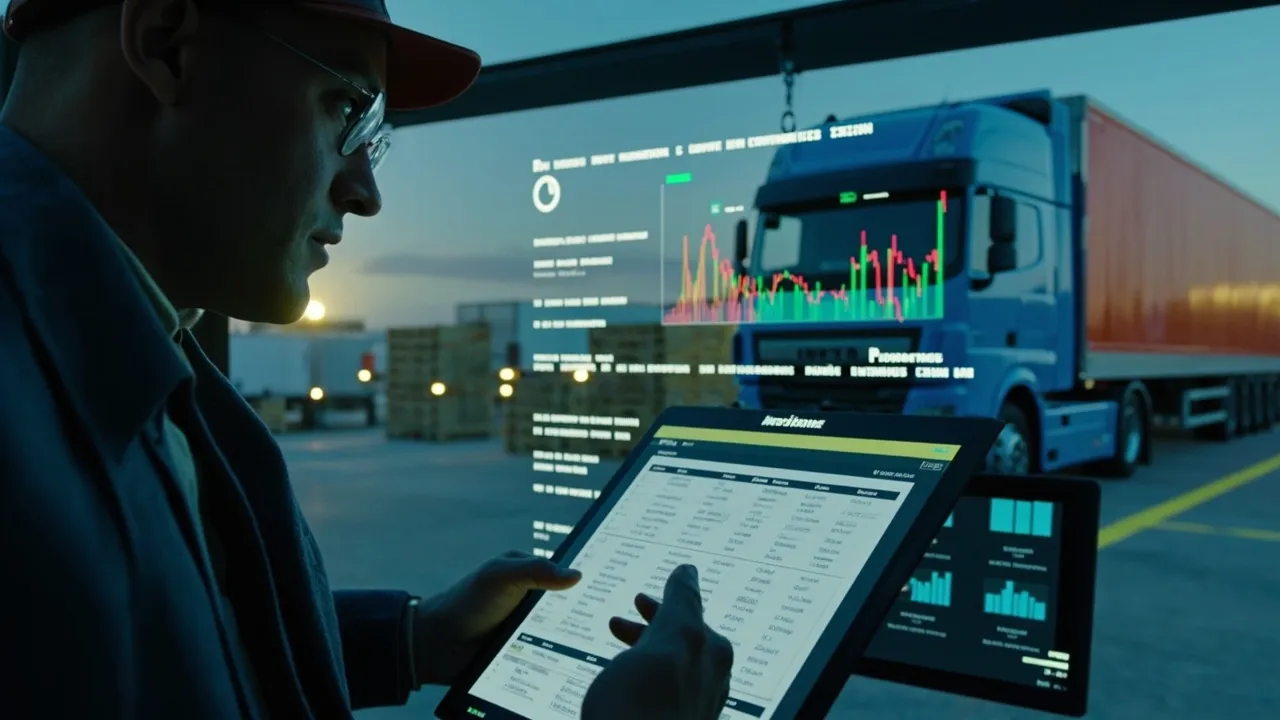
The Freight Broker Career in 2026: How AI Is Transforming the Role from Deal-Maker to Data Strategist


If you picture a freight broker as someone glued to a phone, cold-calling carriers from a cluttered desk covered in rate sheets, it's time to update that mental image. The freight brokerage profession is undergoing its most dramatic transformation in decades—and in 2026, the brokers who thrive won't just be great negotiators. They'll be data strategists, relationship architects, and technology operators who use AI as a force multiplier rather than a threat.
The Old Playbook Is Dead
The traditional freight broker lived and died by the phone. Success meant dialing more carriers, building Rolodex relationships, and relying on gut instinct to match loads to trucks at the right price. That model worked for decades, but it's rapidly becoming obsolete.
According to Logistics Management's 2025 Digital Freight Matching Roundtable, over 75% of digital truckload marketplace gross revenue now comes from digitalized brokers. The industry's shift from manual load boards and phone trees to AI-driven matching platforms isn't a future prediction—it's already the market reality.
At the same time, the broader transportation sector faces a paradox. The Bureau of Labor Statistics reports that total Transportation and Warehousing employment fell to 6.55 million in January 2026, a 1.8% year-over-year decline. Yet the BLS Job Openings and Labor Turnover Survey (JOLTS) counted 308,000 unfilled positions in the sector as of December 2025. This isn't a simple downturn—it's a skills mismatch that's redefining which logistics professionals are in demand and which are being left behind.
What Today's Freight Broker Actually Does
Walk into a modern brokerage operation like Grand Rapids-based Ally Logistics, and you'll see the transformation in action. As FreightWaves reported, AI systems now handle initial rate negotiations, manage carrier communications, and route inbound calls to the right representative—tasks that used to consume the bulk of a broker's day.
"A carrier calls in, talks with the bot, and they agree on a rate. From there, the call is transferred through the phone tree to a human rep who then finishes the job, books the load, and confirms everything," explained John Corey, Truckload Operations Manager at Ally Logistics.
The result isn't fewer brokers—it's brokers doing fundamentally different work. Instead of spending hours on repetitive check calls and load postings, today's freight professionals focus on:
- Carrier relationship strategy: Building long-term partnerships with vetted, high-performance carriers rather than scrambling for spot capacity
- Exception management: Stepping in when AI flags genuine problems—a reefer unit running out of temperature spec, a driver running into HOS issues—rather than monitoring routine shipments
- Pricing and capacity analytics: Using AI-driven market intelligence to identify profitable lanes, forecast rate movements, and optimize margins
- Customer consultancy: Advising shippers on network design, modal optimization, and contingency planning
As Dan Manshaem, CEO of Ally Logistics, told FreightWaves, technology investments are opening conversations with shipper partners that go far beyond covering individual loads—into sustainability measurement, network optimization, and strategic supply chain planning.
The Skills That Matter Now
The freight broker job description in 2026 looks dramatically different from even five years ago. Industry hiring data tells the story: demand for supply chain talent has increased an estimated 31% year-over-year, while projections show 17% growth in demand for high-level logisticians specifically.
Here's what brokerages are actually hiring for:
Data literacy. Understanding lane analytics, carrier scorecards, and market rate indices is now table stakes. Brokers who can interpret dashboards and translate data into actionable recommendations for shippers command premium compensation.
TMS proficiency. The average freight brokerage now works with 175 carriers monthly, according to data cited by The Trucker. Managing that network without deep fluency in transportation management systems is simply impossible.
API and integration awareness. As shippers demand real-time visibility and automated booking, brokers need to understand how systems connect—EDI, API integrations, and data-sharing protocols that keep information flowing across platforms.
Consultative selling. With AI handling transactional work, the human value proposition shifts to strategic advisory. The most successful brokers in 2026 function as extensions of their clients' transportation teams, providing proactive lane recommendations, surge planning, and risk mitigation strategies.
The Salary Picture: Bifurcation Is Real
The compensation landscape for freight brokers has split into two distinct tiers. Entry-level, transaction-focused roles—where they still exist—pay in the $45,000–$55,000 range according to PayScale and BLS data. But brokers with data skills, TMS expertise, and strategic client management capabilities are commanding significantly more, with Glassdoor reporting average freight broker compensation reaching $112,500 when factoring in commissions and performance bonuses for experienced professionals.
This bifurcation will only accelerate. As AI absorbs more transactional work, the brokers who resist upskilling will find themselves competing for a shrinking pool of lower-value roles. Those who embrace the transformation will find themselves in one of the most rewarding logistics careers available.
Why the Role Isn't Disappearing—It's Upgrading
Despite the automation headlines, freight brokerage is not on a path to full replacement. The freight market is inherently volatile, relationship-driven, and riddled with exceptions that require human judgment. When a major shipper needs emergency capacity during a weather event, when a carrier's insurance lapses mid-transit, when a customs hold threatens a time-critical delivery—these are moments where experienced human brokers earn their keep.
What's changing is the ratio of strategic to transactional work. As WSInc noted in their 2026 transportation trends analysis, shippers now evaluate brokerage relationships not just on price, but on the value of expertise, responsiveness, and technology brought to the table. Transactional load coverage is no longer enough—retailers and manufacturers need partners with advanced supply chain management tools who can anticipate disruptions and actively support network optimization.
The freight broker of 2026 is less like a used-car salesperson and more like a financial advisor: someone who leverages technology, data, and deep market knowledge to deliver outcomes that neither human intuition nor AI algorithms could achieve alone.
How CXTMS Empowers the Modern Freight Broker
The shift from deal-maker to data strategist requires platforms built for the way brokers actually work today. CXTMS gives freight professionals the tools to operate at the strategic level:
- Real-time market intelligence with lane-level rate analytics and capacity forecasting that turns raw data into pricing confidence
- Automated carrier management with compliance monitoring, performance scoring, and relationship tracking across your entire carrier network
- Integrated visibility dashboards that give both brokers and their shipper clients a single pane of glass for shipment tracking, exception alerts, and performance reporting
- Workflow automation that handles routine booking, tendering, and documentation—freeing brokers to focus on the high-value work that AI can't replicate
The freight brokerage career isn't dying. It's being reborn as one of the most dynamic, technology-forward roles in supply chain management. The question isn't whether the transformation is happening—it's whether you're positioned to lead it.
Ready to equip your brokerage team with the platform built for the AI era? Request a CXTMS demo today and see how modern TMS technology transforms broker productivity from day one.