Siemens and KION Just Made the Strongest Case Yet for Software-Defined Intralogistics

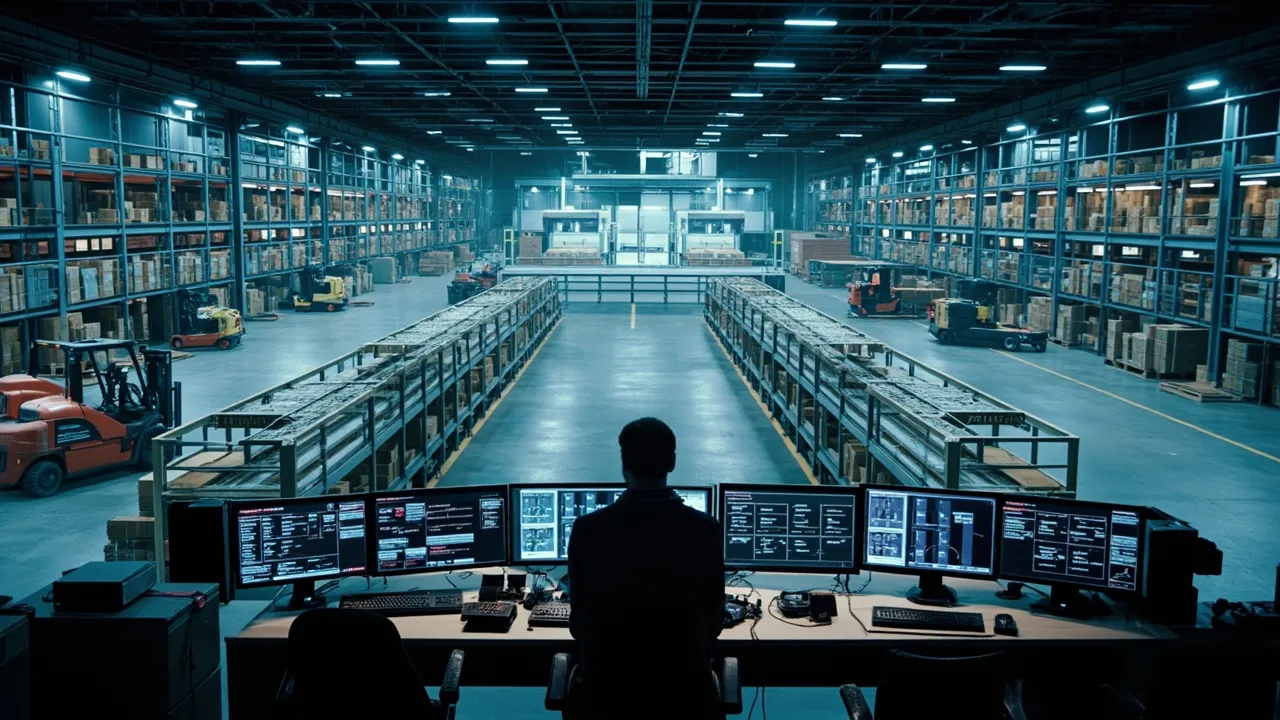
Warehouse operators have spent the past decade buying automation one machine at a time. A conveyor here, an AMR project there, maybe a sortation upgrade when labor got painful enough. That approach is running out of road.
The new partnership between Siemens and KION is worth paying attention to because it frames warehouse modernization the right way: not as a collection of clever machines, but as a coordinated digital operating model. As Modern Materials Handling reported, the two companies said they are entering a strategic partnership to digitalize complex intralogistics processes. That wording matters. It points to a bigger market shift from point automation to software-defined intralogistics, where orchestration, data, and execution logic matter as much as the equipment on the floor.
This is the real next chapter in warehouse modernization. Hardware still matters, obviously. But the companies that win will be the ones that can connect warehouse control, flow orchestration, equipment telemetry, labor priorities, and exception handling into one system of action.
Why the market is moving past point automation
The economic backdrop is doing a lot of the talking. According to Mordor Intelligence’s warehouse automation market outlook, the global warehouse automation market is expected to reach $34.17 billion in 2026 and grow at a 13.98% CAGR to $65.74 billion by 2031. That is not a niche upgrade cycle. That is a full-stack modernization wave.
But scale creates a nasty side effect. As operators add more robotics, controls, sensors, and software layers, the warehouse gets more capable and more fragile at the same time. You can automate three separate processes and still end up with a network that stalls whenever one subsystem falls behind, one buffer fills up, or one labor handoff breaks the rhythm.
That is why software-defined intralogistics is such a useful frame. It treats the building less like a set of machines and more like a dynamic, continuously optimized production environment. In practice, that means software is doing the heavy lifting around work release, traffic prioritization, slotting logic, replenishment timing, order sequencing, and exception recovery.
In other words, the intelligence layer becomes the operating system for the warehouse.
What “digitalizing complex intralogistics processes” actually means
This phrase can sound suspiciously like vendor perfume, so let’s translate it into plain English.
A digitally coordinated intralogistics environment should be able to:
- see inventory, equipment status, and work queues in near real time
- route work across humans, forklifts, conveyors, AMRs, and AS/RS without creating bottlenecks upstream or downstream
- adjust priorities when demand spikes, labor shifts, or inbound delays change the plan
- connect warehouse execution with broader enterprise and transportation decisions
- recover faster when one part of the flow breaks
That is a very different ambition from simply installing automation assets.
The partnership logic behind Siemens and KION reflects that reality. Siemens brings deep strength in industrial software, automation, and digitalization. KION brings material handling, warehouse equipment, and intralogistics domain expertise through brands and operations already embedded in warehouses worldwide. Together, the pitch is not “buy another machine.” It is “run the warehouse as a coordinated digital system.” That is a much stronger answer to current operator pain.
Why buyers are spending more on the software layer
The budget data backs this up. In the 2026 MHI and Deloitte annual industry report, 56% of organizations said they expect to increase spending on supply chain innovation, 52% said they plan to spend more than $1 million, and 17% said they expect to spend more than $10 million. The same report projects adoption over the next five years of 88% for AI, 86% for advanced analytics, 85% for cloud computing and storage, 77% for IoT and sensors, and 73% for robotics and automation.
Those numbers tell a simple story: buyers are no longer thinking about automation as a standalone capital project. They are investing in the digital stack that lets automation scale.
That shift is healthy. A warehouse full of disconnected machines is expensive clutter. A warehouse with coordinated software, shared data, and clear control logic can absorb more volume, adapt to more variability, and expose fewer stupid failure points.
Software-defined intralogistics is really about coordination
This is the part that gets missed in too much warehouse marketing.
The core problem in modern fulfillment is not the absence of automation. It is the absence of coordination between automated and semi-automated processes. Most warehouses do not fail because one conveyor is too slow. They fail because replenishment timing is off, order waves are released badly, labor is moved too late, and local optimization creates congestion somewhere else.
Software-defined intralogistics attacks that coordination problem directly.
It makes the warehouse more adaptive by turning every operational signal into a planning input: machine status, queue depth, slot availability, task aging, labor availability, service commitments, and upstream transportation delays. When those signals actually inform execution, operators stop managing by lagging reports and start managing by live conditions.
That is also why software-defined environments tend to outperform during disruptions. They are built to re-prioritize, not just to repeat.
A buyer’s checklist for this next wave
If you are evaluating intralogistics platforms, ecosystem partnerships, or warehouse transformation roadmaps, do not get hypnotized by demo videos. Ask the harder questions.
- Can the platform orchestrate across mixed environments? Most real warehouses are hybrid environments, not clean-sheet labs.
- Does it improve visibility at the exception level? Dashboards are cheap. Useful exception handling is not.
- Can execution logic change dynamically? Static rules break when volume, labor, or product mix shifts.
- How well does it connect to WMS, ERP, and transportation systems? Warehouse decisions do not happen in a vacuum.
- What happens when one subsystem fails? Resilience matters more than perfect-slideware throughput.
- Will the data model support future AI and analytics use cases? If not, you are buying tomorrow’s integration headache.
That last point matters a lot. The Siemens-KION move is compelling because it aligns with where supply chain tech spending is already going: more intelligence, more orchestration, more data, less tolerance for disconnected tools.
Warehouse modernization is not about collecting robotics trophies. It is about building a flow engine that can think, adapt, and recover.
Siemens and KION did not invent that trend, but they just made one of the clearest cases for it. The operators who understand that now will spend the next few years building more resilient, higher-throughput facilities. The ones who keep buying automation as isolated hardware projects will keep wondering why expensive systems still create messy operations.
If your team is rethinking how warehouse execution, transportation planning, and real-time visibility should work together, schedule a CXTMS demo and see how a modern TMS can support a more coordinated logistics stack.