CBP E-Commerce Compliance Platforms: A Buyer's Guide for International Shippers Navigating 2026 Regulations


The end of the de minimis exemption didn't just change a rule — it rewrote the entire playbook for cross-border e-commerce shipping. Since the global suspension took effect on August 29, 2025, CBP has collected over $1 billion in duties on more than 246 million low-cost shipments that previously cleared customs duty-free. For international shippers, the message is clear: compliance infrastructure is no longer optional.
The Regulatory Earthquake of 2025–2026
To understand why compliance platforms matter now more than ever, consider the scale of what changed. By 2024, CBP was processing over 1.36 billion de minimis shipments annually, worth a combined $64.6 billion — a tenfold increase from 134 million shipments just a decade earlier. These packages entered the U.S. with minimal documentation and zero duty.
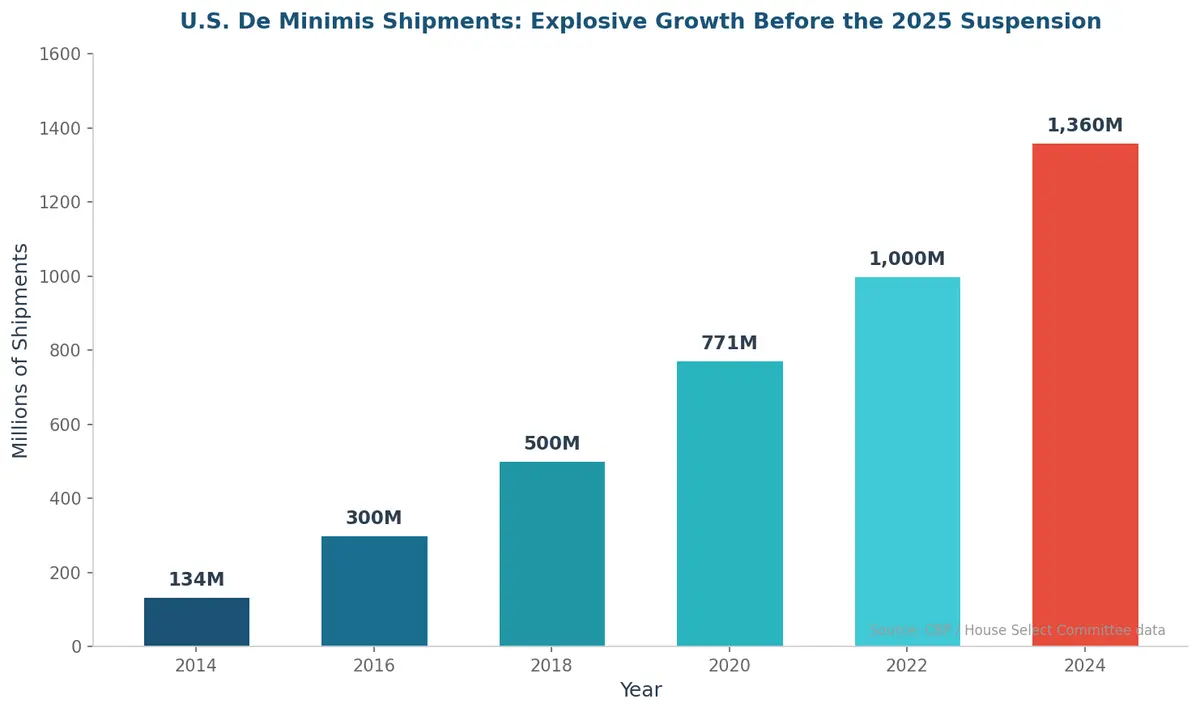
That era is over. President Trump's executive orders first suspended de minimis for China and Hong Kong in May 2025, then expanded the suspension globally on August 29, 2025. As of February 28, 2026, only the ad valorem duty methodology may be used — the specific duty option that provided a simpler alternative during the transition has expired.
Meanwhile, the European Union has followed suit, agreeing to revoke its own duty-free threshold for parcel imports and introducing a flat €2 e-commerce handling fee starting November 2026. Cross-border e-commerce compliance is now a global challenge, not just a U.S. one.
What Converging Regulations Mean for Shippers
Three major regulatory streams are converging simultaneously, and each demands different compliance capabilities:
De Minimis Suspension: Every inbound shipment now requires formal customs entry data — HTS classification, country of origin, commercial value, and duty payment. Shippers who previously filed minimal data for low-value goods must now provide the same documentation as a full container import.
CPSC Product Safety E-Filing: The Consumer Product Safety Commission now requires electronic certificates of compliance for regulated consumer products. This means shippers must verify whether each SKU falls under CPSC jurisdiction and file accordingly — a classification challenge at scale.
AES/ACE Export Requirements: For shippers moving goods in both directions, the Automated Export System requirements continue to tighten, with enhanced reporting on dual-use goods and sanctioned destinations.
The common thread? All three demand accurate product classification, automated data submission, and real-time regulatory updates. No single spreadsheet or manual process can keep up.
Platform Categories: Choosing the Right Solution
Not all compliance platforms are built the same. Understanding the categories helps you invest wisely.
Traditional Customs Brokers with Digital Portals
These are established brokerage firms that have layered digital interfaces onto their existing operations. They handle filings on your behalf and offer portal access for tracking. Best for shippers with moderate volume who want hands-off compliance but accept slower turnaround and per-entry fees.
Standalone Compliance SaaS Platforms
Purpose-built software that automates classification, screening, and filing. These platforms typically offer API integrations with e-commerce platforms and ERPs, AI-powered HTS classification, denied party screening, and duty calculation engines. Best for high-volume e-commerce sellers who need speed and scale.
TMS-Embedded Compliance Modules
Transportation management systems that integrate compliance directly into the freight workflow. Rather than operating as a separate layer, compliance checks happen automatically during booking, routing, and customs clearance. Best for shippers who want unified visibility from order to delivery without toggling between systems.
The Feature Checklist: What to Evaluate
When evaluating CBP e-commerce compliance platforms, prioritize these capabilities:
Automated HTS Classification: Manual classification at scale is impossible when every $15 package now needs a tariff code. Look for AI-driven classification that learns from your product catalog and adapts as codes change. Misclassification penalties can reach four times the duty owed.
Denied Party and Restricted Entity Screening: Every shipment must be screened against consolidated screening lists including OFAC, BIS Entity List, and UN sanctions. Automated screening should happen in real-time, not in batch overnight.
Landed Cost Calculation: With duties now applying to all shipments, your customers need accurate landed cost at checkout. Platforms should calculate duties, taxes, and fees in real-time so there are no surprises at delivery.
Regulatory Update Management: Trade regulations are changing monthly. Your platform must ingest updates from CBP, CPSC, and foreign customs authorities automatically. A platform that was accurate in January may be dangerously wrong by March if it relies on manual updates.
Audit Trail and Record Retention: CBP requires importers to maintain records for five years. Your platform should generate and store complete audit trails for every filing — not just the entry summary, but the classification rationale and screening results.
The Total Cost of Non-Compliance
In fiscal year 2025, CBP issued 2,218 trade penalties and collected more than $216 billion in total duties, taxes, and fees. The penalties for non-compliance extend far beyond fines:
- Monetary penalties up to four times the unpaid duties for negligent violations
- Shipment holds and seizures that delay delivery by weeks and damage customer relationships
- Loss of trusted trader status (C-TPAT), increasing inspection rates across all your shipments
- Criminal referrals for repeated or willful violations, with DOJ and HSI increasingly coordinating enforcement
For e-commerce brands shipping thousands of parcels daily, even a 2% error rate in classification can trigger systematic penalty exposure that dwarfs the cost of proper compliance technology.
How CXTMS Integrates Compliance Into Cross-Border Workflows
CXTMS approaches e-commerce compliance not as a standalone module, but as an embedded layer within cross-border freight management. When a shipment is booked through CXTMS, classification verification, denied party screening, and duty calculation happen automatically — before the package leaves the warehouse.
This integrated approach eliminates the gap between logistics execution and compliance filing that plagues most shippers. Instead of reconciling shipment data with customs entries after the fact, CXTMS ensures every parcel carries the right data from origin, reducing clearance delays and penalty risk.
For shippers navigating the post-de minimis landscape, the platform's real-time regulatory updates and automated classification engine mean you're always filing against current rules — not last month's tariff schedule.
Navigating CBP's new e-commerce compliance requirements? Contact CXTMS for a demo of our integrated cross-border compliance and freight management platform.