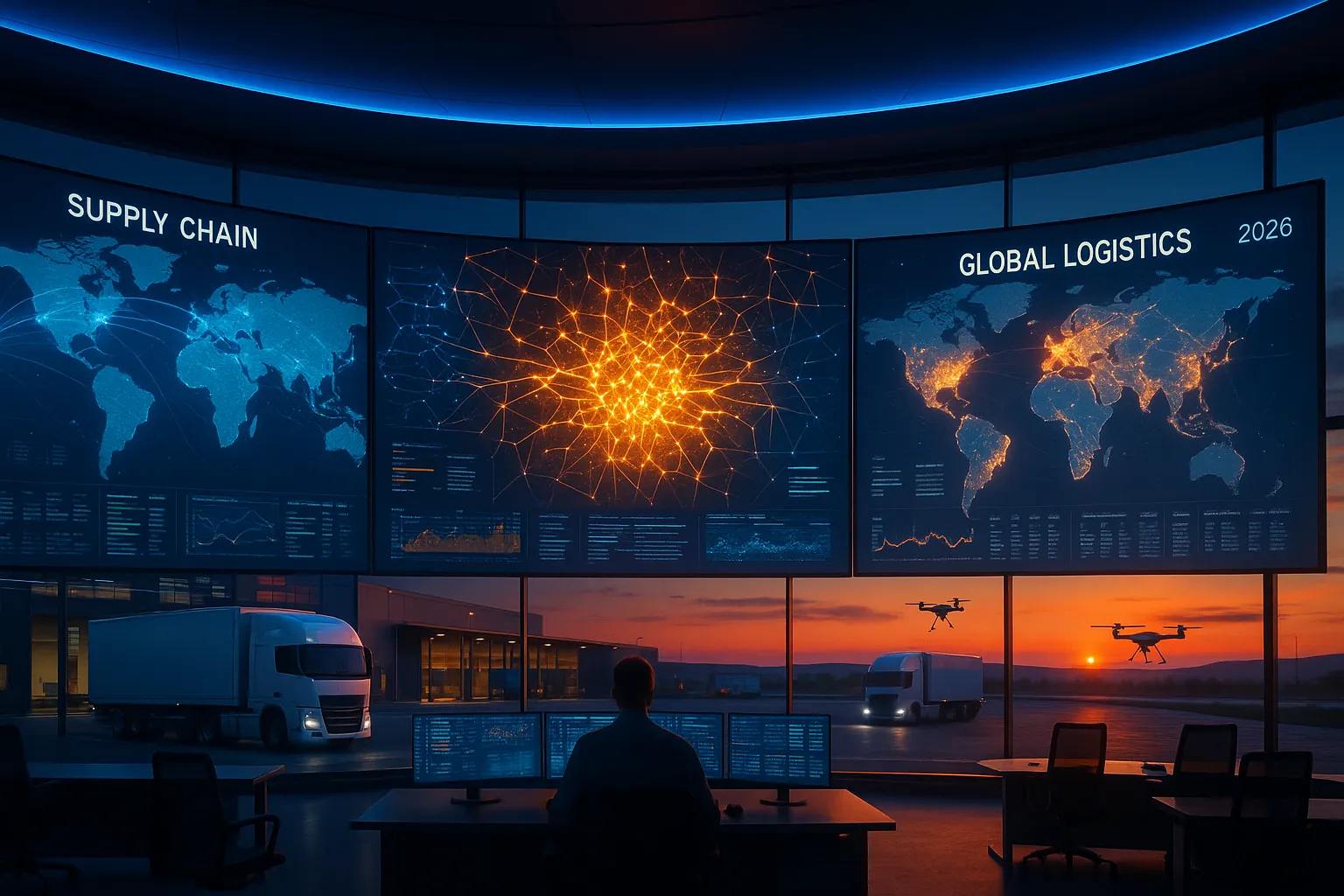
The Automation Paradox: How Over-Digitization Is Leaving Truckloads of Food to Rot in 2026

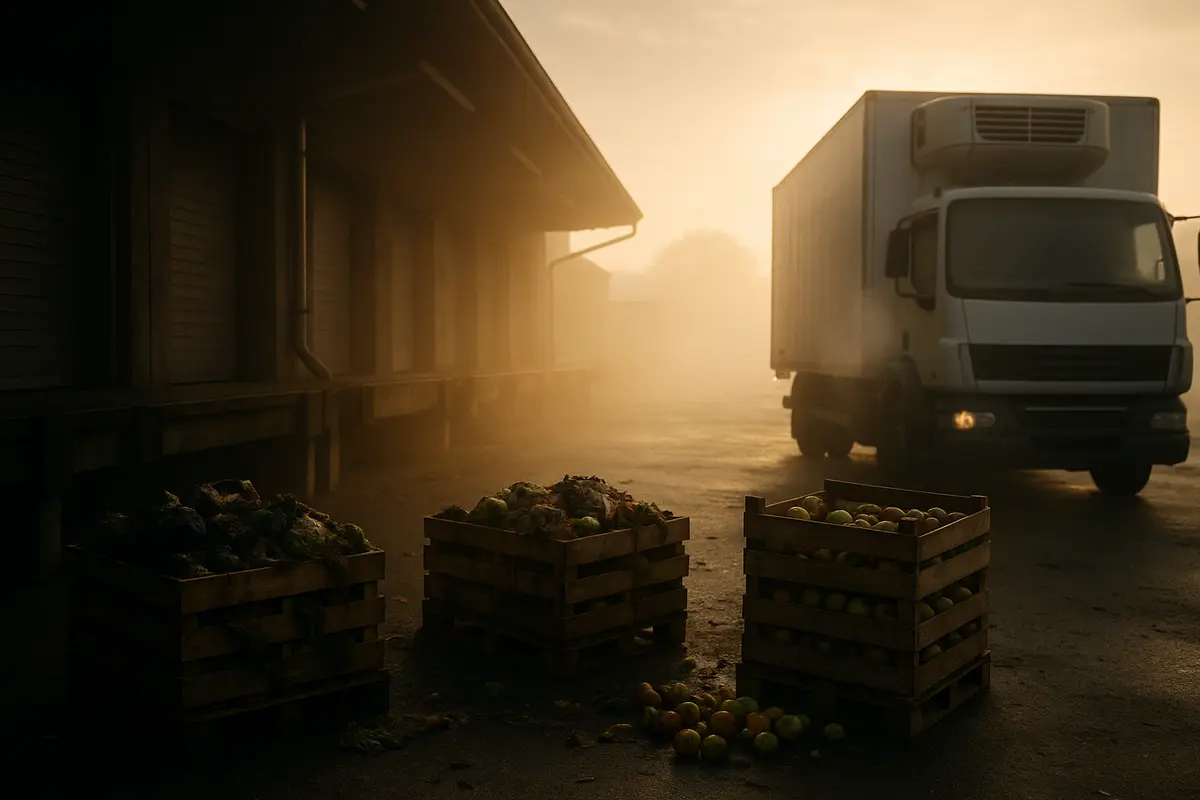
Supermarket shelves look full. Chilled meat is in place. Fruit is stacked neatly. Everything appears fine — until you look beneath the surface. A growing body of research reveals that the same digital systems designed to make food supply chains more efficient are now creating new, dangerous failure modes that leave perfectly good food stranded, rejected, and rotting.
The $540 Billion Problem No One Talks About
Global food waste across the supply chain is projected to cost $540 billion in 2026, up from $526 billion in 2025. Approximately 1.6 billion tons of food — roughly 25–30% of everything produced worldwide — is lost or wasted every year. While consumers shoulder some blame, a significant and growing share of that waste now originates in the logistics layer between farm and shelf.
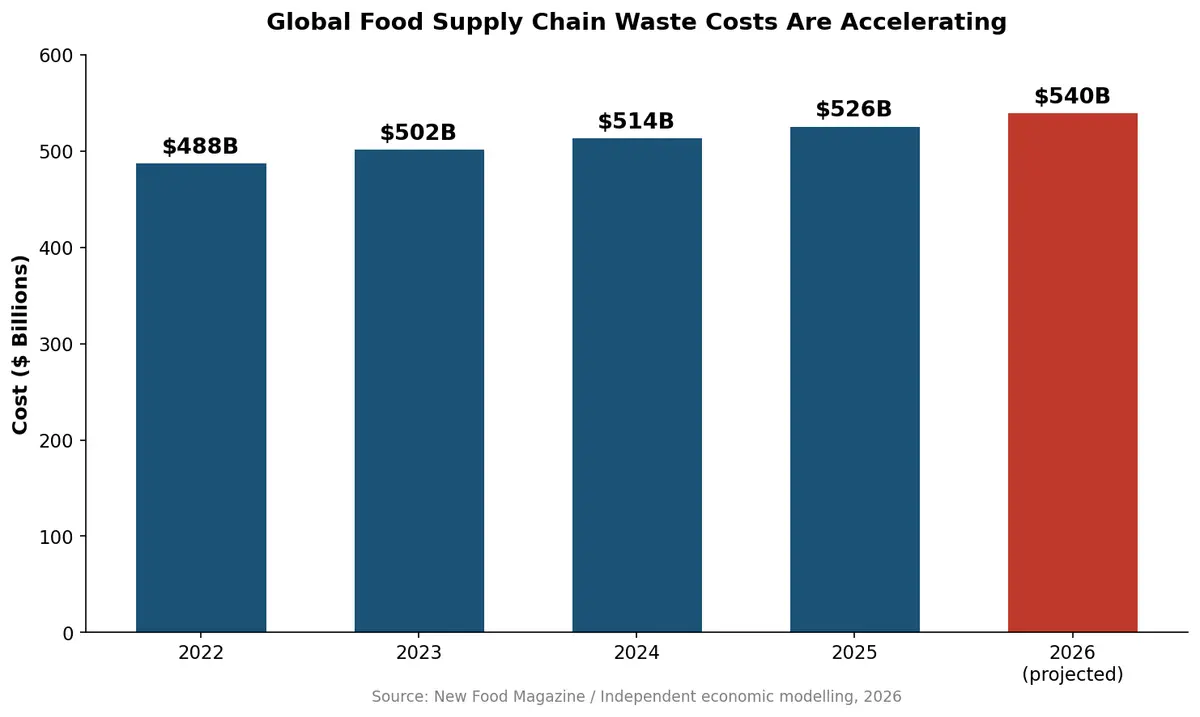
What's new in 2026 is the cause. It's not spoilage from inadequate refrigeration or slow trucking. It's digital systems rejecting food that is physically fine.
When Digital Systems Can't "See" Food, It Ceases to Exist
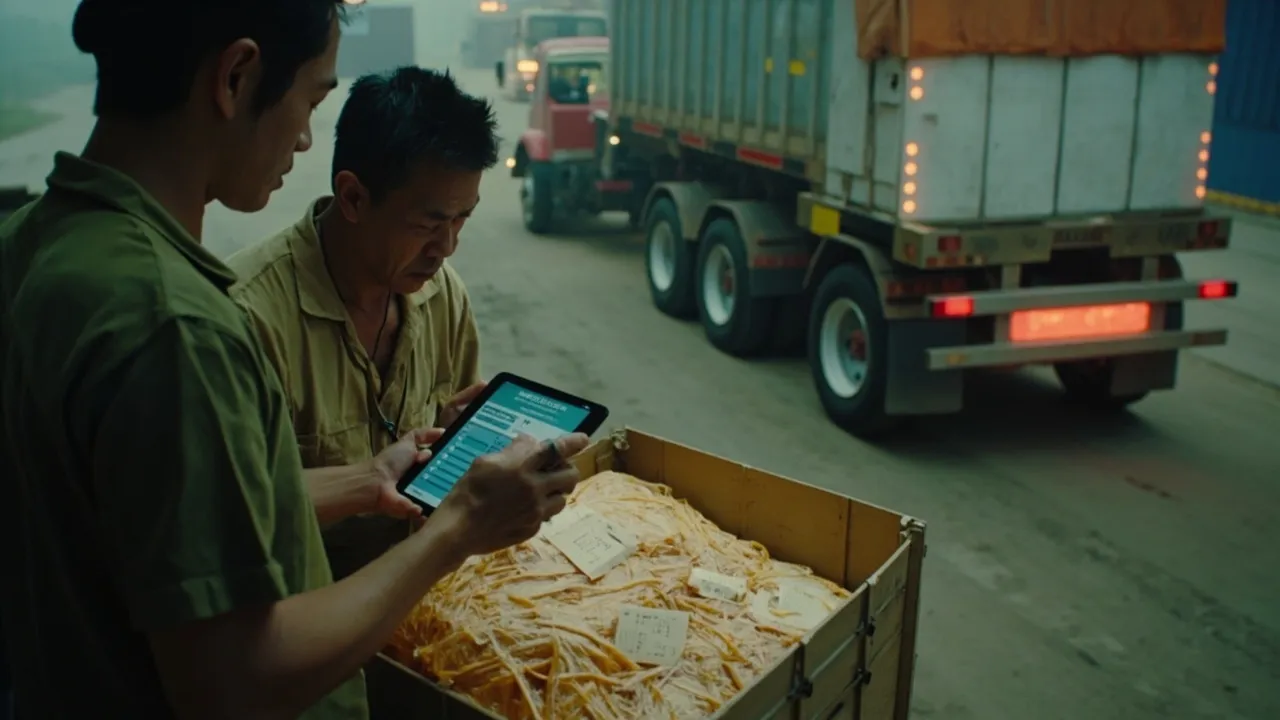
A landmark study from Durham University, published in February 2026, exposes a critical vulnerability in modern food supply chains: food now moves through supply chains because databases, platforms, and automated approval systems recognize it. If a digital system cannot confirm a shipment, that food cannot be released, insured, sold, or legally distributed.
In practical terms, food that cannot be "seen" digitally becomes unusable — even when it's sitting right there on the loading dock.
This isn't a theoretical risk. During the 2021 ransomware attack on JBS Foods, meat processing facilities halted operations despite animals, staff, and infrastructure being physically present and ready. More recently, cyberattacks on major US grocery chains disrupted online ordering and delivery systems, delaying food distribution even though physical stocks were available in warehouses.
The Auto-Ordering Trap
The problem extends beyond cybersecurity. Supermarket automated ordering systems — designed to optimize inventory and reduce labor costs — are creating their own category of waste. These systems use historical sales data and algorithmic forecasting to place orders automatically, removing human buyers who once used contextual judgment: local events, weather patterns, community knowledge of demand shifts.
When algorithms get it wrong with perishable goods, the consequences are immediate and irreversible. Unlike electronics or clothing, you can't put spoiled produce back on the shelf next week. The Durham researchers found that manual backups and human override capabilities are being systematically removed in the name of efficiency, leaving no safety net when automated decisions fail.
This creates a paradox: the more efficient the system becomes in normal conditions, the more catastrophically it fails in abnormal ones.
Farming's Digital Dependency
The vulnerability starts well before the supermarket. AI and data-driven systems now shape decisions across agriculture — forecasting demand, optimizing planting schedules, prioritizing shipments, and managing inventories. According to Food Logistics, all phases of food production and transportation must be meticulously coordinated due to stringent compliance requirements and the perishable nature of goods.
But when these systems are designed without adequate human oversight, authority shifts from experienced professionals who understand the nuances of perishable logistics to software rules that optimize for a single metric: cost efficiency.
Consider the farmer whose automated logistics platform routes a truckload of strawberries through a distribution hub 200 miles away because the algorithm found a 3% cost saving — ignoring that the extra transit time pushes the berries past their viable shelf life. A human dispatcher would have caught that. The algorithm cannot.
The Cyber Vulnerability Multiplier
The Durham research highlights another dimension: as food supply chains become fully digitized, they become targets. The UK government has identified this digital dependency as a critical vulnerability in national food security. When a single ransomware attack can halt the movement of thousands of tons of food — not because the trucks stopped, but because the database that authorizes their release went offline — we've built a system where digital infrastructure is more critical than physical infrastructure.
The irony is stark: we automated food supply chains to make them more resilient, and instead created new single points of failure that didn't exist in the analog era.
The Balanced Path Forward: Human-AI Collaboration
The answer isn't to abandon automation — the efficiency gains are real and necessary to feed a growing global population. The answer is to design systems that combine algorithmic efficiency with human judgment, especially for perishable goods where errors are irreversible.
This means:
- Maintaining human override capabilities at every critical decision point in perishable supply chains
- Building redundant manual processes that activate when digital systems fail, rather than eliminating them for cost savings
- Designing AI systems that flag anomalies for human review instead of auto-executing decisions on perishable goods
- Implementing graceful degradation so that a system outage delays shipments by hours, not days
- Preserving contextual knowledge by keeping experienced logistics professionals in the decision loop
The food supply chains that will prove most resilient in 2026 and beyond are those that treat automation as a tool for human decision-makers, not a replacement for them. Technology should expand what logistics professionals can see and do — not eliminate their role entirely.
CXTMS is built on the principle that the best logistics outcomes come from AI-augmented human decision-making, not full automation. Our TMS platform keeps experienced professionals in control while using AI to surface insights, flag exceptions, and optimize routes — especially for time-sensitive perishable freight. Contact us to see how balanced automation works in practice.