Brownfield Warehouse Modernization Is Beating Big-Bang Automation in 2026

Warehouse automation used to be sold like a construction project: design the future state, tear out what no longer fits, install the new system, and wait for payback. In 2026, that playbook is losing ground. The more useful model is brownfield modernization: extracting more capacity, labor productivity, uptime, and shipment reliability from the buildings, equipment, software, and people already in place.
That shift is not a retreat from automation. It is a more disciplined version of it.
Inbound Logistics’ 2026 supply chain technology survey framed the change clearly, noting that tight money is pushing warehouse investment toward brownfield modernization instead of full network resets. The goal is to layer new capability onto installed assets: WMS corrections, device-agnostic automation control, robotics that fit around existing workflows, and decision intelligence that turns operational signals into immediate action.
For many operators, that is the right call. Capital is too expensive, service promises are too tight, and disruption tolerance is too low to bet everything on a multi-year rebuild.
The warehouse problem is capacity, not novelty
The strongest business case for brownfield modernization starts with a blunt reality: many warehouses cannot simply add well-located space. Modern Materials Handling’s 2026 Intralogistics Robotics Survey found that physical warehouse constraints topped the list of supply chain challenges, ahead of high labor costs and operating costs above expectations. Dwight Klappich, principal at DK Advascent, put it plainly in the report: wages, hiring, and labor location can be adjusted, but companies cannot easily create more well-located square footage.
That makes modernization less about shiny equipment and more about density. If a facility can pick more orders per hour, reduce travel, improve trailer turn time, prevent inventory mismatches, and clear dock congestion without expanding the building, the return is immediate.
Robotics adoption data supports the same direction. The survey, conducted with 166 respondents from Modern Materials Handling, Logistics Management, and Supply Chain Management Review subscribers, found that 52% of respondents already use one or more types of robots. Another 32% plan to deploy robotics within three years, while the share with no robotics plans dropped from 9% to 3%. Broader intralogistics automation is also rising: 58% of respondents use or consider conveyors, sortation, automated storage and retrieval systems, or shuttle systems, up from 46% last year.
Those numbers do not describe a market waiting for one perfect greenfield project. They describe operators adding capability in layers.
Why big-bang automation is harder to justify
Big automation projects still have a place. A new regional distribution center or high-volume parcel hub may justify deep automation from day one. But most warehouses are live facilities with legacy WMS rules, mixed racking, labor constraints, seasonal peaks, carrier appointment windows, and customer promises that do not pause for an implementation cutover.
That is where big-bang automation gets risky. It asks logistics teams to absorb capital risk, integration risk, construction risk, training risk, and service risk at the same time.
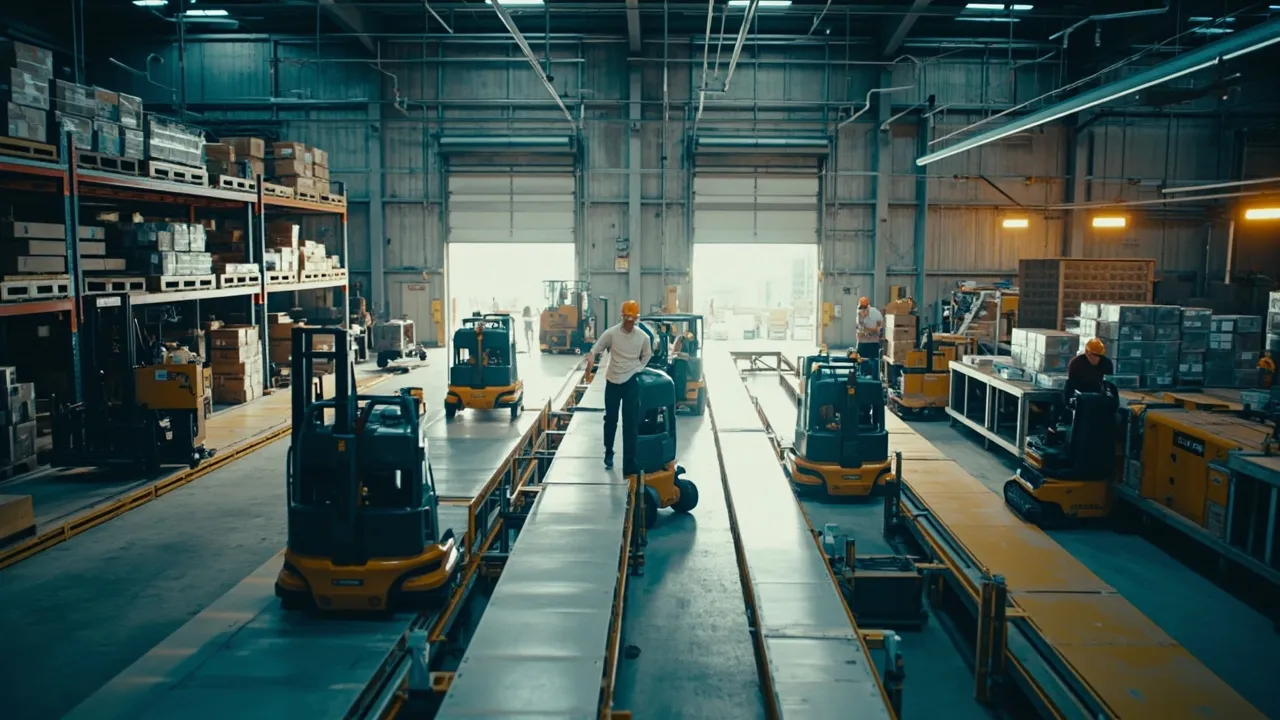
Brownfield modernization spreads that risk. A facility can pilot autonomous mobile robots in a high-SKU, low-volume picking zone. It can fix WMS replenishment logic before adding another fleet. It can automate pallet moves where empty fork travel is wasting labor. It can connect yard appointments and dock schedules before asking robotics to solve downstream congestion. Each step improves the current operation while creating cleaner data for the next one.
That sequencing matters because automation does not fail only when hardware fails. It fails when work instructions, inventory records, dock priorities, shipment cutoffs, and exception ownership are unclear.
Integration is becoming the real automation layer
Modern Materials Handling’s mobile robot trends coverage makes the point directly: warehouse operators are no longer just buying robots; they are asking how robots fit, communicate, and keep product moving inside busy facilities. As more companies layer automation into existing operations, mobile robots need to talk to WMS, warehouse execution systems, order management systems, conveyors, lift trucks, and other robotic systems without turning the warehouse into what the article called a “complex science project.”
That phrase should make every logistics leader uncomfortable, because it describes exactly where many modernization programs stall. A robot fleet may perform its assigned task well, but if the WMS releases work in the wrong sequence, if dock doors are not synchronized with carrier appointments, or if transportation cannot see inventory availability until too late, the improvement stays trapped inside the four walls.
The warehouse is not an island. A faster pick path only matters if the outbound plan can use it. Improved pallet flow only matters if yard moves and trailer assignments keep pace. Better inventory accuracy only matters if customer service, freight planning, and carrier tendering can trust the signal.
That is why brownfield modernization changes the integration burden for warehouse, yard, and transportation teams. The job is no longer to choose a robot and bolt it onto the floor. The job is to make each incremental automation step visible in execution metrics: dock dwell, on-time ship, short-ship reduction, labor productivity, trailer utilization, order cycle time, and exception response.
The best projects start with workflow friction
The smartest modernization roadmap starts by hunting friction, not technology. Where does work wait? Where do employees re-key data? Where do orders miss cutoffs? Which dock doors create recurring yard congestion? Which SKUs drive excess travel? Which carrier appointments routinely slip because inventory is not staged? Which exception emails tell the same story every week?
Once those patterns are visible, the automation choice becomes clearer. A WMS correction may outperform a robot. A small fleet of mobile robots may outperform a conveyor rebuild. A device-agnostic orchestration layer may unlock capacity from existing systems. A yard appointment change may produce more shipping reliability than another pick module.
Inbound Logistics cited examples of AI orchestration, automated WMS corrections, and device-agnostic control as part of the 2026 technology landscape. The common thread is not automation for its own sake. It is operational control: systems that can see friction, assign work, and improve execution without forcing the entire network through a reset.
Where CXTMS fits
CXTMS sits at the point where warehouse improvements have to become transportation performance. Brownfield modernization only pays off if better pick rates, cleaner inventory, and faster staging show up in appointments, milestones, load planning, and customer commitments.
A CXTMS-style execution layer helps connect those dots. Warehouse teams can expose inventory readiness and staging status. Yard teams can coordinate dock and trailer movement against real appointment windows. Transportation teams can adjust tenders, cutoffs, and carrier plans based on live warehouse conditions instead of yesterday’s assumptions. Exceptions can be assigned to owners, not lost between WMS screens, spreadsheets, and email threads.
That is the practical promise of brownfield modernization in 2026. Do not rip out the operation to prove you are modern. Make the installed operation smarter, more connected, and easier to improve one workflow at a time.
If your warehouse automation roadmap still depends on heroic manual coordination between the floor, the yard, and transportation, it is time for a better execution layer. Schedule a CXTMS demo to see how shipment visibility, appointment control, and operational workflows can turn incremental modernization into measurable logistics performance.