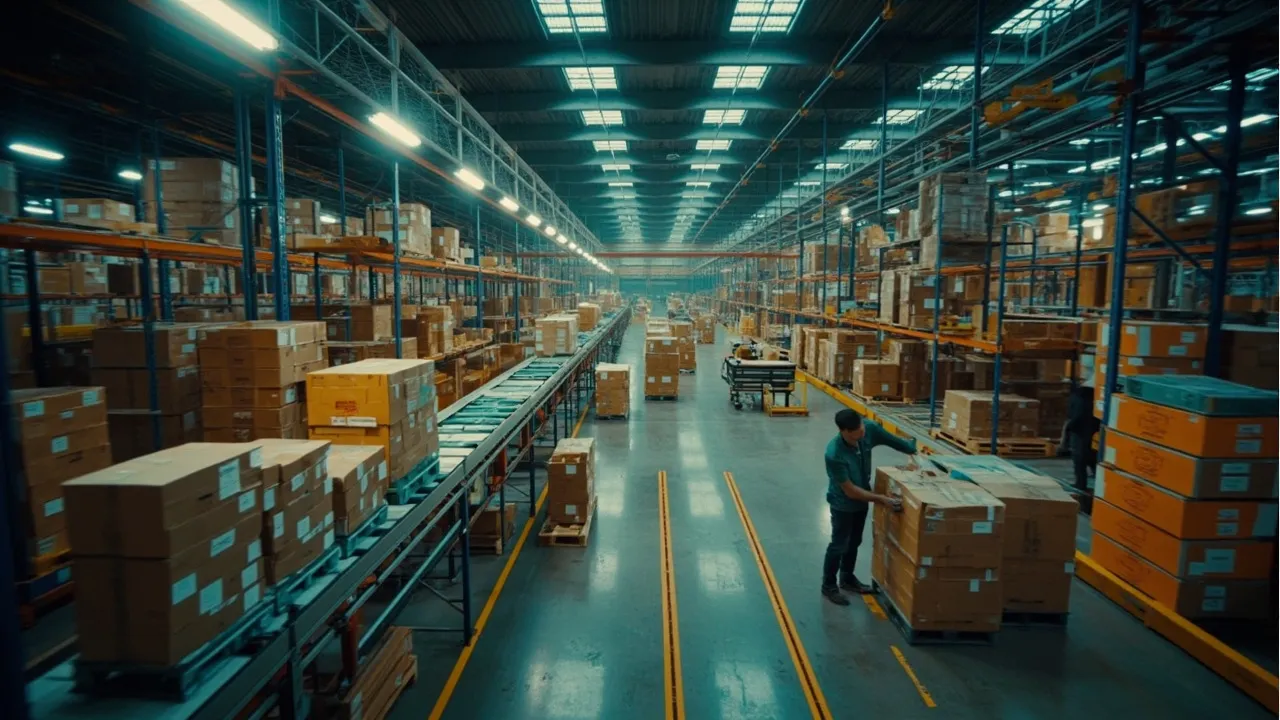
Shippers Are Expanding 3PL Use, but the Relationship Model Is Changing


Third-party logistics outsourcing is still expanding, but the old mental model is breaking down. The shipper-3PL relationship is no longer just a way to buy capacity, rent warehouse space, or hand off messy execution. In 2026, the stronger signal is convergence: transportation, warehousing, fulfillment, technology, trade services, and value-added operations are being bundled into fewer, deeper relationships.
That sounds efficient. It can be. But it also raises the stakes for control.
A recent Armstrong & Associates report covered by Logistics Management shows how broad the shift has become. The report, Convergence: Trends in 3PL/Customer Relationships—2026, draws from more than 8,404 3PL customer relationships across 46 countries and 22,000 individual services. Armstrong estimates the global 3PL market reached $1.3 trillion in 2025 and is on track for roughly $1.4 trillion in 2026. In the United States, 3PL revenue is estimated at $424.3 billion for 2025.
The most striking number: 94% of domestic Fortune 500 companies now work with at least one 3PL, a 46% increase compared with 2001. That is not a niche procurement tactic anymore. It is the operating model for modern logistics.
Outsourcing Is Moving Up the Value Chain
For years, shippers often treated 3PLs as an overflow valve. When capacity tightened, freight was tendered to brokers. When buildings filled, overflow inventory moved to an outside warehouse. When parcel complexity grew, another provider was added. The result was functional outsourcing, but not always strategic outsourcing.
The 2026 data points to a different pattern. Armstrong found that technology, retail, and healthcare are among the fastest-growing customer sectors for 3PL relationships, with compound annual growth rates of 8.7%, 7.9%, and 7.7%, respectively. Those are not simple freight-buying categories. Technology logistics requires serialization, returns discipline, spare-parts support, and tight delivery windows. Healthcare requires cold-chain control, product authentication, and regulatory traceability. Retail requires high-velocity pick-pack operations and constant service-level tuning.
In other words, shippers are outsourcing execution that is deeply connected to customer experience, compliance, and working capital. That changes the relationship. A 3PL is not just moving freight after the important decisions are made. Increasingly, the 3PL is part of how those decisions become operational reality.
Fewer Partners Does Not Mean Less Complexity
Convergence can look clean on a procurement slide: consolidate providers, standardize technology, centralize accountability. In practice, large logistics networks still depend on layers of subcontractors, regional specialists, carriers, fulfillment nodes, and systems.
Armstrong notes that some large 3PL accounts exceed $100 million and often involve a leading logistics provider managing other 3PLs underneath it. One example cited in the report: Volkswagen works with 74 different 3PLs. That is the uncomfortable truth behind many “single-source” logistics strategies. The shipper may have one strategic contract, but the freight still moves through a distributed operating network.
That is not bad. It is reality. Global logistics requires specialized partners. The problem starts when the shipper loses the operating thread: who owns the data, which KPI governs the exception, where escalation happens, and whether the customer promise is visible across all parties.
The risk is not outsourcing. The risk is blind outsourcing.
Platform Consolidation Is Accelerating the Shift
The market itself is pushing shippers toward broader logistics relationships. FreightWaves recently reported that WWEX Group and Auctane completed their merger to form ShipStation Global, combining freight brokerage, transportation services, parcel shipping technology, and international shipping tools. The new company says it serves more than 3 million customers, handles over 3 billion shipments annually, connects with more than 75 LTL carriers, 350 regional, national, and international carriers, 600 technology partners, and about 45,000 truckload carriers.
That kind of scale matters because small and midsize shippers increasingly want enterprise-grade logistics capability without stitching together ten separate systems and provider relationships. It also reflects where investors and providers see value: AI-enabled logistics platforms, broader service coverage, and end-to-end execution control.
Inbound Logistics made a similar point in its analysis of Amazon Supply Chain Services. Amazon’s decision to open freight, distribution, fulfillment, and parcel capabilities to outside businesses gives shippers and regional 3PLs access to infrastructure that was previously out of reach. For local and regional providers, the opportunity is not necessarily to compete with Amazon node-for-node. It is to become an integrator that brings global capability into a shipper’s existing operating model.
The common thread is obvious: logistics providers are no longer selling only labor, trucks, buildings, or labels. They are selling network access plus technology plus orchestration.
Governance Has to Catch Up
Shippers that expand 3PL usage without upgrading governance will feel the pain first in exceptions. A late inbound container becomes a warehouse labor issue. A missing lot number becomes a customer-service issue. A carrier failure becomes a chargeback. A system integration gap becomes a week of spreadsheet reconciliation.
The fix is not to pull everything back in-house. That is usually fantasy. The fix is to define control points before outsourcing expands.
Start with data ownership. Shippers need clear rights to shipment events, inventory status, appointment records, carrier performance, accessorial charges, proof of delivery, and exception notes. If the relationship ends, the operating history should not disappear into the provider’s portal.
Then define KPI governance. A 3PL scorecard should not stop at cost per shipment or on-time delivery. It should include tender acceptance, dwell, claims, inventory accuracy, exception response time, appointment adherence, detention exposure, and customer-impact metrics. Most importantly, the shipper and 3PL need one shared version of performance truth.
Finally, build escalation workflows. When an order misses a milestone, the system should show the owner, next action, customer impact, and financial exposure. Email threads and portal screenshots are not governance. They are evidence that governance failed.
Where CXTMS Fits
CXTMS is built for the middle ground: shippers can use 3PL partners aggressively without surrendering visibility or control. That matters because the winning model in 2026 is not purely insourced and not blindly outsourced. It is distributed execution with centralized intelligence.
With CXTMS, logistics teams can keep shipment milestones, partner performance, documents, carrier activity, and exceptions tied to the operating record instead of scattering them across provider portals. That gives managers a clean way to compare 3PL performance, spot recurring service failures, manage escalations, and keep customers informed even when multiple partners touch the freight.
The 3PL relationship model is changing because logistics itself is becoming more bundled, more digital, and more interdependent. Shippers should take advantage of that scale. They just should not confuse outsourcing with abdication.
Want tighter control across outsourced logistics operations? Schedule a CXTMS demo and see how unified shipment visibility and partner governance can keep distributed execution from turning into distributed confusion.