Cold Chain Mapping Has to Move Faster Than the Network Changes


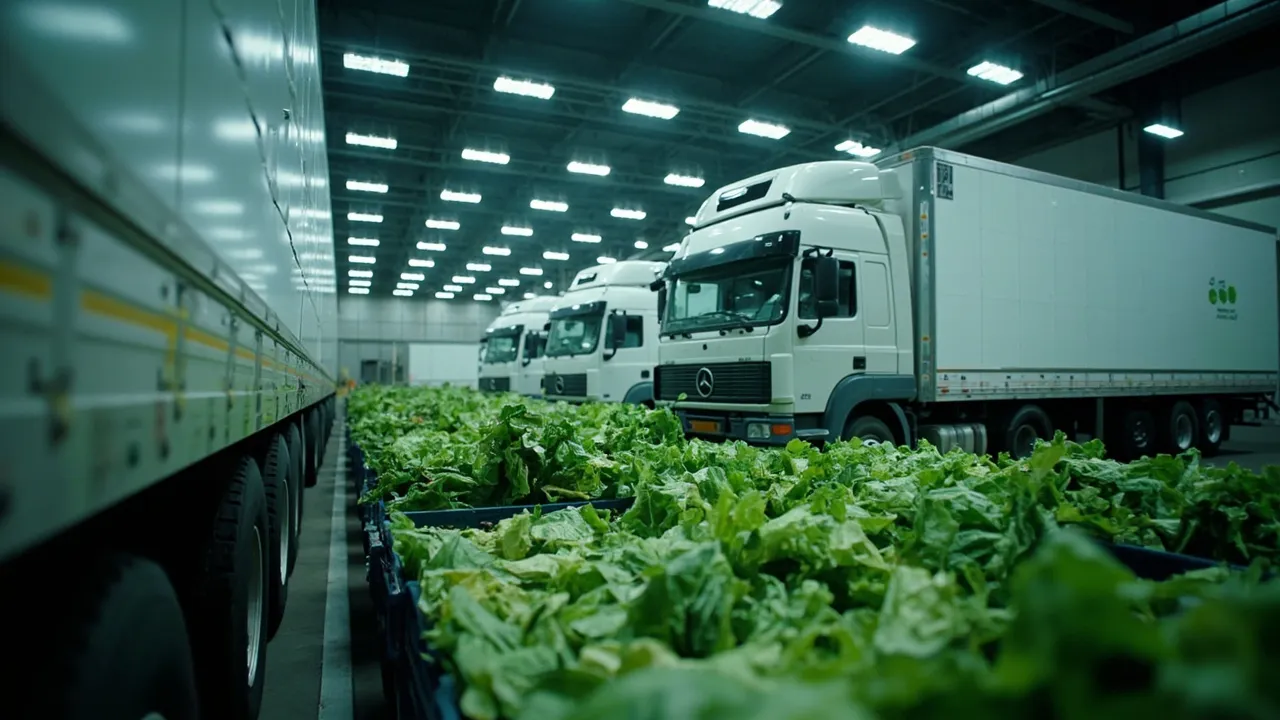
Cold chain maps used to be treated like infrastructure drawings: build them, review them occasionally, and trust them until the next network redesign. That rhythm is now too slow. The cold food chain is changing underneath operators every week as storage capacity shifts, carriers rebalance reefer equipment, produce seasons move volume into different lanes, and customers demand tighter delivery promises.
Food Logistics recently framed the problem well in its article on applying supply chain mapping to an ever-changing cold food chain landscape: the map is often built once and then trusted indefinitely while the network it represents changes around it. That is not a documentation problem. It is an execution risk.
For temperature-controlled logistics, a stale map can turn into spoiled product, rejected loads, missed retail appointments, food safety exposure, and expensive emergency capacity. The real question for 2026 is not whether food shippers have a map. It is whether the map updates fast enough to match how the network actually behaves.
Cold Storage Capacity Is Not a Fixed Backdrop
Cold chain teams sometimes talk about warehouses as if they are permanent dots on a lane diagram. In practice, cold storage capacity is becoming a dynamic constraint. Operators are expanding in some regions, tightening costs in others, and adjusting customer mix as food demand, inflation, and inventory policies change.
FreightWaves reported that Americold expanded cost-takeout efforts with a “Fit for Purpose” initiative expected to reduce overhead expenses by more than $25 million annually, on top of initiatives targeting $30 million in indirect labor and SG&A reductions and $50 million in project-spend reductions. Even major cold storage networks are under pressure to simplify, rebalance, and improve utilization.
Inbound Logistics points to the other side of the same market: DHL Supply Chain signed an MOU with RLCold to develop more than five million square feet of advanced temperature-controlled facilities across North America, including multi-temperature distribution centers. New capacity is coming, but it will not appear evenly across every shipper’s lane, commodity, or service window.
That combination—cost pressure in existing networks and selective new development—makes static assumptions dangerous. A warehouse that looked reliable last quarter may now have different appointment rules, labor constraints, customer priorities, or operating hours.
The Map Needs Operating Data, Not Just Locations
A useful cold chain map is not a list of facilities. It is a live model of dependencies.
At minimum, food logistics teams should map storage nodes, reefer partners, cross-dock points, dwell locations, inspection steps, transload options, backup carriers, and temperature-control responsibilities. Then they should attach operating data: appointment reliability, average dwell, claims history, temperature excursions, trailer availability, on-time performance, and exception response speed.
The difference matters. Two facilities may look identical on a map. One can recover a late inbound with flexible dock labor. The other may create a 36-hour dwell event that pushes product toward shelf-life risk. Cold chain mapping should expose those differences before dispatch commits the load. Otherwise it is not mapping the network. It is drawing geography.
Produce Season Makes the Weak Spots Obvious
Static maps fail hardest during produce season. Volumes shift geographically, appointment windows tighten, reefer capacity gets pulled into harvest lanes, and product tolerance shrinks. A route that works in March may become fragile in June because the same carrier is now serving a higher-value lane, a warehouse is facing seasonal labor pressure, or a transload point is absorbing more temperature-sensitive volume than planned.
This is where cold chain mapping becomes more than network design. It becomes exception management.
Teams should ask three questions before the season hits: where are the likely dwell points if volume surges, which partners recover exceptions quickly, and which customer commitments require a different backup plan than the lowest-cost option?
The answers should change tender rules. High-risk produce lanes may need earlier appointment confirmation, stricter carrier qualification, more frequent milestone checks, and pre-approved recovery options. A good map makes those tradeoffs visible. A bad map hides them until product is warm, late, or rejected.
Food Safety Turns Visibility Into Accountability
Cold chain visibility is often sold as tracking dots on a screen. That is too shallow. For food logistics, visibility has to connect location, temperature, custody, and accountability.
When a temperature-controlled shipment misses a milestone, the team needs to know more than “where is the truck?” They need to know whether the reefer set point is holding, how long the load has dwelled, who has custody, what partner owns the next action, and whether the customer promise is still recoverable. If the answer lives across emails, spreadsheets, carrier portals, and phone calls, the response will be slower than the risk.
That is why cold chain maps should be maintained as operational records, not presentation slides. Every lane should carry partner performance history. Every storage node should have service constraints. Every exception should feed the next planning cycle. Customers do not only buy capacity; they buy confidence.
What CXTMS Teams Should Operationalize
CXTMS is built around the work that happens after a plan meets reality. For cold chain teams, that means turning the map into a living execution layer.
Start with lane visibility. Each temperature-controlled lane should show planned milestones, storage dependencies, approved reefer partners, appointment windows, and service commitments in one workflow. When a carrier, facility, or dwell point underperforms, the lane should be flagged before the next shipment repeats the same mistake.
Next, connect partner performance to routing decisions. Cold chain partners should be measured on temperature compliance, milestone discipline, claims, dwell, recovery speed, and communication quality—not rate alone.
Finally, make exceptions actionable. A temperature alert, missed pickup, delayed dock appointment, or late delivery milestone should trigger a clear playbook: notify the right owner, activate recovery options, update the customer, and preserve the event history for future planning.
The cold food chain will keep changing. Capacity will move, costs will shift, facilities will open, carriers will rebalance, and seasonal demand will expose weak assumptions. Logistics teams cannot stop that churn. They can stop pretending last month’s map is enough.
Want to turn cold chain mapping into live lane control? Schedule a CXTMS demo and see how CXTMS connects temperature-controlled milestones, partner performance, exception workflows, and customer commitments in one operating platform.