Air Freight Customs Clearance Goes Digital: How Pre-Arrival Processing Cuts Clearance Times by 25%

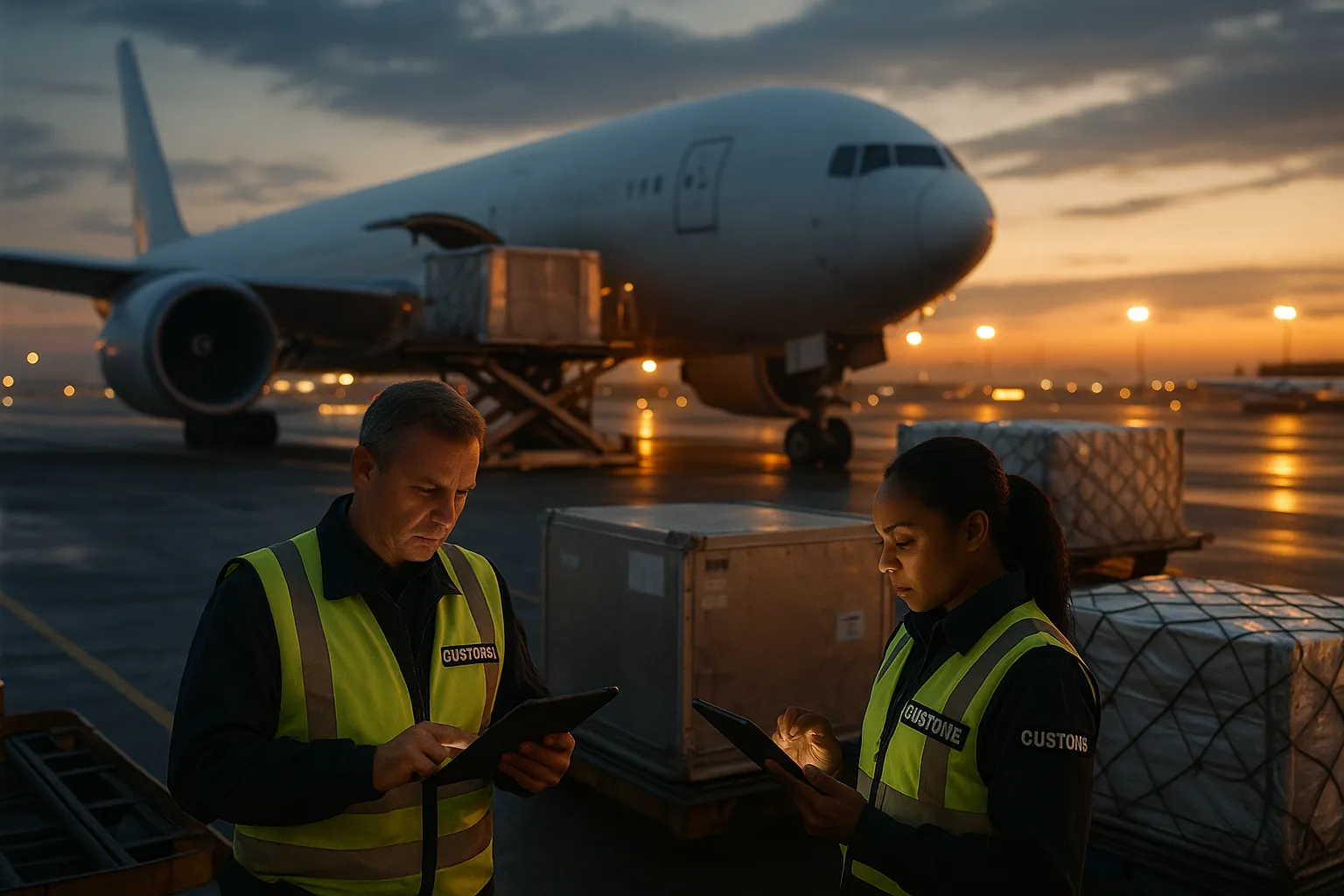
Air cargo moves at the speed of flight—until it lands. Then, for too many shipments, the clock stops. Customs clearance delays can ground high-value freight for hours or even days, eroding the speed premium that makes air freight worth its cost. In a market that Mordor Intelligence values at $169.5 billion in 2026 and projects to reach $225 billion by 2031, those delays represent an enormous drag on global commerce.
But 2026 is shaping up as the inflection point. Digital customs platforms, pre-arrival processing corridors, and IATA's ONE Record standard are converging to transform how air freight clears customs—and forwarders using these digital tools are already reporting clearance times 25% faster than their paper-dependent counterparts.
The Air Freight Customs Bottleneck
Air freight represents less than 1% of global trade by volume but more than 35% by value. Pharmaceuticals, semiconductors, e-commerce parcels, and perishable goods all depend on air cargo precisely because speed matters. When a shipment of temperature-sensitive biologics sits on an airport tarmac waiting for customs paperwork to clear, every hour of delay threatens product integrity and patient outcomes.
The traditional air freight customs process is notoriously document-heavy. A single international air cargo shipment can generate 30 or more paper documents: air waybills, commercial invoices, packing lists, certificates of origin, phytosanitary certificates, dangerous goods declarations, and more. According to Supply Chain Dive's reporting on the industry's digitalization push, over 7,800 tons of paper documents are processed annually in the air cargo industry—the equivalent of 80 Boeing 747 freighters filled with nothing but paperwork.
Each of those documents must be reviewed, cross-referenced, and validated by customs authorities. Manual data re-entry introduces errors. Mismatched information between the air waybill and the commercial invoice triggers holds. A single HS code discrepancy can delay an entire consignment while brokers scramble to file corrections.
How Digital Customs Platforms Are Changing the Game
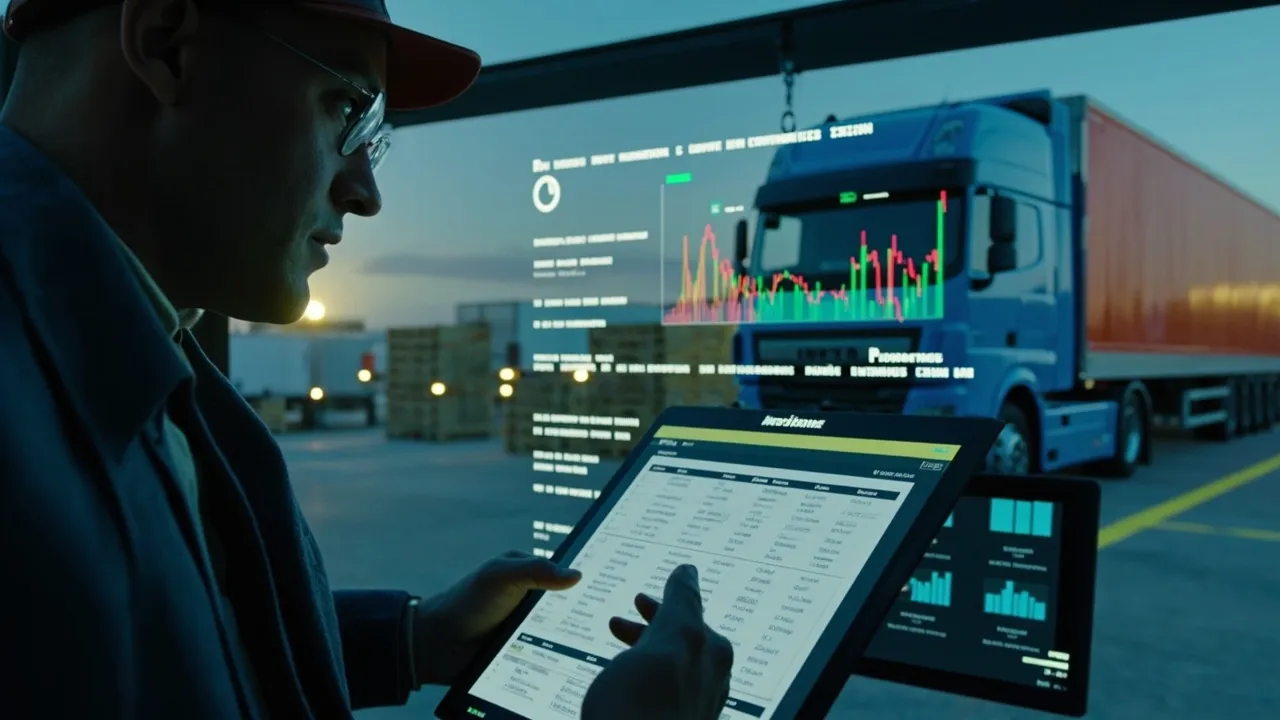
Digital customs clearance platforms attack this problem at its root: they replace manual document handling with automated data extraction, validation, and submission. Here is what the modern digital customs workflow looks like for air freight:
Automated Airway Bill Processing. Electronic air waybills (eAWBs) eliminate the paper trail entirely. Shipment data flows directly from the forwarder's system to the airline and customs authority in a structured digital format. IATA reports that 85% of shipments where eAWBs are permitted now use the electronic format, though full adoption remains a work in progress.
AI-Powered HS Classification. Machine learning algorithms analyze product descriptions and historical classification data to assign Harmonized System codes with greater accuracy than manual lookup. This reduces the classification errors that account for a significant share of customs holds and penalty assessments. With U.S. CBP fines totaling over $2 billion in 2025, getting classification right is not optional.
Commercial Invoice Matching. Digital platforms automatically cross-reference invoice data against the eAWB, flagging discrepancies before submission rather than after a customs examiner catches them. This pre-validation step alone eliminates one of the most common causes of clearance delays.
Automated Compliance Screening. Denied party screening, export license checks, and sanctions compliance happen in real time as the shipment data enters the system—not as a separate, time-consuming manual process.
Pre-Arrival Processing: Clearing Cargo Before It Lands
The most transformative shift in air freight customs is the move to pre-arrival processing. Rather than waiting for cargo to physically arrive at the destination airport before initiating clearance, digital corridors allow customs authorities to review and approve shipments while they are still in transit.
The concept is straightforward: when all shipment documentation is submitted electronically 3 to 5 days before arrival, customs can complete risk assessment, duty calculation, and release authorization before the aircraft touches down. When the cargo lands, it is already cleared—ready for pickup or onward transit within hours instead of days.
The results speak for themselves. IATA has documented that Brazil's adoption of digital air cargo standards cut cargo release times from 5 days to just 5 hours, with up to 90% less manual processing. While not every market will see gains of that magnitude, the directional evidence is overwhelming: digital pre-arrival processing dramatically compresses clearance timelines.
The U.S. Air Cargo Advance Screening (ACAS) program already requires participating carriers to submit pre-arrival cargo data for security screening. The natural extension is to layer customs clearance onto that same pre-arrival data flow—and that is exactly what digital customs platforms enable.
IATA ONE Record: The Data Backbone for 2026
Underpinning this digital transformation is IATA's ONE Record standard, which became the preferred data-sharing standard for all IATA member airlines as of January 1, 2026. ONE Record creates a single, standardized digital record for each shipment, accessible via secure web API to every stakeholder in the air cargo chain: airlines, forwarders, ground handlers, and customs authorities.
More than 200 companies worldwide participated in pilot projects leading up to the January 2026 launch. Major carriers including Cathay Pacific, Turkish Cargo, and Lufthansa Cargo are already using ONE Record for eAWB submission, shipment tracking, and customs status updates. The standard eliminates the fragmented, point-to-point messaging that has plagued the air cargo industry for decades.
For customs clearance specifically, ONE Record means that every participant in the supply chain works from the same verified data set. When the forwarder creates the shipment record, the customs broker sees it instantly. When customs issues a release, the ground handler and consignee are notified in real time. No more faxes. No more phone calls to check shipment status. No more conflicting data between systems.
What This Means for Shippers
For companies that ship high-value, time-sensitive goods by air, the shift to digital customs clearance is not just a technology upgrade—it is a competitive advantage. Here is what shippers should be doing now:
Demand eAWB capability from your forwarders. If your freight forwarder is still generating paper air waybills, you are paying for delays. Ask about their eAWB adoption rate and ONE Record readiness.
Invest in data quality. Digital customs platforms are only as good as the data fed into them. Accurate product descriptions, correct HS classifications, and complete commercial invoice data are the foundation of fast clearance.
Leverage pre-arrival filing windows. Work with your customs broker to submit entry documentation as early as possible—ideally 3 to 5 days before arrival. The earlier customs receives clean data, the higher the probability of pre-arrival release.
Monitor compliance continuously. Automated denied party screening and sanctions checks should run on every shipment, every time. The cost of a compliance violation far exceeds the cost of the technology to prevent it.
How CXTMS Accelerates Air Freight Customs Clearance
CXTMS air freight modules integrate directly with digital customs platforms to streamline the pre-clearance workflow. Our system automatically validates shipment documentation against customs requirements before submission, flagging errors and discrepancies that would otherwise trigger holds.
With real-time tracking of customs status across multiple airports and jurisdictions, CXTMS gives shippers and forwarders a single dashboard view of every air cargo shipment's clearance progress. Automated alerts notify your team the moment a shipment is cleared—or the moment an issue requires attention.
The air freight industry's digital transformation is accelerating, and customs clearance is where the biggest operational gains are being realized. Request a CXTMS demo today to see how our platform can cut your air freight clearance times and keep your cargo moving at the speed your business demands.