Voice-Directed Warehouse Operations in 2026: Why Voice Picking Technology Is Outperforming Screens in High-Volume Fulfillment


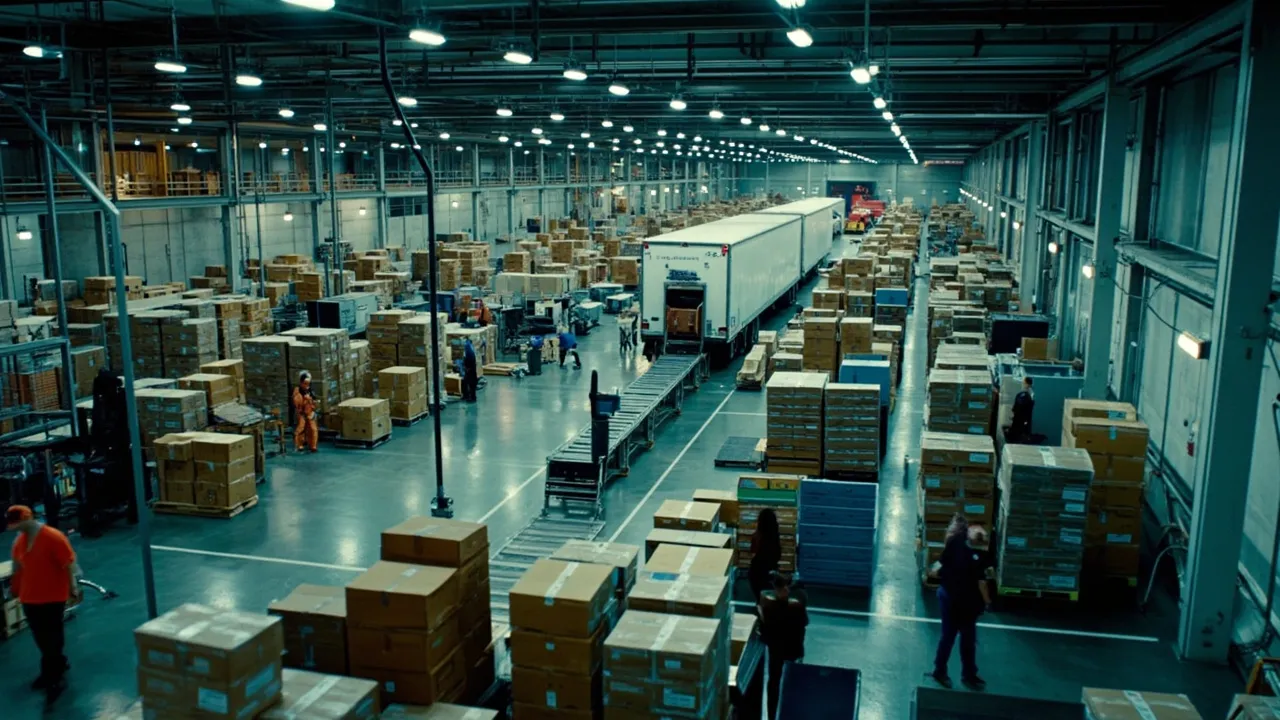
A picker walks down aisle 14 in a 600,000-square-foot distribution center outside Memphis. She's moving at a steady pace—no stopping to squint at a screen, no fumbling with a handheld scanner, no pausing to tap a confirmation button. A calm voice in her headset tells her exactly where to go next, she confirms the location with a spoken check digit, and her hands never leave the product. She's averaging 118 picks per hour. The picker in the next zone using an RF scanner is doing 85.
This isn't a technology demo. It's a Tuesday afternoon. And it illustrates why voice-directed warehouse operations are experiencing a resurgence that's reshaping how the industry thinks about fulfillment productivity.
A $6.6 Billion Market That Refuses to Be Replaced
Voice picking has been around since the late 1990s—long enough that many logistics professionals assumed it would be eclipsed by AR smart glasses, autonomous mobile robots, or some other flashier technology. Instead, the opposite has happened.
The global voice-directed warehousing solutions market reached $5.6 billion in 2025 and is projected to hit $6.61 billion in 2026, representing an 18% compound annual growth rate according to Research and Markets. Looking further ahead, the market is expected to expand at a 16.2% CAGR through 2035, driven by the accelerating integration of artificial intelligence and natural language processing into voice platforms.
Why the sustained growth? Because voice technology hits a productivity sweet spot that neither screens nor glasses have been able to match in most mid-size to large-scale fulfillment environments. As Logistics Management reports, voice picking solutions are gaining impact through deeper integration with warehouse execution systems and autonomous mobile robots—extending well beyond the simple pick-and-confirm workflows of a decade ago.
How Modern Voice Systems Differ from Legacy: The NLP Revolution
The voice picking systems of 2016 required workers to memorize rigid command vocabularies—short, clipped phrases like "ready," "confirm," and specific digit strings. Mispronunciations or heavy accents could trigger repeated prompts and frustration. Training took days. Worker satisfaction was middling.
The 2026 generation is fundamentally different.
Modern voice-directed systems powered by natural language processing and AI-driven speech recognition can understand conversational language, adapt to individual accents within minutes, and support dozens of languages on a single platform. A warehouse in Southern California with workers speaking English, Spanish, Mandarin, and Tagalog can deploy a single voice system that adapts to each picker's natural speech patterns without requiring them to switch languages or learn artificial commands.
This multilingual capability isn't a nice-to-have—it's a competitive necessity. With the U.S. warehouse workforce becoming increasingly diverse, voice systems that adapt to the worker rather than forcing the worker to adapt to the system are delivering measurably faster onboarding. Facilities using modern AI-enhanced voice platforms report reducing new-hire training time from five days to less than two, with pickers reaching full productivity within their first week.
Voice vs. AR Glasses vs. RF Scanners: The Productivity Numbers
The debate over warehouse picking technology often gets framed as a futuristic choice between voice, augmented reality, and traditional RF scanning. But the data tells a more nuanced story.
RF handheld scanners remain the most widely deployed picking technology. They're reliable, well-understood, and inexpensive per unit. But they occupy one of the picker's hands, require visual attention on a small screen, and force stop-and-scan motions that fragment workflow. Typical productivity: 60–90 picks per hour depending on warehouse layout.
Voice-directed picking frees both hands and the picker's eyes, enabling continuous motion through the warehouse. Modern systems achieve 100–120 picks per hour with accuracy rates exceeding 99.5%. The hands-free advantage is particularly significant in cold storage, food distribution, and pharmaceutical environments where gloves, protective equipment, or clean-room protocols make screen interaction impractical.
AR smart glasses promise the best of both worlds—visual guidance plus hands-free operation. In practice, however, the technology faces persistent headwinds. Current-generation devices still carry ergonomic concerns over extended shifts, battery life rarely exceeds a full 8-hour shift, and the hardware cost per picker runs three to five times higher than a voice headset. For operations running 200+ pickers across multiple shifts, that cost differential is substantial.
The result is that voice picking occupies a durable middle ground: significantly more productive than RF scanners, substantially less expensive than AR glasses, and proven at scale across tens of thousands of facilities worldwide.
Integration with WMS: Real-Time Inventory in Every Spoken Word
One of the most significant advances in voice technology is its real-time bidirectional integration with warehouse management systems. Every spoken confirmation from a picker updates inventory counts, triggers replenishment workflows, and feeds into labor management analytics—instantaneously.
Modern voice platforms from providers like Honeywell (Vocollect), Lucas Systems, and Zebra Technologies now function as execution layer endpoints within broader warehouse execution systems (WES). This means voice-directed workers aren't just picking—they're feeding live data streams that optimize slotting decisions, wave planning, and dynamic task interleaving across the facility.
According to the MHI, this integration between voice, vision, and automation systems represents the current frontier of warehouse technology—where individual picking technologies converge into unified execution platforms that optimize the entire facility rather than just individual tasks.
The analytics dimension is equally powerful. Voice systems generate granular performance data—time-per-pick, travel patterns, confirmation delays, error clusters—that supervisors can use to identify coaching opportunities, rebalance zones, and predict throughput bottlenecks before they impact service levels.
The Multilingual Workforce Advantage
The warehouse labor market in 2026 is defined by scarcity and diversity. Operations competing for workers can't afford technologies that create language barriers or extend onboarding timelines.
Voice picking technology has emerged as an unexpected equalizer. Because the interface is auditory rather than visual, literacy levels and screen-reading proficiency become irrelevant. A speaker-independent voice recognition engine that understands a picker's natural speech—regardless of accent, dialect, or primary language—removes one of the most persistent friction points in warehouse staffing.
Facilities deploying multilingual voice systems report 15–25% reductions in first-month turnover among non-native English speakers, a demographic that represents a growing share of the U.S. warehouse workforce. When workers can perform at full productivity from day one without struggling with English-language screen interfaces, retention improves and training costs drop.
For operations managing seasonal ramp-ups—where hundreds of temporary workers need to be productive within days, not weeks—the rapid onboarding capability of modern voice systems provides a measurable competitive advantage.
Beyond Picking: Voice Expands Across Warehouse Operations
While picking remains the primary use case, voice technology is expanding into adjacent warehouse workflows at an accelerating pace. Receiving, put-away, replenishment, cycle counting, loading, and even quality inspection are all being voice-enabled in leading facilities.
The logic is consistent: any warehouse task that benefits from hands-free, eyes-free operation and real-time WMS updates is a candidate for voice direction. Cycle counting, in particular, has seen rapid voice adoption—eliminating the clipboard-and-pencil processes that still persist in many operations and reducing count discrepancies by enabling real-time verification against system records.
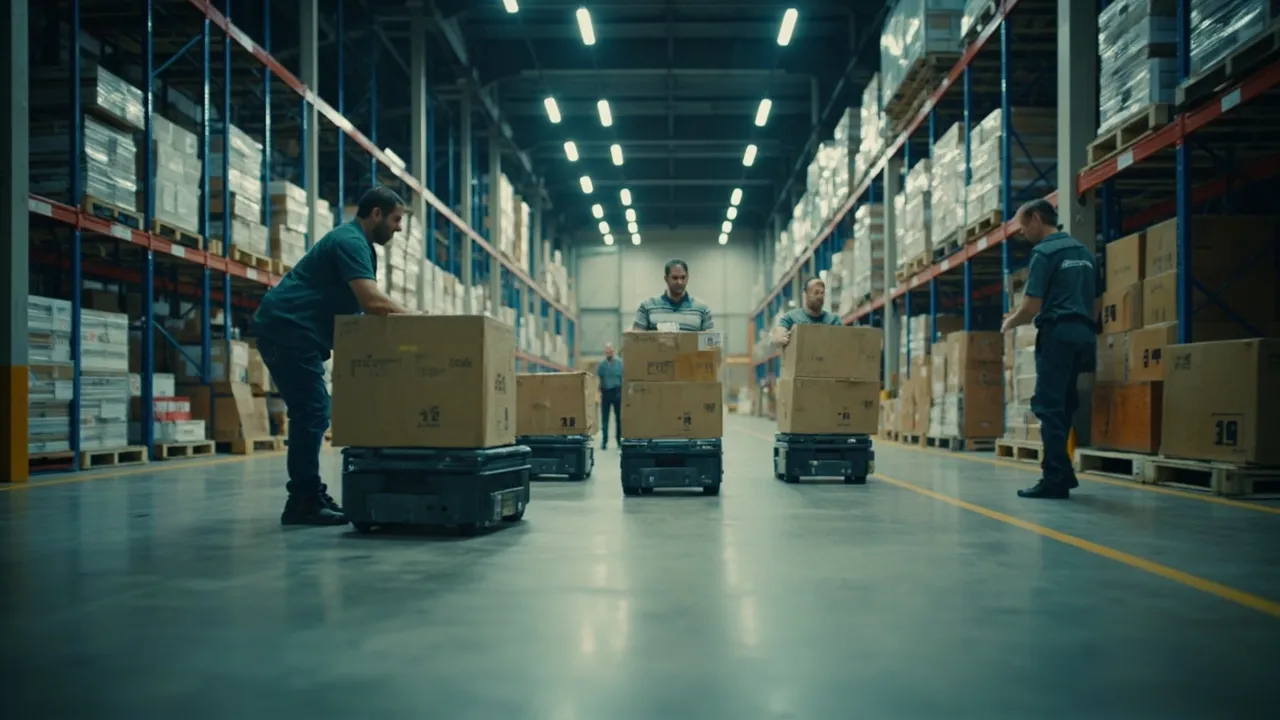
Forward-thinking operations are also combining voice with AMRs in collaborative workflows. The voice system directs the picker to the location, the AMR follows with the cart or tote, and the picker confirms the pick verbally—creating a human-robot collaboration model that delivers throughput improvements without the massive capital expenditure of fully automated goods-to-person systems.
How CXTMS Supports Voice-Directed Warehouse Workflows
For organizations running voice-enabled warehouses, the efficiency gains at the pick face need to flow seamlessly into transportation execution. CXTMS connects warehouse output—order completion signals, shipping unit data, and dock scheduling requirements—directly into carrier selection and load optimization workflows.
When a voice-directed operation completes a wave, CXTMS automatically matches completed orders against available carrier capacity, optimizes multi-stop loads, and generates shipping documentation—ensuring that the productivity gains achieved through hands-free picking aren't lost in a manual transportation planning bottleneck.
Ready to connect your warehouse execution to intelligent transportation management? Request a CXTMS demo and see how real-time warehouse-to-carrier integration eliminates the gaps between picking productivity and shipping performance.