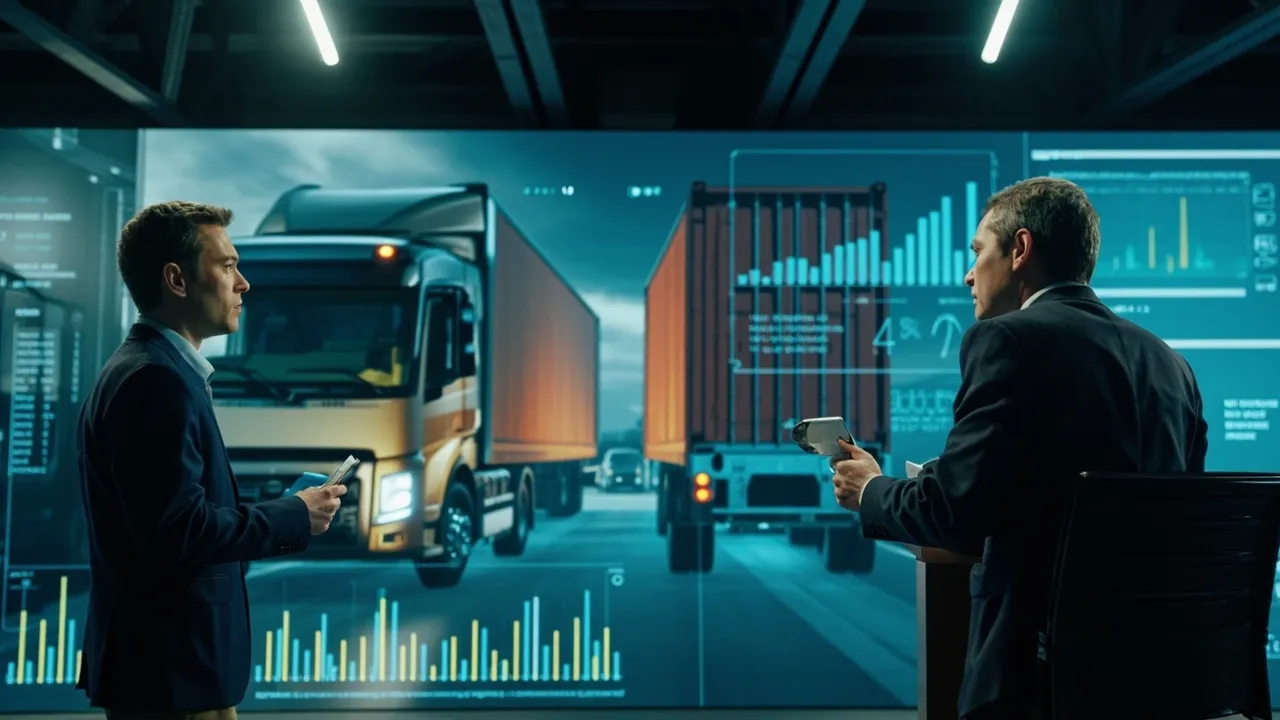
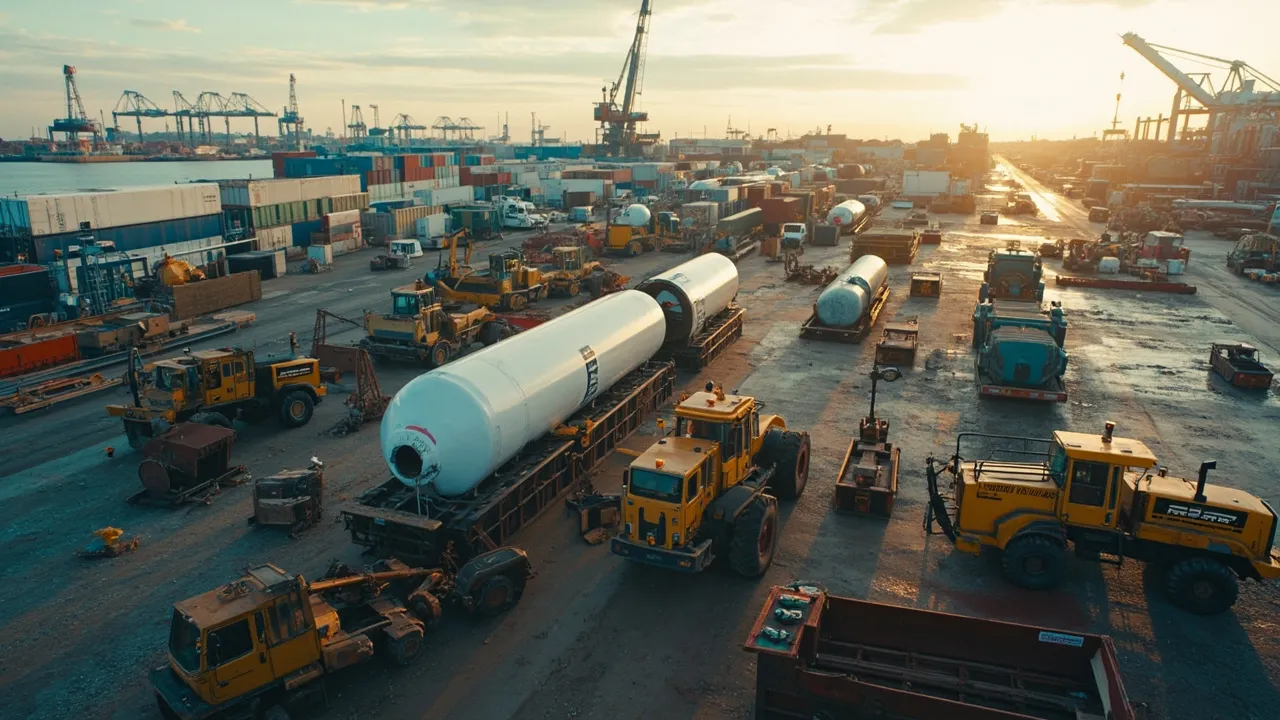
The Port of Long Beach Green Truck Corridor Turns Drayage Decarbonization Into Route Design


Zero-emission drayage is often discussed as an equipment transition: replace diesel tractors with battery-electric or hydrogen trucks and emissions fall. The Port of Long Beach’s new Green Truck Corridor shows why that view is too narrow. Cleaner trucks matter, but the operating design around those trucks matters just as much.
According to Supply Chain Dive, the Port of Long Beach, the Wonderful Co., and Lincoln Transportation Services signed a memorandum of understanding to develop a port-powered Green Truck Corridor between Long Beach and California’s Central Valley. The proposed corridor spans about 150 miles and serves a freight artery that moves more than 300,000 shipping containers of imports and exports each year.
That is the important number. A 150-mile route with recurring container volume is not just a sustainability announcement. It is a route-design problem with enough density to make charging, equipment assignment, appointment planning, and inland staging work together.
The Corridor Is the Product
Drayage is unforgiving because the trip is short, the windows are tight, and the handoffs are numerous. A truck may touch a marine terminal, chassis pool, transload site, warehouse, rail ramp, depot, or inland distribution hub in a single operating cycle. Any delay can ripple into demurrage, detention, missed vessel cutoffs, missed warehouse appointments, or driver-hours pressure.
That is why zero-emission drayage cannot be planned one truck at a time. The corridor has to become the operating unit.
The Long Beach-to-Central Valley lane has three characteristics that make it suitable for early scaling. First, it connects a major port complex to inland freight demand rather than relying on scattered one-off moves. Second, it has directional flow from import distribution and agricultural export activity. Third, it has enough recognizable participants to coordinate behavior instead of hoping each shipper, carrier, and facility optimizes independently.
Supply Chain Dive reported that corridor partners already include shippers such as Amazon, Walmart, Target, and Ross Stores. Lincoln Transportation Services, named as the first lead truck ambassador, has ordered 300 Tesla Semi electric trucks with an estimated 500-mile range, with the first 50 to 70 trucks expected in June. Voltz, an electric truck manufacturer affiliated with Lincoln, plans 100 additional units beginning in Q3 2027.
Those fleet numbers are meaningful only if the lane can keep the assets productive. Electric trucks sitting in the wrong yard, waiting for a charger, or missing an appointment do not reduce much beyond utilization.
Charging Placement Is a Service-Reliability Decision
The Port of Long Beach already has 102 charging stations, with 92 more expected later this year, according to the same Supply Chain Dive report. That infrastructure expansion is necessary, but it should not be treated as a simple real estate or utility project.
Charging placement becomes a service-reliability decision. A charger at the port helps if trucks return to the port frequently and dwell long enough to use it. Inland charging helps if distribution centers can align charge windows with loading, unloading, or driver breaks. Public or shared hubs help if they do not create new queues that erase the schedule gains from cleaner equipment.
The operating question is not “how many chargers exist?” It is “where can a truck charge without breaking the freight plan?”
For logistics teams, that means mapping the full trip: terminal appointment, gate turn time, chassis status, empty return, inland unloading, backhaul availability, charge state, driver schedule, and next dispatch. Sustainability improves when that loop is designed tightly. It struggles when charging is bolted onto a diesel-era routing model.
Port Volume Makes the Stakes Bigger
The timing matters because Southern California port volume remains heavy. Logistics Management reported that the Port of Long Beach handled 842,030 TEU in May, up 31.7% year over year, making it the third-busiest May in the port’s history. Imports reached 418,851 TEU, up 40%, while empties rose 21.8% to 314,012 TEU. Through May, the port handled 4,050,247 TEU and was tracking close to its busiest year on record.
Those figures make the corridor more than a pilot. When import demand is strong, any drayage redesign has to protect throughput, not merely demonstrate good intentions. If zero-emission trucks cannot match the cadence of container availability, warehouse receiving schedules, and empty returns, shippers will treat them as a compliance layer rather than a dependable service option.
The better framing is different: sustainability and service reliability can reinforce each other when route density creates repeatable flows.
How Shippers Should Identify Good Lanes
Not every lane is ready for zero-emission drayage at scale. The best candidates share several traits.
They have repeatable volume. Sporadic moves are harder to plan because chargers, drivers, and equipment cannot be scheduled confidently. A recurring port-to-inland lane gives carriers a reason to dedicate tractors and gives facilities a reason to prepare.
They have disciplined appointments. Electric drayage does not tolerate avoidable dwell. If trucks burn hours waiting at a gate or warehouse, the charge plan and next dispatch suffer. Appointment compliance should be treated as part of the emissions strategy.
They have facility readiness. Warehouses and transloaders need yard flow, staging space, clear check-in processes, and, eventually, charging partnerships or onsite capacity. A shipper cannot demand cleaner service while sending trucks into chaotic receiving operations.
They have backhaul logic. The strongest corridors reduce empty miles by pairing import flows with export, repositioning, or return freight. The Central Valley connection is interesting because it links consumer import distribution with one of the country’s most important agricultural production regions.
They have shared data. Route design depends on appointment times, gate status, container availability, driver schedules, charge levels, and exception alerts. Without that visibility, dispatchers are forced to protect service by adding buffers, which weakens both utilization and sustainability.
Carrier Selection Will Change
Green drayage also changes carrier evaluation. The cheapest truck rate is a weak metric if the carrier cannot manage charge planning, appointment execution, asset utilization, and exception recovery.
Shippers should ask carriers more specific questions: Which tractors are assigned to the lane? Where do they charge? What is the target minimum state of charge before dispatch? How are missed terminal appointments recovered? What happens if a charger is unavailable? Can the carrier share lane-level emissions, dwell, and service data? How does the carrier coordinate empty returns?
The answers reveal whether the carrier has a real operating model or just access to zero-emission equipment.
The Real Lesson for Drayage Decarbonization
The Port of Long Beach corridor points to a practical future. Decarbonization will not spread evenly across every lane at once. It will start where freight density, infrastructure, shipper participation, carrier investment, and facility discipline overlap.
That is not a weakness. It is how logistics networks improve. The smartest teams will not wait for a perfect national charging map. They will identify corridors where cleaner freight can also be more predictable freight, then redesign routing rules, appointment behavior, and exception workflows around those lanes.
The truck matters. The route matters more.
CXTMS helps freight forwarders and logistics teams connect shipment execution, carrier performance, appointments, and exceptions in one operating workflow. If your team is evaluating cleaner drayage corridors or trying to make port moves more predictable, schedule a CXTMS demo and see how better logistics control turns visibility into execution.