Project Logistics Needs Better Drayage Planning Before the Next Infrastructure Wave Hits

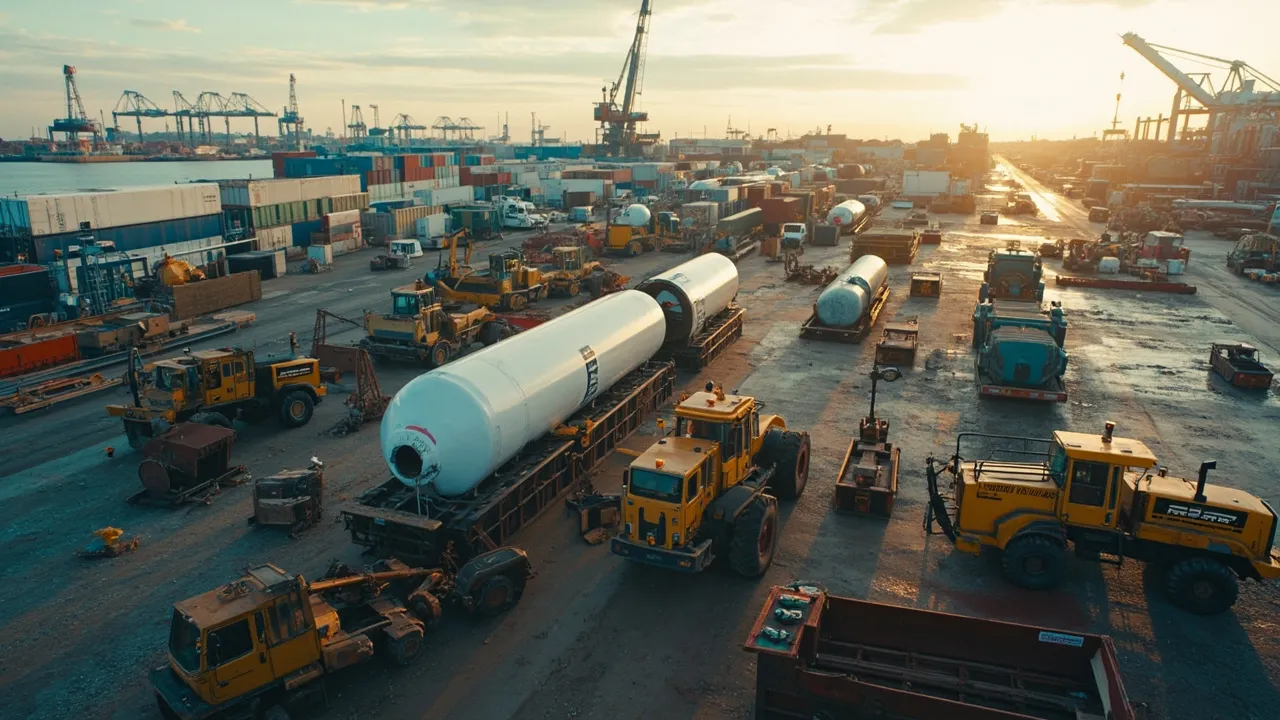
Project logistics failures rarely start with the spectacular part of the move. The crane performs. The ocean leg sails. The engineered transport plan looks impressive. Then the cargo reaches the interface nobody planned tightly enough: a port gate, rail crossing, marshalling yard, escort window, permit constraint, bridge clearance, chassis shortage, or drayage appointment that does not line up.
That is where the next infrastructure wave will punish weak coordination. Project logistics is growing because capital projects are moving bigger, heavier, and more time-sensitive equipment across more constrained networks. According to Mordor Intelligence's project logistics market analysis, the market was valued at USD 464.30 billion in 2025 and is expected to grow from USD 487.62 billion in 2026 to USD 624.06 billion by 2031, a 5.06% CAGR. Oversized cargo represented 32.61% of the market in 2025, while heavy-lift cargo is projected to grow at a 5.65% CAGR through 2031.
Those numbers point to a physical reality: more transformers, wind components, LNG modules, turbines, generators, data-center equipment, and industrial machinery will be moving through networks not designed around out-of-gauge cargo. The winners will control every handoff before the cargo reaches a bottleneck.
Infrastructure spending raises the planning bar
Public investment is pushing more freight toward corridors that need better sequencing, not just more capacity. Logistics Management reported that the U.S. Department of Transportation's 2026 National Freight Strategic Plan targets a freight system that moves more than 54 million tons of goods worth more than USD 68 billion each day across a nearly 7-million-mile network. The plan emphasizes bottleneck reduction, supply chain visibility, streamlined project reviews, advanced freight technologies, and digital freight data standards.
The same Logistics Management coverage notes that the proposed BUILD America 250 Act includes freight-focused items such as nationally significant multimodal freight and highway projects, bridge programs, railway-highway grade crossings, the National Highway Freight and High Priority Corridor Program, state freight plans, freight advisory committees, and freight logistics optimization work.
That policy backdrop is practical for project cargo teams. Bridge work can change route viability. Grade-crossing projects can affect rail timing. Port and highway upgrades can improve long-term flows while creating near-term detours, lane restrictions, permits, escorts, and temporary operating rules. Drayage cannot stay a local detail at the end of the plan; it is the control point that often decides whether expensive assets arrive when the project schedule needs them.
Drayage is where project plans meet the real world
For standard container freight, drayage already creates risk: appointment windows, chassis availability, terminal dwell, driver capacity, demurrage, and cutoffs. Project cargo adds specialized trailers, engineered tie-downs, police escorts, bucket trucks, utility coordination, night moves, bridge surveys, route permits, temporary storage, and synchronized crane access.
Mordor's research highlights why those dependencies are becoming more important. Transportation services accounted for 60.71% of project logistics revenue in 2025, but warehousing, distribution, and inventory management are projected to grow at a 5.24% CAGR as clients add buffer capacity near fabrication yards and ports. That is a clear signal: shippers are learning that the safest project plan may include staged inventory, marshalling space, and controlled release windows rather than a heroic direct move that assumes every handoff will happen perfectly.
The fastest-growing end-user segment tells the same story. Mordor projects energy generation and transmission to grow at a 5.90% CAGR through 2031. Grid equipment, renewable energy components, and power infrastructure are not forgiving cargoes. A late transformer can hold up commissioning. A wind blade may need a narrow weather and escort window. A modular LNG component may require berth access, inland clearance, and site readiness to line up within days, not weeks.
In that environment, drayage planning becomes less about calling a truck and more about managing a chain of prerequisites: Has the permit been issued? Is the route still valid? Are escorts confirmed? Is the terminal appointment aligned with crane labor? Is the marshalling yard ready? Has the receiving site cleared laydown space? Are carrier insurance certificates and safety credentials approved? Does everyone know the escalation path if a port delay consumes the approved movement window?
Control towers need milestone discipline, not dashboard theater
Project logistics visibility has to be more precise than a dot on a map. A control tower should translate events into milestone risk. If a heavy module misses a port pickup window, the system should show which downstream permits expire, which escort bookings become invalid, which crane reservation is at risk, and which project milestone absorbs the delay.
That requires a different workflow from ordinary shipment tracking. Project cargo teams need a shared operating record for permits, route surveys, carrier readiness, asset assignments, terminal appointments, marshalling yard capacity, document status, and site constraints. Each item should have an owner, due date, evidence trail, and exception rule.
The broader freight market reinforces why this matters. Mordor's freight and logistics market study values the global freight and logistics industry at USD 6.68 trillion in 2026 and projects it to reach USD 8.49 trillion by 2031 at a 4.91% CAGR. It also identifies infrastructure upgrades and public-private partnership logistics corridors as a growth driver, while port congestion and inland bottlenecks remain a constraint. In other words, more freight is moving through systems that are improving and stressed at the same time.
For project cargo, that means exception management cannot wait for a weekly call. Teams should define milestone gates before execution begins: engineering complete, route approved, permit filed, permit issued, carrier confirmed, equipment staged, terminal appointment secured, cargo available, port release complete, drayage dispatched, yard received, site ready, final delivery complete. When one gate slips, the control tower should automatically surface the next three consequences.
What better drayage planning looks like
Strong project drayage programs usually share five traits. They plan from the destination backward, letting the site schedule, crane availability, laydown capacity, safety requirements, and commissioning sequence dictate the cargo release plan. They treat permits as live operating constraints with validity dates, route assumptions, escort requirements, axle limits, and weather sensitivity visible to dispatch. They use marshalling yards strategically, because buffer space near ports, rail ramps, or job sites can absorb vessel delays and smooth sequencing. They connect financial exposure to operational events, attaching demurrage, detention, escort rebooking, crane standby, storage, and premium drayage to the exception record while there is still time to act. And they build escalation paths before the move starts, so a port hold, permit delay, equipment failure, or site constraint does not trigger improvisation.
The next infrastructure cycle will reward logistics teams that make drayage a planning discipline, not an afterthought. Heavy-lift capability still matters. But the projects that stay on schedule will be the ones that manage the interfaces: port to road, road to rail, rail to yard, yard to site, plan to reality.
CXTMS helps logistics teams connect shipment milestones, carrier readiness, document workflows, exception escalation, and customer visibility in one transportation operating layer. If your project logistics program needs tighter control before the next infrastructure wave hits, schedule a CXTMS demo and see how connected execution can keep complex freight moving.