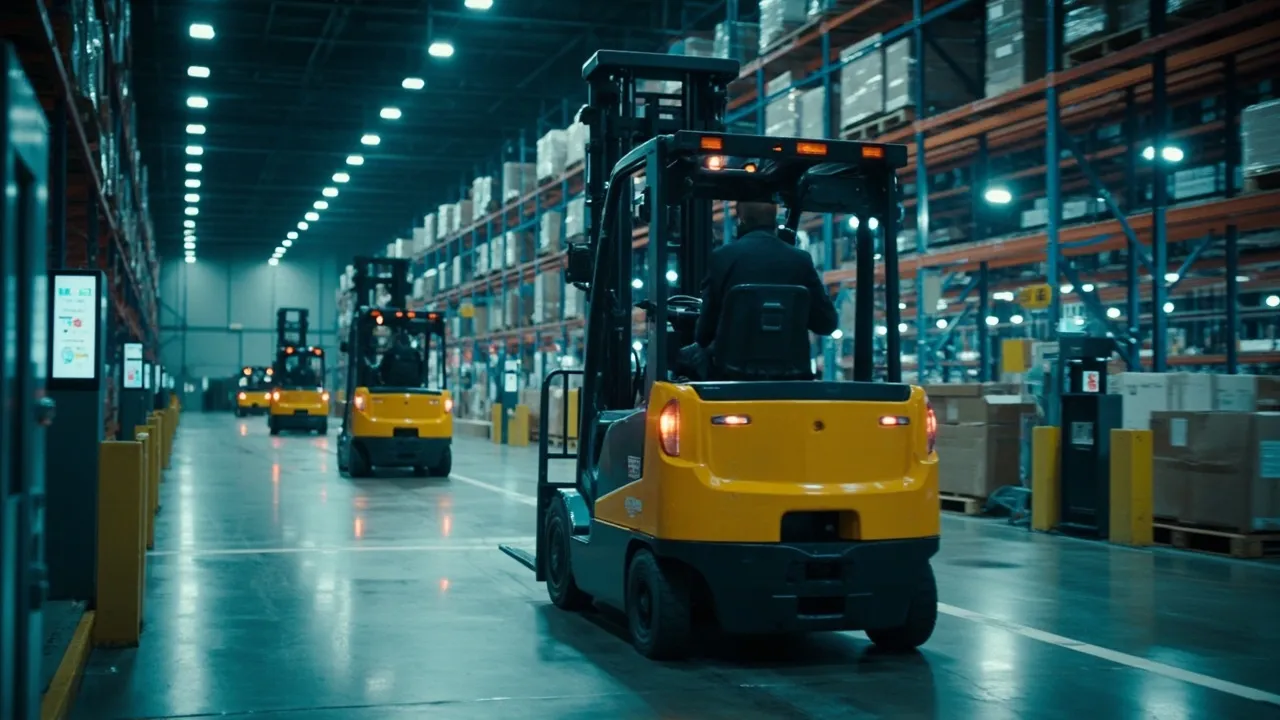
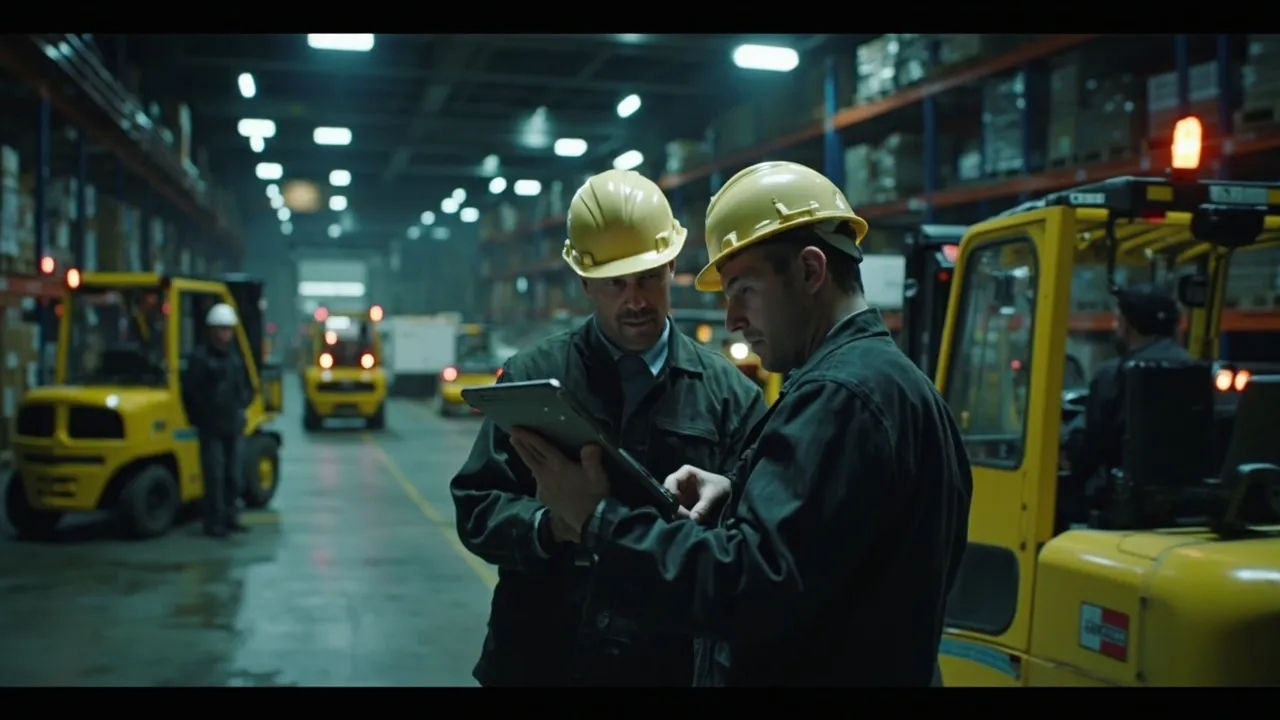
Connected Worker Platforms at $20 Billion: How IIoT Is Finally Reaching the Logistics Frontline

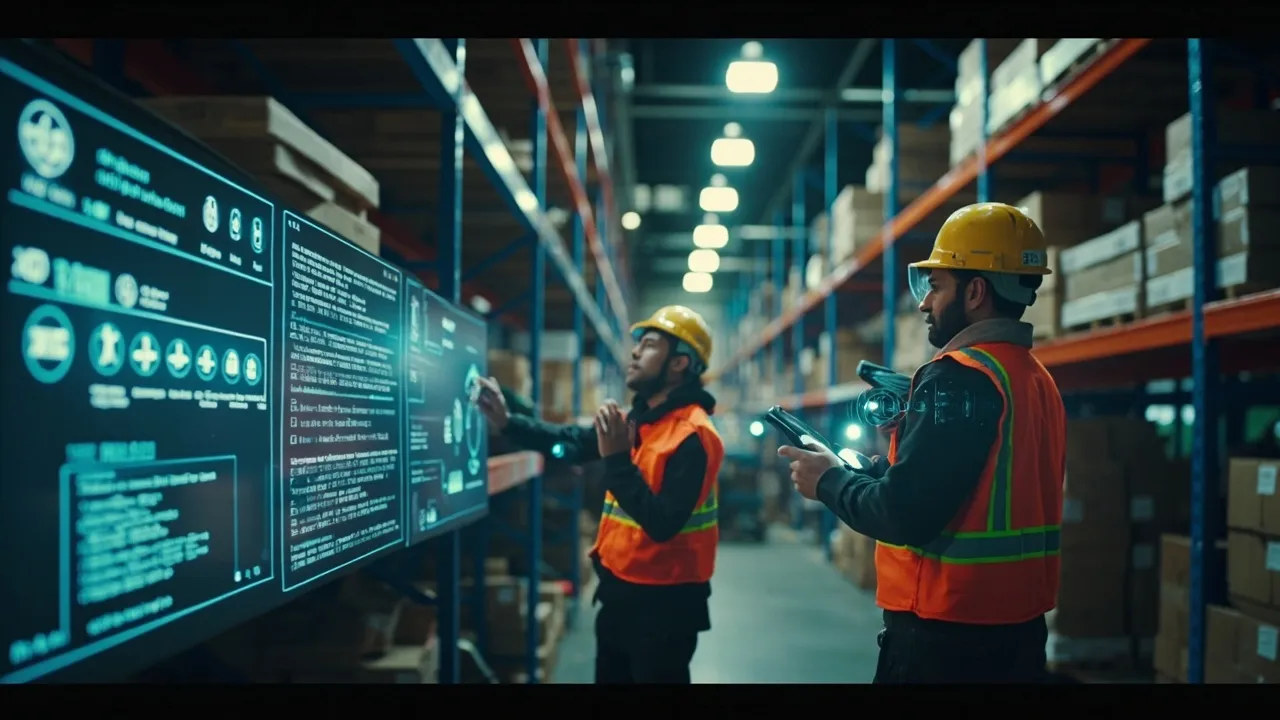
The connected worker market is officially a mainstream investment category. Valued at $8.62 billion in 2025, it's on a trajectory to reach $20.18 billion by 2030 at an 18.5% CAGR, according to MarketsandMarkets research. If you're still picturing a smart vest with a vibration alert, you're wildly behind the curve.
What changed isn't the hardware — it's the thinking. The logistics industry has moved past the novelty phase of connected devices and is now treating the frontline as an data-generating operations layer. And that shift is producing real productivity results that are starting to show up on balance sheets.
The Hardware Was the Easy Part
For years, the limiting factor in connected worker deployments was the device itself: cost, durability, worker adoption, connectivity in RF-challenged facilities. Those barriers haven't fully disappeared, but they've collapsed enough that the conversation has moved upstream.
The harder problem — the one that's actually separating winners from laggards in 2026 — is task orchestration. Not "here's a wearable." But "here's a system that knows which worker should be doing what, right now, based on live conditions."
That's a meaningfully different product category. And it's why the data layer underneath the hardware has become the genuine competitive differentiator.
Task Orchestration: The Operational Core
The clearest way to understand what's happening is to look at what modern connected worker platforms actually do on the ground.
Traditional approach: Assign pick paths statically based on warehouse layout and SKU velocity. Workers follow fixed routes. Exceptions — a bin is empty, a pallet is damaged, a conveyor is jammed — bubble up through supervisors, creating delays and manual workarounds.
Connected worker approach: Real-time task management systems dynamically route work to the right worker with the right equipment based on live location, workload balance, skill certifications, and current facility conditions. When a bin is empty, the system re-routes the pick automatically and flags the inventory discrepancy for correction — no supervisor intervention required.
Lidd, a workflow orchestration platform serving warehouse operators, describes it this way: while the logistics world races toward robots, the real revolution is happening with smarter task orchestration — not more automation. That's a telling quote, because it captures where the industry has landed after years of overhyped robotics promises. The ROI isn't in the robot arm; it's in the decision about which task the robot arm should attempt next.
What the Productivity Data Actually Shows
The MHI Annual Industry Report has been tracking adoption patterns closely, and the 2025 data — reported across Supply Chain Dive and Modern Materials Handling — tells a clear story:
- 48% of organizations were using warehouse robots in 2025, up from just 23% three years earlier — more than doubling in adoption
- 55% of companies cite improving worker productivity as the primary driver for automation investment
- 50% cite ergonomics and worker safety
- 50% are deploying automation to increase throughput with existing headcount
Read that last number carefully. Half of all warehouse automation investment in 2025 wasn't about replacing workers — it was about doing more with the same team. Connected worker platforms are the infrastructure that makes that possible.
The Data Layer Is the Moat
Here's the insight that separates strategic deployers from pilot collectors: the competitive advantage in connected worker platforms doesn't come from the hardware — it comes from the data the hardware generates and what you do with it.
A rugged wearable scanner costs roughly the same whether it's deployed by a regional 3PL or a Fortune 100 retailer. The differentiation is entirely in the software layer that sits on top:
- Which operational decisions does the platform automate vs. surface for human judgment?
- How quickly does the system learn from exception patterns and adjust task routing?
- Can the data feed upward into a TMS or WMS for cross-functional optimization?
- Does the platform integrate with carrier systems, dock scheduling tools, and freight audit workflows?
Organizations that treat the data layer as a first-class architectural concern are building compounding advantages. Every task completed, every exception resolved, every cycle time logged becomes training data that improves the system's recommendations. After 18 months of live operations, a platform with rich data ingestion will outperform a competitor running the same hardware on gut instinct — and the gap widens every quarter.
MHI and Deloitte's 2025 joint report on orchestrating end-to-end digital supply chain solutions flagged this explicitly: leading supply chain operators are investing in solutions that orchestrate tech and human workers together, not in parallel. The platforms winning in 2026 are the ones that treat workforce data as an asset class.
Real-World Deployment: Where It's Actually Working
The strongest connected worker deployments in logistics share a common pattern: they started with a single high-friction workflow and expanded from there.
A receiving dock with chronic detention issues, a pick path with consistently high mispick rates, a loading bay where equipment utilization sits below 60% — these are the proving grounds. Organizations that launch connected worker platforms with a specific operational pain point, measure the outcome rigorously, and expand incrementally are achieving 3- to 12-month payback on platform investments. Those that attempt enterprise-wide rollouts before proving the model are the ones writing post-mortems about failed digital transformations.
The vendors building the strongest platforms for this pattern — Zebra Technologies, Honeywell, Microsoft, and a crop of focused task orchestration specialists — have all shifted their messaging in 2026 from "here's what the device does" to "here's what your operation will look like when every frontline decision is data-informed." That's not a hardware story. That's a software and data story.
Why the Next 18 Months Matter
The market is at an inflection point. The infrastructure is mature enough that the question is no longer "does this technology work?" It's "which deployment model captures the value fastest?" and "who can build the operational flywheel where more data produces better decisions, which produces more data."
Organizations that treat connected worker platforms as a data strategy — not a device rollout — will be the ones looking back in 2028 and wondering why the competition is so far behind.
For logistics operators already running a TMS, the integration path is clearer than it's ever been. The CXTMS platform is designed to ingest real-time workforce and exception data from warehouse execution systems, turning frontline intelligence into automated freight optimization decisions. When your connected workers flag an inbound dock delay, that data flows directly into CXTMS for carrier notification and load reallocation — before the supervisor's coffee gets cold.
Want to see how CXTMS turns frontline worker data into transportation savings? Request a demo and learn how integrated workforce and freight data creates operational advantages that compound over time.