Warehouse Labor Management Systems: How AI Workforce Planning Is Solving the Turnover Crisis

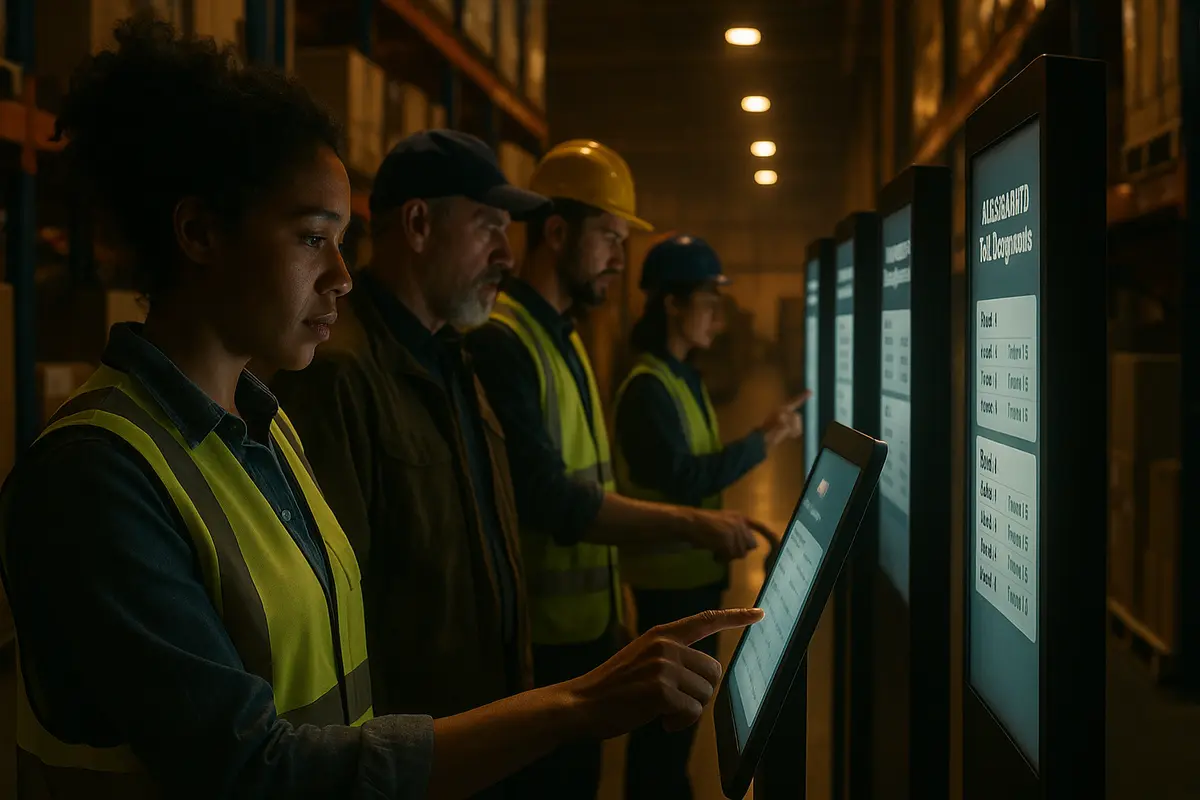
Warehouse turnover rates average 36% annually, with some facilities exceeding 100%. For a 50-person operation, that means replacing up to 50 workers every single year — each departure costing roughly 150% of their annual salary in recruitment, training, and lost productivity. The math is brutal, and it's why AI-powered labor management systems (LMS) have become the fastest-growing category in warehouse technology.
The True Cost of Warehouse Turnover
The headline numbers are staggering. According to industry data, warehouse and logistics facilities face some of the highest turnover rates of any sector, with the Bureau of Labor Statistics consistently placing transportation and warehousing among the top industries for separations. For a warehouse worker earning $40,000 annually, replacement costs can reach $60,000 when factoring in recruiting, onboarding, the six-week learning curve for new hires, and the productivity drag on supervisors and teammates who absorb the extra workload during vacancies.
But the hidden costs run deeper. When experienced workers leave, they take institutional knowledge with them — pick path familiarity, equipment quirks, informal safety protocols. New hires typically operate at reduced productivity for their first six weeks, and supervisor time gets consumed by training instead of optimization. Multiply this across a facility cycling through 40% of its workforce annually, and you're looking at a persistent 10-15% productivity penalty that never fully resolves.
How AI Labor Management Systems Work
Traditional labor management relied on engineered labor standards — time studies that measured how long each task should take, then compared actual performance. It worked, but it was static, backward-looking, and often resented by workers who felt surveilled rather than supported.
Modern AI-powered LMS platforms take a fundamentally different approach. Instead of just measuring performance, they predict and optimize across three dimensions:
Demand forecasting and shift optimization. AI analyzes historical order patterns, seasonal trends, promotional calendars, and even weather data to predict labor demand days or weeks in advance. Managers can see exactly how many workers they need for each shift, in each zone, before the schedule is published. As Modern Materials Handling reports, advanced LMS platforms now determine "who needs to work when, based off your projected needs and what the optimal scenario is for running your facility."
Real-time workload balancing. When conditions change mid-shift — a truck arrives early, an order wave spikes, or a conveyor goes down — AI redistributes tasks across available workers in real time. If 10 people are scheduled to clock in at 3 PM but the team is already caught up, the system can redirect them to other zones or cancel the shift entirely, eliminating wasted labor hours.
Intelligent task allocation. Rather than assigning tasks sequentially, AI matches workers to tasks based on their skills, physical capabilities, certification status, and current fatigue levels. A worker certified for hazmat handling gets routed to chemical picks; someone with a back restriction gets assigned to lighter duties. The result is fewer injuries, fewer errors, and higher throughput.
Gamification: The Retention Weapon That Actually Works
One of the most surprising developments in warehouse labor management is the rise of gamification — and the data backing it up. According to Gartner research, 40% of large warehouse operations will adopt gamification and employee engagement tools by 2028, up from a much smaller base today.
The approach uses game mechanics — points, badges, leaderboards, and rewards — tied to real warehouse KPIs like picking accuracy, safety compliance, and training completion. It sounds simple, but the impact on retention is significant. Workers, especially younger demographics, respond to immediate feedback and visible progress far more than traditional quarterly reviews.
"Employee retention is becoming increasingly crucial in the current climate, where labor shortages are one of the toughest challenges companies face," explains Federica Stufano, Senior Principal Analyst at Gartner. "Gamification helps organizations deliver those experiences by combining engagement, skill-building and recognition in a practical way."
Gamified training tools — simulations, interactive quizzes, real-time performance dashboards — also shorten the time new hires take to reach full productivity. When that six-week ramp-up period shrinks to three or four weeks, the ROI on every new hire improves dramatically.
AI Is Growing the Warehouse Workforce, Not Replacing It
A common fear is that AI and automation eliminate warehouse jobs. The data tells a different story. A joint survey by Mecalux and MIT's Intelligent Logistics Systems Lab found that more than half of logistics leaders have grown their warehouse workforce since implementing AI tools, while over 75% reported rises in both employee productivity and job satisfaction. More than 90% of respondents now use some form of AI or advanced automation, with 87% planning to increase their AI budgets over the next two to three years.
The key insight: AI doesn't replace workers — it creates new roles (ML engineers, automation specialists, data analysts) while making existing roles more productive and less physically punishing. Facilities using AI-powered LMS report that workers spend less time on repetitive manual tasks and more time on higher-value activities, which directly correlates with job satisfaction and retention.
The Integration Imperative
A standalone LMS delivers value, but the real gains come from integration with your warehouse management system. When labor management data flows into your WMS and TMS in real time, you get a unified view of capacity — not just shelf space and dock appointments, but the human resources to actually execute. CXTMS warehouse modules connect labor planning with order management and carrier scheduling, ensuring that workforce capacity aligns with operational demand across the entire fulfillment chain.
What to Look For in 2026
The workforce management market is projected to reach $13 billion by 2030, driven by AI-native platforms that go beyond scheduling into predictive workforce analytics. The facilities winning the labor war in 2026 share common traits: they treat workers as assets rather than costs, they use data to optimize rather than surveil, and they invest in systems that make work measurably better — not just measurably faster.
The warehouse turnover crisis isn't a labor problem. It's a management technology problem. And the solutions are finally here.
Struggling with warehouse turnover and labor costs? Contact CXTMS for a demo of our integrated warehouse and workforce management platform.