Union Pacific’s Domestic Steel Rail Contract Makes Rail Infrastructure a Supply Chain Story

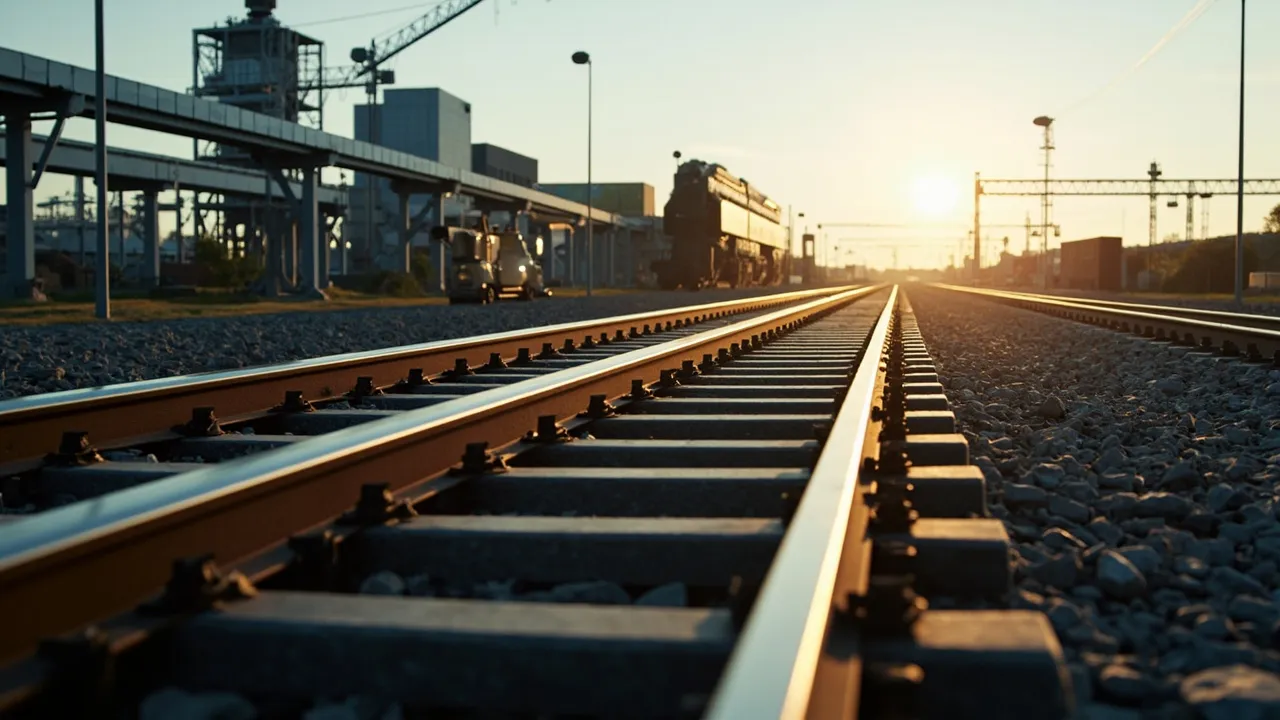
Rail infrastructure usually sits in the background of supply chain planning. Shippers watch fuel, labor, drayage, terminal dwell, and carrier schedules. The steel under the train is assumed to be there, maintained, and available.
Union Pacific’s new domestic steel rail agreement is a useful reminder that assumption is too casual. According to Supply Chain Brain, Union Pacific and Rocky Mountain Steel Mills have reached a seven-year contract for domestic rail production at the Pueblo, Colorado facility. The site is described as the only remaining dedicated rail production facility in the United States, with a new long-rail mill backed by more than $1 billion in domestic steel production investment.
That is not just a railroad procurement story. It is a supply chain resilience story.
Why rail steel belongs on the shipper risk map
Railroad service quality depends on assets most shippers never see: rail, ballast, ties, switches, bridges, signals, maintenance crews, and work windows. When those assets are stressed, service disruptions rarely arrive as a neat infrastructure alert. They show up as slower trains, tighter capacity, longer terminal recovery, embargo risk, missed intermodal cutoffs, or more conservative operating plans.
The Union Pacific agreement matters because rail replacement and maintenance are long-cycle commitments. Railroads cannot simply spot-buy network resilience when traffic rebounds. They need predictable access to the physical inputs that keep track structure safe and productive.
The Pueblo mill’s long-rail capability is especially important. Supply Chain Brain reported that the new mill will produce 100-meter, or 328-foot, premium rail lengths. The companies said that long rail requires 80% fewer welds than standard 80-foot rails, improving safety and reliability. Fewer welds mean fewer potential failure points and fewer places where maintenance quality can ripple into operating constraints.
For shippers, the operational translation is simple: infrastructure quality affects velocity. Velocity affects capacity. Capacity affects price, service, and customer promises.
The demand signal is already visible
This matters more when rail volumes are growing. Logistics Management reported that U.S. rail carloads reached 229,592 for the week ending May 9, up 3.3% year over year, while intermodal containers and trailers reached 284,163, up 4.0%. Through the first 18 weeks of 2026, U.S. rail carloads were up 3.6% year over year and intermodal units were up 0.6%.
Those are not explosive numbers, but they are enough to expose weak points. Rail networks are high-fixed-cost systems where incremental volume can be absorbed smoothly until it cannot. When corridors, ramps, crews, or maintenance windows are tight, small demand changes can create outsized service effects.
That is why infrastructure procurement should not be treated as background noise. If railroads are investing in track materials, domestic production, long-rail efficiency, and maintenance resilience, shippers should read those moves as signals about where the network is preparing for long-term volume, reliability, and safety requirements.
Domestic sourcing changes the risk profile
Union Pacific’s contract also highlights the sourcing dimension of transportation infrastructure. The agreement supports domestic rail production from a U.S. facility that has supplied Union Pacific since the early 1890s. In a period when tariffs, trade policy, energy costs, and geopolitical risk keep moving through industrial supply chains, domestic access to critical rail inputs can reduce exposure to import delays, currency swings, port disruption, and policy shocks.
That does not mean domestic sourcing is automatically cheaper or immune to disruption. Steel production still depends on energy, labor, raw materials, maintenance, capital investment, and environmental compliance. But the risk profile is different. A domestic mill tied directly into railroad demand can shorten feedback loops between infrastructure planning, production scheduling, and deployment across the network.
The solar-powered angle is more than a branding flourish. Supply Chain Brain reported that the new rail mill is powered by a dedicated 1,800-acre solar farm and described it as the world’s largest solar-powered steel mill. For railroads and shippers facing sustainability pressure, lower-carbon infrastructure inputs may become part of the broader conversation around Scope 3 transportation emissions, supplier qualification, and ESG reporting.
Again, the point is not that every shipper needs to audit rail steel. The point is that rail infrastructure is entering the same resilience conversation as warehouses, ports, vessels, trucks, labor, and software.
What shippers should monitor
Shippers do not control railroad capex, but they can watch the right indicators. Rail infrastructure investment should feed into network planning in four practical ways.
First, track corridor-level service, not just carrier averages. A railroad can report healthy system performance while a specific lane struggles with maintenance windows, terminal congestion, or weather-sensitive infrastructure. Lane-level transit variance is more useful than broad reliability claims.
Second, monitor intermodal ramp performance. If steel and track investment supports higher mainline fluidity, the benefit still has to pass through terminals. Gate hours, appointment availability, chassis supply, cutoffs, grounded container dwell, and drayage recovery determine whether network improvements reach the customer.
Third, review contract assumptions annually. Rail-heavy routings should be tested against volume growth, seasonal peaks, alternate gateways, and service failure scenarios. A route that worked at last year’s volume may not hold when traffic mix changes or maintenance programs intensify.
Fourth, document exceptions cleanly. When rail delays occur, teams need shipment-level evidence: tender history, carrier communications, ETA changes, accessorial exposure, customer notifications, and recovery actions. Without that record, infrastructure disruption turns into finger-pointing instead of process improvement.
Where CXTMS fits
A modern transportation management system cannot replace steel rail or remove maintenance windows. But it can make rail-dependent supply chains easier to manage when physical network risk appears.
CXTMS gives logistics teams a structured way to monitor shipment milestones, compare planned and actual transit performance, preserve exception history, and evaluate carrier or lane reliability over time. That matters when rail service changes are gradual rather than dramatic. A few hours of delay here, a missed cutoff there, and a pattern of unstable recovery can be invisible until customers start complaining.
The strongest logistics teams will treat railroad infrastructure news as an input to planning, not trivia. Union Pacific’s domestic steel rail contract shows that physical network resilience is being built years in advance. Shippers should be doing the same with their transportation data, routing strategies, and contingency playbooks.
If your team depends on rail or intermodal capacity, now is the time to make the network visible. Schedule a CXTMS demo to see how shipment tracking, exception management, and lane performance analytics can turn infrastructure risk into a manageable operating plan.