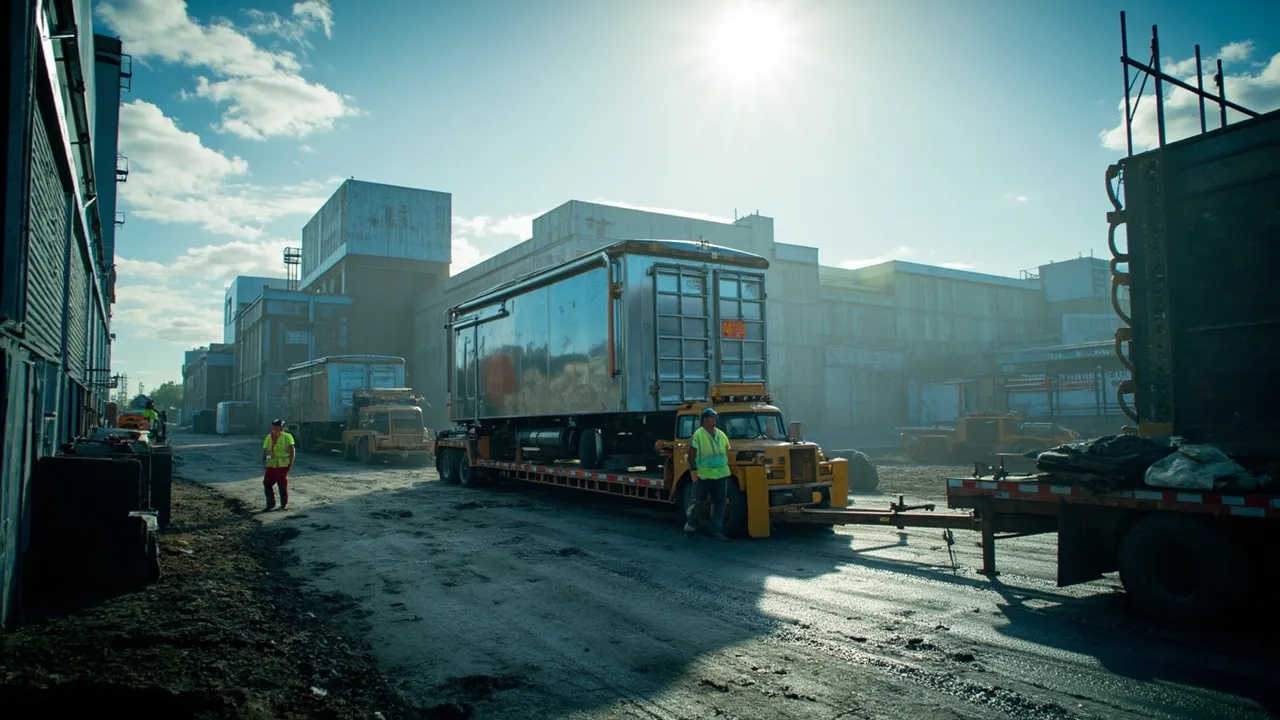
China State-Backed Project Acceleration Turns Infrastructure Materials Into Priority Freight


China is trying to support growth with faster public works instead of a broad stimulus wave. For logistics teams, that is not an abstract macroeconomic choice. It is a freight-allocation signal.
Reuters reported that Chinese policymakers are leaning on accelerated state-backed projects to shore up the economy while avoiding a sweeping stimulus package. The practical effect is a sharper focus on getting approved projects moving: roads, rail, utilities, industrial parks, power infrastructure, municipal works, and public-sector construction programs that need physical inputs on a schedule.
When government-backed projects move faster, the first constraint is rarely the headline budget. It is whether materials, equipment, documents, permits, crews, carriers, and site windows line up in time. Cement, steel, machinery, electrical gear, transformers, switchgear, pipes, aggregates, cranes, trailers, and long-lead components do not magically appear because a project calendar compressed.
That is where state-backed acceleration becomes a project logistics problem.
Acceleration Pulls Demand Forward
Infrastructure demand behaves differently from ordinary replenishment. A retailer can often smooth purchase orders, move inventory between nodes, or adjust promotional timing. A public works project has milestones: site preparation, foundations, structural work, utility connection, equipment installation, inspection, commissioning, and handover. Miss one milestone and freight urgency cascades into the next one.
The acceleration pattern matters because project freight is bulky, specialized, and schedule-sensitive. Cement and aggregate need local or regional flow discipline. Steel beams and fabricated structures require yard space, lifting equipment, route planning, and sequencing. Electrical systems and industrial machinery may need security handling, special permits, escort vehicles, shock monitoring, customs coordination, or supplier documentation before they can move.
In a calm market, project managers can stage materials gradually and use buffers to absorb variance. In an accelerated market, buffers shrink. Multiple projects may ask the same regional carriers, heavy-haul operators, yards, ports, rail ramps, fabricators, and equipment providers to support moved-up schedules at the same time.
The result is a familiar logistics trap: every project claims priority, but the network can only honor priorities that are defined in data.
China's Flexibility Push Raises The Planning Bar
The project acceleration story is happening in a broader supply-chain environment that is already being redesigned for flexibility. SupplyChainBrain reported on a survey of 292 Chinese supply chain leaders in which diversification was the most common strategic shift for 2026. The article cited sourcing diversification at 58%, near-shoring at 38%, friend-shoring at 36%, and inventory increases at 32%.
Those numbers are not only about consumer goods or export strategy. They show that Chinese supply-chain leaders are already adjusting sourcing, inventory posture, and supplier geography to manage volatility. Infrastructure acceleration adds another layer: instead of simply asking where supply should come from, industrial shippers have to ask which project gets scarce freight capacity first.
That question cannot be handled with generic expedite requests. If a bridge project, industrial park, power upgrade, and port expansion all need similar material inputs inside the same region, planners need a priority model that can compare the consequences of delay. Is the missing item a commodity input, a custom-fabricated component, a crane required for a narrow work window, or an electrical system that gates commissioning? The answer decides whether the load deserves premium capacity.
This is also why suppliers outside China should pay attention. Project acceleration can alter demand signals for global inputs: industrial controls, construction machinery, electrical components, specialty metals, safety equipment, and spare parts. A supplier that only sees a purchase order increase may miss the real issue, which is milestone risk.
Project Logistics Is Already A Large Market
The scale of project logistics explains why these shifts matter beyond one country's construction cycle. Mordor Intelligence estimates the global project logistics market at $487.62 billion in 2026, growing at a 5.06% CAGR to $624.06 billion by 2031. Mordor's China-specific project logistics data also estimates the China market at $9.14 billion in 2026, rising at a 5.78% CAGR to $12.11 billion by 2031.
Those figures make a blunt point: project cargo is not a niche exception. It is a major logistics category with its own operating rules. The more public-sector and industrial projects accelerate, the more freight teams need to treat project milestones as planning data, not status notes buried in email.
A milestone-based freight plan should start with the project ID. Every shipment should connect to a named project, site, phase, and customer or public authority. Without that link, transportation teams cannot tell whether a delayed load blocks a critical path or merely changes a staging plan.
Next, capture the material class. Cement, steel, fabricated structures, electrical gear, mechanical equipment, hazardous goods, and oversized cargo create different transportation constraints. The class should determine routing rules, carrier qualification, equipment type, inspection needs, and handling instructions.
Add the milestone dependency. A shipment that gates foundation work is not the same as one that replenishes general site stock. The record should say whether the load affects mobilization, civil works, installation, energization, commissioning, inspection, or handover.
Track the long-lead status. Many project delays come from items that cannot be replaced quickly: transformers, switchgear, custom machinery, controls, imported parts, or fabricated components. If the component is long-lead, planners need earlier exception alerts and stricter custody rules.
Name the capacity constraint. Is the risk heavy-haul availability, regional trucking, port handling, railcar supply, site crane access, permit timing, yard storage, driver availability, customs clearance, or supplier readiness? "Urgent" is not enough. The system needs to know what is actually constrained.
Finally, assign the priority owner. Project freight prioritization should not be left to whoever shouts loudest. Operations, finance, procurement, project management, and customer teams need a shared owner who can decide when to pay for premium moves, split shipments, reserve equipment, or escalate supplier delays.
Priority Freight Needs A Shared Control Loop
Infrastructure acceleration rewards teams that can connect the policy signal to the shipment record. It punishes teams that manage project cargo in separate spreadsheets, forwarding emails, and disconnected carrier updates.
The operating loop should be clear. Project teams define milestones. Procurement confirms supplier readiness. Transportation reserves qualified capacity. Warehouse or yard teams prepare staging space. Finance understands premium-freight exposure. Customer and site teams see exception ownership before crews are waiting on material.
CXTMS helps freight forwarders and logistics teams build that loop around real shipment data: project IDs, documents, tasks, milestones, carrier events, exception reasons, customer commitments, and cost ownership all stay attached to the freight record.
China's state-backed project acceleration is a reminder that infrastructure is built with logistics discipline as much as concrete and steel. When public schedules pull demand forward, priority freight cannot be improvised load by load.
If your project logistics team is still prioritizing critical materials through email threads and status calls, request a CXTMS demo. CXTMS helps teams turn project milestones into executable freight priorities before accelerated schedules become avoidable delays.