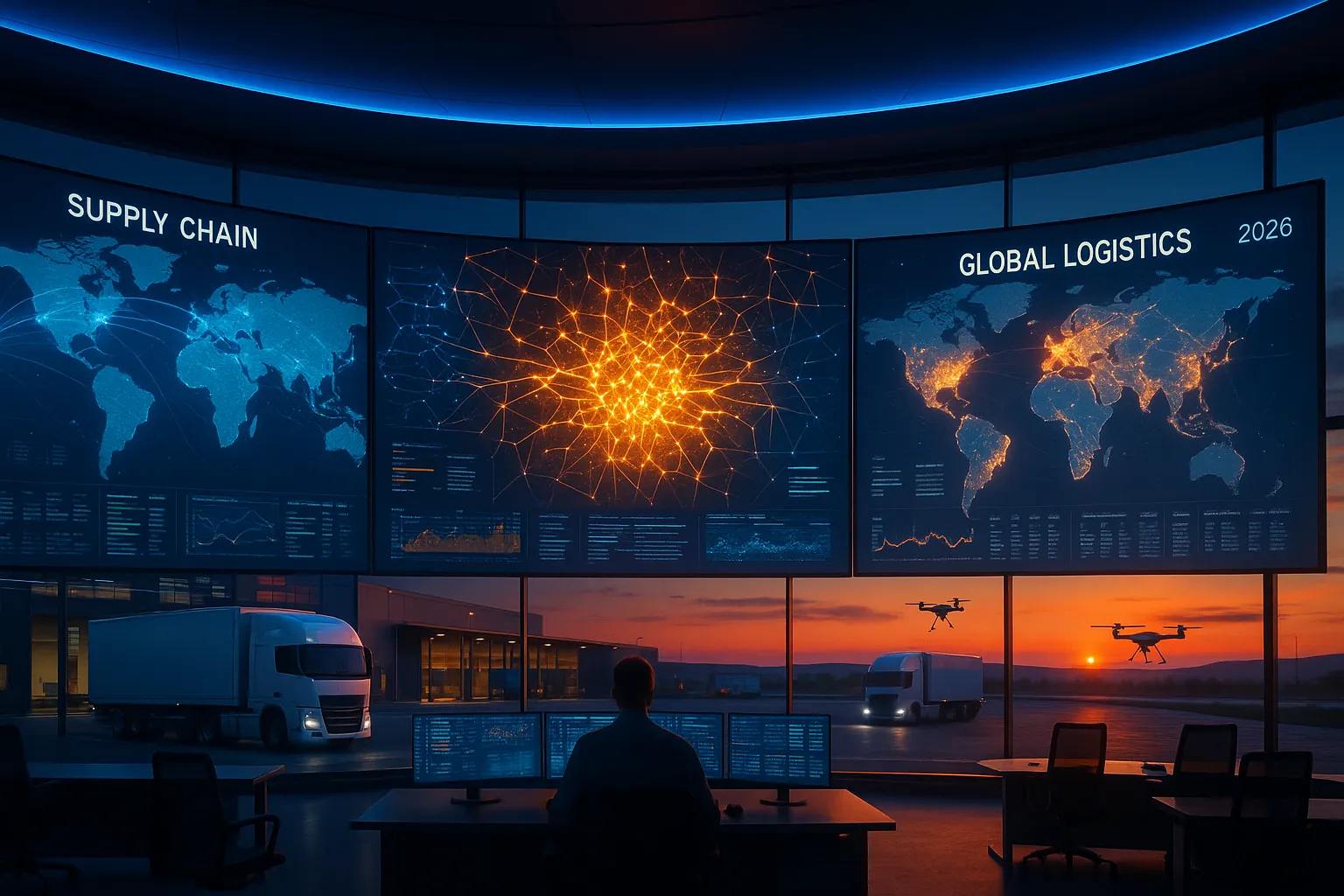
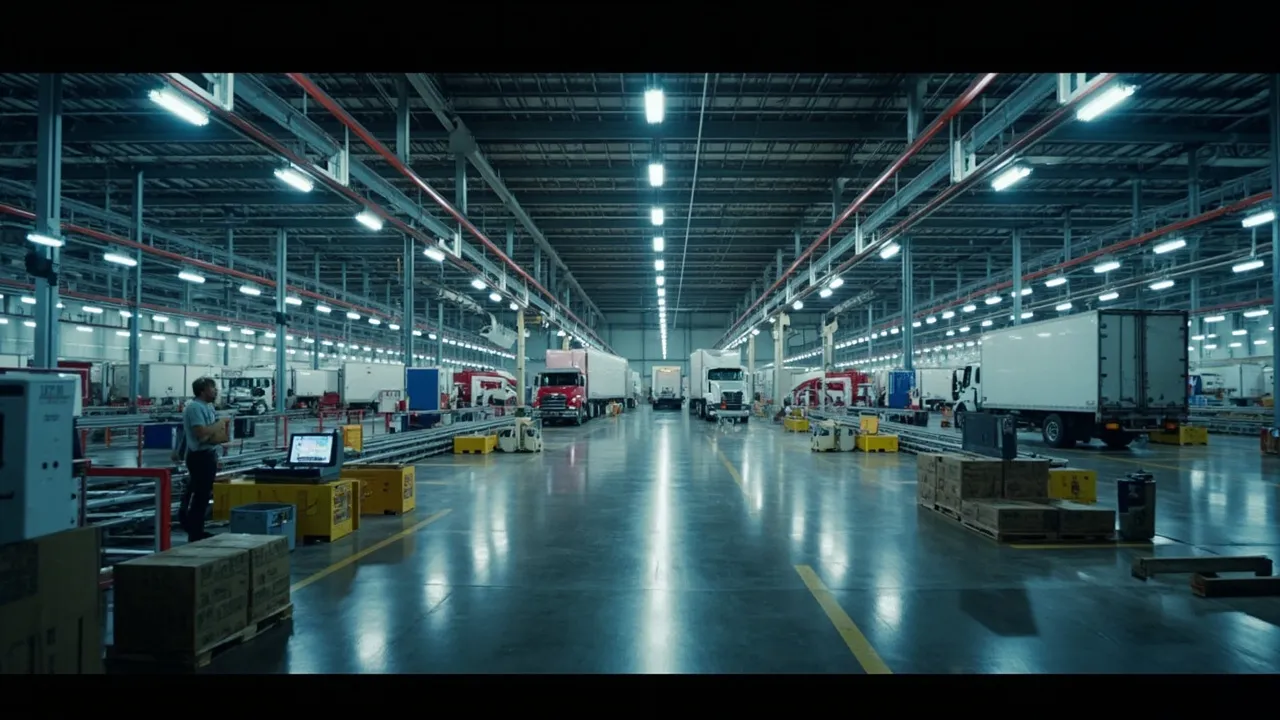
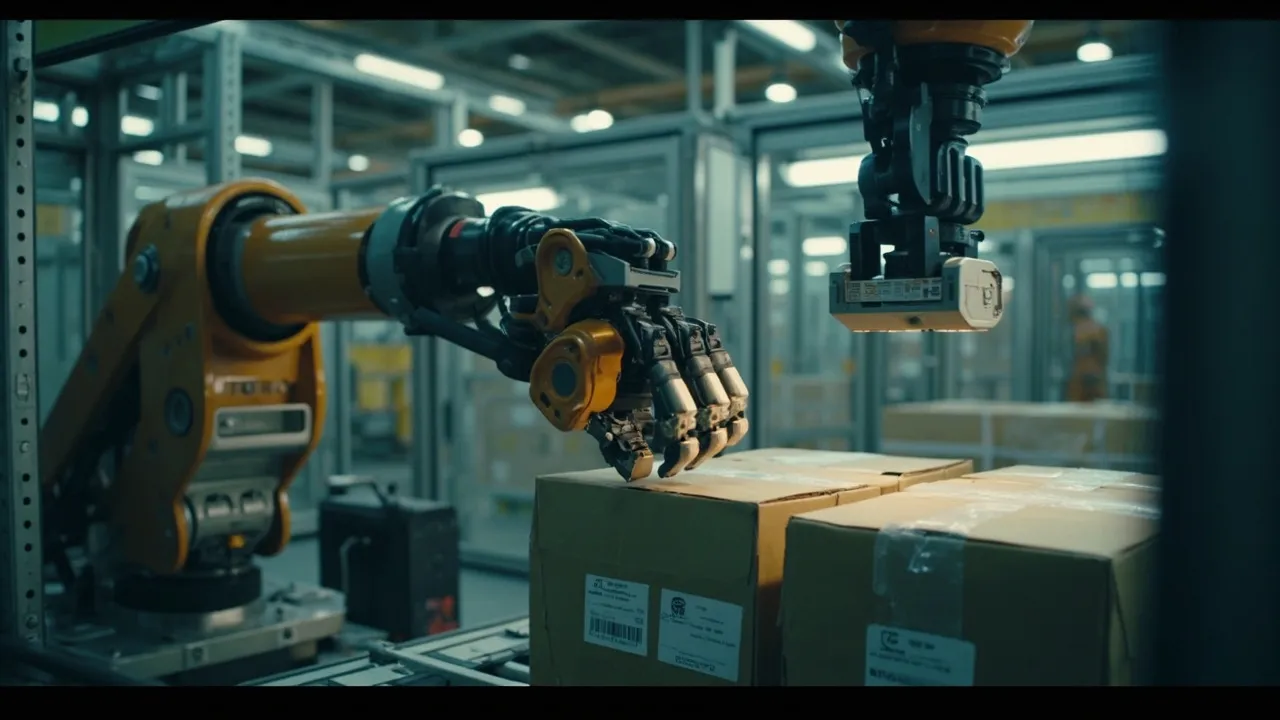
Physical AI Arrives in Logistics: How Embodied Intelligence Is Redefining Warehouse Robotics Beyond Software

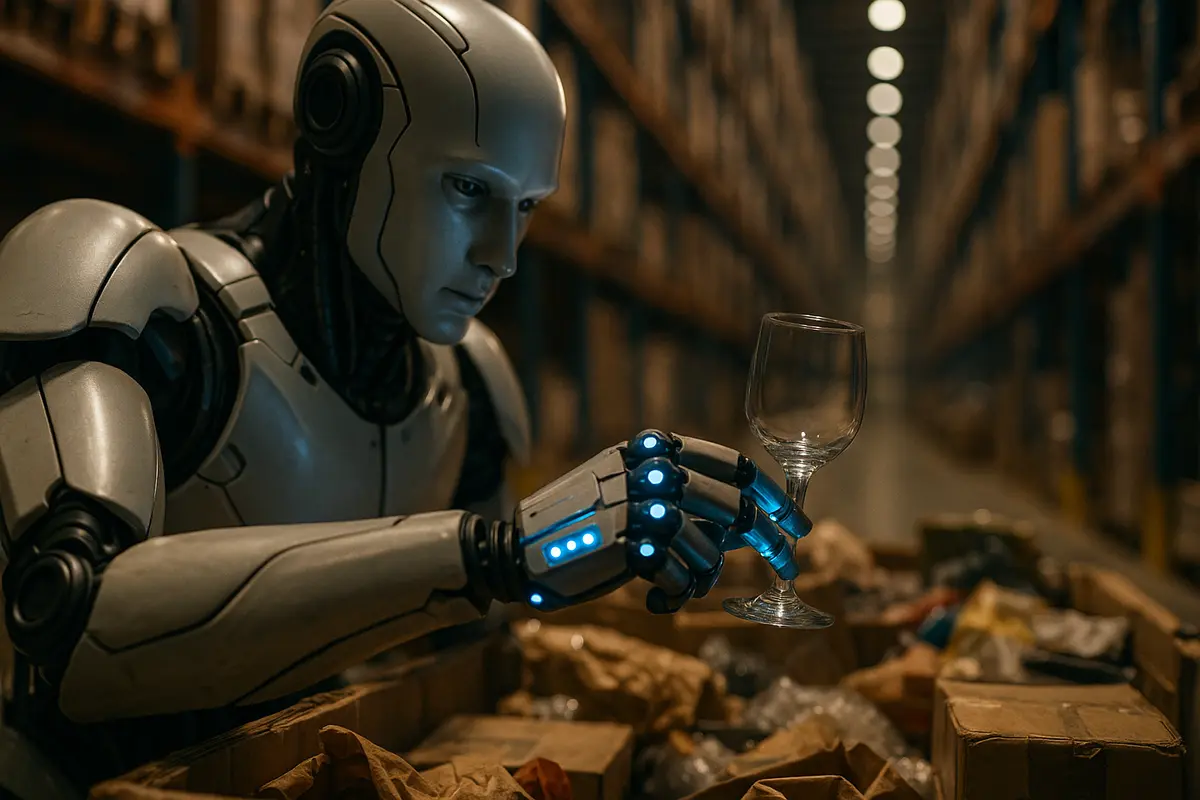
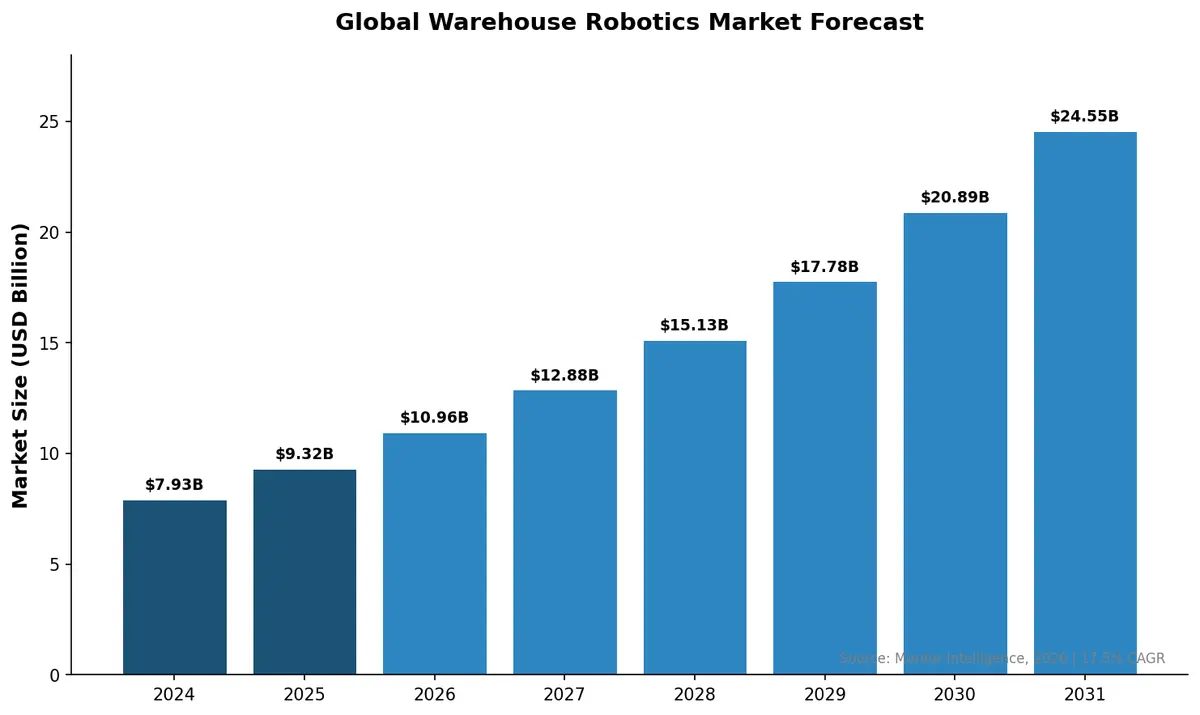
The warehouse robotics market is on track to reach $10.96 billion in 2026, growing at a 17.5% CAGR toward $24.55 billion by 2031. But something more fundamental than market growth is happening: a new category of intelligence is emerging that could make today's autonomous mobile robots look as primitive as conveyor belts.
Welcome to the era of Physical AI — artificial intelligence that doesn't just process data, but reasons about the physical world.
What Is Physical AI, and Why Does It Matter Now?
Traditional warehouse robots follow predetermined paths, pick items from known locations, and execute programmed movements. They're impressive, but fundamentally rigid. Physical AI represents something different entirely: machines that understand physics, spatial relationships, and the unpredictable messiness of real-world environments.
Where a conventional AMR stops when it encounters an unexpected obstacle, a Physical AI system reasons about the object's weight, fragility, and how to navigate around — or move — it. Where a standard robotic arm can only grasp items it's been explicitly programmed for, embodied intelligence generalizes across thousands of SKUs it has never encountered before.
This distinction matters because the hardest problems in warehouse automation aren't the ones we've already solved. Moving pallets from A to B is straightforward. The real challenge is depalletizing a mixed-SKU shipment where fragile glass bottles sit next to heavy cans, or handling returns where items arrive in unpredictable conditions and packaging.
The NVIDIA-Siemens Convergence: Simulation Meets Reality
The technology making Physical AI practical is simulation-to-real transfer learning — training robots in digital twins before deploying them in physical warehouses. And two companies are driving this convergence at scale.
NVIDIA and Siemens expanded their partnership in January 2026 to build what they call an "industrial AI operating system." Using NVIDIA's Omniverse platform and Siemens' digital twin technology, companies can now create photorealistic simulations of entire warehouse operations and train robotic systems within them.
The results are already tangible. PepsiCo partnered with both companies to create digital twins of their manufacturing and warehousing facilities, modeling every machine, robot, and conveyance system to optimize operations before making physical changes. Addverb Technologies is using the same NVIDIA-Siemens stack to train its humanoid and wheeled robots in simulation using NVIDIA Cosmos world foundation models before real-world deployment.
This simulation-first approach solves the fundamental chicken-and-egg problem of warehouse robotics: you can't afford to let untested robots loose in a live facility, but robots can't learn without experience. Digital twins provide millions of training scenarios — drops, collisions, edge cases — without risking a single pallet of product.
Gather AI's $40 Million Bet on Physical AI for Logistics
In February 2026, Gather AI raised $40 million in Series B funding specifically to embed Physical AI across logistics infrastructure. Their approach highlights a critical distinction: while traditional AI processes text or images from the internet, Physical AI learns directly from the physical environment.
Gather AI's drone-based inventory system doesn't just scan barcodes — it understands spatial context, detects anomalies in how products are stored, and builds a living, three-dimensional model of warehouse operations. The company's vision is to become "the system of record for every warehouse, factory, and yard," replacing static warehouse management data with real-time physical intelligence.
This $40 million raise signals investor confidence that Physical AI isn't a research curiosity but a near-term commercial reality for logistics operations.
Walmart's Automation Peak: The Scale of Transformation
No company illustrates the warehouse robotics transformation better than Walmart. The retailer is investing $330 million to modernize its regional distribution center in Opelousas, Louisiana — just one facility in a push to upgrade all 42 of its regional distribution centers.
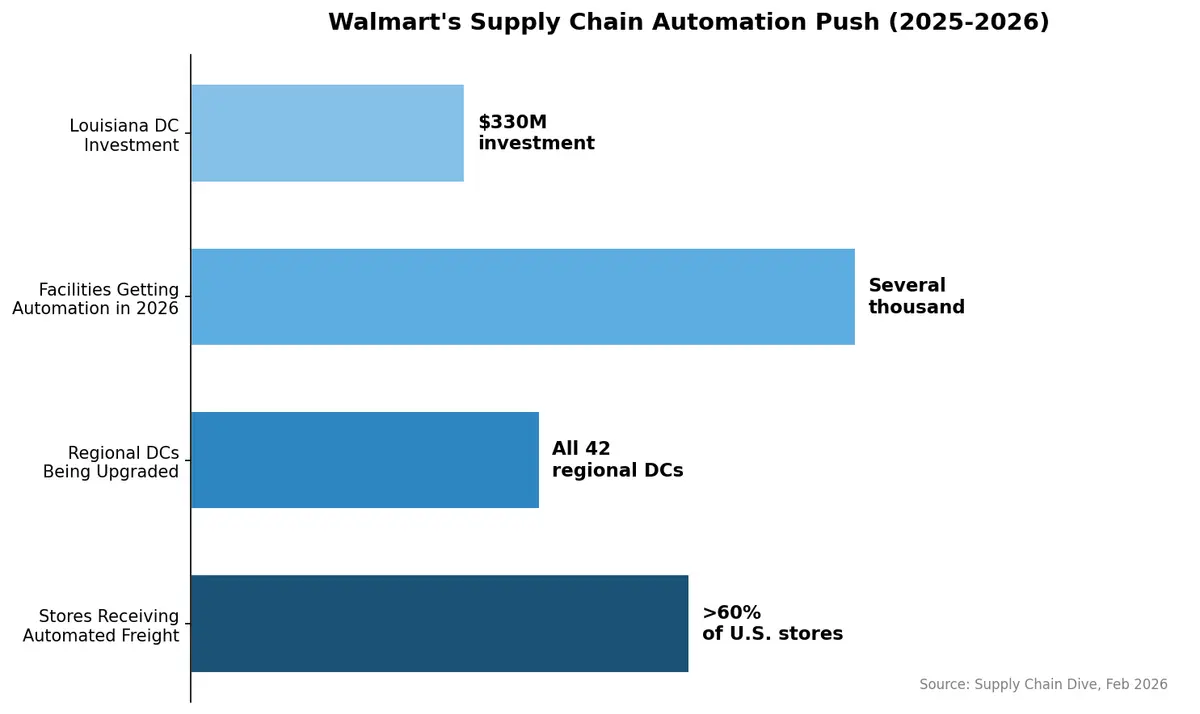
The scale is staggering: several thousand Walmart facilities are set to receive some form of automation in 2026 alone. As of late 2025, more than 60% of Walmart's U.S. stores already received freight from automated distribution centers, driving measurably lower shipping costs. CEO John Furner confirmed that supply chain automation spending is set to "peak" over the next two years.
Walmart's strategy reveals an important pattern. The company isn't just adding robots — it's transitioning its 1,900+ distribution center employees toward higher-skilled positions in automation management, advanced technology, and robotics oversight. Physical AI doesn't eliminate humans; it elevates them from manual labor to machine supervision.
Beyond AMRs: The Unstructured Task Frontier
Today's warehouse automation handles structured tasks well: moving standardized pallets along defined routes, sorting packages by zip code, picking items from organized bins. Physical AI opens the door to unstructured tasks that have resisted automation for decades.
Consider mixed-SKU depalletizing. A typical inbound shipment contains items of different sizes, weights, and fragilities stacked in no particular order. A human worker intuitively knows to lift the glass jar carefully, grab the heavy box from the bottom, and set aside the damaged package. Physical AI systems are beginning to replicate this judgment by combining computer vision, force-sensing, and physics simulation in real-time.
Or consider returns processing — the bane of e-commerce logistics. Every returned item arrives in a unique state: different packaging, varying levels of damage, unknown contents. Physical AI systems can inspect, categorize, and route returns with the kind of adaptive judgment that previously required human hands and human eyes.
Amazon has demonstrated that orchestrating autonomous mobile assets with AI-guided systems can deliver a 25% boost in facility efficiency and 25% faster delivery times. As Physical AI matures, those gains will compound as robots tackle increasingly complex, unstructured work.
What This Means for Mid-Market Shippers
You don't need to be Walmart or Amazon to benefit from the Physical AI revolution. The technology is already filtering down through three accessible channels:
Robotics-as-a-Service (RaaS): Companies like Locus Robotics and 6 River Systems offer Physical AI-capable robots on subscription models, eliminating the capital expenditure barrier. Mid-market warehouses can deploy intelligent picking assistants for a monthly fee per robot.
3PL partnerships: Major third-party logistics providers are investing heavily in Physical AI for their shared facilities. By choosing automation-forward 3PLs, mid-market shippers get access to cutting-edge robotics without owning any hardware.
TMS integration: The real value isn't just in the robots — it's in connecting physical warehouse intelligence to your broader transportation and logistics network. When your warehouse robots know exactly what's picked, packed, and ready, your TMS can optimize carrier selection and dock scheduling in real-time.
The Road Ahead
Physical AI is still early. Most commercial deployments today combine conventional robotics with elements of spatial reasoning rather than fully embodied intelligence. But the trajectory is clear: the convergence of simulation platforms, foundation models, and sensor technology is compressing what was a 10-year timeline into 2-3 years.
For logistics operators, the message is straightforward. The robots of 2028 won't just follow routes — they'll understand your warehouse as well as your best employee does. The companies investing in automation infrastructure today will be ready when that threshold arrives.
Want to connect your warehouse automation with intelligent freight management? Contact CXTMS to see how our platform integrates with modern warehouse robotics systems.