PepsiCo's Tulsa Warehouse Shift Shows Production and Distribution No Longer Need the Same Address

For decades, the default beverage-network design was easy to understand: make the product, store it, and dispatch it from the same property. PepsiCo's planned change in Tulsa, Oklahoma, is a useful reminder that this model is not sacred.
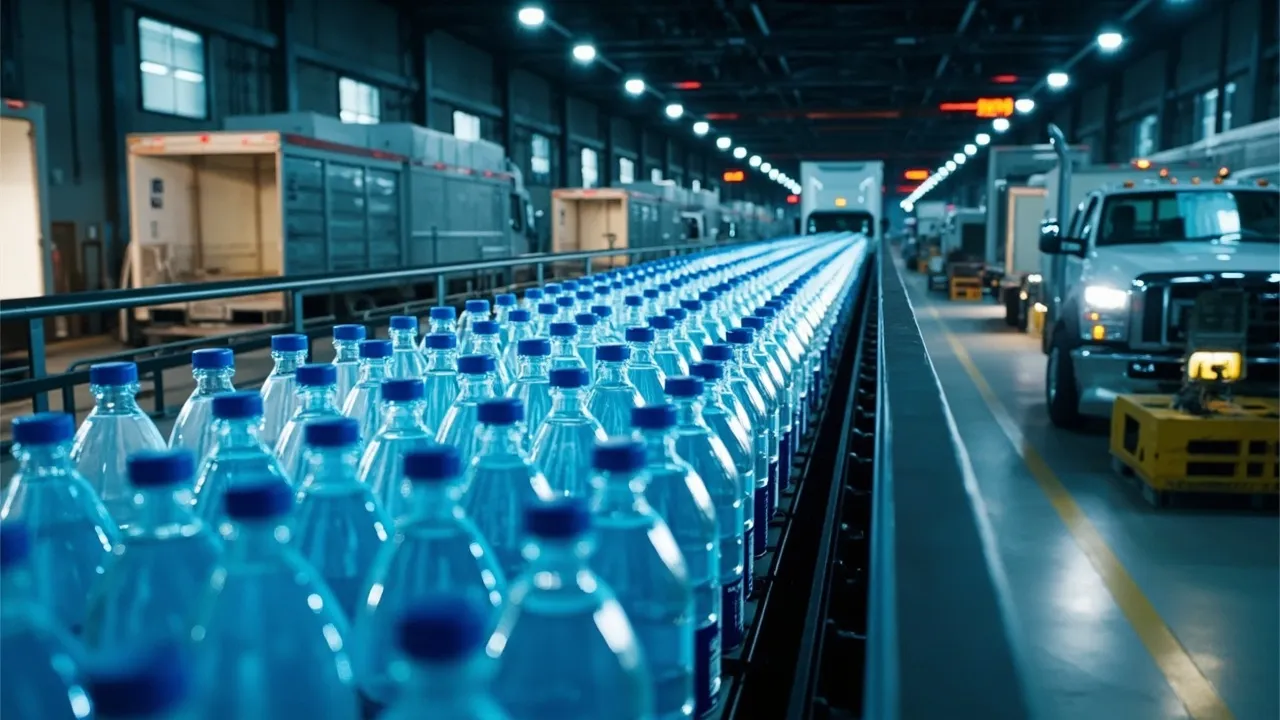
PepsiCo will cease warehouse operations at its Tulsa production facility and transfer those duties to another site in the Tulsa area, while production continues at the existing plant. According to Supply Chain Dive, warehouse operations are scheduled to end November 15, 2026, and 184 warehouse employees are affected.
The announcement is about one facility, but the underlying network question applies broadly: when should a manufacturer stop treating production and distribution as one node?
Why separate production from distribution?
A production plant and a distribution center optimize different flows. Production favors long runs, predictable material supply, line uptime, and tightly sequenced finished-goods movement. Distribution favors order responsiveness, carrier access, trailer capacity, rapid picking, and proximity to customers.
Co-location can be efficient when both functions fit the same site. It can become restrictive when warehouse growth competes with production for land, docks, labor, yard space, or capital. Moving distribution can let a company select a building for logistics performance rather than accept the limitations of a manufacturing property chosen years earlier.
The broader 3PL market shows how specialized distribution has become. Inbound Logistics' 2026 3PL market survey found that 81% of responding providers offer cross-docking, 77% offer fulfillment, and 67% offer distribution center management. Technology is equally central: 87% offer transportation management systems and 83% offer visibility capabilities.
Those services can support a dedicated distribution node with more doors, better carrier scheduling, stronger systems, and operating hours designed around customer delivery windows. The value is not merely extra storage. It is the ability to decouple production rhythm from outbound-order rhythm.
The decision must survive a total-cost test
Separating the nodes also creates a new link in the chain. Every finished pallet must move from the plant to the distribution site before it can move to a customer. That introduces transfer miles, another loading event, another receiving event, and another opportunity for damage, count discrepancies, or delay.
Network teams should model at least five variables:
- Transfer cost per unit. Calculate shuttle transport, fuel, equipment, labor, and accessorials by pallet or case—not just by truck.
- Handling cost and loss. Price the additional touches and expected damage, shortage, and reconciliation work.
- Inventory latency. Measure the time between production completion and stock becoming available to promise at the distribution node.
- Outbound savings. Test whether improved highway access, carrier density, trailer utilization, or customer proximity offsets the new transfer leg.
- Capacity value. Quantify the production or storage constraints relieved at the original site.
This is why a simple rent comparison is inadequate. A cheaper warehouse can still produce a more expensive network if it causes low-utilization shuttles or missed customer appointments. Conversely, a higher-cost distribution building can earn its keep through better consolidation, shorter outbound routes, and fewer service failures.
The market is already focused on this discipline. In the same Inbound Logistics survey, 61% of 3PL respondents identified DC network optimization as an important response to current supply chain challenges. Only 25% selected decentralization, suggesting that adding or separating nodes should be a deliberate optimization decision rather than a reflex.
Cutover risk is operational, not theoretical
The hardest period is not the steady state. It is the transition, when old and new processes overlap.
A beverage plant may continue producing without interruption, but its finished goods now require a dependable shuttle lane and confirmed receiving capacity. If the destination cannot receive at the production rate, pallets accumulate at the plant. If inventory records switch locations before the physical move is complete, customer orders can be allocated against stock that dispatchers cannot find.
The change also creates new dock dependencies. A delayed shuttle can affect two appointments: pickup at production and receipt at distribution. Trailer shortages can become production constraints. Product-lot traceability, shelf-life controls, and damage inspection must remain intact across the transfer.
The workforce numbers in Tulsa make the scale tangible. Supply Chain Dive's summary of the WARN filing lists 63 warehouse persons, 57 forklift operators, 16 checkers, 13 inventory control specialists, and five truck jockeys among the 184 affected roles. Those job categories describe essential processes that the receiving operation or logistics provider must replicate before go-live.
Build a cutover control file
A network redesign needs one operational source of truth, not a collection of email threads. A CXTMS cutover control file can connect each inventory move with its carrier, equipment, appointment, origin status, destination receipt, and exception owner.
At minimum, the control file should cover:
- Inventory by SKU, lot, quantity, origin location, and planned destination
- Transfer lanes with carrier, rate, equipment type, transit time, and backup capacity
- Dock appointments and site operating calendars for both nodes
- Carrier onboarding, insurance, tender tests, and driver instructions
- System mappings for location codes, shipment statuses, and proof of delivery
- Customer-order rules during inventory freeze and transition windows
- Exception thresholds for late pickups, unreceived loads, discrepancies, and damage
- Named owners and escalation deadlines for every open issue
Teams should rehearse the lane with live pilot loads before the final migration. They should reconcile physical and system inventory after every wave, test peak production volume rather than average volume, and maintain contingency space at the plant until the new node demonstrates stable receiving performance.
The key metrics are straightforward: transfer tender acceptance, on-time pickup, on-time receipt, receiving dwell, inventory variance, damage rate, and time from production completion to available-to-promise status. Watching them in one transportation platform makes the new dependency visible before it becomes a service failure.
Treat the new node as a network decision
PepsiCo's Tulsa change highlights a wider shift in logistics design. Manufacturing and distribution can share a city without sharing a building. When their requirements diverge, separation can unlock throughput and improve outbound execution—but only when the new transfer leg is engineered and controlled as carefully as a customer shipment.
CXTMS gives logistics teams a shared view of transfer lanes, carrier readiness, appointments, inventory moves, and cutover exceptions. Request a CXTMS demo to see how one control layer can keep production and distribution synchronized across separate nodes.