LNG Trucking Moves From Sustainability Claim to Dispatch Constraint

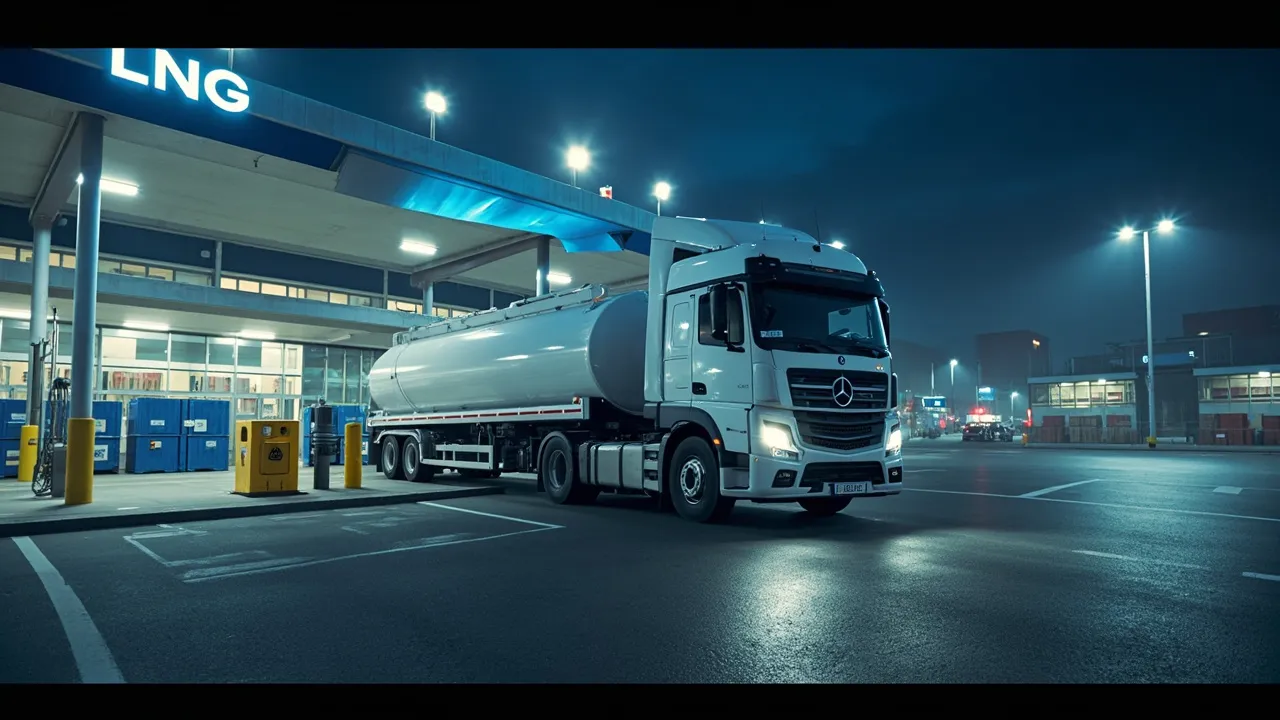
Alternative-fuel trucks are often introduced through a sustainability announcement. Dispatch teams inherit the operational consequences.
Dabur India’s new partnership with GreenLine to introduce liquefied natural gas trucks into its logistics network is the latest sign that LNG is moving into mainstream consumer-goods transportation. The business case is attractive: GreenLine says its LNG trucks can reduce carbon dioxide emissions by up to 30% compared with diesel, according to Reuters.
But an LNG tractor is not simply a lower-emission substitute for every diesel tractor. It is an asset with different fueling, range, payload, maintenance, and recovery requirements. If those constraints remain outside the transportation management system, dispatchers must remember them manually—and eventually an infeasible load will be assigned.
The practical shift is clear: fuel type must become a shipment-eligibility rule.
Diesel Flexibility Hides Planning Assumptions
Diesel networks allow planners to treat fuel as broadly available. A driver can usually refuel along a major corridor, change routes around congestion, or recover from an unexpected detour without redesigning the trip.
LNG operations have less room for improvisation. A lane may be viable only because a particular station is open, compatible with the vehicle, and reachable within its operating range. A missed fueling window, station outage, or unplanned diversion can turn an otherwise routine shipment into a recovery event.
Range alone does not solve the problem. Natural-gas technology has improved substantially: FreightWaves reports that one approximately 265-diesel-gallon-equivalent fuel-system configuration can provide about 1,200 miles of range, depending on payload and terrain. The same report says a newer 15-liter natural-gas engine reaches up to 500 horsepower and 1,850 pound-feet of torque, approaching diesel performance.
Those figures are important, but the qualifications matter more than the headline. Payload, terrain, weather, traffic, auxiliary consumption, and driver behavior all affect usable range. Dispatch should therefore work from a conservative route-specific estimate, not a brochure maximum.
Qualify the Lane Before Assigning the Truck
An LNG lane scorecard should answer five questions before the asset becomes eligible.
1. Can the truck complete the route with a safe reserve? Calculate expected consumption using loaded miles, empty repositioning, elevation, typical congestion, and seasonal conditions. Set a minimum arrival reserve and reject assignments that fall below it.
2. Is compatible fuel reliably available? Record approved stations, operating hours, dispenser compatibility, payment access, queue expectations, and service history. A station that is geographically convenient but closed during the planned arrival window is not a usable station.
3. Does the fuel system preserve required payload? Tank configuration affects wheelbase, frame space, and vehicle weight. The FreightWaves example uses a behind-the-cab tank plus side-mounted capacity, illustrating why equipment configuration must be considered alongside cargo weight and trailer type. Dispatch eligibility should use the tractor’s actual specification, not a generic LNG category.
4. Can the network maintain the asset? Identify workshops qualified for cryogenic fuel systems, required parts, technician availability, and towing or recovery procedures. A lane that runs far beyond the maintenance network carries a different risk than one connecting supported terminals.
5. Is there a workable exception plan? Define what happens if fuel is unavailable, the delivery appointment changes, or the truck must divert. The plan may require an alternate station, a relay point, a replacement tractor, or a diesel fallback. If no recovery path exists, the lane should not be approved for LNG service.
These checks can be converted into a simple score: approved, conditional, or ineligible. Conditional lanes might require daylight fueling, a minimum starting fuel level, a lighter payload, or dispatcher confirmation before release.
Treat Fuel Stops as Scheduled Events
Fuel planning should appear on the trip timeline alongside pickup, delivery, driver breaks, and border or facility appointments. Each planned stop needs an arrival window, expected service duration, reserve level on arrival, and fallback location.
This matters because a feasible route can still produce a late delivery. If an LNG station adds 45 minutes of deviation and service time, that time must be included before the carrier accepts the appointment. Otherwise the sustainability program quietly creates detention, missed windows, and emergency replanning.
Dispatchers should also see real-time exceptions. Useful alerts include projected fuel below reserve, deviation from the approved corridor, late arrival at a fueling stop, station unavailability, and reassignment to a tractor with a different tank capacity. Alerts should be early enough to change the plan, not merely document a failure.
Measure Operations and Emissions Together
An LNG program should not be judged only by trucks deployed or estimated carbon avoided. Measure whether the network can use those assets reliably.
Operational metrics should include:
- percentage of loads eligible for LNG assignment;
- LNG loads completed without fuel-related intervention;
- planned versus actual fuel-stop duration;
- miles driven outside the optimal route for fueling;
- reserve fuel at destination;
- station outage and queue incidents;
- on-time pickup and delivery versus diesel control lanes; and
- maintenance downtime by asset and component.
Emissions reporting should use actual fuel consumed and actual miles, not only a nominal reduction factor. Empty repositioning and fueling detours can weaken the benefit. Conversely, stable high-mileage lanes with predictable backhauls may produce stronger utilization and a more credible emissions result.
The technology is no longer purely experimental. FreightWaves cites more than 40,000 global installations of one natural-gas engine platform and roughly 2 billion accumulated miles. That scale demonstrates technical maturity. It does not eliminate the need for disciplined network design.
Make Alternative Fuel a Dispatch Rule in CXTMS
CXTMS can bring the required controls into the same workflow used to plan and execute freight. Equipment records can identify fuel type, tank capacity, practical range, payload implications, and maintenance restrictions. Lane records can store approved stations, operating windows, required reserve, and fallback options.
When a load is planned, CXTMS can compare shipment weight, route distance, fuel availability, appointment timing, and equipment capability before presenting an LNG tractor as eligible. Dispatchers gain a clear reason when an asset is excluded instead of relying on tribal knowledge or a separate spreadsheet.
That is how an emissions commitment becomes a dependable transportation operation. The truck may run on LNG, but the program runs on accurate constraints.
Ready to make alternative-fuel eligibility part of daily dispatch? Request a CXTMS demo and see how lane, equipment, and execution rules can work together.