La-Z-Boy's $23M Expansion: Designing a Furniture Distribution Hub Around Bulky Freight

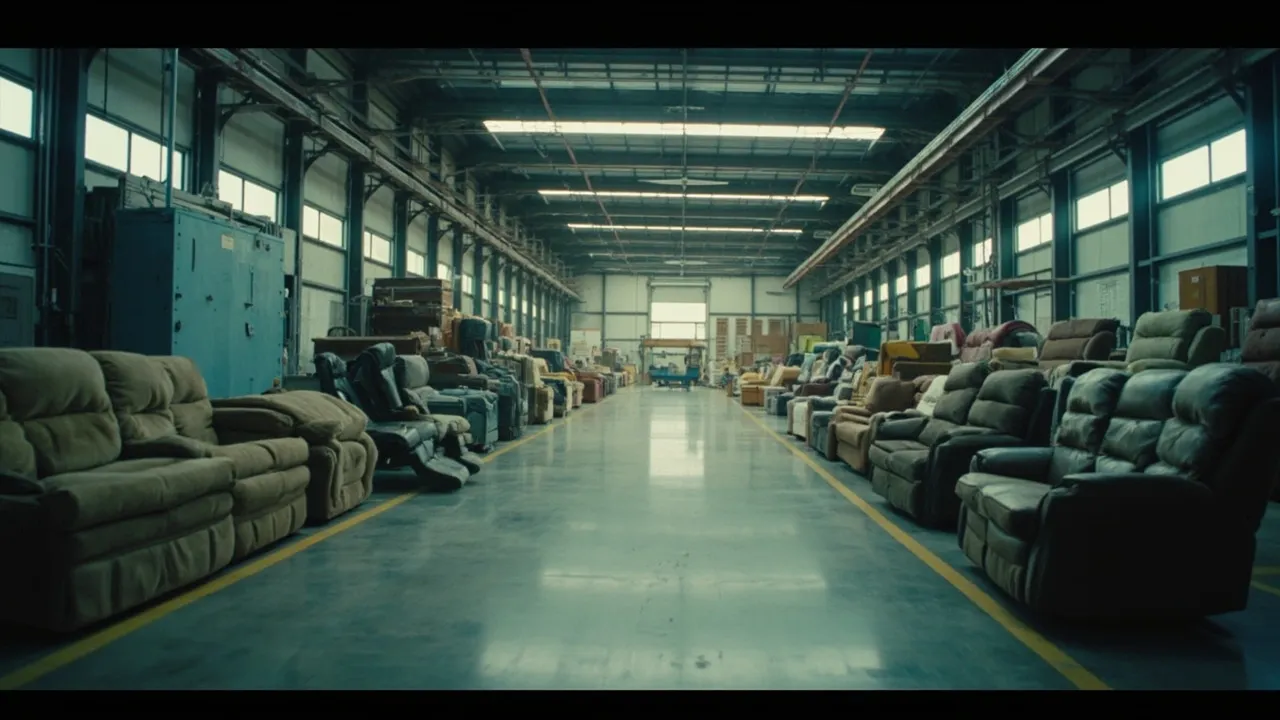
Furniture distribution is a cube-and-care problem before it is a weight problem. A trailer can run out of usable space long before reaching its legal weight, while one rushed transfer can turn an otherwise profitable sofa into a damage claim. That makes La-Z-Boy's latest network investment a useful case study in designing a hub around the freight rather than forcing bulky products into a generic warehouse model.
La-Z-Boy plans to invest $23 million in an expansion and new distribution center in Neosho, Missouri. According to Supply Chain Dive, the 150,000-square-foot facility will operate as a central hub and is expected to create up to 100 jobs. It will also sit alongside one of the company's oldest manufacturing plants, which produces a significant share of its customized furniture.
That co-location is strategically important. The building is not merely extra storage; it is a chance to shorten the handoff between production, consolidation, and outbound distribution while creating cleaner control over bulky freight.
Why furniture needs a different operating model
A palletized consumer-goods warehouse is usually optimized around case velocity, pallet positions, and weight-based trailer capacity. Upholstered furniture behaves differently.
First, every item consumes considerable cube. Recliners and sofas may be relatively light for their dimensions, and product geometry creates unusable gaps in a trailer. Planners therefore need cube utilization and floor positions, not weight alone, when deciding whether a load is genuinely full.
Second, the damage risk compounds with handling. Fabric can tear, frames can scrape, mechanisms can be stressed, and cartons can crush. Every unload, staging move, and reload adds exposure. Scan compliance is useful, but condition checks at each custody transfer are just as important.
Third, appointments are tighter. Furniture deliveries often depend on store receiving windows, cross-dock schedules, or consumer delivery routes requiring crews and adequate dwell time. A linehaul that arrives “on time” by date can still miss the operating window and strand a route for another day.
Finally, customized furniture has less substitution flexibility than standard inventory. If a made-to-order piece is damaged or misrouted, another unit may not be available nearby. The shipment record should preserve the customer order, product dimensions, handling requirements, and promised delivery date from factory release through final delivery.
Central hubs change the network equation
The Neosho project forms part of a larger redesign. La-Z-Boy is consolidating 15 large regional distribution centers into three centralized hubs in the West, Midwest, and East, supported by small cross-docks. Earlier Supply Chain Dive reporting says the company expects the network to reduce warehouse square footage by roughly 30% and inventory mileage by about 20%. It also intends to double the delivery radius from 75 to 150 miles.
The attraction is clear: fewer large inventory pools can reduce duplicated stock, space, and interfacility transfers. Larger consolidated flows can also improve trailer fill and create more predictable carrier volumes. Co-locating the Midwest hub with manufacturing should eliminate at least some intermediate moves.
But centralization does not automatically produce savings. Longer delivery radii can increase route variability and amplify disruption at a hub. If outbound orders are released without considering dimensions, stops, appointment windows, and unloading sequence, fewer facilities can simply concentrate congestion.
The right comparison is not “three hubs versus 15 warehouses” in isolation. It is the expected cost and service of each order path:
- Plant to hub to cross-dock to destination: adds consolidation opportunities but also handling events.
- Plant to hub to destination: works when a hub can build dense direct routes or full loads.
- Plant direct to destination: can be best for complete truckloads, high-priority orders, or customers near the plant.
- Hub-to-hub transfer: may rebalance inventory, but excessive transfers can erase mileage and damage gains.
A transportation management system should evaluate these paths using all-in cost, usable cube, handling touches, promised date, and capacity—not mileage alone.
Design docks and loads around cube and damage
The hub's physical and digital rules must reinforce each other. Dock schedules should reserve enough time for careful unloading and condition inspection, with separate treatment for floor-loaded furniture and products requiring special equipment. Staging lanes should be tied to outbound route and appointment, minimizing re-handling.
Load planning should capture packaged dimensions at the SKU level and use actual orientation constraints. A theoretical cubic-foot calculation overstates capacity if items cannot be stacked or rotated safely. Planners need a usable-cube measure that accounts for those restrictions and tracks the gap between planned and actual trailer utilization.
Damage controls should record product condition with time-stamped photos at the factory, hub receipt, outbound loading, and cross-dock transfer. When a claim occurs, the team can identify the custody point and correct the process instead of debating responsibility through email.
Appointment management belongs in the same workflow. Inbound production releases, dock capacity, outbound cutoffs, carrier arrival forecasts, and store or consumer windows should feed one plan. If a late inbound load threatens an outbound promise, the system should surface the affected orders early enough to re-sequence the dock or select another route.
Measure the ramp-up with operational KPIs
A new hub should not be judged only by whether it ships volume. Its ramp-up scorecard should expose whether the expected network benefits are arriving without hidden service costs.
Track these measures weekly by lane, dock, product family, and carrier:
- Inbound balance: scheduled versus actual receipts by hour and day, plus dock-door utilization and dwell time.
- Usable cube: planned and actual cubic utilization, floor positions used, and loads dispatched below target.
- Handling intensity: touches per unit and the share of orders flowing through each network path.
- Damage: damage incidents per 1,000 units, claim value, and the last verified custody point.
- Appointment reliability: on-time dock arrival, on-time departure, and missed receiving windows.
- Promise accuracy: percentage of orders delivered on or before the customer-promised date, plus average days late.
- Network outcome: miles per delivered unit, cost per cubic foot, and inventory days by hub.
Targets should be phased. Early in the launch, leaders may accept lower productivity while teams learn new processes, but damage and promise accuracy should have hard guardrails from day one. The baseline should come from the facilities and lanes the new hub replaces, allowing management to distinguish genuine improvement from simple volume growth.
This matters in a fast-changing cost environment. A survey of 240 leaders cited by SupplyChainBrain found that 52% selected faster issue identification as a top source of long-term value, while 50% chose greater cost predictability. A hub ramp-up needs both: early exception detection and a defensible view of whether network savings are materializing.
La-Z-Boy's $23 million expansion highlights the promise of combining manufacturing with a central distribution hub. The real payoff, however, will depend on execution: building loads around usable cube, reducing unnecessary touches, managing appointments as connected constraints, and protecting the delivery promise through every handoff.
CXTMS connects orders, dimensions, carrier capacity, dock appointments, shipment milestones, and exceptions in one transportation workflow. Contact CXTMS to see how your team can manage a bulky-freight network with fewer surprises and clearer cost control.