Oil Price Shock Meets Freight Rates: How the 2026 Strait of Hormuz Crisis Will Cascade Through Transportation Costs for Every Shipper

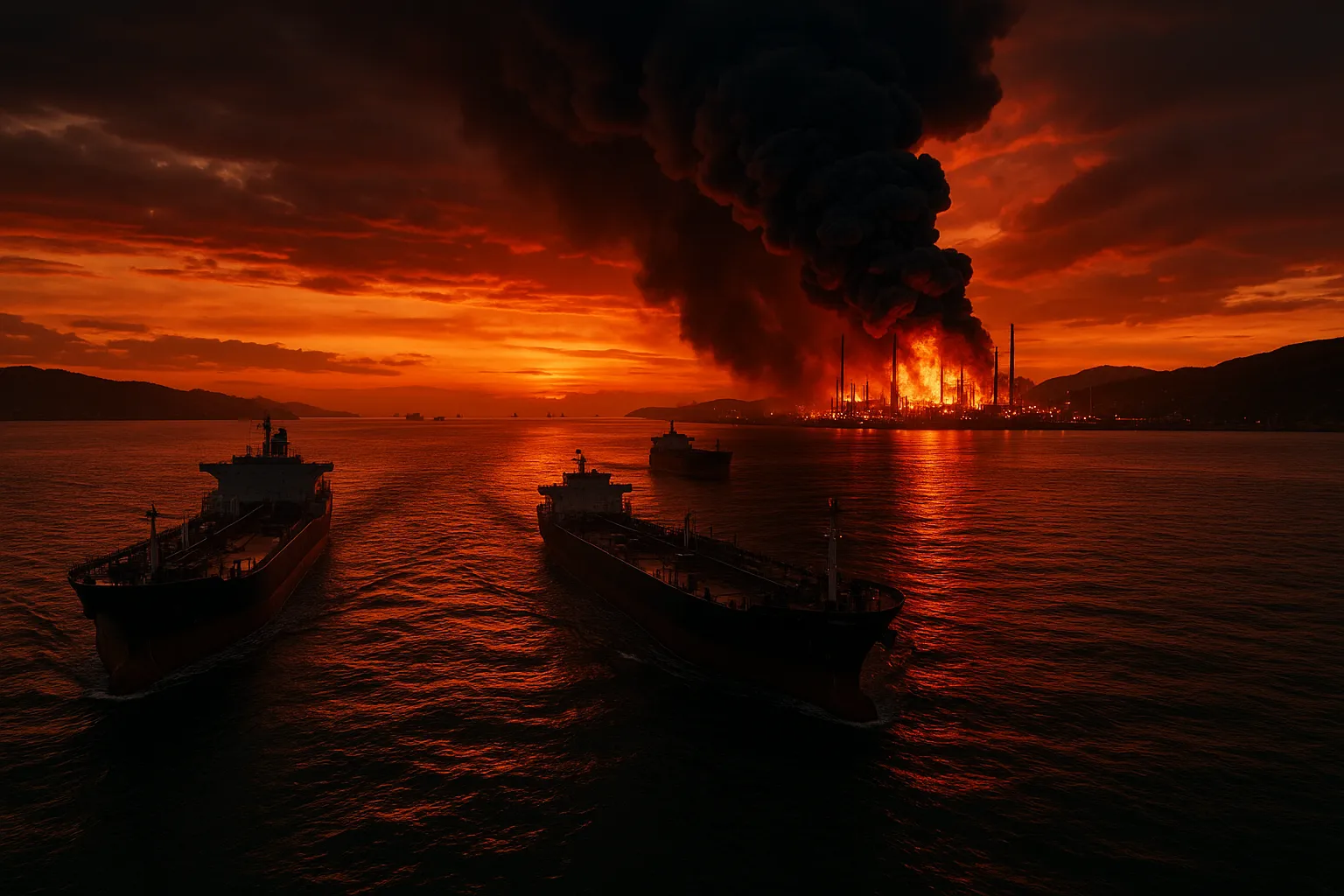
The Strait of Hormuz has effectively closed to commercial traffic. As the US-Iran conflict intensifies in March 2026, one-fifth of the world's oil supply is now stranded behind a 21-mile chokepoint—and every shipper on the planet is about to feel the ripple effects in their freight invoices.
This isn't just an energy story. It's a transportation cost story that will cascade from supertanker day rates through diesel pumps and into every fuel surcharge line item on every bill of lading crossing your dock.
The Energy Supply Shock: What's Actually Happening
The numbers are staggering. Approximately 15 to 20 million barrels of crude oil pass through the Strait of Hormuz daily, making it the single most important energy chokepoint on Earth. After US-Israel strikes on Iran and Tehran's retaliatory attacks on vessels in the strait, traffic through Hormuz has dropped by at least 80%, according to maritime intelligence firm Windward.
Brent crude jumped as much as 13% during early trading this week, hitting $82 a barrel—a 14-month high. Analysts at Kpler forecast Brent could push into the $85–90 range, while Ocean Network Express (ONE) CEO Jeremy Nixon warned that $100 a barrel is "quite possible" if the disruption persists.
Qatar has halted LNG production. Saudi Aramco shut down its Ras Tanura refinery after drone strikes. The energy infrastructure of the entire Persian Gulf region is under pressure.
VLCC Rates Hit All-Time Highs—And That's Just the Beginning
The benchmark freight rate for Very Large Crude Carriers (VLCCs) shipping 2 million barrels from the Middle East to China surged to an all-time record of $423,736 per day on Monday, according to LSEG data. That rate doubled from Friday alone.
LNG tanker rates jumped more than 40% in a single day. Atlantic rates hit $61,500 per day, while Pacific rates reached $41,000 per day, according to Spark Commodities. Wood Mackenzie analyst Fraser Carson warned that spot LNG shipping rates could exceed $100,000 per day this week as vessel availability tightens.
These tanker rate spikes are the first domino. When it costs more to move crude oil and LNG, those costs flow directly into refinery input prices, then into diesel and jet fuel production costs, and ultimately into the fuel surcharges that carriers pass on to shippers.
The Diesel-to-Freight Math: How Oil Prices Hit Your Invoice
Here's the cost cascade that every logistics manager needs to understand:
Step 1: Crude to diesel. Diesel prices track crude oil with a typical 2–4 week lag. A sustained 20% increase in Brent crude historically translates to a 15–18% increase in wholesale diesel prices.
Step 2: Diesel to freight rates. Industry data shows that for every 10% rise in fuel prices, transportation costs increase by 2–4%, depending on the mode. Fuel represents roughly 25–35% of total trucking operating costs and up to 50% of ocean carrier operating costs.
Step 3: Fuel surcharges kick in. Most carrier contracts include automatic fuel surcharge adjustments tied to the Department of Energy's weekly diesel price index. These surcharges typically recalculate weekly or monthly, meaning shippers will see the first increases within 1–3 weeks.
For a shipper moving 500 FTL loads per month at an average cost of $3,000 per load, a 4% fuel-driven cost increase translates to $60,000 per month in additional transportation spend. Scale that across a mid-market shipper's full network and you're looking at six-figure annual cost increases from fuel alone.
Ocean Freight: The Compounding Surcharge Problem
Ocean shippers face the most acute pain. FreightWaves reports that the effective closure of the strait has forced carriers to reroute around the Persian Gulf entirely, omitting key port calls at Jebel Ali and other Gulf terminals.
These disruptions compound through multiple surcharge categories simultaneously:
- War Risk Surcharges (WRS): Carriers are implementing emergency surcharges for any Middle East-adjacent routing, often $500–1,500 per container.
- Bunker Adjustment Factor (BAF): Rising fuel costs drive BAF increases across all trade lanes, not just Middle East routes.
- Congestion Surcharges: As carriers omit Gulf ports and reroute cargo through alternative hubs, port congestion at transshipment points like Colombo, Singapore, and Salalah will trigger additional fees.
- Peak Season Surcharges: With capacity tightening globally as vessels are repositioned, carriers may layer on peak-season premiums even outside traditional peak windows.
The real danger for shippers is the surcharge stack: when three or four independent surcharges compound simultaneously, total per-container costs can spike 30–50% above contracted base rates.
Historical Comparison: 2024 Red Sea vs. 2026 Hormuz
The 2024 Red Sea disruption, when Houthi attacks forced carriers to reroute around the Cape of Good Hope, offers a useful but imperfect benchmark. Container rates from Asia to Europe roughly doubled during that crisis, and the rerouting added 10–14 days to transit times.
The Hormuz crisis is potentially more severe for three reasons:
- Oil dependency: The Red Sea disruption didn't directly threaten oil supply. Hormuz carries 20% of global crude, making this simultaneously an energy crisis and a shipping crisis.
- LNG impact: Qatar, the world's largest LNG exporter, ships almost exclusively through the strait. European natural gas prices have already spiked.
- Regional scope: The conflict has damaged infrastructure across the Gulf, affecting Saudi, Qatari, and Emirati facilities—not just transit routes.
ONE CEO Jeremy Nixon told Supply Chain Dive that the conflict has already snarled 10% of the world's container fleet, with ripple effects expected to persist for months even after the immediate crisis subsides.
What Shippers Should Do Right Now
1. Audit Your Fuel Surcharge Clauses
Review every carrier contract for fuel surcharge calculation methods. Know your index triggers, adjustment frequencies, and cap clauses. If your contracts don't include surcharge caps, negotiate them now before the next rate cycle.
2. Model Multiple Fuel Scenarios
Build three cost models: a base case (oil at $80), a moderate case ($90), and a severe case ($100+). Stress-test your transportation budget against each scenario to understand your exposure.
3. Accelerate Modal Diversification
Where possible, shift non-urgent freight from air to ocean, or from ocean to rail. Every modal option you add to your network creates negotiating leverage and cost flexibility.
4. Lock In Rates Where You Can
For predictable, high-volume lanes, consider converting spot freight to short-term contracts while rates are still adjusting. The window for pre-spike pricing is measured in days, not weeks.
5. Increase Inventory Buffers for Critical Inputs
If your supply chain depends on Middle East-sourced raw materials or energy-intensive products, build safety stock now. The cost of carrying extra inventory is far less than the cost of a production shutdown.
How CXTMS Helps Shippers Manage Fuel Cost Volatility
The Hormuz crisis underscores a fundamental truth: shippers who rely on static rate agreements and reactive surcharge management will always be blindsided by geopolitical disruptions.
CXTMS provides real-time rate management and cost optimization tools that help shippers stay ahead of fuel-driven cost spikes. Our platform continuously monitors fuel indices, carrier surcharge announcements, and market rate movements—giving you automated alerts when costs cross critical thresholds.
With CXTMS multi-scenario routing, you can instantly model alternative carrier and mode combinations as costs shift, ensuring you're always moving freight on the most cost-effective path available.
The energy shock is here. The freight cost cascade is coming. The only question is whether you'll see it on your invoice or in your dashboard first.
Request a CXTMS demo → See how real-time rate management and fuel cost optimization can protect your transportation budget from the next disruption.