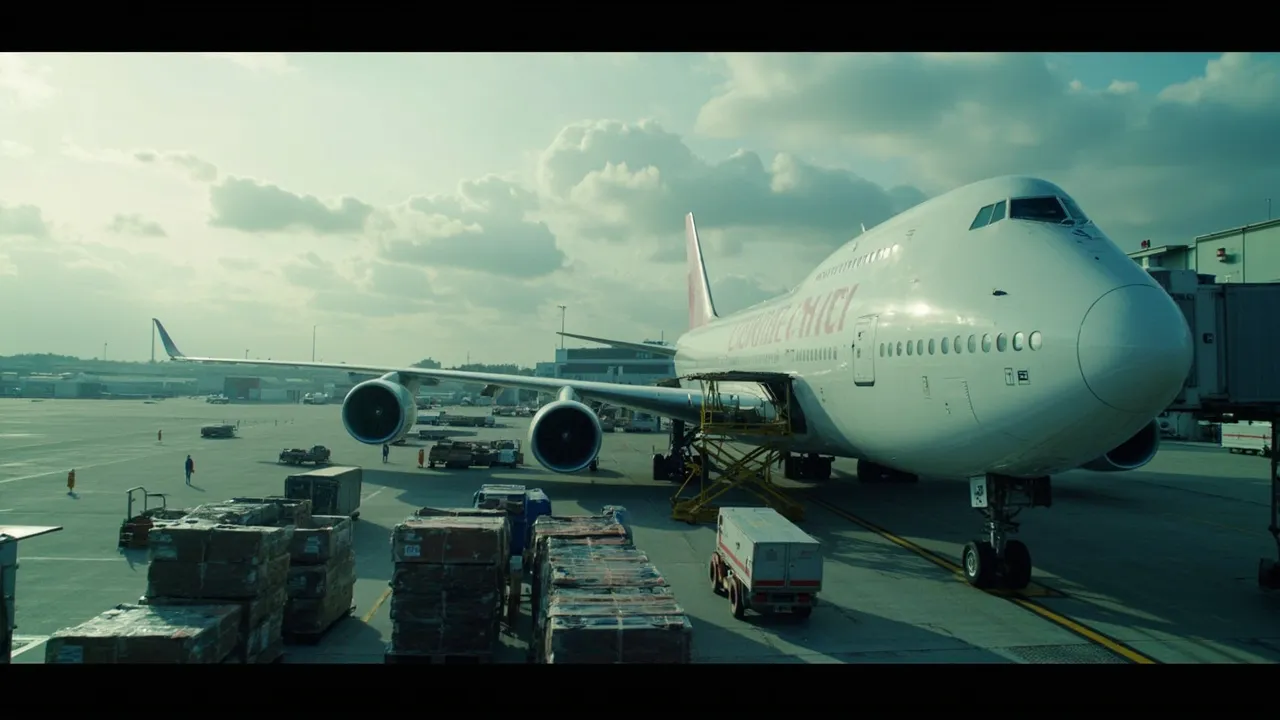
Middle East Airspace Closures Are Reshaping Global Air Cargo Routes: A Shipper's Guide to Navigating the March 2026 Capacity Crunch


The largest air cargo disruption since COVID is unfolding right now. As US-Israeli strikes on Iran have triggered sweeping airspace closures across the Middle East, global air freight capacity has plummeted 18% in a matter of days. For shippers who depend on air cargo for time-sensitive goods, the next weeks will demand rapid adaptation—or risk severe delays and spiraling costs.
Here's everything you need to know about the crisis and how to navigate it.
The Scale of Disruption: Three of the World's Largest Cargo Airlines Grounded
The numbers are staggering. Emirates SkyCargo, the world's fourth-largest cargo airline, has suspended all flights through Dubai. Qatar Airways Cargo—operating 29 Boeing 777 freighters and offering shippers 13 tons of capacity per day—has halted operations from its Doha hub due to Qatari airspace closure. Etihad Airlines has grounded its five 777 freighters out of Abu Dhabi.
These aren't marginal players. Dubai, Doha, and Abu Dhabi collectively serve as critical transshipment hubs handling an estimated 18% of global air cargo traffic. When those hubs go dark, the ripple effects are immediate and global.
FedEx has suspended flights to and from 11 Middle Eastern countries including the UAE, Qatar, Bahrain, Kuwait, Iraq, and Saudi Arabia. Lufthansa Cargo has cancelled services to Tel Aviv, Beirut, Amman, and Tehran through at least March 8. IAG Cargo has suspended London-to-Dubai, Doha, Abu Dhabi, and Bahrain routes until March 4 at the earliest. Cathay Group has pulled all 20 of its Boeing 747 freighters from Middle East operations.
As of this writing, major Middle East carriers have ruled out resuming scheduled flights before Thursday at the earliest.
Capacity Math: Why 18% Matters More Than You Think
Data from Netherlands-based consultancy Rotate shows global air cargo capacity dropped 18% week-over-week as of March 1, driven by three compounding factors: Middle East carriers suspending all flights, non-regional carriers pulling out of Gulf routes with no redeployment options, and carriers rerouting freighters to different tech stops with accompanying payload restrictions.
But the aggregate number understates the corridor-specific damage. Research from aviation analytics firm Aevean reveals that air cargo capacity on the Asia-Middle East-Europe corridor has collapsed by more than 40% on some routes when comparing the weekend of February 28–March 1 to just one week prior. Overall capacity on this corridor, excluding intra-Asia and Africa-Europe segments, is down 26% in available cargo tonne-kilometer terms.
For shippers moving goods between Asia and Europe—the world's second-busiest trade lane—this isn't a minor disruption. It's a structural capacity shock.
Alternative Routes: Longer Flights, Higher Costs, Less Payload
Airlines that continue operating are rerouting around the closed airspace, primarily via Central Asian corridors or African overflight paths. These diversions add 2–4 hours of flight time on typical Asia-Europe routes and carry a painful trade-off: longer routes require more fuel, which means aircraft must reduce cargo payload to stay within maximum takeoff weight limits.
Rotate's data shows an interesting counter-signal: direct Asia-Europe capacity (bypassing Middle East hubs entirely) actually increased by 22% as carriers shifted tech stops to Central Asian airports or opted to fly nonstop with reduced loads. China/Hong Kong-to-Europe capacity surged 34% on direct routing.
But this rebalancing doesn't come close to offsetting the lost hub capacity. Airlines that relied on Dubai or Doha as consolidation points for multi-origin cargo now have no efficient way to aggregate shipments from South Asia, Africa, and the Middle East onto Europe-bound flights.
Rate Forecasting: Expect Significant Spikes on Asia-Europe
"We are expecting some potentially significant move in rates, especially Asia-Europe, if the situation continues with large-scale flight cancellations," Neil Wilson, editor of global price reporting agency TAC Index, told FreightWaves.
Historical precedent from the 2024 Red Sea crisis—which primarily affected ocean freight but still caused air cargo spillover—suggests rate increases of 15–30% on affected corridors within the first two weeks of disruption. The current crisis is more directly damaging to air cargo than the Red Sea situation ever was, because it has physically shut down major hub airports rather than simply rerouting ocean vessels.
DSV, the world's leading airfreight forwarder, has already warned customers to expect extended transit times, irregular schedules, and rate increases. The forwarder recommended shippers share updated shipment forecasts to support capacity planning, confirm bookings early to secure space, and factor congestion impacts into safety stock assessments.
Oman Air Cargo has restricted perishable cargo as a precautionary measure—a signal that carriers are prioritizing high-value general cargo over temperature-sensitive goods during the capacity squeeze.
Modal Shift Strategy: When to Move Cargo Off Air
For shippers with flexibility on transit time, the crisis presents a forcing function to evaluate modal alternatives:
Ocean freight remains viable for non-urgent goods, though the Strait of Hormuz situation adds complexity to Middle East ocean routing. Transpacific and Asia-North Europe ocean lanes via the Cape of Good Hope remain operational.
Rail freight via China-Europe express services (the "New Silk Road") offers 14–18 day transit versus 30+ days by sea, with no exposure to Middle East airspace. Rail capacity has been tight but is scaling.
Nearshoring buffer stock from regional distribution centers can bridge the gap for critical SKUs while air capacity normalizes.
The key is acting now. Every day of delay in shifting modal strategy means competing with more shippers for shrinking capacity.
How CXTMS Helps Shippers Navigate the Crisis
When air cargo networks fracture, visibility and agility become the difference between a manageable disruption and a supply chain crisis. CXTMS provides the multimodal optimization engine shippers need to pivot in real time:
- Real-time rate comparison across air, ocean, and rail to identify the lowest-cost available capacity for each shipment's urgency profile
- Automated carrier alerts when suspended routes resume service, so you can rebook immediately
- Multi-scenario routing that pre-calculates alternative paths before disruptions hit
- Surcharge tracking to maintain cost visibility as war risk premiums and fuel surcharges fluctuate daily
The shippers who emerge from this crisis with the least damage will be those who had the tools to see alternatives and act on them fast.
Ready to build disruption-resilient logistics? Request a CXTMS demo and see how multimodal optimization protects your supply chain when the world shifts under your feet.