Ocean Peak-Season Surcharges Are Returning Before Demand Looks Strong

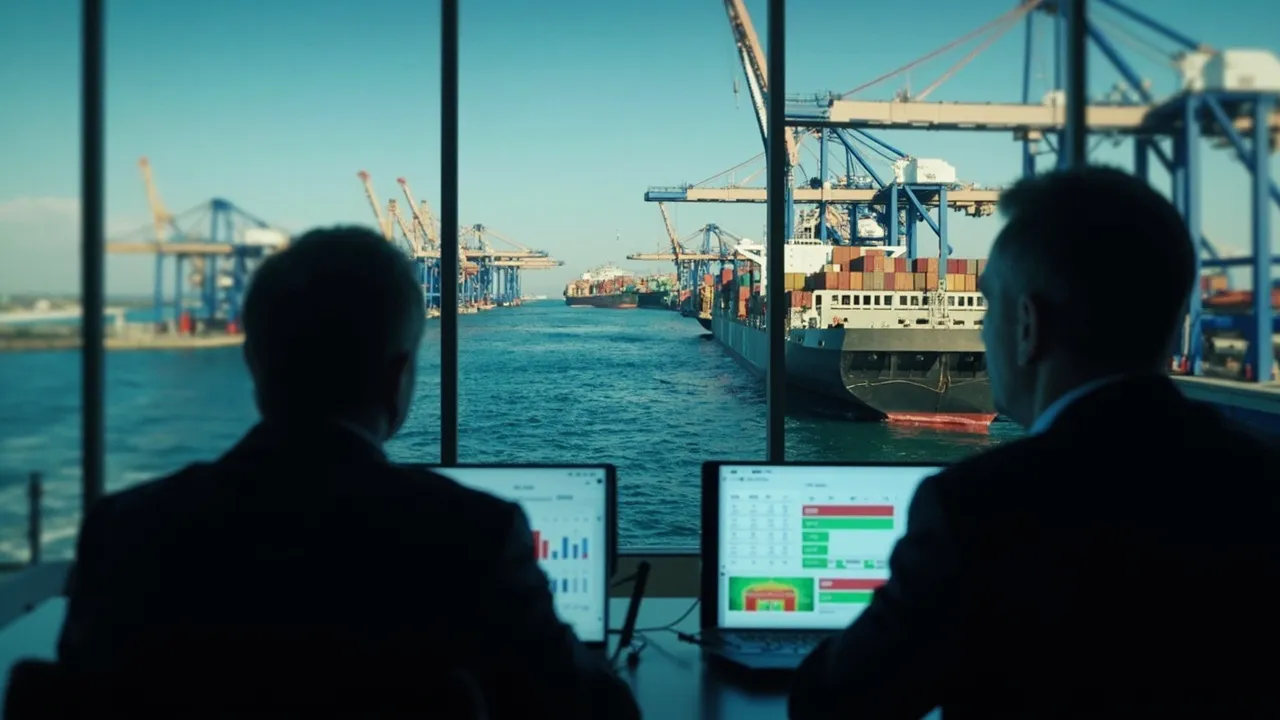
Peak season is supposed to arrive with visible demand. Bookings rise, space tightens, rollover risk increases, and carriers price the imbalance. This year, the warning signs are messier: ocean surcharges are returning before demand looks uniformly strong.
That matters for freight forwarders because customers are still seeing uneven order books. A surcharge announced into a booming market is painful but easy to explain. A surcharge announced into a cautious market creates a harder question: why are ocean freight budgets moving before demand looks strong?
The answer is that carrier pricing does not wait for every shipper forecast to agree. Fuel cost, longer transit times, conflict risk, service changes, and early peak-season positioning can move rate sheets faster than procurement cycles. Forwarders that treat surcharges as after-the-fact billing noise will get squeezed. Forwarders that manage them as an operating calendar can protect margin and customer trust.
Rates are climbing from a low-confidence base
FreightWaves recently reported that spot rates for 40-foot equivalent containers from China to the U.S. East Coast have nearly doubled since late February, rising from $2,600 to more than $5,000. China-to-North America West Coast pricing also moved higher, increasing by nearly $1,400 over the same period to about $3,200. Both lanes were up more than 75% in eight weeks, according to market index data cited by FreightWaves.
That would normally scream demand recovery. But the underlying story is less clean.
In the same FreightWaves analysis of ocean rates ahead of peak season, the publication noted that the latest increases appeared largely fuel-cost driven, with capacity still ample and demand not yet broadly higher. Import demand had been flat since early April and was trailing 2024 and 2025 levels, aside from specific disruption windows.
This is the awkward operating environment: prices can rise even when customers do not feel busy yet. Longer transits, Red Sea diversions that have remained largely in place since early 2024, and geopolitical risk can raise the carrier cost base before a classic peak-season surge appears in purchase orders. The old mental model — demand first, surcharge second — is too slow.
The $2,600 surcharge is the louder signal
The sharper warning came from a separate FreightWaves report on carrier pricing. CMA CGM announced a $2,600 increase on 40- and 45-foot containers moving from the East Mediterranean to U.S. East Coast ports. The surcharge applies to dry cargo effective July 1 for origins including Turkey, Greece, Lebanon, Bulgaria, Egypt, Syria, Georgia, Ukraine, Romania, Croatia, Albania, and Slovenia.
FreightWaves also reported a separate West Mediterranean-to-U.S. East Coast peak-season surcharge of $1,000 per container. Those are not rounding errors. On lower-margin forwarding business, a four-figure surcharge can erase the economics of a lane if it is discovered after the quote, after the customer award, or after the container is already booked.
The demand indicator behind the move is notable too. In its coverage of the $2,600 peak-season increase, FreightWaves cited SONAR’s Ocean Volume Index rising from 49,032 on May 4 to 65,346 as peak season got underway. That is a material move, but it sits alongside a broader market still described as uncertain.
That is exactly why surcharge governance matters. Forwarders are not just managing rates; they are managing timing mismatches. Carrier notices can update weekly. Customer budgets may update quarterly. Contract negotiations can lag the live market by weeks. Blank sailings and service-string changes can alter space and transit assumptions faster than sales teams can reprice.
Volatility is the real planning problem
A wider supply chain view reinforces the point. Inbound Logistics reported that North American port activity reached a new high in 2025, with container volumes across the top 15 ports rising 1.6% to 62.3 million TEUs, surpassing the 2022 peak. That sounds stable, but the year was anything but smooth.
The same Inbound Logistics roundup described sharp swings from tariff front-loading, a collapse when a stacked China tariff disrupted trade, and a rebound after relief. Savills’ import volatility index reached 8.1% from May through July, double the 10-year average and a level last seen in 2020.
That history matters because surcharges thrive in volatility. Carriers price risk, reposition capacity, and defend yields when cargo timing becomes less predictable. Even if annual volume looks healthy, week-to-week volatility can create local space pressure, equipment imbalances, and service uncertainty.
For a freight forwarder, annual TEU growth is not the number that decides whether a customer shipment loses money. The deciding numbers are the surcharge effective date, booking confirmation date, customer quote validity window, and margin left after accessorials.
A practical playbook for forwarders
Start with a surcharge calendar by trade lane. Capture carrier notice date, effective date, origin and destination scope, equipment type, amount, expiration date if listed, and whether the charge applies to existing bookings or new bookings only. Do not bury this in PDFs. Put it somewhere operations, pricing, and customer service can all use.
Next, define customer notification triggers. A good rule is simple: notify customers when a surcharge exceeds a dollar threshold, changes within the quote validity window, affects a committed sailing, or creates a margin exception. Waiting for perfect certainty is how teams end up apologizing instead of advising.
Then run lane-level margin checks. Four-figure surcharges should automatically reprice vulnerable lanes, especially Mediterranean-to-U.S. East Coast, Asia-to-U.S. East Coast, and any lane with tight inland delivery commitments. Margin reviews should include drayage, detention exposure, alternate routings, and cargo-ready-date risk.
Build alternate-port options before the customer asks. If East Coast pricing or service reliability deteriorates, some freight may need West Coast routing plus intermodal, Gulf alternatives, or a different transshipment path. Those options need lead-time and cost assumptions in advance.
Finally, connect surcharge data to execution workflows. If pricing, booking, documentation, and invoicing live in separate systems, the surcharge will fall through the cracks somewhere. The failure mode is predictable: sales quotes old data, operations books new data, finance disputes the invoice, and the customer sees confusion.
The CXTMS view
Ocean peak season is not just about whether demand is strong. It is about whether your team can respond when carrier pricing moves before the market narrative catches up.
CXTMS helps forwarders manage that gap by connecting lane rates, surcharge rules, customer quote controls, booking workflows, margin checks, and exception communication in one operating layer. When rate volatility returns, spreadsheets and inboxes are too slow.
If your team is still tracking ocean surcharges manually, now is the time to tighten the process. Request a CXTMS demo to see how better rate governance and freight execution controls can protect margin during peak-season volatility.