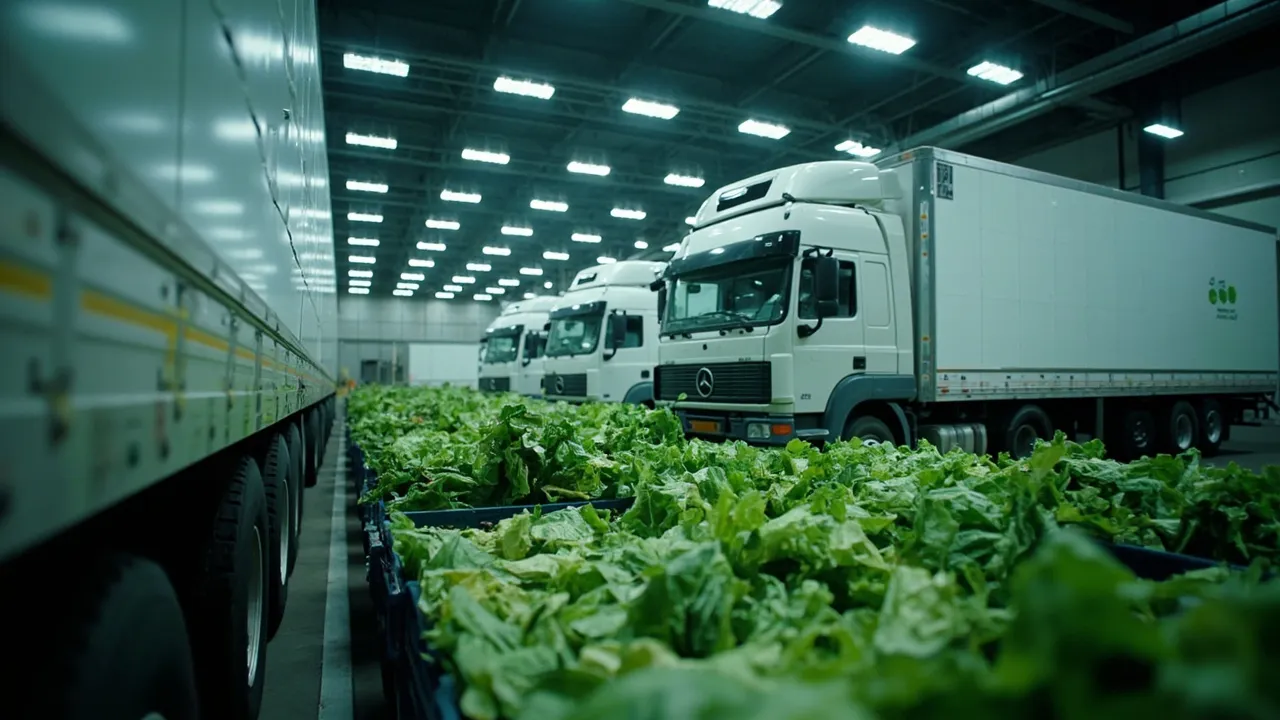
Perishable Inventory Visibility Is the Next Food Logistics Cost Lever

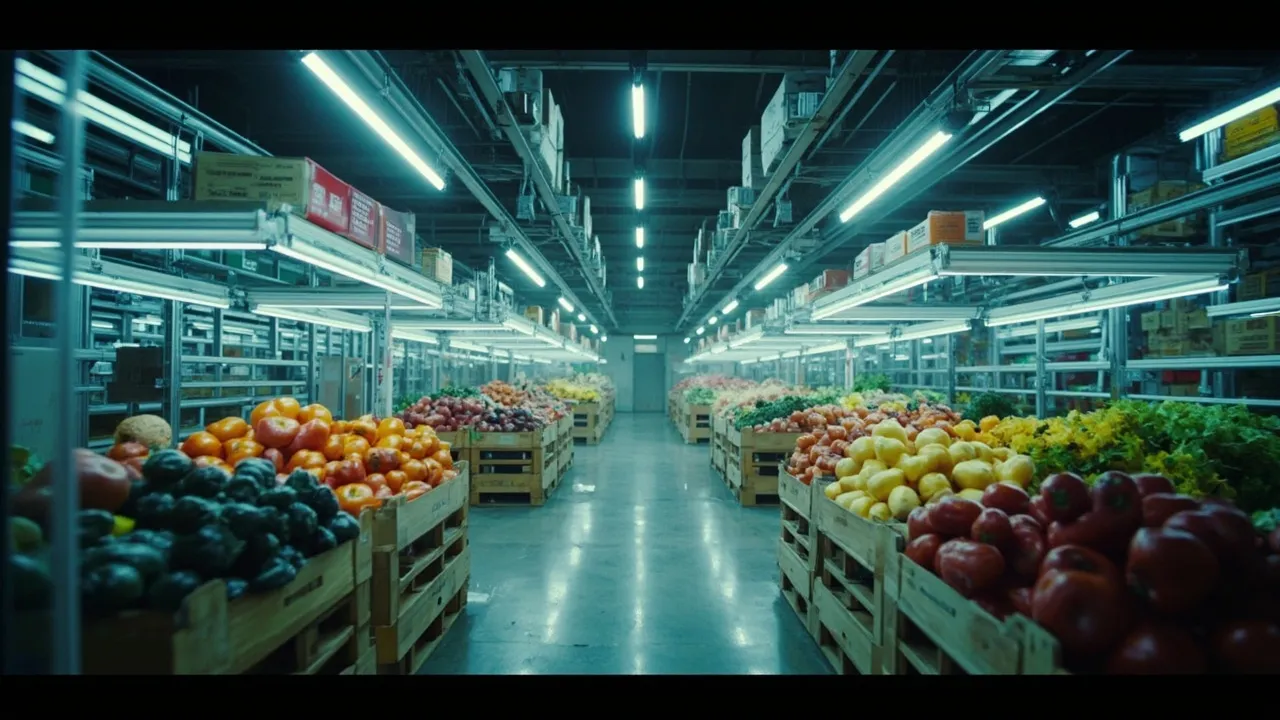
Food logistics has spent years talking about cold-chain visibility as a shipment problem: where is the truck, what is the trailer temperature, and when will the load arrive? Those questions still matter. But the next cost lever is more specific: visibility into usable perishable inventory.
That distinction matters because a pallet can be counted, received, and technically available while no longer being the right pallet to ship. It may have lost shelf life during dwell, experienced a temperature excursion, or be sitting in the wrong facility for the demand signal that just changed.
For food shippers, grocers, distributors, restaurant networks, and cold-chain forwarders, that is where margin quietly disappears.
The waste problem is really an information problem
Food waste is often framed as a sustainability issue. It is one, but for logistics teams it is also a working-capital, transportation, and service-level problem. Food Logistics recently put the issue in operational terms, arguing that the gap between recorded stock and usable stock is where food loss begins. In other words, the problem is not simply that food expires. It is that teams discover too late which inventory is still fit for which order.
The scale is not small. In a separate Food Logistics cold-chain mapping article, the publication cited USDA estimates that 30-40% of the U.S. food supply is lost or wasted. The same article noted that 61% of food businesses say they still lack full visibility into where that waste occurs in their operations.
That is the expensive part. If more than half the market cannot see where loss happens, then many transportation decisions are being made with incomplete inventory truth. A planner may prioritize the wrong reefer load. A warehouse may ship newer stock while older usable inventory ages out. A distributor may replenish a node that already has product, but not product with enough remaining shelf life to serve demand.
Perishable inventory visibility closes that gap by changing the question from “How much do we have?” to “What can we safely and profitably use now?”
Shelf life should shape transportation decisions
The transportation impact is immediate. In food logistics, inventory quality should influence mode, lane, carrier choice, stop sequence, and allocation. If the system only knows item quantity, those choices become blunt. If it knows lot, dwell time, temperature history, expiration window, and order priority, transportation can protect margin instead of merely moving freight.
Consider reefer prioritization. A facility may have two outbound loads waiting for limited refrigerated capacity. The load with the highest order value is not always the right first move. If another load has tighter remaining shelf life, a longer lane, or a customer with stricter receiving rules, delaying it may create more waste than delaying the larger order.
The same logic applies to expiry-aware allocation. Food companies often understand first-expire-first-out inside the warehouse, but the principle needs to extend across facilities and lanes. Inventory that works for a nearby foodservice customer may not work for a distant grocery DC with longer receiving requirements.
Dynamic replenishment also improves when shelf life is visible. A regional DC may show adequate inventory on paper, yet still need replenishment because much of that product will age out before forecasted demand hits. Transportation planning should respond to the usable position, not the book position.
Cold-chain complexity is moving upstream
Inbound Logistics recently described a broader shift toward regionalized, multi-hub supply chains and stronger digital operating models. Its reporting noted that companies are investing in digital tools and data-driven processes to anticipate disruption before it hits. It also cited QIMA survey findings that 43% of supply chains made notable sourcing geography changes in 2025, 60% of respondents report mapped supply chains, and 74% plan to invest in supply chain digitization in 2026.
Those numbers matter for food logistics because perishables do not get simpler when networks become more regional and multi-node. More hubs can reduce distance to demand, but they also create more inventory handoffs, more dwell points, more temperature-control obligations, and more chances for shelf-life data to fragment.
The cold chain is no longer just a refrigerated transportation network. It is a data network that must preserve product truth from supplier to facility to carrier to customer. If that truth breaks, the organization starts paying in spoils, rejects, expedites, stockouts, and avoidable transfers.
The data model needs to get more practical
Useful perishable visibility does not require turning every shipment into a science project. It requires a practical operating record that connects the data teams need to make daily decisions.
Start with lot and batch identity. If inventory cannot be tied to a specific lot, recall containment becomes slower and broader than necessary.
Add temperature history. A single current reading is not enough. Teams need to know whether product stayed within tolerance across transit, cross-dock, yard dwell, and facility handling.
Track facility dwell. Perishable inventory often loses value while waiting: at origin, in a cross-dock, in a cold room, on a trailer, or at the receiver. Dwell data helps logistics teams identify where shelf life is being consumed before the customer ever sees the product.
Expose remaining shelf-life status. This should be available to transportation planners, not buried in quality systems. If a shipment has six days of remaining life and a customer requires five days at receipt, a small delay becomes a service failure.
Finally, keep real-time exception history attached to the inventory record. Temperature excursions, missed appointments, rejected loads, late carrier arrivals, and split shipments all change the usability picture. They should not live as separate emails and spreadsheets.
Recalls make visibility non-negotiable
Inventory visibility also changes the economics of recall response. When lot, location, carrier, shipment milestone, and customer delivery data are connected, a food company can isolate affected product faster. When they are disconnected, the recall footprint expands because the company cannot confidently identify what moved where.
That is both a safety issue and a cost issue. Broad recalls consume carrier capacity, warehouse labor, customer trust, and management time. Better traceability narrows the blast radius.
For logistics teams, the takeaway is blunt: perishable inventory visibility is not a “nice to have” analytics project. It is the operating layer that determines which product should move, where it should move, how fast it should move, and when it should not move at all.
CXTMS helps food logistics teams connect shipment execution, carrier milestones, temperature-sensitive workflows, inventory context, documents, and customer communication in one transportation operating record. If your team is trying to reduce spoilage, protect shelf life, and make smarter refrigerated freight decisions, book a CXTMS demo and see how usable inventory visibility turns cold-chain data into daily execution.