MODEX 2026 Shipper's Preview: 7 Material Handling Innovations That Will Reshape Your Warehouse Strategy

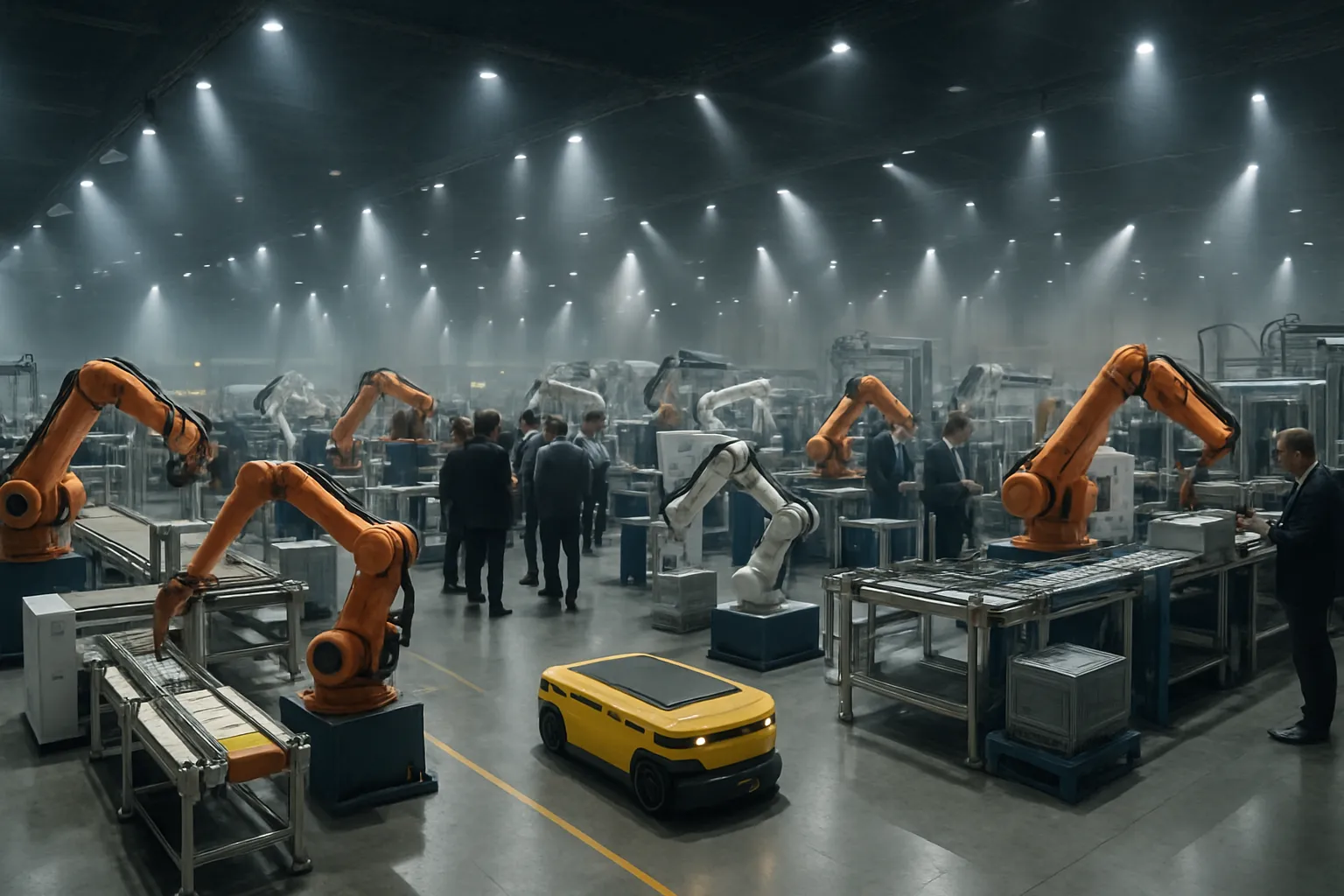
The largest manufacturing and supply chain event of 2026 is less than a month away. MODEX 2026 descends on Atlanta's Georgia World Congress Center from April 13–16, and the numbers alone tell a story of an industry in transformation: over 1,060 exhibitors spread across more than 650,000 square feet of exhibit space, with registered attendees tracking above 50,000—all record figures that dwarf the pre-COVID era when attendance hovered around 30,000 and floor space topped out at 400,000 square feet.
But raw scale isn't what makes MODEX 2026 essential for shippers. It's the 220 companies that submitted Innovation Award entries—each representing a new product, platform, or technology launching at the show. MHI CEO John Paxton put it plainly in a recent interview with Robotics 24/7: "The attendees come to see new solutions and the full breadth of supply chain technologies, and the show delivers."
Here are the seven innovations and trends shippers should prioritize when building their MODEX visit strategy.
1. AutoStore's AutoCase: Rethinking Case-Level ASRS
AutoStore, the cube storage pioneer, is debuting AutoCase at MODEX—a finalist for the Best New Innovation Award. While AutoStore's grid-based system has long dominated piece-level fulfillment, AutoCase extends the platform to full-case handling. For shippers managing multi-channel fulfillment where case-level picking coexists with eaches, this could eliminate the need for separate automation islands.
Why shippers should care: Consolidating case and piece picking onto a single automation platform reduces footprint requirements and simplifies warehouse management system integration.
2. Locus Robotics' Locus Array: Scaling AMR Orchestration
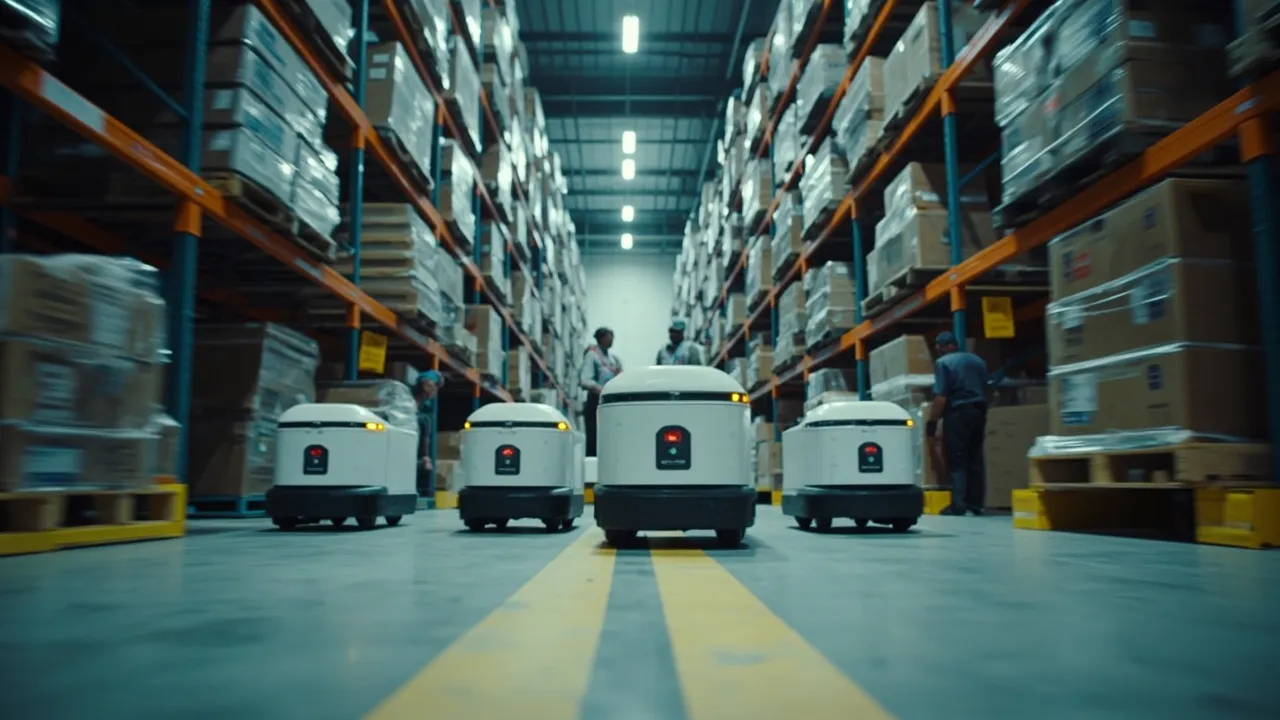
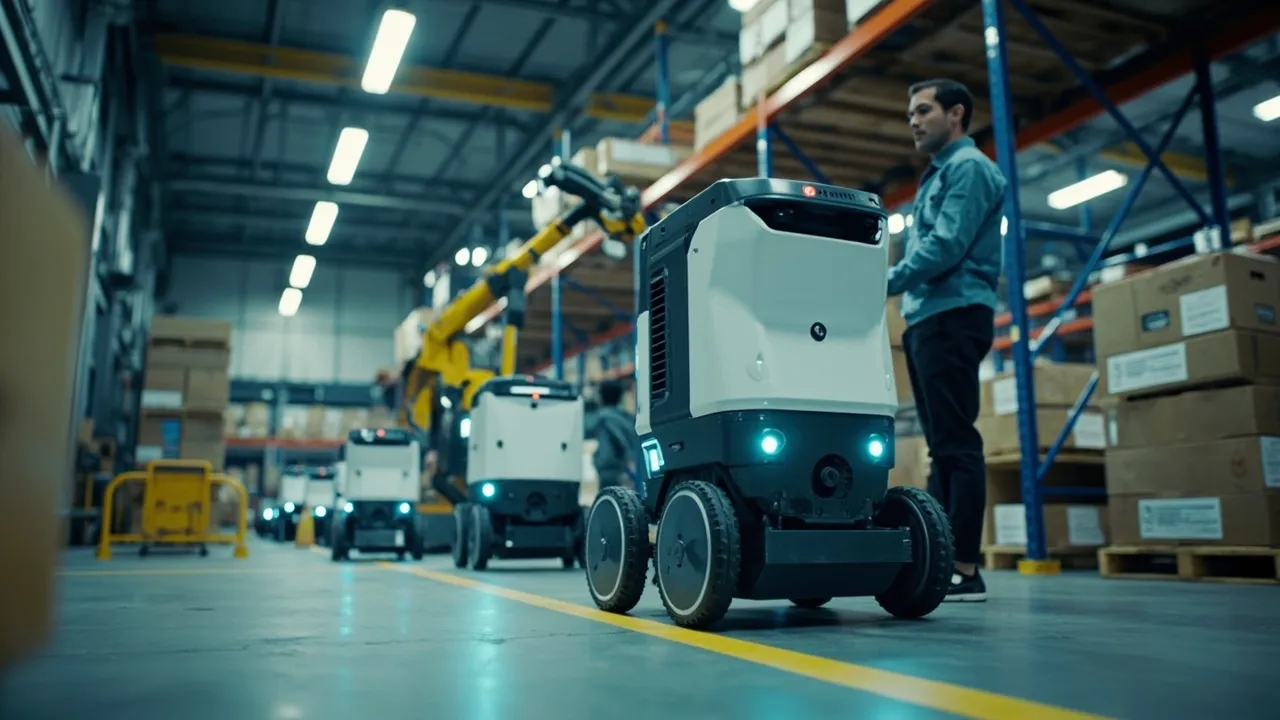
Another Best New Innovation finalist, the Locus Array from Locus Robotics represents the next evolution in autonomous mobile robot (AMR) fleet management. Rather than deploying individual bots, the Array coordinates large-scale robot fleets with adaptive task allocation that responds to real-time demand shifts across warehouse zones.
As Paxton noted, the post-COVID acceleration of robotics was driven by "fewer people in the process and much higher picking volumes." The labor crunch hasn't eased. According to the MHI and Deloitte Annual Industry Report, 55% of supply chain leaders are increasing technology investments, with 60% planning to spend over $1 million on supply chain technology in the near term.
3. Dexory's DexoryView: Autonomous Warehouse Visibility
Dexory, the third Best New Innovation finalist, brings something fundamentally different to the floor: DexoryView's Storage Health Feature. Using autonomous scanning robots that traverse warehouse aisles, the system creates a real-time digital twin of inventory locations, flagging misplacements, empty bins, and storage utilization anomalies without manual cycle counts.
Why shippers should care: Inventory accuracy in most warehouses sits between 63% and 95%. Continuous autonomous scanning closes that gap without diverting labor from picking operations.
4. Anyware Robotics' Pixmo: Inbound Automation Without Fixed Infrastructure
On the robotics front, Anyware Robotics earned a Best Robotics Innovation nomination with Pixmo, a system designed to automate inbound operations without the fixed conveyors, gantries, or bolted-down infrastructure that typically accompanies warehouse automation.
For shippers leasing warehouse space or operating in multi-client 3PL environments, infrastructure-free automation means deployability in weeks rather than months—and portability when lease terms change.
5. Slip Robotics' SlipLift: Autonomous Trailer Loading
SlipLift from Slip Robotics tackles one of the last manual bastions in the warehouse: trailer loading and unloading. Also a Best Robotics Innovation finalist, the platform automates the physical movement of palletized freight into and out of trailers—a task that's historically resisted automation due to the variability of trailer conditions and pallet configurations.
Why shippers should care: Dock operations are bottleneck generators. Autonomous loading reduces dwell time, cuts detention charges, and keeps outbound schedules tight—a direct impact on transportation costs.
6. ProGlove MAI: AI Voice Assistants Go Wearable
ProGlove's MAI (Best IT Innovation finalist) pairs a wearable barcode scanner with an AI-powered voice assistant. Warehouse associates can query inventory status, receive pick instructions, and report exceptions through natural language—hands-free and heads-up. It's the convergence of voice picking, wearable scanning, and generative AI in a single device.
This aligns with a broader trend the MHI/Deloitte research quantified: AI adoption in supply chains currently sits at 28%, but another 54% of organizations plan to implement AI within five years, nearly tripling the adoption footprint.
7. The MHI/Deloitte Annual Industry Report Keynote: Data That Drives Decisions
Not a product, but arguably the most strategically valuable session at MODEX: the 2026 MHI Annual Industry Report keynote on April 15, featuring MHI CEO John Paxton and Deloitte's Wanda Johnson. The report—the 13th edition of the industry's benchmark technology adoption survey—will present fresh data on how supply chain leaders are investing, what technologies are reaching critical mass, and where the gaps remain.
Previous editions have shaped investment decisions across the industry. The 2025 report found that the majority of leaders are prioritizing end-to-end digital orchestration, but execution still lags strategy. The 2026 findings—unveiled at MODEX before public release—give attendees a first-mover advantage on industry intelligence.
Building Your MODEX Visit Strategy
With 200+ educational sessions across four days and three massive exhibit halls, MODEX can overwhelm without a plan. Here's how to maximize your time:
- Day 1 (April 13): Attend the Home Depot CFO keynote for macro supply chain strategy context, then focus on Hall B for robotics and automation demos.
- Day 2 (April 14): Prioritize IT innovation exhibitors and the exponential strategy keynote from Salim Ismail.
- Day 3 (April 15): Don't miss the MHI/Deloitte report keynote panel, Innovation Award winners announcement, and Student Day networking.
- Day 4 (April 16): Final day for hands-on demos and one-on-one vendor meetings.
Pro tip: The Innovation Awards showcase at MODEX's innovation portal lets you pre-screen all 220 entries before the show. Build your shortlist now.
What This Means for Your Warehouse Strategy
MODEX 2026 isn't just a trade show—it's a preview of the warehouse operating model for the next three to five years. The themes are clear: infrastructure-light automation that deploys fast, AI integration at every level from voice picking to fleet orchestration, and autonomous systems that tackle the last manual holdouts like trailer loading and inventory scanning.
The shippers who win in 2026 and beyond won't be those with the biggest automation budgets. They'll be the ones who select the right technologies for their specific operational constraints—space, labor, lease flexibility, and fulfillment complexity.
Ready to evaluate how these innovations fit your warehouse operations? Request a CXTMS demo to see how our platform integrates with modern warehouse technologies to optimize your entire supply chain—from inbound receiving to final-mile delivery.