Singapore Cements Its Role as Asia's Supply Chain Nerve Center: Why Multinationals Are Centralizing Logistics Operations in the City-State

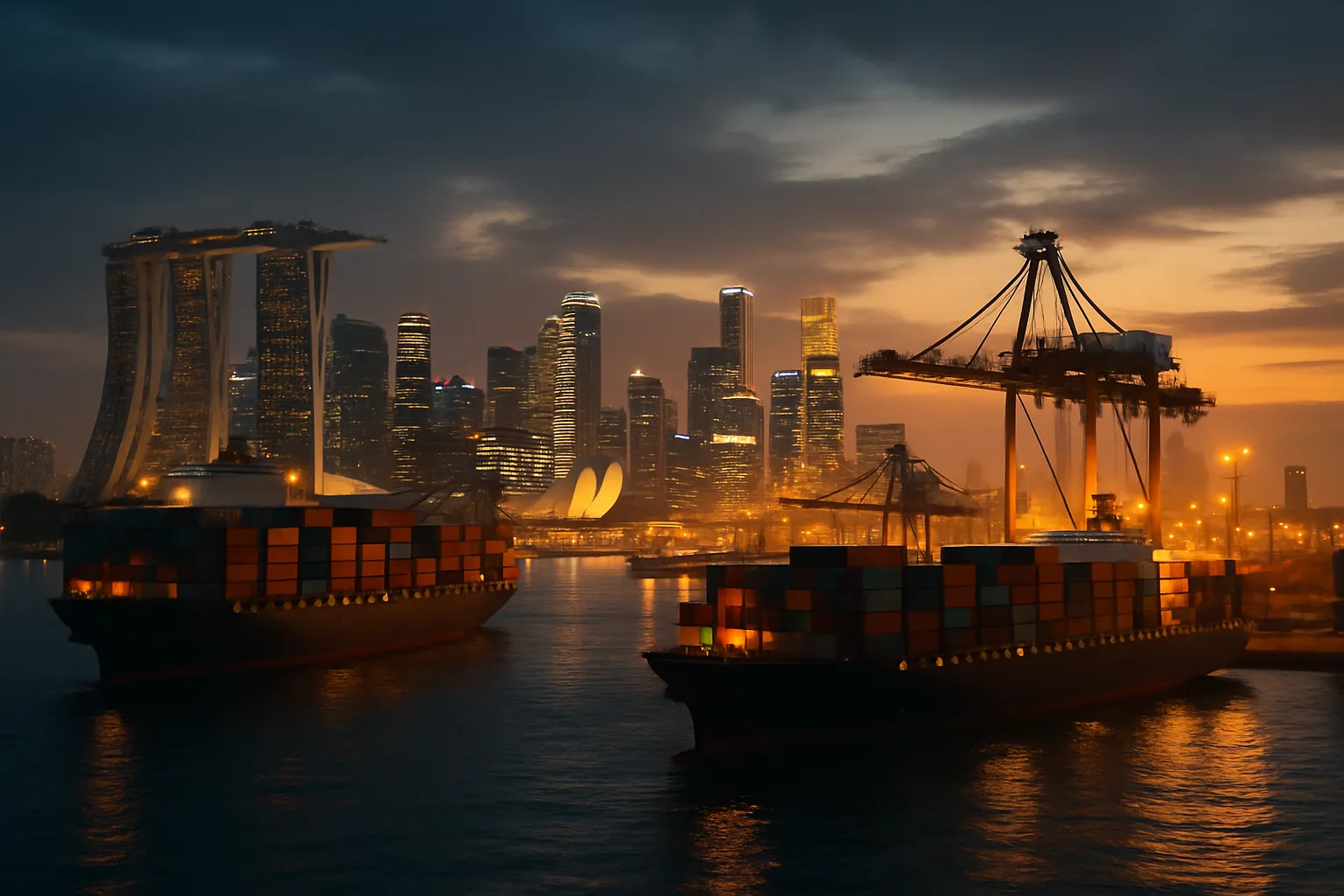
When DELIVER Asia 2026 convened in Singapore this March, the conference wasn't just another industry gathering — it was a showcase of why the city-state has become the gravitational center of Asia-Pacific supply chain operations. With a freight and logistics market valued at $26.11 billion in 2026 and projected to reach $35.37 billion by 2031 at a 6.26% CAGR, according to Mordor Intelligence, Singapore isn't merely competing as a regional logistics hub. It's establishing itself as the undisputed nerve center for global supply chain command and control.
The Numbers Behind Singapore's Port Dominance
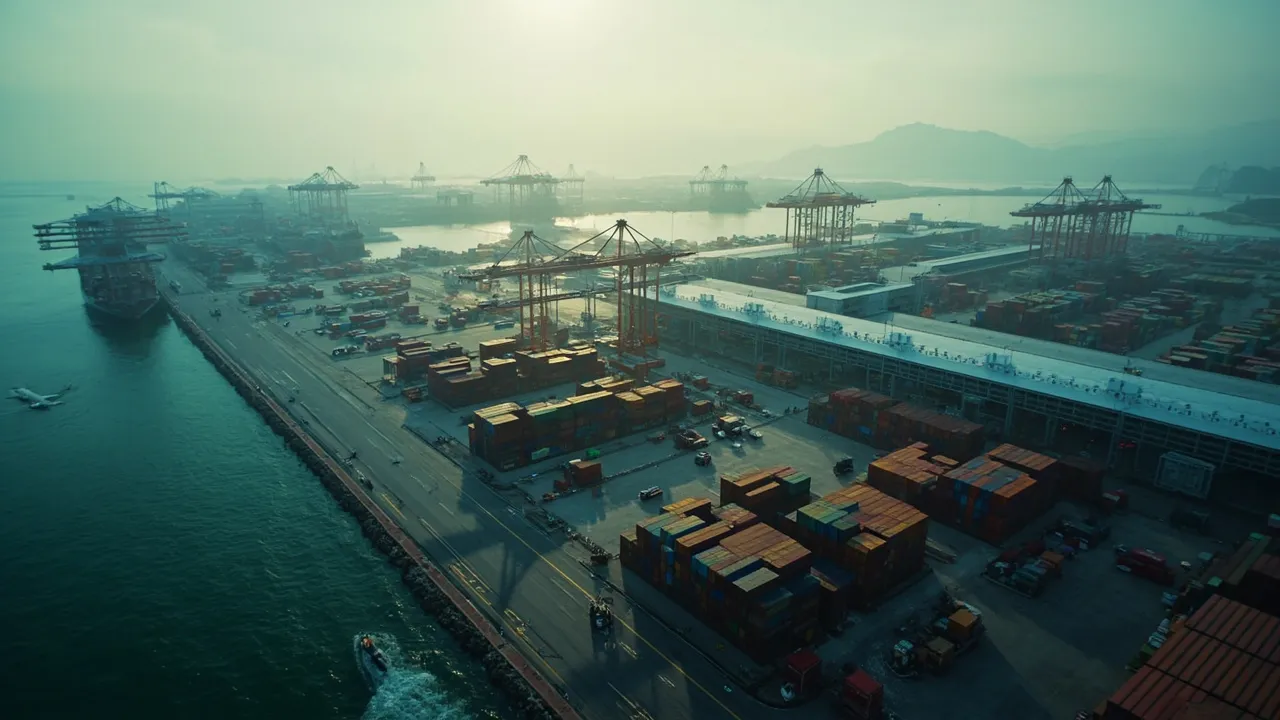
The Port of Singapore shattered records in 2025, handling a staggering 44.66 million TEU — an 8.6% year-over-year increase that cemented its position as the world's second-busiest container port. Vessel arrival tonnage hit 3.22 billion gross tonnage, up 3.5%, while bunker fuel sales reached 56.8 million tonnes, reflecting the sheer volume of maritime traffic flowing through the Strait of Malacca.
What makes these numbers more impressive is context. Singapore isn't a manufacturing powerhouse generating its own export volumes. Instead, roughly 85% of its container throughput is transshipment traffic — cargo that arrives, gets sorted, consolidated, or redistributed, and continues onward. This makes Singapore function less like a traditional port and more like a massive physical router for global trade, connecting over 600 ports across 120 countries.
For shippers managing Asia-Pacific supply chains, that connectivity translates to unmatched routing flexibility. Whether you're moving goods from Vietnam to Europe, India to Latin America, or China to Africa, Singapore sits at the crossroads.
Why Multinationals Choose Singapore as Their Logistics Command Center
The list of companies that have planted regional or global headquarters in Singapore reads like a who's who of logistics: DHL, Kuehne + Nagel, Sankyu, DB Schenker, Toll, UPS, and Yusen Logistics all maintain major operational hubs in the city-state. But it's not just logistics companies — manufacturers, retailers, and technology firms are increasingly centralizing their supply chain management functions here.
Several factors drive this concentration:
Timezone Advantage
Singapore sits at UTC+8, giving supply chain teams a working-day window that overlaps with both Asian manufacturing centers (China, Vietnam, India) and European headquarters. A Singapore-based control tower can manage morning operations across Asia and hand off to European teams before close of business — creating near-continuous supply chain visibility across two of the world's three major economic zones.
Trade Agreement Network
Singapore has signed 27 implemented free trade agreements covering the vast majority of global GDP. These FTAs reduce tariff barriers, simplify customs procedures, and provide preferential market access that directly impacts landed cost calculations for shippers routing goods through Singapore.
The newest addition is the EU–Singapore Digital Trade Agreement, which entered into force on February 1, 2026 — the EU's first-ever standalone bilateral digital trade agreement. This agreement allows companies to operate integrated digital systems across the EU and Singapore without duplicative infrastructure costs, a significant advantage for logistics technology platforms managing cross-border data flows.
Digital Trade Infrastructure
Singapore's Networked Trade Platform (NTP) is perhaps the most underappreciated advantage for supply chain professionals. Operated by Singapore Customs, the NTP enables digital transactions with trade regulators both domestically and internationally, connecting parties across the entire global trade value chain through a single platform.
Combined with Singapore's broader digital economy push — including AI-powered customs clearance, blockchain-based trade financing, and electronic bills of lading — the city-state offers a digital infrastructure stack that reduces friction at every node in the supply chain.
Singapore vs. the Competition: How It Compares as a Regional Command Center
Singapore doesn't exist in a vacuum. Hong Kong, Dubai, and Shanghai all compete for the "supply chain capital of Asia" title. But each faces headwinds that Singapore has managed to avoid.
Hong Kong has seen an exodus of multinational headquarters since 2020, with geopolitical uncertainty and regulatory alignment with mainland China making companies nervous about data sovereignty and operational independence. Several major logistics firms have quietly shifted regional decision-making authority from Hong Kong to Singapore over the past three years.
Dubai has built impressive logistics infrastructure and serves as an effective gateway between Asia, Europe, and Africa. But its geographic position is better suited for Middle East and Africa operations than for managing the dense intra-Asian trade networks that dominate global supply chains.
Shanghai offers unparalleled access to China's manufacturing base, but foreign companies face restrictions on data transfer, capital movement, and operational autonomy that make it challenging as a command center for multi-country supply chain operations.
Singapore's combination of political stability, rule of law, English-language business environment, world-class infrastructure, and open data policies creates a package that no competitor currently matches for supply chain headquarters functions.
The Tuas Mega Port: Future-Proofing Through 2040
Singapore isn't resting on current achievements. The Tuas Mega Port — when fully operational by 2040 — will consolidate all of Singapore's container operations into a single automated facility capable of handling 65 million TEU annually. That's nearly 50% more capacity than today's record volumes, built with full automation, AI-driven berth allocation, and autonomous vehicle transport between terminals.
For shippers planning long-term Asia-Pacific strategies, Tuas represents a commitment signal. Singapore is investing tens of billions to ensure it remains the premier logistics node in the region for decades to come — a level of infrastructure commitment that provides planning certainty for companies choosing where to anchor their supply chain operations.
What This Means for Your Supply Chain Strategy
The centralization trend in Singapore reflects a broader shift in how companies think about supply chain management. Rather than distributing logistics decision-making across multiple regional offices, leading organizations are building centralized control towers that leverage Singapore's connectivity, talent, and infrastructure advantages.
This approach delivers several benefits:
- Consolidated visibility across Asian suppliers, carriers, and distribution networks
- Faster response times to disruptions through centralized monitoring and decision authority
- Standardized processes across markets, reducing errors and improving compliance
- Better carrier procurement through aggregated volume leverage across the region
According to Supply Chain Dive, the trend accelerated sharply after the post-pandemic supply chain crises demonstrated that fragmented regional management structures couldn't respond quickly enough to cascading disruptions.
How CXTMS Enables Singapore-Based Supply Chain Command
For organizations establishing or expanding supply chain operations in Singapore, CXTMS provides the digital infrastructure layer that turns a physical presence into a true command center.
Our platform connects to carrier networks, customs systems, and warehouse management platforms across Asia-Pacific, giving Singapore-based teams real-time visibility into shipments, inventory, and logistics performance across the entire region. Automated compliance checking ensures that shipments leverage the right FTA preferences, while AI-driven analytics identify routing optimizations that reduce transit times and landed costs.
Whether you're managing ocean freight through the Port of Singapore, air cargo through Changi, or cross-border trucking across ASEAN, CXTMS centralizes control into a single platform designed for multi-modal, multi-country logistics operations.
Ready to build your Asia-Pacific supply chain command center? Request a CXTMS demo today and discover how our platform powers centralized logistics operations from Singapore to the world.