Robotics Adoption Has Crossed the Warehouse Mainstream Line

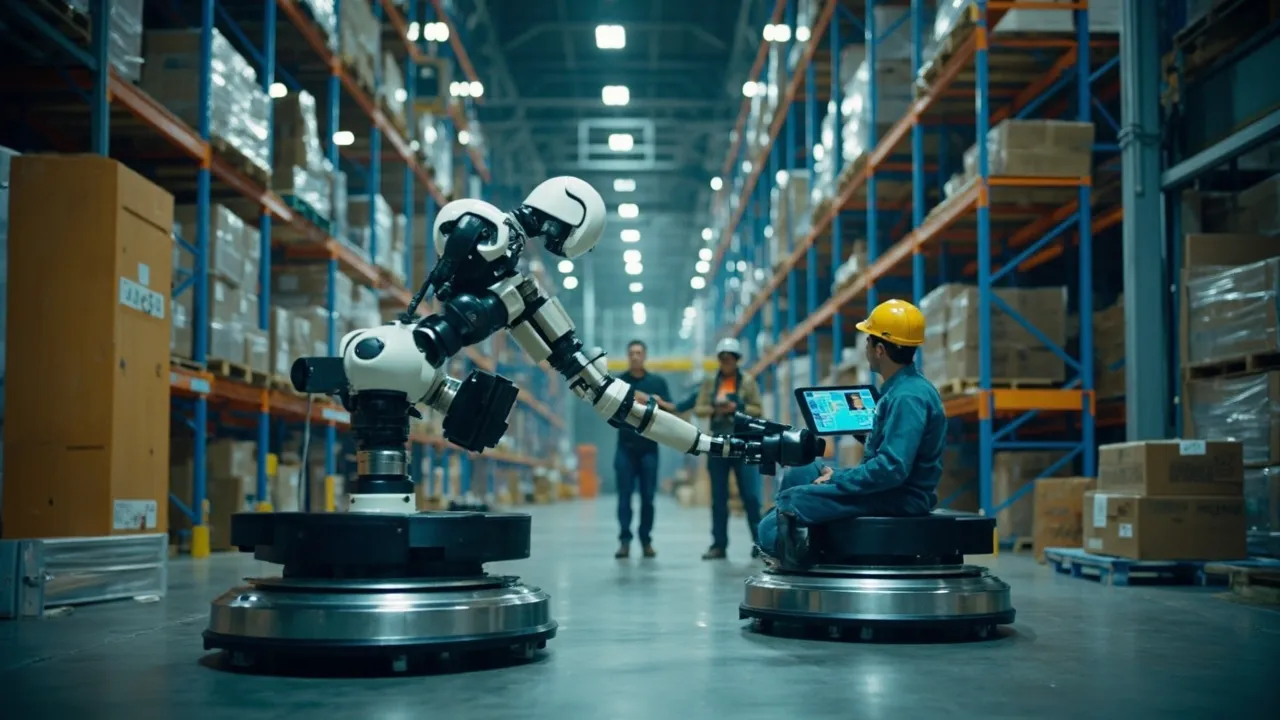
Warehouse robotics has crossed an important line. The question is no longer whether robots belong in mainstream distribution operations. They already do. The harder question is whether logistics leaders are ready to run robotic capacity as part of the operating system, not as an impressive side project.
Modern Materials Handling’s 2026 Intralogistics Robotics Survey makes the shift difficult to ignore. The survey, produced by Peerless Research Group with MHI and The Robotics Group, found that 52% of respondents already use one or more types of robots. Another 32% plan to deploy robotics within three years, and only 3% have no robotics plans. In 2025, the no-plans group was 9%. In one year, robotics moved from “many are interested” to “almost everyone is at least considering it.”
This is not trade-show hype. It is warehouse operators responding to labor cost, labor availability, throughput pressure, order cycle time, and the uncomfortable fact that well-located warehouse space is hard to create.
Robots are now an operating decision
The survey’s respondent base covered a practical cross-section of the market: manufacturing, transportation and warehousing, wholesale trade, retail, corporate management, logistics leadership, warehouse leadership, and industrial engineering. That makes the findings useful because these are the people who have to make freight, inventory, labor, and service levels work every day.
The adoption numbers show why the strategic conversation has changed. Companies are not simply testing robots to see if the technology functions. Many are expanding fleets, adding locations, and moving robots into more operational areas. The survey found that 29% of current robot users deployed systems one to three years ago and are now operational, while 17% went from purchase to deployment in less than a year. Among active users, 45% say robotics budgets are rising, including 18% expecting increases above 10%.
That matters because robotics investment is becoming a network planning issue. A robot fleet affects how work is released, how labor is scheduled, how inventory is staged, how trailers are loaded, and how customer promises are made. Once robots are doing real work on the floor, they become part of the daily logistics cadence.
Labor is the trigger, but space may be the constraint
Labor remains the obvious driver. The survey found respondents ranked reduced labor costs as the top motivator for robotics, followed by improved warehouse productivity and increased throughput. Asked to name the single most important factor, 67% pointed to labor costs and 33% cited labor availability.
But the deeper constraint may be physical space. The survey identified limited warehouse space as the leading supply chain challenge. That is harder to fix than a labor plan. Companies can adjust wages, change shifts, or use temporary staffing. They cannot easily create new well-located square footage near customers, ports, parcel hubs, or population centers.
Robotics fits that problem because it can squeeze more productive work out of existing space. Order and case picking led deployment interest at 57%, followed by heavy payload forked or tugger transport robots at 32%, sortation robots at 31%, and collaborative in-aisle picking at 30%. Those are direct attacks on travel time, touch labor, congestion, and throughput bottlenecks.
The risk moves from buying robots to coordinating them
When adoption was early, the biggest risk was choosing the wrong use case. That risk still exists. But as robotics scales, the bigger danger is running fleets without orchestration discipline.
MMH’s coverage of mobile robot trends put it cleanly: warehouse operators are not just buying robots anymore; they are asking how machines fit, communicate, and keep product moving inside their facilities. As automation is added in layers, mobile robots need to connect with WMS, WES, OMS, conveyors, lift trucks, and other robotic systems without turning the operation into a “complex science project.”
That phrase should make logistics leaders sit up. A complex science project is exactly what happens when robots are deployed faster than workflows are redesigned. The hardware may perform. The fleet manager may dispatch tasks. But if the WMS releases work in the wrong sequence, replenishment is late, dock priorities are unclear, or transportation planners cannot see staged inventory, the operation still misses the truck.
A scaled robotics operation needs clear answers: What work should robots prioritize when outbound cutoffs are at risk? Who owns exceptions when a robot cannot complete a task? How are maintenance windows planned around volume waves? How does transportation know when robotic picking has advanced or delayed load readiness? Which metrics prove the fleet is improving service rather than merely moving around the building?
A practical robotics readiness scorecard
Before adding the next fleet, logistics leaders should score readiness across five areas.
1. Workflow fit. Robots should target a defined operational constraint: travel reduction, case picking, sortation, pallet movement, replenishment, truck loading, or another measurable bottleneck. “We need automation” is not a use case.
2. Data quality. Robot performance depends on clean location data, inventory status, item dimensions, order priority, wave logic, and task sequencing. Bad master data turns smart equipment into expensive confusion.
3. Integration depth. The fleet manager has to connect with the systems that control orders, inventory, labor, docks, and transportation. A robot that operates in isolation may improve a task while weakening the flow.
4. Operating ownership. Operations may own the robot fleet, but IT, engineering, maintenance, safety, warehouse leadership, and transportation all touch the outcome. Ownership has to include escalation paths, not just budget lines.
5. Execution visibility. Leaders need to see whether robotics improves the metrics that matter: on-time ship, dock dwell, order cycle time, labor productivity, trailer utilization, short-ship rates, and exception response.
The same logic applies beyond the four walls. Logistics Management noted that the 2026 National Freight Strategic Plan focuses on improving the freight network that moves more than 54 million tons of goods worth over $68 billion each day, with goals including efficiency, resiliency, innovation, workforce development, and better supply chain visibility. Warehouse robotics belongs in that broader execution picture. Faster internal movement only matters if it helps freight move more reliably across the network.
Where CXTMS fits
CXTMS helps logistics teams connect warehouse automation to transportation execution. When robotic picking, sortation, replenishment, or pallet movement changes load readiness, transportation teams need that signal inside the shipment workflow—not buried in a WMS screen, spreadsheet, or status meeting.
With CXTMS, operators can align warehouse milestones with appointments, carrier tenders, load plans, and customer commitments. Exceptions can be assigned to owners before they become missed pickups. Dock and yard activity can be managed against live readiness, not stale assumptions. Performance dashboards can show whether automation is actually improving shipment outcomes.
Robotics has gone mainstream. The winners will not be the companies that buy the most machines. They will be the companies that orchestrate robots, people, inventory, docks, and freight as one execution system.
If your warehouse robotics roadmap still stops at the fleet manager, it is unfinished. Schedule a CXTMS demo to see how connected shipment workflows turn automation investments into measurable logistics performance.